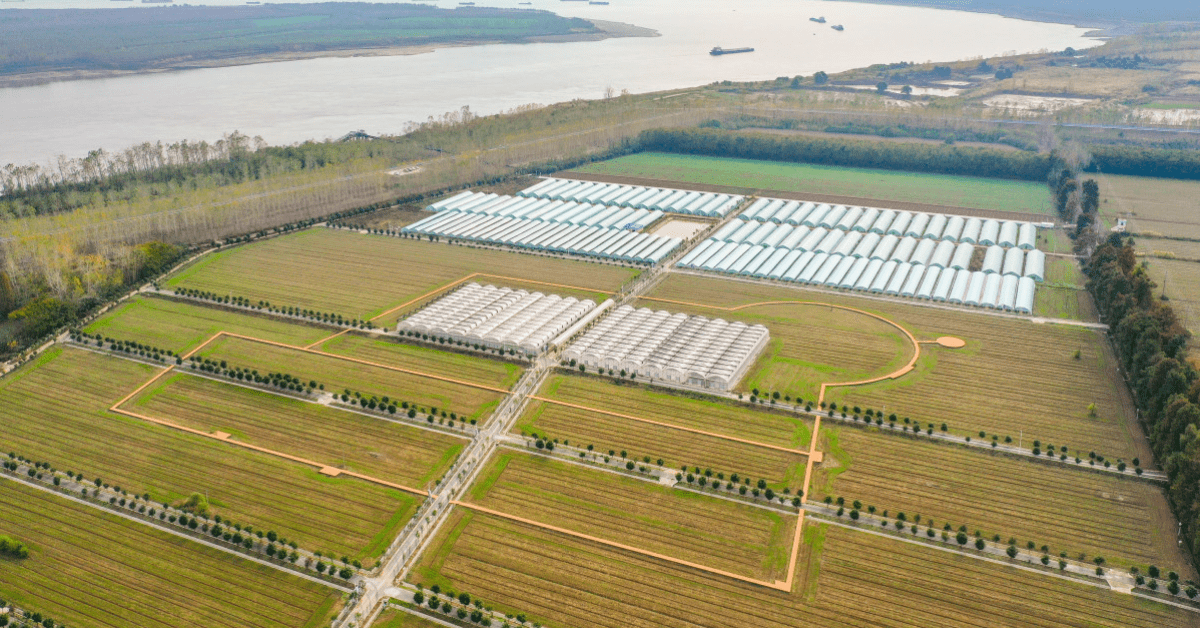

You have invested an entire season into planting, growing, and harvesting your crop. The last thing you want is to watch that investment lose value because of a preventable quality issue at the bin, the elevator, or the export terminal. Yet that is exactly what happens across the global grain supply chain every year.
Post-harvest losses account for roughly 20% of all cereal grains produced worldwide, according to the Food and Agriculture Organization of the United Nations. In Sub-Saharan Africa alone, lost food grains cost an estimated $4 billion annually. Even in the United States, where infrastructure is more advanced, grain quality control directly determines whether a load earns a premium or gets docked at the scale.
Grain quality management is the thread that ties harvest decisions to market returns. It encompasses everything from the moment you set your combine to the second a buyer signs off on a shipment.
In this guide, you will learn how official grading standards work, which testing techniques matter most, and how to protect quality on the farm. Whether you are a row-crop farmer, a cooperative manager, or an agribusiness executive, this guide gives you the practical knowledge to safeguard every bushel and boost your bottom line.
What Is Grain Quality Management and Why Does It Matter?
Grain quality management is a holistic, end-to-end approach that tracks and controls the physical, chemical, and biological condition of grain from field to buyer. It is not a single test at the elevator door. It is a system of decisions, starting with variety selection and harvest timing, running through drying, storage, and transport, and ending with the final grade that determines your price.
Why does it matter? Because the same commodity can serve wildly different end uses. Hard red spring wheat destined for artisan bread flour needs protein levels of 14% or higher. Corn heading to an ethanol plant has different starch and moisture requirements than corn bound for a poultry feed mill. Malting barley must meet germination thresholds before a maltster will accept it. If your grain quality management system does not align what you produce with what the market demands, you leave money on the table.
Think of quality control not as a sunk cost but as a direct revenue driver. Every dollar you spend on proper storage, timely testing, and digital record-keeping comes back as higher sale prices, fewer rejected loads, and stronger buyer relationships.
Understanding Grain Quality and Official Grade Standards
When a load of grain arrives at an elevator or export terminal, inspectors evaluate a core set of physical attributes to assign a numerical grade. The Federal Grain Inspection Service (FGIS) maintains the U.S. grain standards and requires all licensed elevators to use approved methods. The key grading factors include:
- Test weight (bulk density): Measured in pounds per bushel, test weight indicates kernel soundness. Higher test weight generally means plumper, healthier kernels that yield more flour, feed, or starch per unit.
- Moisture content: Excess moisture promotes mold growth, mycotoxin development, and spoilage. Safe storage thresholds vary by grain type and storage duration.
- Damaged and broken kernels: Heat-damaged, sprout-damaged, or mechanically broken kernels lower the grade and reduce end-use performance.
- Foreign material and dockage: Weed seeds, dirt, chaff, and other non-grain material reduce purity and can harbor insects or pathogens.
Chemical Quality Tests
Beyond physical appearance, chemical composition determines how grain performs in processing:
- Protein: Protein content drives the economic value of wheat and durum. Hard red spring wheat is typically traded on a 14% protein basis because buyers need strong gluten for bread and noodle production.
- Starch and oil content: Critical for corn destined for ethanol, wet milling, or livestock feed formulations.
- Falling number: This test measures alpha-amylase activity and indicates sprout damage. Values below 300 seconds are often discounted by buyers because high enzyme activity degrades baking and pasta quality.
- Mycotoxin testing (DON): Deoxynivalenol, a mycotoxin produced by Fusarium head blight, is critical for both feed and food safety. The FDA advisory level for DON in finished food grain products is 1.0 ppm.
Grades and Standards by Commodity
FGIS classifies each grain into classes and grades based on measurable thresholds. The table below summarizes key grade factors for three major U.S. commodities:
| Grade Factor | Wheat (HRS, U.S. No. 1) | Corn (Yellow, U.S. No. 1) | Soybeans (U.S. No. 1) |
| Minimum Test Weight | 60.0 lb/bu | 56.0 lb/bu | 56.0 lb/bu |
| Max Damaged Kernels | 2.0% | 3.0% | 2.0% |
| Max Foreign Material | 0.4% | 2.0% | 1.0% |
| Max Moisture (typical) | 13.5% | 14.0% | 13.0% |
Source: USDA FGIS Grain Standards
International Standards and Trade
Global grain trade also relies on standards from the International Organization for Standardization (ISO), the Food and Agriculture Organization (FAO), and the Grain and Feed Trade Association (GAFTA).
Harmonizing these standards reduces disputes, lowers transaction costs, and gives both buyers and sellers a shared language for quality. Official grades help buyers set premiums and discounts, which is why understanding them puts you in a stronger negotiating position.
How to Challenge a Grade
If you believe an inspection result does not accurately reflect your grain, you have the right to appeal. U.S. producers can request that FGIS or an FGIS-approved service provider retest the sample. This safeguard ensures fairness and maintains market confidence in the grading system.
Grain Quality Analysis and Testing Techniques
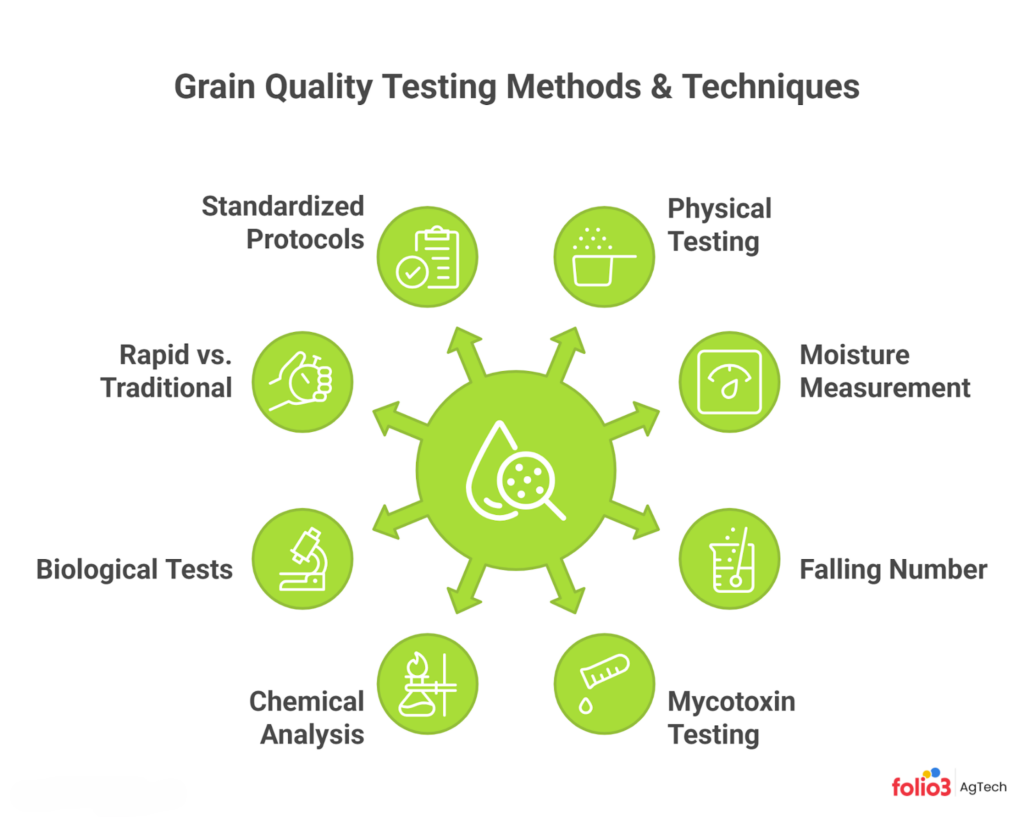
Choosing the right testing method at the right time can save you thousands in rejected loads. Below is every major technique from portable meters to lab-grade instruments.
Physical Tests
Physical grain quality testing starts with test weight, measured using FGIS-approved devices that determine weight per bushel. High test weight signals sound kernels and typically translates to better milling extraction and feed conversion. Inspectors also evaluate kernel size uniformity and bulk density, both of which affect processing efficiency and end-product consistency.
Moisture Measurement
Portable moisture meters are your first line of defense. These handheld devices give you a field-side reading in seconds, helping you decide whether grain is ready for safe storage. For official purposes, the Unified Grain Moisture Algorithm (UGMA) calibrates electronic meters against laboratory oven methods, ensuring consistency across the supply chain. Getting moisture right is non-negotiable. Even a percentage point above the safe threshold accelerates mold growth and invites spoilage.
Recommended moisture levels for safe storage:
| Storage Period | Corn (%) | Wheat (%) | Soybeans (%) |
| Sept.–Oct. | 14 | 13.5 | 12 |
| Nov.–Mar. | 15 | 14 | 13 |
| Apr.–May | 14 | 13 | 12 |
| June–Aug. | 13 | 12.5 | 11 |
Falling Number and Mycotoxin Testing
The falling number test quantifies alpha-amylase enzyme activity. A low value means the grain has suffered sprout damage, which reduces baking quality and pasta firmness. Buyers typically consider values above 350 seconds as sound grain. For mycotoxin screening, ELISA kits and lateral flow strips deliver rapid, on-site results for deoxynivalenol (DON) and other toxins. These rapid kits can return results in as little as 5 to 15 minutes, making them invaluable during harvest when decisions must happen fast.
Chemical Analysis: Protein, Oil, and Starch
Near-infrared (NIR) spectroscopy has become the industry standard for rapid, non-destructive measurement of protein, oil, and starch content. Whole-grain NIR analyzers can process a sample in under a minute without any sample preparation. Fourier-transform infrared (FTIR) instruments offer even greater precision for research and reference labs. Whatever technology you use, regular calibration against certified reference samples is essential to maintain accuracy.
Biological and Contaminant Tests
For seed grain, germination testing confirms viability. Insect damage assessments identify infestations before they spread through a bin. Screening for pesticide residues and additional mycotoxins rounds out a comprehensive quality profile. Lab test packages typically cost between $50 and $100 and return results within a few days, while rapid on-site kits deliver answers in minutes at a lower per-test cost.
Rapid vs. Traditional Methods
Portable NIR analyzers and smartphone-based grain scanners are closing the accuracy gap with traditional laboratory instruments. In-line NIR sensors installed in grain handling equipment now provide continuous, real-time data during loading and unloading. The trade-off is simple: rapid methods give you speed and convenience on-farm, while certified lab tests provide the legal and contractual certainty required for official grading and dispute resolution.
Standardized Protocols
International grain trade depends on standardized protocols from ISO, ASTM, and GAFTA. Certified laboratories and proper sampling procedures are the foundation of credible results. A test is only as good as the sample it starts with, so representative sampling, using probes at multiple depths and locations, is critical for accurate grain quality analysis.
Managing Grain Quality on the Farm and Through the Supply Chain
Most quality losses happen between the combine and the buyer. Here is how to protect your grain at every step of the journey.
Pre-Harvest and Harvest Practices
Grain quality assurance starts before the combine rolls. Timing your harvest to the optimal moisture window reduces the need for excessive drying and minimizes field losses. During threshing, adjusting cylinder speed and concave clearance to match crop conditions prevents kernel breakage. Cleaning equipment between fields and between crops eliminates cross-contamination. Remember, every broken kernel is a gateway for mold, bacteria, and accelerated spoilage.
On-Farm Storage: The S.L.A.M. Approach
The S.L.A.M. framework acts as a practical checklist for on-farm grain storage. It stands for Sanitation, Loading, Aeration, and Monitoring:
- Sanitation: Clean bins and surrounding areas thoroughly before loading. Remove old grain, dust, and debris to eliminate insect harborage. Treat bin walls and floors with approved insecticides if needed.
- Loading: Fill bins evenly and avoid overfilling. Fine material and broken kernels naturally segregate to the center, creating dense pockets that restrict airflow and become hotspots. Core the bin after filling, meaning withdraw several loads from the center, to redistribute fines. Level the grain surface for uniform airflow.
- Aeration: Use fans to equalize temperature and moisture throughout the grain mass. Run fans during cool, dry nights to bring grain temperature down. Target storage temperatures of 35–45°F during the winter months to slow insect activity and reduce respiration.
- Monitoring: Check grain temperature, moisture, and carbon dioxide levels regularly. Use temperature cables and insect traps to catch problems early. A 5°F rise in temperature at any point in the bin is a warning sign that demands immediate investigation.
Adopting sound grain storage best practices is one of the highest-return investments a grain farmer can make.
Handling and Transport
Every transfer point, from bin to truck, truck to elevator, elevator to barge, introduces the risk of contamination and mechanical damage. Minimize the number of handling steps, inspect conveying equipment for wear, and keep transport vehicles clean and dry. Shipments can be rejected outright if foreign matter or moisture exceeds contract specifications, so protecting quality during transit directly protects your revenue.
Quality Control at Elevators and Mills
Commercial elevators sample and test every incoming load, then segregate grain by grade, moisture, and protein. Modern facilities use online NIR systems to monitor tempering, moisture, and protein continuously, optimizing blends for milling or export. As a producer, understanding how elevators grade your grain gives you the leverage to present loads that consistently meet or exceed target specifications.
Digital Solutions and Emerging Technologies for Grain Quality
Technology is shifting grain quality monitoring from reactive to predictive. Here is what is available now and what is coming next.
IoT Sensors and Real-Time Monitoring
Sensor systems that measure temperature, relative humidity, and CO₂ concentration are transforming how grain is tracked during transport, drying, and storage. Scientific Reports demonstrated that sensor data combined with machine-learning models could predict safe transport times. It is approximately 43 hours at 20% moisture content and safe storage durations of around 42 days in metal silos versus 24 days in canvas silos for corn.
The study also found that intergranular relative humidity was the dominant factor influencing equilibrium moisture content and dry matter losses. These findings underscore just how much precision IoT in agriculture can deliver when deployed correctly.
Machine-Learning Models for Quality Prediction
There are multiple algorithms, including multiple linear regression, artificial neural networks (ANN), decision trees, and random forest models. Meanwhile, neural networks predict moisture content most accurately, while random forest models excelled at predicting apparent specific mass and electrical conductivity. For grain operations, it means AI can forecast quality trends, detect anomalies before they cause visible damage, and support faster, more confident decision-making across the supply chain.
IoT and Edge Computing for Inventory Management
Modern bin monitoring systems use LiDAR for volume measurement, combined with CO₂, temperature, and humidity sensors to assess grain condition in real time. Edge computing processes sensor data locally, reducing latency and enabling alerts even in areas with limited connectivity. These systems address two persistent challenges of on-farm grain monitoring, which are the lack of real-time data and the physical safety risks of manually checking bins. Pairing these sensors with a robust farm inventory management system turns raw data into forecasts and actionable insights.
Drones, Satellites, and Remote Sensing
Drone-based platforms equipped with multispectral and thermal cameras can detect pest damage, moisture stress, and nutrient deficiencies before harvest. It helps you anticipate grain quality rather than react to it. High-resolution aerial imagery also supports variable-rate applications that improve crop uniformity. For a deeper look at how UAVs are reshaping field-level decisions, explore this guide on drones in farming.
Blockchain and Traceability
Blockchain technology is gaining traction for supply-chain traceability and compliance with quality regulations. By recording test results, sensor data, and transaction histories on an immutable ledger, blockchain gives buyers verifiable proof of product integrity. For exporters dealing with multiple international standards, this transparency reduces disputes and accelerates customs clearance.
Regenerative and Sustainable Farming Practices
Regenerative techniques in agriculture, such as cover crops, diversified crop rotations, and reduced tillage, improve soil health. It supports stronger, more uniform grain development. As markets increasingly reward sustainability credentials, integrating these practices with AI-enabled precision agriculture positions you to capture both quality premiums and sustainability incentives.
Linking Grain Quality to Profitability and Market Access
Quality is not just a technical metric. It is the single biggest lever on your per-bushel return. Here is how it translates directly to your bottom line.
Premium Pricing and Discounts
Meeting or exceeding grade specifications opens the door to premium prices, long-term forward contracts, and repeat business. Buyers pay more for soybeans with higher protein and oil content. For wheat that consistently hits target protein levels, and for corn with low mycotoxin readings.
On the flip side, missing specifications results in per-bushel discounts or outright rejection. In Q4 2024, U.S. grain inspections for export reached 42.8 million metric tons, a 25% increase over the same period in 2023, demonstrating just how much volume moves through quality checkpoints.
Cost of Quality Control vs. Savings
Investing in testing equipment, sensor networks, and proper storage management carries upfront costs, but the return is measured in reduced spoilage, lower shrinkage, and fewer mycotoxin-related rejections. Predicting safe storage times prevents quality losses that would otherwise erode net revenue silently over weeks. A bin of corn that loses just 1% of its dry matter to respiration represents real dollars lost from your harvest.
Role of Contracts and Buyer Requirements
Most grain contracts specify thresholds for moisture, test weight, protein, and foreign material. Meeting these parameters consistently ensures shipments are accepted without penalty and fosters the kind of buyer trust that turns one-time transactions into long-term partnerships. Understanding your buyer’s requirements before you plant, and managing quality toward those targets throughout the season, is the foundation of grain quality optimization.
Integrating ERP and Digital Tools for End-to-End Grain Quality Management
Folio3 AgTech’s Grain ERP is designed specifically for cooperatives, elevators, traders, and producers who need a single platform to manage the full grain lifecycle. What sets this platform apart is its ability to integrate with the sensors and testing devices you already use, such as NIR analyzers, moisture sensors, and LiDAR units. The ERP consolidates data from on-farm sensors, lab tests, and supply-chain transactions, then applies predictive analytics to flag deviations before they cause losses.
Key capabilities include:
• Bin clean-out scheduling and load submission for growers
• Multi-site inventory heatmaps with real-time volume visibility
• Real-time bin monitoring for temperature, moisture, and volume
• Moisture and shrink management to protect grain value
• Grain quality and grade tracking aligned to FGIS standards
• Regulatory and compliance logging for audit readiness
• Buyer profitability analysis for smarter contract decisions
• Offline mode for remote sites with limited connectivity
Unified data management enables you to meet grade specifications, monitor storage conditions, and document compliance with FGIS and ISO standards, all from a single dashboard. For operations looking for a broader agriculture ERP platform, the system scales to cover financial management, supply chain logistics, and HR alongside grain-specific workflows.
Best Practices for Farm-to-Silo Grain Quality Assurance
A simple, actionable checklist keeps your team aligned on quality from planting through delivery. Print this section and post it in your shop.
1. Know Your Standards: Identify the grade requirements and buyer specifications for your grain and target market before the season starts. Knowing the targets lets you manage toward them.
2. Test Regularly: Use portable moisture meters and protein testers on-farm. Send representative samples to certified labs for official grading, especially before large deliveries or export shipments.
3. Implement S.L.A.M: Sanitize bins, load evenly, manage aeration actively, and monitor grain temperature and moisture throughout the storage period.
4. Use Digital Tools: Adopt sensors, IoT devices, and ERP software to track grain condition and inventory in real time. Integrate test results for data-driven decisions.
5. Stay Informed: Keep up with emerging technologies like AI-powered quality prediction, drone-based crop assessment, and blockchain traceability. Attend workshops and work with extension services.
6. Engage Buyers: Communicate your quality control program to buyers proactively. Be ready to appeal test results when you believe they do not reflect your grain’s true quality.
7. Plan for the Future: Budget for upgrades like additional sensors, NIR analyzers, and ERP integration. Develop a road map for incorporating predictive analytics and big data in agriculture into your quality management workflow.
Conclusion
Grain quality control is not a one-time checkpoint. It is a dynamic, year-round strategy that spans from seed selection and harvest timing to storage management and final delivery. Understanding official standards, employing the right testing techniques at the right moments, and leveraging modern technologies are what separate operations that consistently earn premiums from those that settle for discounts.
The opportunity is clear. Whether you are a farmer protecting a single season’s investment, a cooperative managing millions of bushels, or an agribusiness executive competing in global export markets, data-driven grain quality management is the path to higher profitability, stronger buyer relationships, and a more resilient operation.
Start with the fundamentals, build on them with technology, and treat every bushel like the investment it is.
FAQs
What Is the Most Important Factor in Grain Quality Control?
Moisture content is widely considered the single most critical factor because it influences mold growth, mycotoxin development, and overall storability. Keeping moisture within safe thresholds protects every other quality attribute from degradation during storage and transport.
How Often Should You Test Grain in Storage?
Check temperature and moisture at least every two weeks during warm months and monthly during winter. If sensors detect a temperature spike of 5°F or more, test immediately. More frequent monitoring catches problems before they cause irreversible damage.
Can AI Really Predict Grain Quality Before Visible Damage Occurs?
Yes. Machine-learning models trained on sensor data, such as temperature, humidity, and CO₂ levels, can forecast quality trends and flag unsafe conditions well before damage becomes visible. Artificial neural networks and random forest algorithms have demonstrated strong predictive accuracy.
What Is the S.L.A.M. Method for Grain Storage?
S.L.A.M. stands for Sanitation, Loading, Aeration, and Monitoring. Developed by the University of Tennessee, it is a practical four-step framework that helps farmers maintain grain quality in on-farm storage bins by addressing the main causes of spoilage and insect infestation.
How Does an ERP System Improve Grain Quality Management?
A grain ERP centralizes data from sensors, lab tests, and supply-chain transactions into one platform. It automates compliance logging, tracks moisture and grade by bin, and provides real-time alerts when conditions deviate. This unified visibility reduces manual errors and helps producers meet buyer specifications consistently.