
Running a grain facility today is nothing like it was two decades ago. The concrete bins and bucket belts are still there, but everything around them has changed. You’re managing data, contracts, margins, and buyer relationships in real time, and the pressure to get it right has never been higher.
This guide walks you through what actually happens at a grain elevator, from the moment a truck pulls onto the scale to the moment a grower gets paid. It covers physical grain handling, inventory challenges like shrink and temperature monitoring. Plus, you’ll discover the financial workflow behind scale tickets and settlements, and the software making it all faster and more accurate.
Whether you’re evaluating your current stack, training new staff, or looking for where your operations are leaking efficiency, this is the resource to keep open.
What is a Grain Elevator? The Backbone of the Ag Supply Chain
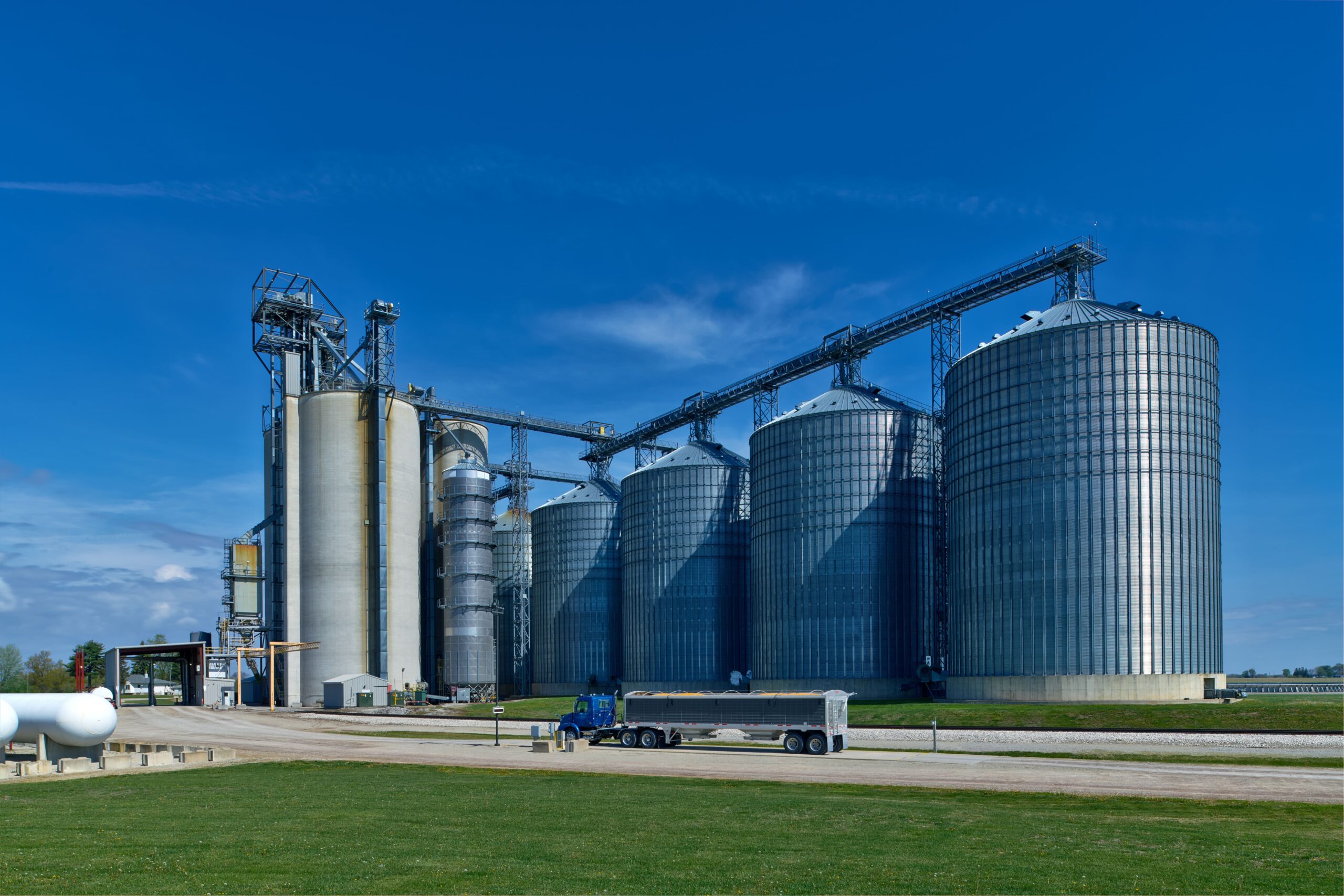
A grain elevator is a facility designed to receive bulk grain, assess its quality, condition it for storage, and move it forward to processors, exporters, or end users. It’s the central node where farm production meets the commercial market.
There are three primary types, each serving a different role:
- Country elevators are located in rural communities and receive grain directly from local farm operations. They’re the first point of contact in the commercial grain system, offering basic grading, storage, and transportation to larger hubs.
- Terminal elevators are high-capacity facilities located near rail corridors, ports, or processing centers. They receive grain from country elevators and prepare it for domestic or export shipment at scale.
- Export elevators sit at port locations and handle the final loading of grain onto vessels for international markets. Their throughput speed and blending capabilities are highly specialized.
The U.S. system holds an enormous volume of grain across these facility types. According to USDA data, combined on-farm and off-farm grain storage capacity totaled 25.48 billion bushels as of December 2024, with off-farm commercial capacity accounting for 11.85 billion bushels of that total.
Storage timing decisions at the elevator level directly affect grower profits. For a deeper look at the crop side, see our ultimate guide to grain farming.
How Tall is a Grain Elevator? (Capacity and Structural Overview)
Country grain elevators typically stand between 70 and 120 feet tall. Terminal elevators can reach 150 feet or more.
Height is not an accident of design; it’s an operational requirement. Grain elevators are built vertically for three practical reasons:
- Gravity-fed operations: Once grain reaches the top of the structure via bucket elevator belts, it moves downward into bins and out to trucks or rail cars entirely by gravity. Less mechanical energy is required.
- Storage footprint efficiency: Tall, narrow concrete bins hold more grain per square foot of land than wide horizontal structures.
- Bucket elevator mechanics: The continuous belt system that lifts grain from the receiving pit to the top of the facility, called the “leg,” functions most efficiently in a tall vertical column.
Country elevators typically hold 30,000 to 1 million bushels. Terminal elevators can hold around 20 million bushels or more. The largest grain facility in the world, in Wichita, Kansas, has a licensed capacity exceeding 22.4 million bushels across 310 concrete tanks, each standing 120 feet tall.
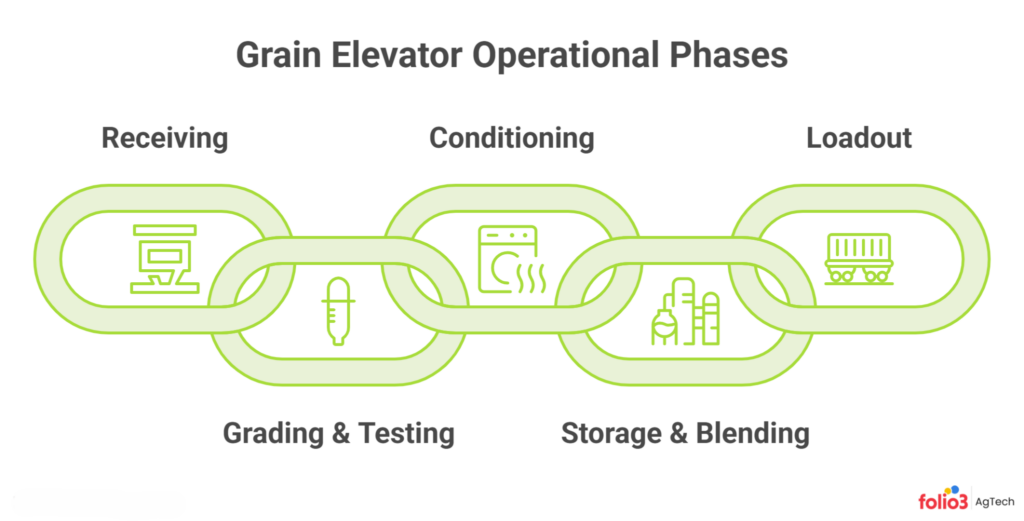
How Does a Grain Elevator Work? The 5 Core Physical Phases
When a farmer pulls onto your scale, they trigger a sequence that most people in agriculture can describe, but few follow all the way through. Here’s what actually happens inside a grain elevator.
Phase 1: Receiving (The Scale and Pit)
The process starts before the truck is empty. The driver stops on the inbound scale, and the gross weight of the truck and grain is recorded. The truck then moves to the work floor, dumps grain into the receiving pit, and crosses the scale again, this time empty. The weight difference is the net bushels received.
Everything downstream depends on this measurement being accurate. Errors at the scale create reconciliation headaches later and erode grower trust fast.
Phase 2: Grading and Testing
While the grain is still in or near the pit, a sample is pulled. Lab technicians or automated probes measure three things:
- Moisture content (expressed as a percentage; corn is typically valued at 15%, soybeans at 13%)
- Test weight (pounds per bushel, which indicates grain density and quality)
- Foreign material (debris, broken kernels, foreign seeds, and damaged grain)
These numbers determine how much dockage as price deductions will be applied when the grower is paid. High moisture or excess foreign material reduces the net value of the load.
Phase 3: Conditioning
High-moisture grain cannot go into storage without treatment. Wet grain ferments and generates heat, which can destroy an entire bin and create safety risks. Conditioning involves two steps:
- Drying: High-moisture grain passes through a dryer to reach storage-safe moisture levels. The drying cost is typically deducted from the grower’s settlement.
- Cleaning: Grain cleaners remove fines, chaff, and foreign material before the grain enters long-term storage.
Both steps protect the value of the inventory sitting in your bins.
Phase 4: Storage and Blending
Once conditioned, grain moves through the elevator leg and the bucket conveyor system to the top of the structure. Distributors at the headhouse direct grain into specific bins based on grade, commodity type, and available space.
Growers do not always segregate grain bins. Most facilities blend grain into larger pools of comparable grade, which simplifies storage management and improves loadout flexibility. The tradeoff is that grower-specific tracking becomes a software challenge rather than a physical one.
Phase 5: Loadout
When grain is sold or shipped, gravity takes over. Gates at the base of each bin release grain through chutes and loading spouts into outbound trucks, railcars (typically 3,500 bushels per car), or barges. The loaded vehicle crosses the outbound scale for final weight verification before leaving the facility.
How to Master Grain Elevator Operations with Inventory and Storage Management
Physical grain movement is only half the job. Once grain is in your bins, a different set of challenges begins. That’s where most grain facility managers spend the bulk of their time.
Bin-by-bin inventory tracking: Every bin holds a different commodity, grade, and volume. Tracking what’s in each bin and reconciling it against scale ticket records is an ongoing discipline. Discrepancies accumulate quickly without consistent record-keeping.
Aeration management: Grain in storage needs consistent airflow to prevent hot spots and moisture migration. Aeration fans run on timed cycles or temperature triggers. Getting this wrong costs you grain quality, sometimes entire bins.
Temperature cable monitoring: Storage bins are equipped with temperature cables spaced vertically through the grain mass. Regular monitoring catches warming trends early, which can signal spoilage, pest activity, or inadequate aeration. Many modern facilities log these readings automatically.
Turning grain: In extended storage, grain is periodically moved bin to bin to redistribute moisture and prevent caking. Each turn is a handling event that must be recorded in your inventory system.
Shrink accounting: Shrink is the weight loss that occurs when high-moisture grain is dried to standard moisture levels. Handling losses from dust and removal of foreign materials typically add another 0.25 to 0.5% on top of moisture shrink. If shrink isn’t built into your inventory workflow, your position reports will show more grain than you actually have. It’s a reconciliation gap that compounds over time and creates grower settlement disputes.
Good farm data management practices apply directly here. Real-time data at every touchpoint is what keeps your inventory position clean.
How to Handle Contracts, Scale Ticketing, and Automated Settlements at Grain Elevators
The physical side of the elevator generates the grain. The financial side generates the revenue and the risk. This is where the biggest operational gains from technology show up.
Scale ticketing as the financial starting point: Every load starts with a scale ticket capturing weight, moisture, grade, commodity, grower identity, and date. Many facilities still run paper-based ticketing, which means manual data entry downstream and slower settlements. Modern facilities integrate scale hardware directly with farm accounting software so ticket data populates the system automatically.
Applying discounts at the scale: Dockage can’t be a manual calculation at scale. When a load comes in at 18% moisture instead of the standard 15%, the software calculates dockage, applies the shrink table, and adjusts the grower’s net bushels automatically before the truck leaves. Getting this right at the ticket level means settlements are accurate before anyone opens a spreadsheet.
Contract matching: A single grower may have grain under a spot sale, a forward contract, and a basis contract simultaneously. Your ticketing system needs to match inbound loads against the correct contract in real time, especially during peak harvest. Misapplied contracts create disputes and delay payments.
Settlement processing: Modern grain ERP systems consolidate scale ticket data, applied discounts, storage fees, and drying charges into a single settlement. EFT eliminates the paper check cycle and speeds up payment. Delays in settlement show up directly in your origination numbers; growers move their business to facilities that pay faster.
If your facility regularly takes two weeks to settle while a competitor settles in two days, you’ll see it in your origination numbers. Connecting your ticketing and settlement workflows removes most of the time lag.
For a broader look at how software integrates financial and physical workflows in agriculture, the benefits of ERP for agriculture piece covers the core value drivers well.
The AgTech Edge: Modernizing Facilities with Software and Automation
The grain industry has relied on spreadsheets and disconnected point solutions for a long time. The facilities moving away from that model are seeing real competitive advantages.
Unattended scale ticketing with RFID: During peak harvest, the scale operator becomes the bottleneck for your entire receiving operation. RFID-enabled systems let pre-enrolled trucks self-weigh, dump, and receive tickets without operator involvement, reducing peak-day congestion without adding headcount.
Real-time inventory visibility: Modern grain management platforms update bin inventory in real time as each ticket is processed. Instead of running a daily position report from yesterday’s data, your team knows exactly what’s in every bin at any moment by commodity, grade, and moisture. That kind of visibility changes how you manage blend decisions, storage offers, and loadout scheduling.
Cloud-based Grain ERP integration: When a scale ticket is generated, it should flow automatically into your accounts payable module for settlement, your inventory module for bin updates, and your contract management module for delivery matching, all in one transaction. Siloed spreadsheets can’t do this. They can’t flag discrepancies in real time or generate a clean Daily Position Report (DPR) without manual assembly.
Business intelligence dashboards: The role of business intelligence dashboards in agriculture is growing fast in grain operations. When your operational data is centralized, you can run margin analysis by commodity. So, track grower origination trends, monitor contract fulfillment rates, and flag storage capacity thresholds without building anything from scratch in Excel.
The impact of broader digital transformation in agriculture is hitting grain elevators alongside every other segment of the industry. Facilities that modernize their data infrastructure now are building a real operational advantage.
Strategic Takeaways to Future-Proof Your Grain Elevators
The grain elevator industry is under pressure from consolidation, tight storage margins, and higher grower expectations. Here’s where your attention should go.
- Close the data gap between physical and financial. If your scale tickets and accounting system don’t talk to each other in real time, you’re running with a built-in accuracy deficit. That integration changes your settlement speed, inventory accuracy, and audit readiness.
- Account for shrink systematically. Shrink is predictable and manageable. Build it into your ticketing workflow, and you reconcile faster at month-end with fewer disputes.
- Build for throughput, not just capacity. More bin space only helps if you can receive, process, and ship efficiently. Unattended ticketing, automated contract matching, and fast EFT settlements show up directly in grower relationships and origination volume.
Looking to modernize your grain facility’s software ecosystem? Folio3 AgTech’s consulting team works with grain operations, agribusinesses, and food supply chain companies to evaluate, implement, and optimize ERP and data management systems. Contact us to discuss your grain facility’s needs.
For a broader perspective on how ERP fits into agricultural operations management, our ERP implementation in agriculture guide covers the selection and rollout process in detail.
FAQs
What Types of Grain Does a Commercial Elevator Handle?
Most commercial grain elevators handle corn, soybeans, wheat, grain sorghum, oats, and barley. Accepted commodities depend on regional production, facility equipment, and buyer contracts. Country elevators in the Corn Belt typically focus on corn and soybeans.
How Long Can Grain Be Stored in an Elevator?
With proper aeration, temperature monitoring, and moisture control, grain can be stored safely for six to eighteen months. Duration depends on incoming grain quality, conditioning equipment, and market conditions. High-moisture or damaged grain degrades faster regardless of storage practices.
What is Dockage in Grain Elevator Settlements?
Dockage refers to price deductions applied based on quality deficiencies: excess moisture, high foreign material, low test weight, or damaged kernels. These are calculated at the scale and applied automatically to the grower’s settlement in modern ticketing systems.
How Do Basis Contracts Work at a Grain Elevator?
A basis contract lets a grower lock in the basis, the spread between local cash price and a futures reference, without setting the full price. The grower delivers grain, then establishes the futures price separately when market conditions favor it. It gives producers more flexibility to manage price risk.
What is a Daily Position Report (DPR) in Grain Elevator Operations?
A DPR is an end-of-day summary showing each bin’s beginning inventory, inbound receipts, outbound movements, shrink adjustments, and ending balance. Operations directors use it to verify that physical inventory matches booked positions. Modern elevator software generates DPRs automatically.
What is the Difference Between a Spot Sale and a Forward Contract?
A spot sale locks in the current cash price on delivery day. A forward contract sets a fixed price for future delivery, letting growers capture favorable market conditions ahead of harvest. Both contract types can coexist within a single grower account at the same facility.