
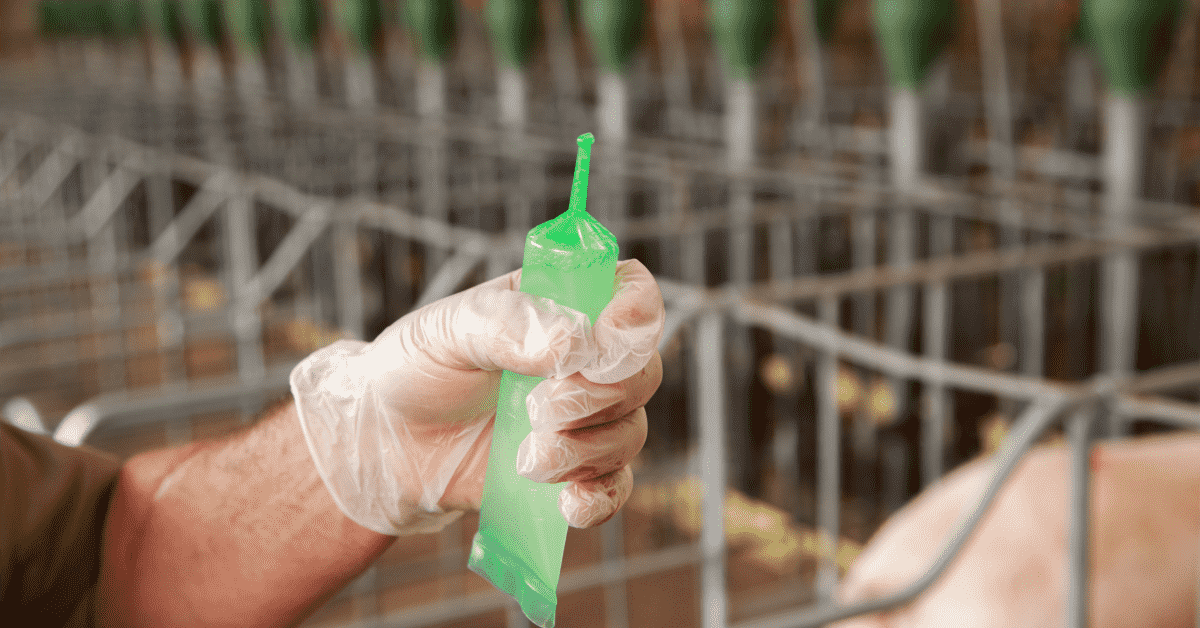

Collecting high-quality livestock sperm is the foundation of every successful artificial insemination (AI) program. Without proper animal sperm collection and processing, even the best genetics never reach your cows.
AI gives you the power to spread a single elite sire’s genetics across thousands of females while keeping disease transmission risks low. According to the NAAB 2025 annual report, NAAB members alone accounted for nearly 69 million total semen units reported across all categories in 2024. That kind of scale is only possible because of reliable cow sperm collection and processing systems.
What is animal sperm collection? Animal sperm collection (also called semen collection) is the controlled extraction of viable ejaculates from male livestock, primarily bulls, rams, and boars, for evaluation, dilution, and preservation in AI programs. The three main methods include the artificial vagina (AV), electroejaculation (EE), and transrectal massage.
Primary Methods of Semen Collection in Livestock
Choosing the right method of semen collection depends on your sire, your setup, and your end goal. Here is a breakdown of how the main livestock sperm collector techniques compare in practice.
1. The Artificial Vagina (AV) Method: The Gold Standard for Cattle
If you ask any experienced livestock breeding technician what method produces the best semen, they will point to the artificial vagina every time. This is how they collect cow sperm in most professional AI studs.
The AV consists of a rigid outer cylinder lined with an inner rubber sleeve. Warm water (typically 45 to 50°C at fill, settling to 41 to 44°C at the inner lumen) fills the space between the two layers, simulating body temperature. An insulated collection cone channels the ejaculate into a sterile graduated tube.
Why does this method dominate? Because it delivers:
- Highest ejaculate volume and concentration compared to all other methods
- Minimal stress on the bull when properly conditioned
- Cleanest samples with the lowest contamination risk
The trade-off is that it requires a bull trained to mount a teaser animal or phantom, plus skilled handling personnel.
2. Electroejaculation (EE): Indications, Protocols, and Ethics
Electroejaculation uses a multi-electrode probe inserted into the rectum. The probe delivers low-voltage, pulsed electrical currents that stimulate the pelvic sympathetic and parasympathetic nerves, triggering ejaculation without the need for the bull to mount.
EE is your go-to option when dealing with:
- Range bulls that have never been conditioned for AV collection
- Injured or refractory sires unable to mount
- Unconditioned bulls in field veterinary settings
Animal welfare matters here. You can minimize discomfort by using proper sedation or analgesia where indicated, starting with low voltage and ramping up gently, and keeping stimulation cycles short. Many countries now regulate EE protocols to ensure humane handling.
3. Transrectal Massage Technique: A Non-Invasive Alternative
This method involves rhythmic manual massage of the ampullae and seminal vesicles through the rectal wall. It works best for bulls that cannot mount or do not tolerate electroejaculation, and for quick veterinary diagnostic sampling.
The downside? Samples tend to be lower in concentration and carry a higher risk of contamination with urine or debris. This makes transrectal massage a useful backup, not your primary collection method.
4. Post-Mortem Epididymal Sperm Recovery: Emergency Harvesting
When a genetically elite sire dies unexpectedly, you can still recover viable sperm from the cauda epididymis. The clock starts ticking immediately. You need to get the testicles into cold-chain storage and extract sperm within 6 to 12 hours for best results. While not routine, this emergency protocol has saved irreplaceable genetics many times.
Table 1: Comparison Matrix of Livestock Semen Collection Methods
| Method | Ideal Animal Profile | Semen Quality | Stress Level | Equipment Required | Primary Pros | Primary Cons |
| Artificial Vagina | Trained, mountable bulls | Highest volume and concentration | Low | AV unit, phantom/teaser, water bath | Gold-standard quality, low stress | Requires trained bull and skilled handler |
| Electroejaculation | Range, unconditioned, injured bulls | Moderate, may be dilute | Moderate to high | EE probe, power source, collection tubes | Works on untrained bulls, field-portable | Welfare concerns, potentially dilute samples |
| Transrectal Massage | Bulls unable to mount or tolerate EE | Lower concentration | Low to moderate | Gloves, collection vessel | Non-invasive, simple equipment | Lower density, contamination risk |
| Epididymal Recovery | Deceased high-value sires | Variable | N/A (post-mortem) | Dissection tools, cold storage | Salvages elite genetics | Time-sensitive, limited quantity |
Pre-Collection Preparation & NAAB/CSS Biosecurity Standards
Proper preparation is what separates a usable ejaculate from a wasted one. Here is what your cattle sperm collection protocol should include before the bull even enters the collection area.
- Sire Preparation and Teasing: Sexual stimulation through false mounts and brief restraint in sight of a teaser animal increases sperm count and ejaculate volume. Two to three false mounts over 10 to 15 minutes is a common recommendation.
- Hygiene Protocols: Trim the sheath hair, wash the preputial opening with warm sterile saline, and dry it thoroughly. It prevents bacterial contamination that can tank your post-thaw motility.
- NAAB/CSS Biosecurity Guidelines: Bulls entering collection facilities must be screened for diseases including Trichomoniasis, Campylobacteriosis, BVD, and Leptospirosis. The NAAB’s Certified Semen Services (CSS) program sets the biosecurity standards that protect both the sire and the receiving herd.
- Equipment Sanitation: All AV tubes should be autoclaved. Use single-use sterile liners and maintain closed collection systems to keep samples free from environmental pathogens.
Step-by-Step Semen Processing Methods in Cattle
Processing is where your raw ejaculate becomes a product ready for storage, shipment, and insemination. Every step in this sperm collection and processing chain must protect cell viability.
Step 1: Ejaculate Transfer and Thermal Protection
Move the collected semen immediately into a 37°C water bath or thermal block. Protect it from direct light and cold drafts. Even brief exposure to temperatures below 30°C can cause irreversible cold shock to the sperm cells.
Step 2: Extender Selection, Dilution, and Antibiotic Addition
The extender is the solution you mix with the raw semen to keep sperm alive during cooling and freezing. A good extender provides:
- Energy sources like glucose or fructose to fuel cell metabolism
- pH buffers such as TRIS or citrate to maintain a stable environment
- Cryoprotectants like glycerol to prevent ice crystal damage during freezing
- CSS-approved antibiotics including Tylosin, Gentamicin, Spectinomycin, and Lincomycin to control bacterial growth
You will choose between egg yolk-based extenders (the traditional option) and soy lecithin-based non-animal alternatives. Dilution ratios depend on raw sperm concentration. High-density ejaculates typically get a two-step dilution, while lower-concentration samples may use a single-step approach.
Step 3: Cooling and Equilibration Protocols
Cooling is not something you rush. The target is to bring the temperature from 37°C down to 4°C over 2.5 to 4 hours at a controlled rate. Once at 4°C, the semen enters an equilibration phase where glycerol penetrates the sperm cells. This step is critical for freeze survival.
Step 4: Straw Packaging and Liquid Nitrogen Freezing
After equilibration, automated machines print identification details and fill 0.25 mL or 0.5 mL straws. Straws are then placed on racks suspended above liquid nitrogen at around -120°C for vapor freezing. After a set hold time, they are plunged directly into liquid nitrogen tanks at -196°C for long-term storage.
That’s where your investment in precision livestock farming technologies pays off. Automated filling and freezing lines reduce human error and improve straw-to-straw consistency.
Table 2: Time and Temperature Control Checklist for Cattle Semen Processing
| Process Phase | Target Temperature | Duration/Hold Time | Critical Risk to Avoid |
| Post-collection transfer | 37°C | Immediate | Cold shock from temperature drop |
| Extender addition and dilution | 37°C (match semen temp) | 5 to 10 minutes | Osmotic shock from rapid dilution |
| Controlled cooling | 37°C → 4°C | 2.5 to 4 hours | Rapid cooling causing membrane damage |
| Equilibration at 4°C | 4°C | 2 to 4 hours | Insufficient glycerol penetration |
| Vapor freezing | -120°C | 7 to 10 minutes | Uneven freezing rates |
| Liquid nitrogen immersion | -196°C | Long-term storage | Tank nitrogen level dropping |
Advanced Quality Control to Evaluate Livestock Sperm Viability
Even a perfectly collected and processed sample means nothing if you do not verify its quality. Here is how to evaluate your livestock sperm at every level.
Macroscopic Evaluation
Start with the basics. Measure ejaculate volume, note the visual density and color (a cream or milky appearance indicates good concentration), and check for any signs of blood or pus contamination.
Microscopic Evaluation
- Gross Wave Motion: Place a drop on a warm slide and observe the swirling activity under low magnification. Rate it on a 0 to 5 scale. A score of 3 or higher is generally acceptable for processing.
- Individual Progressive Motility: Assess the percentage of sperm moving forward in a straight line. Most AI centers require at least 30% progressive motility post-thaw.
- Sperm Concentration: Use a photometer, hemocytometer, or fluorometer to count cells per milliliter. It determines your dilution ratio.
Morphology and Acrosome Integrity
Differential staining techniques like Eosin-Nigrosin let you count normal sperm versus those with head, midpiece, or tail abnormalities. High abnormality rates (above 30%) signal potential fertility problems. Understanding EPDs in animal science alongside semen quality data gives you a fuller picture of a bull’s true breeding value.
AgTech Integration
Computer-Assisted Sperm Analysis removes human bias from the equation. CASA systems measure specific parameters like VCL (curvilinear velocity), VAP (average path velocity), and LIN (linearity). These objective measurements give you repeatable, data-driven results that hold up across technicians and labs.
Pairing CASA with livestock management software lets you track sire-level semen performance trends over time, flag declining quality early, and make smarter donor selection decisions.
Troubleshooting Common Semen Collection and Processing Challenges
Not every collection goes perfectly. Here are the most common problems and how to fix them quickly.
Table 3: Diagnostic and Troubleshooting Matrix for Livestock Breeders
| Observed Issue | Potential Root Cause | Immediate Corrective Action |
| Urine contamination in ejaculate | Improper AV temperature, inadequate teasing, neurological issue | Adjust AV temperature, extend sexual prep time, rule out nerve damage |
| Low motility post-thaw | Cooling rate too fast, extender mismatch, glycerol imbalance | Audit cooling curve, test alternative extender, recalibrate glycerol levels |
| Low ejaculate volume | Insufficient sexual preparation, overuse of the sire, poor nutrition | Increase false mounts, space collections further apart, review the bull’s diet and body condition score |
| Aspermia or refusal to mount | Pain, injury, poor libido, unfamiliar environment | Examine bull for lameness or injury, allow acclimation, consider EE as alternative |
| High abnormal morphology rate | Testicular heat stress, toxin exposure, infection | Check for fever history, review vaccine schedule compliance, test for reproductive infections |
| Bacterial contamination | Dirty equipment, poor sheath hygiene | Enforce sanitation SOPs, use single-use liners, reculture and discard contaminated batches |
Conclusion and Strategic Takeaways for Livestock Producers
Successful animal sperm collection comes down to four pillars: proper sire conditioning, strict thermal management from collection through freezing, hygienic extension practices, and rigorous quality evaluation at every step. Skip any one of these, and you risk wasting valuable genetics.
Looking ahead, the future of cattle reproduction lies in pairing elite semen collection protocols with sexed semen technology and genomic selection. Tools like cattle IVF software and breeding management systems are making it easier to track every straw from collection to conception.
If you are ready to upgrade your on-farm collection protocols or implement a digital tracking system for your semen inventory, connect with a reproductive technology specialist to get started.
FAQs
How Many Times Can You Collect Semen From a Bull Per Week?
Most AI centers collect from a mature bull two to three times per week. Overcollection reduces sperm concentration and motility. Young bulls under 18 months should be limited to once or twice weekly to maintain ejaculate quality.
What Temperature Should an Artificial Vagina Be for Cattle Semen Collection?
Fill the AV water jacket to 45 to 50°C so the internal lumen temperature settles around 42 to 44°C at the time of collection. Too hot causes cell damage, and too cold leads to ejaculation failure or poor sample volume.
How Long Can Fresh Bull Semen Survive Before Processing?
Fresh bull semen held at room temperature loses viability within 30 to 60 minutes. Moving the sample to a 37°C water bath immediately after collection and beginning the extension process within 15 minutes gives you the best post-thaw results.
What Is the Minimum Motility Required for Commercially Frozen Cattle Semen?
Most AI programs and breed registries require a minimum of 30% progressive motility post-thaw for a straw to be considered commercially viable. Some premium programs set the bar at 40% or higher.
Can You Ship Fresh Semen Instead of Frozen for Cattle Breeding?
Yes, fresh (cooled) semen can be shipped at 4 to 5°C in insulated containers for use within 24 to 48 hours. However, frozen semen stored in liquid nitrogen remains viable for decades, making it the preferred option for long-term genetic preservation and global distribution.
How Does Sexed Semen Differ From Conventional Semen in Collection and Processing?
The collection process is the same, but sexed semen undergoes an additional flow cytometry sorting step that separates X-bearing from Y-bearing sperm. This adds processing time and reduces the number of viable cells per straw, which is why sexed semen straws typically contain fewer sperm per dose than conventional straws.