
Every dollar you skip on prevention comes back as ten dollars in treatment, death loss, and missed performance. An unstructured herd health plan is not just a gap in your operation. It is an active drain on your bottom line.
This guide replaces dense veterinary manuals with a clear, actionable cattle vaccine schedule you can take straight to the chute. Whether you run 50 cows or 5,000, the goal is the same: protect every animal at the right time, with the right product.
A standard beef cattle vaccine schedule follows four foundational stages. It begins with calfhood vaccinations at 2 to 4 months, moves into pre-weaning and weaning boosters, advances through pre-breeding protocols for heifers and cows, and continues with annual maintenance for the entire herd, including bulls.
Why a Structured Cattle Vaccination Schedule Dictates Herd Profitability
Your vaccination schedule for cattle directly shapes your profit margin. Here is why prevention pays more than reaction ever will.
Disease Prevention vs. Treatment ROI
The math on prevention is not complicated. A comprehensive annual vaccine program costs roughly $3 to $10 per cow-calf unit. Compare that to what happens when bovine respiratory disease breaks through an unprotected herd.
BRD alone accounts for approximately 75% of all feedlot morbidity and 50 to 70% of all finishing mortality. The annual cost to the U.S. beef industry is estimated to exceed $1 billion in total losses when you combine death loss, reduced feed efficiency, and treatment expenses. On a per-animal basis, clinical BRD can reduce net returns by $214 per steer, and animals treated three or more times face losses exceeding $385 per head.
Reproductive storms are equally devastating. An IBR or Leptospirosis-driven abortion outbreak in a 200-cow herd can wipe out an entire calf crop segment in weeks.
The Critical Window of Colostral Immunity and Maternal Antibodies
Newborn calves are not defenseless. They receive a concentrated dose of antibodies through colostrum in the first 12 to 24 hours of life. These maternal antibodies provide a temporary immune shield, but they also create a tricky immunological gap.
Here is the challenge: maternal antibodies can actually block the calf’s own immune system from responding fully to early vaccines. If you vaccinate too early, the calf’s passive immunity neutralizes the vaccine before it can trigger an active response. Vaccinate too late, and the calf sits exposed in a window where maternal protection has faded, but active immunity has not been built.
This is exactly why timing your cattle vaccination schedule is so critical. The goal is to deploy vaccines at the point where maternal antibody levels have declined enough to allow the calf’s own immune system to respond, while still providing coverage before natural exposure occurs.
Core vs. Risk-Based Biologicals for Beef Cattle
Not every vaccine belongs in every herd. Understanding what is essential versus situational keeps your vaccine schedule for cattle both effective and cost-efficient.
Core Viral and Bacterial Respiratory Pathogens
Every beef operation, regardless of size or geography, must vaccinate against the “Big Four” viral respiratory agents:
- Infectious Bovine Rhinotracheitis (IBR): A herpesvirus that causes severe respiratory disease and can trigger abortions in pregnant cows.
- Bovine Viral Diarrhea (BVD Types 1 & 2): Suppresses the immune system, creates persistently infected (PI) calves, and causes reproductive failure.
- Bovine Respiratory Syncytial Virus (BRSV): Targets the lower respiratory tract and hits young calves especially hard.
- Parainfluenza-3 (PI3): Often, the initial viral insult opens the door for secondary bacterial pneumonia.
These four agents form the core respiratory complex that drives the majority of BRD losses. Most combination vaccines bundle all four into a single dose, commonly referred to as a “4-way viral” or “5-way viral” product.
Core Clostridial Diseases
Clostridial bacteria live in the soil and the animal’s own gut. They kill fast, often without warning, and treatment is rarely successful once clinical signs appear.
A 7-way clostridial vaccine is the minimum benchmark for every beef herd. It covers Blackleg, Malignant Edema, Black Disease, Red Water (Clostridium haemolyticum in most 7-way products), Enterotoxemia (overeating disease), and related clostridial infections.
When should you upgrade to an 8-way? If your operation is in a region with known Redwater (bacillary hemoglobinuria) risk, or if you use banding as a castration method. Banding creates anaerobic wound conditions ideal for Tetanus, and an 8-way product that includes Tetanus toxoid is a smart addition to your protocol.
Risk-Based Reproductive Pathogens
These vaccines are not universal but become critical depending on your geography, stocking density, and breeding program:
- Leptospirosis (5-way multivalent): Covers the five most common serovars. Lepto is widespread across wet, warm environments and causes abortion storms. Most operations include this as near-core.
- Campylobacter fetus (Vibriosis): Essential in herds using natural service bulls. Vibrio is a venereal disease that causes early embryonic death and extended breeding seasons.
- Trichomoniasis: Another venereal pathogen spread by bulls. Some states mandate Trich testing. If you are purchasing or leasing bulls, this should be part of your livestock breeding program risk assessment.
Chronological Beef Cattle Herd Health Vaccination Schedule
A solid beef cattle herd health vaccination schedule follows the animal’s lifecycle. Each phase has its own targets, timing, and product considerations.
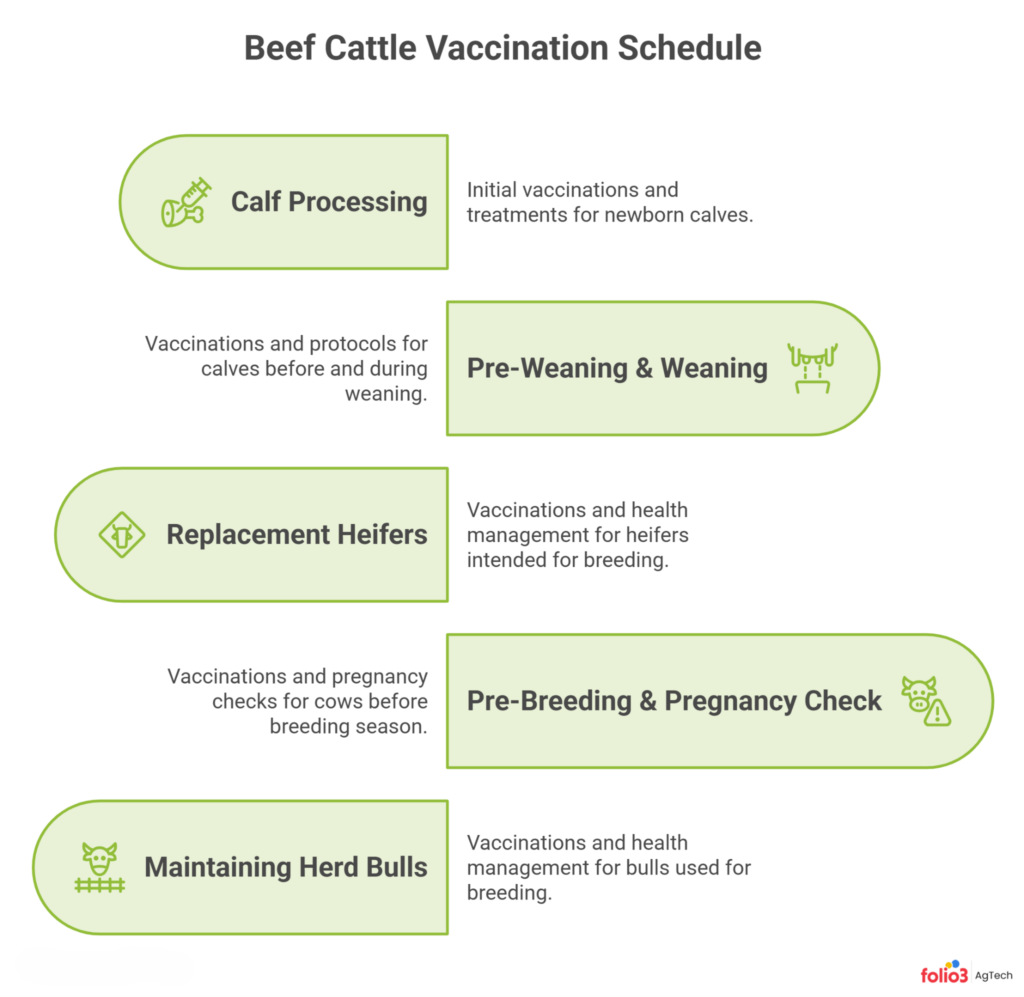
Phase 1: Calf Processing (Birth to Branding/Marking)
Target age: 2 to 4 months
It is your first opportunity to build active immunity. At initial processing, administer:
- 7-way or 8-way Clostridial vaccine (first dose)
- Core viral respiratory vaccine (IBR, BVD, BRSV, PI3)
For young calves still carrying significant maternal antibodies, intranasal vaccines (such as Inforce 3 or Nasalgen 3) are gaining traction. These products deliver the antigen directly to the mucosal surface of the nasal passages, bypassing the maternal antibody blockade that can neutralize injectable vaccines. They stimulate local immunity at the primary point of pathogen entry without the safety concerns of systemic modified-live products in very young animals.
It is also the time for other standard processing tasks like ear tagging and proper identification, castration, and dehorning if applicable.
Phase 2: Pre-Weaning and Weaning Protocols for Calves
Target timing: 3 to 4 weeks before weaning (pre-weaning dose), followed by a booster at or near weaning day
Weaning is the single most stressful event in a calf’s life. The combination of maternal separation, dietary change, social mixing, and often transportation creates the perfect storm for BRD outbreaks.
Your protocol should include:
- Clostridial booster (second dose of 7-way or 8-way)
- 4-way viral respiratory booster (IBR, BVD, BRSV, PI3)
- Mannheimia haemolytica / Pasteurella multocida bacterial respiratory vaccine to cover the bacterial component of BRD
Administering the pre-weaning dose 3 to 4 weeks before actual weaning gives the calf’s immune system time to build protective titers before the stress hits. It is the backbone of any effective calf handling strategy and preconditioning program.
Phase 3: Developing Replacement Heifers (The Bridge to Productivity)
Target timing: 60 days and 30 days before their first breeding season
Replacement heifers represent your herd’s future productivity. Their vaccination protocol needs to build both respiratory and reproductive immunity before they are exposed to bulls or AI:
- Two separate doses of Leptospirosis 5-way and Vibrio (given at 60 days and 30 days pre-breeding)
- Comprehensive MLV respiratory panel (IBR, BVD, BRSV, PI3)
- Brucellosis (Bang’s) vaccination, which is state-mandated (typically administered between 4 and 12 months of age by an accredited veterinarian; check your state’s specific requirements)
Getting these doses administered well before breeding ensures there is no risk of vaccine-induced reproductive issues. This phase is also a good time to evaluate body condition scores to ensure heifers are on track nutritionally for breeding.
Phase 4: Pre-Breeding and Pregnancy Check Guidelines for Mature Cows
Target timing: 30 to 45 days before bull turnout or AI, and again during late-gestation pregnancy checks
Your mature cow herd needs annual boosters to maintain protective immunity:
- Pre-breeding (30 to 45 days before bull turnout): Annual booster for IBR, BVD, Lepto 5-way, and Vibrio.
- Late gestation/pregnancy check: Transition to scour vaccines targeting Rotavirus, Coronavirus, and E. coli K99. These vaccines are given to the cow so she concentrates the antibodies in her colostrum, passing maximum protection to the next calf crop.
Timing scour vaccines correctly, usually 6 to 8 weeks before the expected calving date, directly impacts the colostral antibody concentration your newborn calves will receive.
Phase 5: Maintaining Herd Bulls (The Forgotten Half of the Herd)
Target timing: 30 to 60 days before turnout, aligned with the annual breeding soundness exam (BSE)
Bulls are often overlooked in vaccination planning, but they serve every cow in the herd. An infected bull can spread disease across your entire operation through natural service:
- Annual boosters: IBR, BVD, Lepto 5-way, and Vibrio, matching the cow herd’s reproductive and respiratory profile
- Critical rule: Bulls must never receive Brucellosis vaccines. Brucellosis vaccination in bulls can cause persistent infection and is prohibited.
Align bull vaccinations with the annual BSE window so you handle them once and confirm they are both fertile and immunologically protected before turnout.
Master Blueprint: Quick-Reference Beef Cattle Vaccine Schedule
Bookmark this table for your next processing day. It covers the core cattle vaccination schedule across every management group.
| Cattle Management Group | Recommended Timing | Target Pathogens / Core Vaccines | Vaccine Product Class Consideration |
| Newborn to Branding Calves | 2 to 4 months of age | 7-Way or 8-Way Clostridial, IBR, BVD, BRSV, PI3 | Intranasal or safe injectable MLV |
| Pre-Weaning / Weaning Calves | 3 to 4 weeks pre-weaning and weaning day | Boosters: Clostridial, 4-Way Viral Respiratory + Mannheimia haemolytica | MLV preferred for robust immunity |
| Replacement Heifers | 60 and 30 days pre-breeding | 4-Way Viral, Lepto 5-Way, Vibrio, Brucellosis | MLV (administered more than 30 days pre-breeding) |
| Mature Cow Herd | 30 to 45 days pre-breeding / Preg-Check | Annual pre-breeding: Reproductive/Respiratory Combo. Late gestation: Scour Vaccine | MLV (with strict herd history) or Inactivated |
| Herd Bulls | 30 to 60 days pre-turnout | Annual Booster: IBR, BVD, Lepto 5-Way, Vibrio | Inactivated or safe MLV; No Brucellosis |
Modified-Live (MLV) vs. Killed Vaccines: Choosing the Right Product Class
Selecting the right vaccine type is as important as selecting the right antigen. Here is how MLV and killed products compare for your vaccine schedule for cattle.
Strategic Advantages and Safety Precautions of MLVs
- MLV vaccines stimulate a faster, deeper, and more durable cellular immune response than killed products
- They frequently require only a single initial dose to establish protective immunity in previously vaccinated animals
- MLVs trigger both humoral (antibody) and cell-mediated immune responses, providing broader protection
- Cost per dose is often lower because fewer total doses are needed over the animal’s life
However, MLVs carry rigid safety requirements:
- They can trigger abortions if administered to pregnant cows that do not have a documented, annual MLV vaccination history
- Calves nursing pregnant cows without prior MLV exposure can shed vaccine virus and put those cows at risk
- You must maintain strict, documented annual MLV usage in your herd to safely continue using these products in breeding animals
When to Deploy Killed (Inactivated) Vaccines for Maximum Safety
Killed vaccines offer a complete safety profile regardless of pregnancy status, age, or immune history. They are the safe default when:
- You are vaccinating purchased cattle with an unknown vaccination history
- Pregnant cows have never been on an annual MLV program
- You need to vaccinate during pregnancy without any risk of vaccine-induced abortion
The trade-off is operational. Every naive animal receiving a killed vaccine needs a booster dose 2 to 5 weeks later to build adequate protective titers. It means an extra trip through the chute and additional labor, which adds cost and handling stress.
Maximizing Vaccine Efficacy: Chuteside Storage, Handling, and Herd Factors
Even the best cattle vaccine schedule fails if your chuteside protocols break down. Your storage and handling practices determine whether that $3 dose actually works.
Temperature Controls and Syringe Hygiene Checklist
- Maintain all vaccines between 35°F and 45°F (2°C to 7°C) from the moment they leave the refrigerator until they enter the animal.
- Use a digital data logger inside your cooler chuteside to monitor and document temperature throughout the processing day.
- Follow the “1-Hour Reconstitution Rule” for MLV products: once you mix a freeze-dried MLV vaccine with its diluent, use the entire contents within one hour; after that, the live organisms begin to die, and efficacy drops sharply.
- Never use chemical detergents, soaps, or disinfectants to clean multi-dose, pistol-grip syringes; chemical residues actively destroy live vaccine vectors and render subsequent doses ineffective.
- Sanitize syringes by rinsing with boiling water between uses, and allow them to air dry completely.
- Use a clean, new needle for each animal to reduce injection-site reactions and prevent disease transmission between animals.
Nutritional and Stress Factors Limiting Immune Response
A vaccine is only a blueprint. The animal’s immune system has to build the actual defense structure:
- Energy and protein deficiencies at the time of vaccination significantly depress the immune response; if your cattle are thin or underfed, the vaccine may not generate protective titers.
- Trace mineral deficiencies, specifically Copper, Zinc, and Selenium, are well-documented suppressors of immune function; work with your nutritionist to ensure your feed ration program addresses these critical elements.
- Heavy internal and external parasite loads divert the animal’s immune resources away from vaccine response; deworm strategically before or at the time of vaccination.
- Avoid processing during extreme heat stress or cold stress windows; the physiological burden of thermoregulation reduces the energy available for immune activation.
- Do not combine too many stressful procedures (weaning, transportation, vaccination, castration) into a single event; stagger where possible to give the immune system a fair chance to respond.
Conclusion: Protecting Your Herd Investment
A comprehensive cattle vaccine schedule is not an expense line. It is a risk-management tool that protects your entire ranch asset base, from your cowherd genetics to your calf crop revenue.
While this guide gives you a structured blueprint, a truly effective beef cattle herd health vaccination schedule must be tailored with a local veterinarian who understands your regional disease pressures, pasture conditions, and herd history. Using livestock management software to track vaccination dates, product lot numbers, and individual animal health records strengthens your program with data-driven intelligence.
FAQs
How Often Should You Revaccinate Adult Beef Cows?
Adult beef cows need annual boosters for core respiratory and reproductive vaccines, typically given 30 to 45 days before the breeding season. Scour vaccines should be administered separately during late gestation to maximize colostral antibody transfer for the upcoming calf crop.
Can You Vaccinate a Pregnant Cow With a Modified-Live Vaccine?
You can, but only if the cow has been on a documented, unbroken annual MLV program. If there is any gap in her MLV history, or if her vaccination background is unknown, use a killed vaccine instead. Administering MLV to a naive pregnant cow risks vaccine-induced abortion.
What Happens if You Miss the Pre-Weaning Vaccination Window?
Missing the pre-weaning dose means calves enter the stress of weaning without primed immunity. Vaccinate at weaning and again 2 to 3 weeks later to establish a primary and booster response. This delayed schedule still provides protection, but the calves remain vulnerable during the critical first days post-weaning.
Should Calves Receive Intranasal or Injectable Vaccines First?
Intranasal vaccines are often the better first choice for calves under 4 months because they bypass maternal antibody interference. They stimulate local mucosal immunity right at the point of pathogen entry. Injectable MLV or killed products are then used as follow-up doses at pre-weaning and weaning to build systemic immunity.
Do Preconditioned Calves Command Higher Sale Prices?
Yes. Calves sold through verified preconditioning programs that include documented biosecurity measures and complete vaccination records consistently bring premium prices at auction. Buyers pay more because preconditioned calves have lower BRD risk, reduced treatment costs, and better feedlot performance.