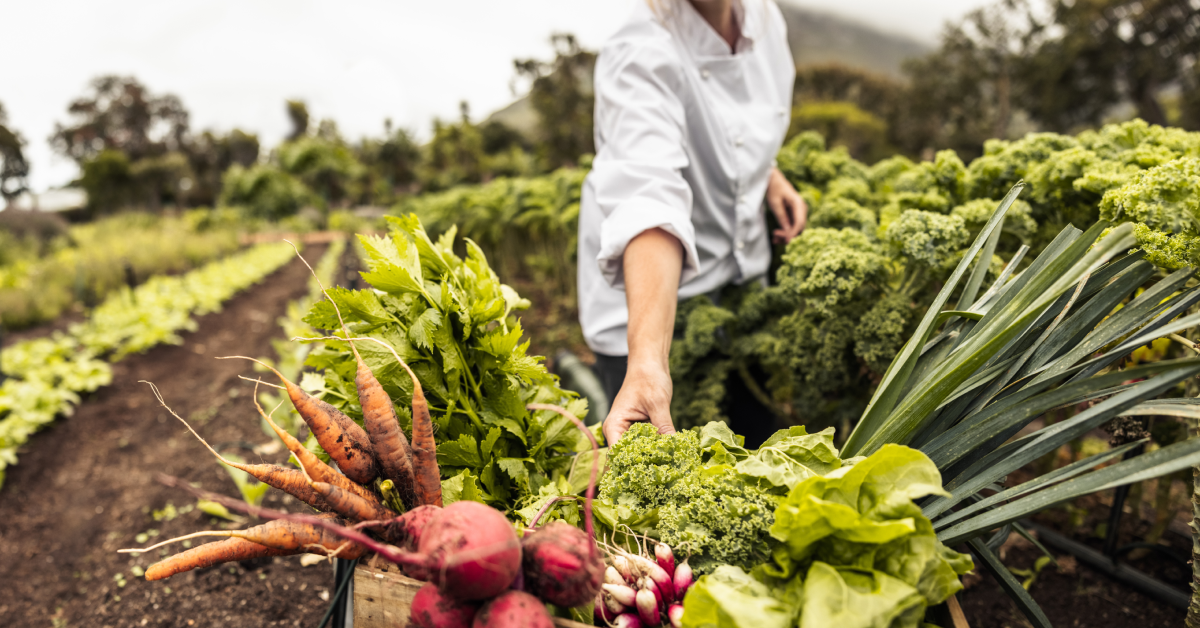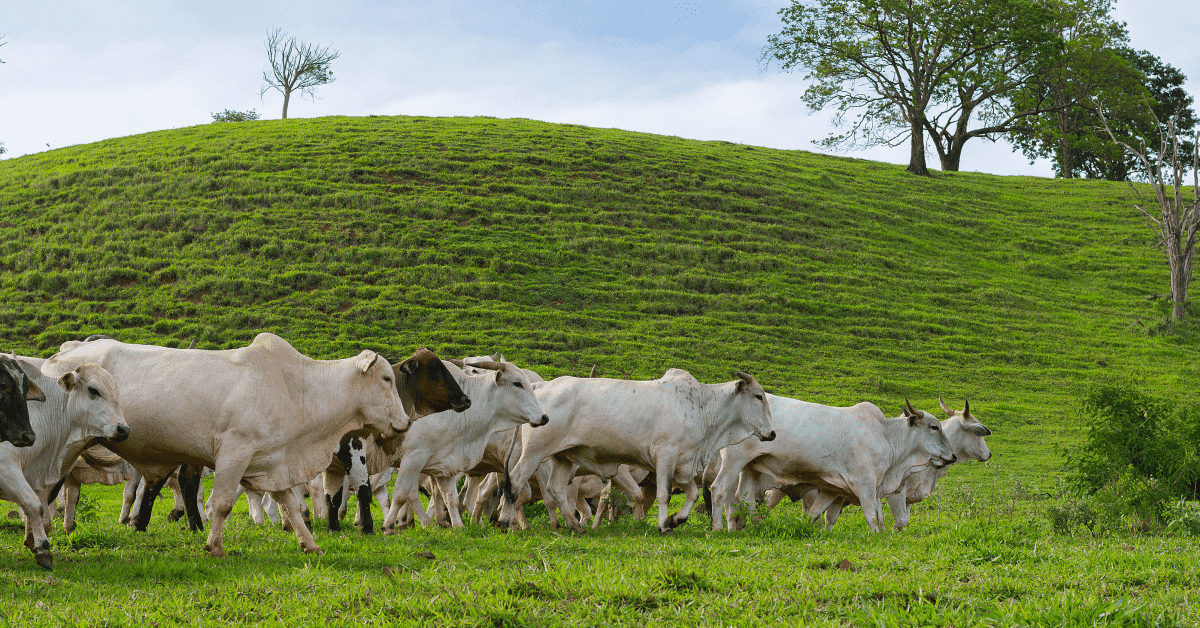


Farming has come a long way from gut-feel planting calendars and paper ledger books. Today, farm data management is at the heart of every profitable operation. It helps you maximize yields, conserve resources, and meet the sustainability demands that buyers and regulators expect. Whether you run a 200-acre family row-crop operation or a 50,000-head feedlot, the way you collect, store, and act on information directly shapes your bottom line.
Data collected from sensors, weather stations, and field machinery allows you to monitor soil moisture, ambient temperature, nutrient levels, and crop health in real time. Major agribusinesses are already investing heavily in digital farming platforms. The global precision farming market was valued at $11.67 billion in 2024 and is projected to reach $24.09 billion by 2030, growing at a 13.1% CAGR, a clear signal that the industry is going all-in on data-driven agriculture.
In this guide, we’ll walk through the core components of a farm data management system, advanced analytics, data governance, and auditor requirements, everything you need to build a data strategy that works for your operation.
The Evolution of Farm Data Management
For decades, farm records lived inside filing cabinets, spiral notebooks, and spreadsheet files that only one person understood. The limitations were real: incomplete records, delayed decisions, and no easy way to share information with lenders, agronomists, or supply-chain partners.
That changed when farm management software solutions emerged to integrate crop planning, livestock records, inventory tracking, and supply-chain coordination into a single platform. Suddenly, you could tie a planting decision in March to a yield result in October and an accounting entry in December, all inside one system.
The rise of IoT in agriculture, cloud computing, and mobile apps pushed the transformation further. Real-time data capture from in-field sensors, drone imagery, and GPS-enabled equipment means you no longer wait until harvest to learn what went wrong. Digital platforms integrate data from multiple equipment types, streamlining collection and enabling growers to visualize and share information with advisors instantly.
Why Farm Data Management Matters? Benefits and ROI
Good data doesn’t just fill reports, it drives revenue. Here’s how structured data management translates into measurable farm profitability.
Resource optimization: Precision agriculture powered by data helps you allocate water, fertilizer, and pesticides precisely where they’re needed, reducing waste and costs. As per reports, variable-rate technology can reduce fertilizer usage by up to 20%, while real-time irrigation scheduling saves up to 30% on water usage.
Improved yields and quality: Monitoring soil characteristics, weather patterns, and crop health lets you act quickly when conditions shift. Data analytics in agriculture transforms raw numbers into actionable insights that boost both yield volume and product quality.
Sustainability: Data-driven practices minimize environmental impact by conserving resources and reducing chemical usage. Precise input application means less runoff, lower carbon footprints, and farming methods that align with consumer and regulatory expectations.
Profitability: Efficient workflows and informed decisions help identify your most profitable crops, adjust strategies quickly, and improve margins. When you know your per-acre cost of production in real time, you stop guessing and start optimizing.
Traceability and transparency: Detailed records on inputs, operations, and outputs support consumer demand for transparency and help satisfy retailer requirements. A well-maintained farm record-keeping system can turn a complex audit into a straightforward report.
Risk reduction: Predictive models allow farmers and lenders to anticipate yield variability, pest outbreaks, and credit risk. Financial platforms use proprietary data to build models for credit-strength prediction, yield forecasting, agronomic risk analytics, and farmland valuation. As a result, it reduces uncertainty for everyone in the value chain.
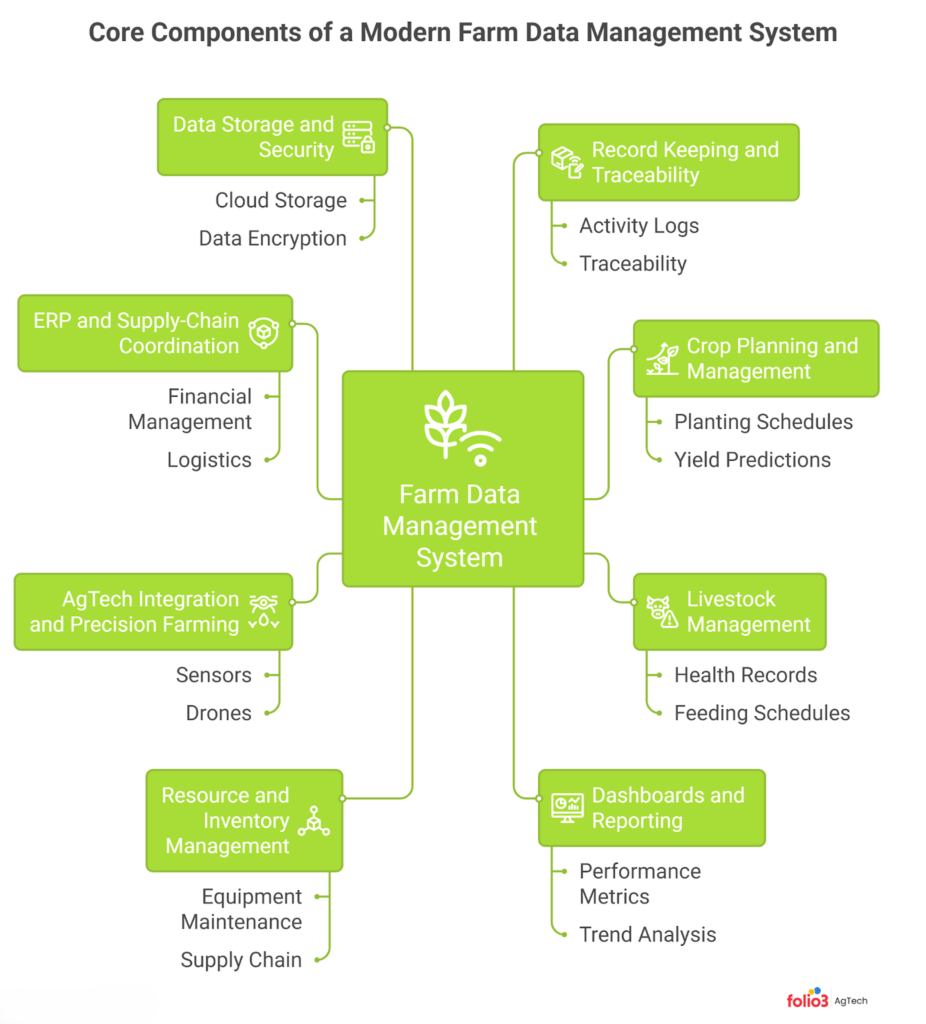
Core Components of a Modern Farm Data Management System
A farm data management system is only as strong as its modules. Here are the building blocks that make up a complete, production-ready platform.
Record Keeping and Traceability
Accurate records of pesticide applications, crop rotations, and livestock health are non-negotiable for compliance and traceability. A good system lets you maintain detailed records, meet retailer requirements, and demonstrate sustainability without spending hours on manual data entry. Investing in dedicated farm record keeping software ensures every input and output is logged automatically.
Crop Planning and Management
Tools that help plan crop cycles using historical data, soil conditions, and weather forecasts give you a competitive edge. Modules for crop management support resource allocation, rotation planning, and input scheduling, improving profitability season after season.
Livestock Management
Dedicated livestock modules enable tracking of feed inventory, health records, breeding schedules, and market prices. A purpose-built livestock management software platform improves animal welfare, reduces labor overhead, and centralizes decision-making across your herd.
Dashboards and Reporting
User-friendly interfaces with customizable dashboards give managers a quick overview of financial performance, inventory levels, and field activities. Reporting tools generate insights for stakeholders from your field crew to your lender, so everyone works from the same data.
Resource and Inventory Management
Systems that track chemicals, seeds, equipment, and supplies in real time help you reduce waste. Plus, they avoid costly shortages during critical windows like planting and harvest.
AgTech Integration and Precision Farming
Advanced modules integrate GPS mapping, drones, soil sampling, and irrigation scheduling. Data from IoT sensors, weather stations, and UAVs provide real-time surveillance, early detection of crop stress, and targeted resource application. It moves you from reactive farming to proactive management.
ERP and Supply-Chain Coordination
Some systems include ERP modules that integrate finance, logistics, and procurement, enabling seamless supply-chain coordination. An agriculture ERP connects field data to back-office operations, so a procurement decision is backed by real-time inventory, not yesterday’s spreadsheet.
Data Storage and Security
Secure, scalable storage whether on-farm servers or cloud-based is essential. Look for encryption, role-based access controls, automated backups, and compliance with data-protection regulations to keep your operation’s most valuable asset safe.
Data Sources and Collection Tools
Modern farms pull data from a wide range of sources. Combining them provides a 360-degree view of your operation and powers the analytics that drive better decisions. Here’s a quick reference:
| Data Source | What It Captures | Example Tools |
| Soil Sensors | Moisture, temperature, pH, nutrient levels | In-ground probes, LoRaWAN nodes |
| Weather Stations | Temperature, humidity, wind, rainfall | On-farm stations, Davis Instruments |
| Satellite Imagery | NDVI, crop health maps, canopy cover | Sentinel-2, Planet Labs |
| Drones / UAVs | High-res imagery, multispectral data, stand counts | DJI Agras, senseFly eBee |
| GPS & Telematics | Machine location, speed, fuel use, coverage maps | Trimble, John Deere Operations Center |
| Yield Monitors | Grain flow, moisture at harvest, yield per zone | Combine-integrated sensors |
| Livestock Wearables | Activity, rumination, temperature, location | Ear tags, boluses, smart collars |
| Manual Scouting | Pest counts, disease notes, visual observations | Mobile scouting apps, tablets |
| Financial Systems | Input costs, revenue, invoices, payroll | Farm accounting software, ERP |
When you connect these sources through a unified farm data management software platform, you move from fragmented records to a single source of truth that fuels every decision on your farm.
Advanced Analytics and Predictive Models for Farm Management
Advanced analytics transform raw data into forecasts and recommendations that would take a team of agronomists weeks to produce manually. Let’s break down the major categories.
Yield Prediction
Predictive models analyze historical yields, weather patterns, and soil conditions to forecast production before harvest. These models examine variable interactions, like the relationship between soil moisture and accumulated growing degree days to produce zone-level yield estimates. The result is smarter marketing, more accurate crop-insurance conversations, and targeted in-season interventions.
Credit Strength Prediction and Risk Analytics
Financial institutions increasingly use farm data to assess creditworthiness and manage lending risk. Data-rich platforms apply credit-strength prediction and agronomic risk analytics to help lenders make data-driven decisions. For you, the farmer, that means lower borrowing costs and expanded access to capital. Because your data tells a stronger story than a paper application ever could.
Farmland Valuation and Land Sale Analytics
Remote-sensing data combined with transaction records enable real-time land valuation. Platforms that analyze millions of land-sale transactions and sub-second data points produce accurate valuations. It helps farmers, investors, and auditors understand asset value and plan investments with confidence.
Uplift Modeling and Custom Solutions
Uplift models identify which interventions; fertilizer type, seed variety, planting density yield the greatest improvement per dollar spent. It lets you target investment where it moves the needle most. Custom analytics solutions can be developed using proprietary data and domain expertise, often within 30 days.
Machine Learning and AI
Algorithms analyze sensor data, detect anomalies, predict pest outbreaks, and optimize resource allocation. AI in agriculture enables more precise and timely decisions than manual analysis, especially when you’re managing thousands of acres or animals. For the record, the AI in agriculture market was valued at $2.1 billion in 2023 and is growing at over 24% CAGR, reflecting rapid adoption across the sector.
Choosing the Right Farm Data Management System
Selecting the right system is one of the most consequential decisions you’ll make for your operation. Here’s what to look for:
- Functionality and modules: Ensure the software covers what you actually need—crop management, livestock management, inventory tracking, and ERP integration. A platform that tries to do everything but does nothing well wastes your investment.
- User-friendly interface: Look for intuitive dashboards that simplify data entry and provide at-a-glance insights. If your field crew won’t use it, it won’t work.
- Real-time data capabilities: Choose solutions that integrate data from weather stations, soil sensors, and satellites for up-to-date decision-making.
- Scalability and customization: Your platform should grow with your operation and be tailored to your workflows, not the other way around.
- AgTech integration: Verify compatibility with sensors, drones, GPS equipment, and your existing software stack.
- Support and training: Select providers that offer hands-on training and responsive ongoing support. Implementation is just the start.
- Cost and ROI: Consider subscription fees, implementation costs, and expected benefits. Evaluate whether advanced analytics justify the investment relative to your operation’s size.
- Data security and privacy: Ensure the vendor implements encryption, access controls, and complies with data-protection regulations.
- Regulatory compliance: Check that the system supports record keeping, traceability, and audit readiness for industry standards and certifications relevant to your markets.
Exploring the benefits of farm crop management software can also help you benchmark what modern platforms should deliver.
A Step-by-Step Guide to Implementing Data Management at Your Farm
Whether you’re transitioning from spreadsheets or upgrading an outdated system, this step-by-step roadmap keeps the process manageable.
- Define your goals: Identify clear objectives such as increasing yields by a target percentage, reducing water use, or meeting a specific certification requirement. Vague goals produce vague results.
- Identify data sources: Determine which sensors, monitoring tools, and equipment will supply relevant data. Map existing data flows before adding new ones.
- Invest in technology: Acquire compatible sensors, management software, and analytic tools. Consider subscription versus ownership models based on your cash-flow position.
- Deploy and calibrate: Install and calibrate sensors, ensure reliable data transmission, and run a trial period before trusting automated decisions.
- Set up secure storage: Choose between on-farm servers and cloud services. Implement automated backups and role-based access controls from day one.
- Analyze your data: Use built-in analytics or partner with experts to identify patterns, trends, and anomalies. Start with simple dashboards and add complexity as your team gains confidence.
- Make decisions and adapt: Use insights to adjust irrigation, fertilization, and pest management. Monitor outcomes and refine strategies each season.
- Train your team: Provide ongoing education so staff can collect and interpret data effectively. Technology only delivers ROI when people know how to use it.
- Ensure data security: Implement strong passwords, access controls, and consider encryption for sensitive records. Follow applicable data-protection laws.
- Integrate into daily operations: Use data for crop monitoring, precision irrigation, resource allocation, machinery maintenance, record-keeping, collaboration, and adaptive planning. Data should be part of every morning’s conversation, not just an end-of-season review.
Data Governance, Sharing, and Privacy
Data governance matters because, without it, even the best technology produces unreliable outcomes. Common challenges include incomplete and inconsistent records, lack of digital literacy among field staff, data not published in FAIR (Findable, Accessible, Interoperable, Reusable) formats, unclear data-quality standards, and uncertain rights controls.
To manage these risks, develop clear policies for personal data protection, responsible data sharing, and anonymization. Encourage your team to participate in initiatives that promote open data while protecting privacy, and consider joining communities of practice that share knowledge and best practices.
Data literacy and capacity building are essential to unlock the benefits of digital agriculture. Training doesn’t have to be formal, even short, seasonal workshops on how to read dashboards or enter scouting data consistently can transform adoption rates. Organizations like the FAO offer open resources, including a Farm Data Management MOOC that outlines principles for data sharing, quality, and interoperability.
The Edge of Farm Data Management for Auditors and Financial Compliance
If you’ve ever spent weeks pulling records for a USDA, FSIS, or FDA audit, you already know the pain of fragmented data. A well-designed farm data management system eliminates that stress by turning compliance into a byproduct of daily operations, not a separate project.
Simplifying Regulatory Audits (USDA, FSIS, FDA)
A robust system automatically logs chemical applications, harvest dates, labor hours, and equipment maintenance as they happen. When an auditor asks for three years of pesticide application records, you generate a one-click report instead of spending a month digging through filing cabinets. According to the USDA’s Census of Agriculture, over two million farms operate in the U.S., and compliance requirements continue to expand. Automated farm record keeping is no longer a nice-to-have, it’s a competitive necessity.
Traceability in the Supply Chain
Consumers and retailers increasingly demand farm-to-fork transparency. A data management system that tracks every input, process, and output creates an unbroken chain of custody. Whether you’re supplying a regional grocery chain or exporting to international markets, detailed traceability records give you a verifiable story that builds buyer confidence and commands premium pricing.
Unlocking Ag Financing and Lending
Accurate farm data systems improve credit scorecards, secure input financing, and provide exact land and portfolio valuations for agricultural lenders. When your data is organized, current, and verifiable, lenders see a lower-risk borrower which translates to better interest rates and faster approvals. Pairing your data platform with farm accounting software creates a financial picture that satisfies both your CFO and your banker.
Conclusion
Farm data management is no longer optional, it is central to sustainable, profitable, and compliant agriculture. By leveraging integrated systems, you can monitor resources in real time, improve yields through predictive analytics, enhance traceability for auditors and buyers, and meet the regulatory demands that define modern food production.
Your success depends on choosing a system that fits your operation, investing in the right data sources, building data literacy across your team, and adopting strong governance practices. The technology is accessible, the ROI is proven, and the farms that embrace data now will be the ones setting the pace for the next decade. Explore modern platforms and analytics tools to unlock the full potential of your operation, and contribute to a more resilient, transparent food system. If you’re ready to turn your data into a strategic asset, Folio3 AgTech partners with farms of every size to build custom, scalable solutions that deliver results from the first season.
FAQs
What Types Of Farms Benefit Most From Data Management?
Every farm, from smallholders to large agribusinesses can gain value. Small farms can start with affordable sensors and mobile apps; larger operations may implement full ERP and analytics platforms. The key is matching your technology investment to your operation’s scale and goals.
Is Data-Driven Farming Sustainable?
Yes. Data-driven practices minimize resource waste and reduce environmental impact. Precise input use and real-time monitoring promote sustainable intensification, which means producing more food with fewer resources and a smaller ecological footprint.
How Does Farm Data Management Support Audits And Certifications?
Detailed records on inputs, operations, and outputs help demonstrate compliance with standards and make audits significantly smoother. Automated logging eliminates the manual burden, and blockchain-enabled ledger technologies can further enhance traceability for premium certifications.
What Data Tools Are Suitable For Small Farms?
Handheld sensors, simple weather stations, and mobile scouting apps provide accessible entry points. Many analytics services are available through affordable cloud subscriptions, so you don’t need a large capital outlay to start collecting actionable data.
How Can Farmers Ensure Data Security And Privacy?
Implement secure storage, encryption, role-based access controls, and regular password updates. Follow applicable data-protection laws and choose reputable vendors with transparent security practices. Your data is one of your farm’s most valuable assets, protect it accordingly.