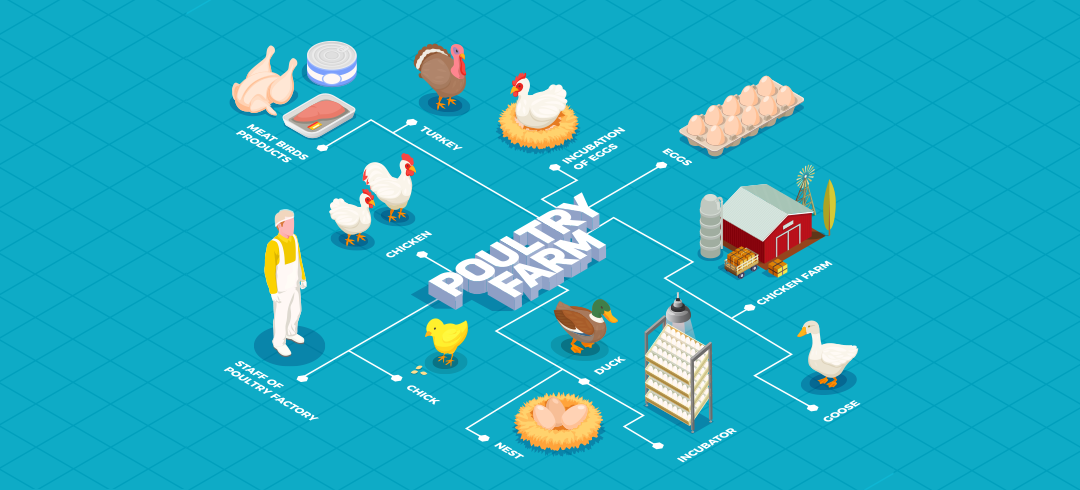

If you’ve been thinking about how to start a poultry farm, you’re stepping into one of agriculture’s most resilient and accessible industries. Poultry farming offers faster returns compared to most livestock sectors, a steady global demand, and flexible scale, whether you’re a rural entrepreneur running 500 birds or an agri-startup targeting commercial growth.
This guide walks you through every critical step: from market research and choosing your birds to housing, feeding, health management, and tech-enabled recordkeeping. By the end, you’ll have a clear, actionable roadmap to launch your poultry farm business with real confidence.
Understanding the Poultry Industry
Before you invest a single dollar, you need to understand what you’re entering. The U.S. poultry market is enormous. The latest projections for per capita availability (proxy for consumption) show 102.7 pounds in 2025; projected 102.8 pounds in 2026 for broiler meat and 21.5 dozen in 2025; projected 22.9 dozen in 2026 for table eggs.
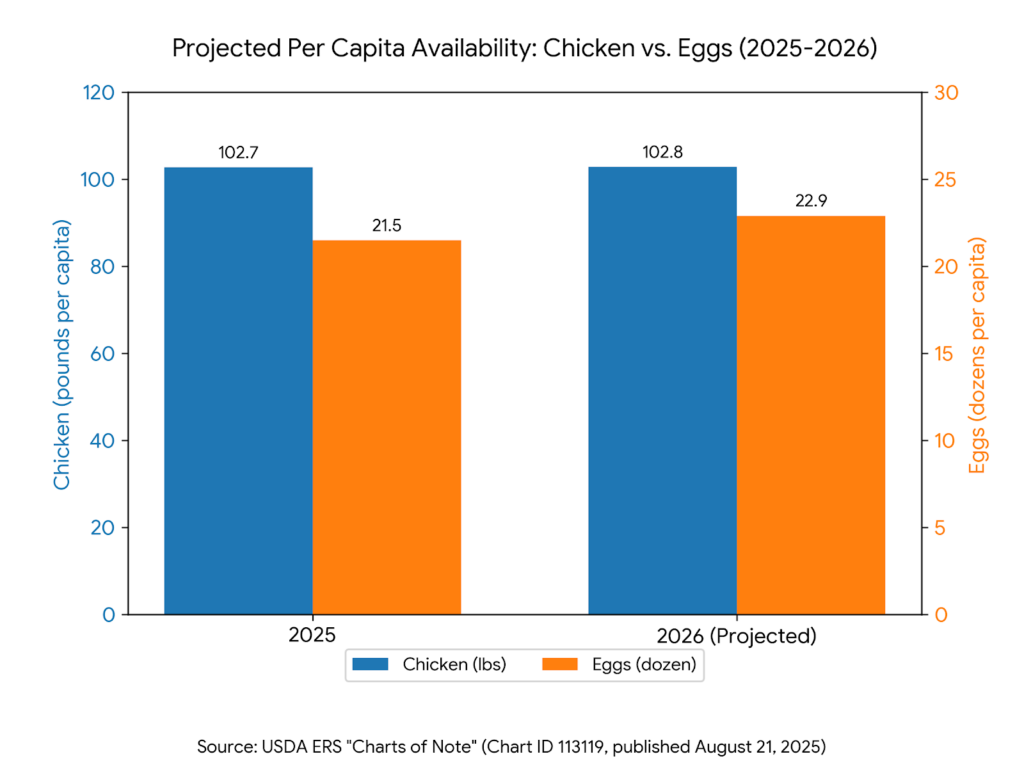
Such a level of consistent consumption is exactly what makes this sector stable for new farmers.
Beyond domestic demand, poultry is a major export commodity. States like Georgia, Arkansas, Alabama, Mississippi, and North Carolina lead U.S. production, creating established supply chains that new operations can tap into.
So why is starting a poultry farm business worthwhile? A few reasons stand out:
- Fast reproduction and growth cycles: Broilers reach market weight in just 5–7 weeks, enabling multiple production cycles per year.
- Strong, consistent demand: Poultry remains the most consumed protein in the U.S. and many global markets.
- Lower startup barrier: Compared to cattle ranching, poultry farming requires less land and capital per unit of output.
Planning Your Poultry Farm
Planning is where most new farmers either set themselves up for success or quietly guarantee failure. Here’s how to think through each element:
Research the market first: Who will buy your eggs or meat? Are local restaurants sourcing free-range chicken? Is there a feed store or processor within a reasonable distance? Understand your buyers before you choose your birds.
Choose your business model: You have several paths: broiler production, layer (egg) farming, hatchery operations, feed production, or a combination. The cost to start a poultry farm varies significantly depending on scale and model. Contract farming with an integrator offers guaranteed income but limits your independence; independent operation gives you flexibility but requires finding your own markets.
Set realistic goals and scale: Start with a manageable flock; 500 to 2,000 birds is typical for a first operation. A formal business plan should outline your vision, product mix, target buyers, and pricing strategy.
Identify multiple revenue streams: meat, eggs, manure compost sold as organic fertilizer, and value-added products like marinated cuts or specialty eggs.
Deciding on Poultry Types and Breeds
Chickens dominate commercial poultry farming globally, but turkeys, ducks, and quail are viable niches depending on your regional market. Within chickens, the core decision is broilers (meat) versus layers (eggs). The table below helps you narrow down breed selection:
| Purpose | Recommended Breeds | Why They Work |
| Meat (broilers) | Cornish Cross, Ross 308 | Rapid growth rates and excellent feed conversion |
| Eggs (layers) | White Leghorn, Rhode Island Red, ISA Brown | Consistently high egg output with strong persistence |
| Free-range/organic | Plymouth Rock, Sussex, Australorp | Hardy breeds with strong foraging ability and low input needs |
| Backyard/dual-purpose | Orpington, Plymouth Rock | Calm temperament; suitable for both meat and eggs |
If you’re focusing on meat production, reviewing broiler chicken farming best practices will give you a detailed look at the specific management requirements for fast-growing breeds before you commit.
Choosing a Farm Location and Housing System
Location matters more than most new farmers expect. You want a rural site with reliable road access and utilities, reasonably close to markets and input suppliers, but far enough from residential zones to satisfy zoning laws and minimize disease transmission risk. Navigating these legal requirements can be complex, especially if you plan to scale operations or invest in processing facilities.
Housing systems vary widely in cost, welfare implications, and suitability:
- Deep litter system: Bedding (rice husks, wood shavings) covers the floor; provides warmth and mobility. Well-suited for broilers.
- Slatted floor system: Reduces bird contact with droppings; better hygiene at a higher cost.
- Battery cage system: Maximizes space for layers and simplifies egg collection, but faces animal welfare scrutiny in some markets.
- Extensive/semi-intensive: Lower density, pasture access; suited for free-range or organic models.
Environmental control is non-negotiable regardless of the system you choose. Proper ventilation prevents dangerous ammonia buildup. Layers require approximately 16 hours of light per day to maintain peak egg output. Build biosecurity into your design from day one: separate age groups in different houses, install footbaths at every entrance, and maintain secure perimeter fencing.
Essential Equipment & Infrastructure
The right equipment reduces labor, protects bird welfare, and keeps your operation running efficiently, even on a lean startup budget. You don’t need to automate everything from the start, but the basics are non-negotiable:
- Brooders and heaters for temperature control in early weeks
- Feeders and drinkers (nipple-type drinkers reduce water waste and contamination)
- Nest boxes for layers
- Ventilation fans and lighting control systems
- Waste management systems and egg trays
As your operation grows, upgrading to automatic feeders, egg collectors, and mechanized manure removal cuts labor costs meaningfully. Start with quality over volume; one well-maintained drinker line outperforms three poorly designed ones.
Sourcing and Brooding Chicks
Always source from NPIP-certified hatcheries (National Poultry Improvement Plan). NPIP certification means birds have been tested and cleared of major vertically transmitted diseases.
Day-old chicks cost less upfront but require a careful brooding setup. Started pullets (6–8 weeks old) cost more but arrive past the high-mortality early phase, a practical trade-off for first-time farmers.
Brooding essentials to have in place before chicks arrive:
- Maintain brooder temperature at 95°F (35°C) for day-old chicks, reducing by 5°F each week
- Prepare clean bedding, feeders, and drinkers before the chicks are placed
- Monitor humidity and air quality daily during the first two weeks
Feeding and Nutrition Management
Poultry nutrition follows clear phases based on bird age and production purpose:
- Starter (0–6 weeks): High-protein diet (20–23%) to support rapid early development
- Grower/finisher (broilers): Higher-energy, lower-protein formulation to maximize weight gain efficiently
- Layer diet: Rich in calcium (3–4%) to support consistent shell quality and egg output
Feed costs typically represent the largest ongoing operational expense in a poultry operation, often accounting for 60–70% of total production costs. It makes the feed conversion ratio (FCR) one of your most critical performance indicators to track across every flock.
On-farm feed mixing using grains, beans, and peas is possible, but raw legumes must be processed or heat-treated to eliminate enzyme inhibitors that impair digestion. Clean water access at all times is non-negotiable.
Health Management and Biosecurity
Core vaccination schedule (always consult your veterinarian for regional disease pressure):
- Marek’s disease, administered at hatch
- Gumboro (infectious bursal disease), weeks 1–3
- Fowl pox, as recommended by a vet based on regional risk
- Newcastle disease and mycoplasma, per regional protocol
Biosecurity isn’t just a checklist, it’s a daily operational discipline:
- Restrict farm visitors; require protective clothing and footwear at entry
- Disinfect all vehicles and equipment before entry
- Use footbaths at every house entrance
- Quarantine all newly introduced birds for at least two weeks
Observe your flock every single day. Signs of illness, such as lethargy, abnormal droppings, reduced feed intake, or unusual clustering, warrant immediate isolation and a call to your veterinarian. Keep records of every mortality, treatment administered, and weight gain checkpoint. That data becomes invaluable across successive flocks.
Legal and Regulatory Requirements
In the U.S., you’ll need to navigate several layers of requirements before your first bird arrives:
- Business registration at the state level
- Zoning permits and environmental approvals from local authorities
- Animal health certificates from your state veterinarian
- NPIP certification if you plan to sell chicks or breeding stock across state lines
- Food safety inspections if you plan to process birds on-site
If you enter contract farming, U.S. contract farmers are protected under the Packers and Stockyards Act, which governs fair dealing between integrators and growers. Your local Cooperative Extension Service or state Department of Agriculture is the best first stop for accurate permit guidance specific to your operation.
Farm Management, Recordkeeping & Technology
The records you need to maintain from day one include: flock inventory and daily mortality logs, feed and water consumption, growth rate benchmarks, egg production counts, treatment records, and a clear profit-and-loss picture across each flock cycle.
Spreadsheets work for small flocks, but purpose-built farm record-keeping software automates vaccination reminders, generates feed efficiency reports, and flags abnormal trends before they become expensive problems.
On the technology side, modern farms are deploying agricultural sensors to monitor temperature, humidity, and ammonia levels in real time, data directly tied to bird welfare and performance. IoT-enabled feeders and drinkers track consumption patterns, and remote cameras allow 24/7 flock monitoring from your phone.
Poultry management software integrates these data streams into a single operational dashboard. For farms managing multiple species or production systems, a broader livestock management platform centralizes all herd and flock data in one place, making multi-site management far more manageable.
Marketing & Sales Strategies
Your poultry product is only valuable if you have consistent, profitable buyers. Building sales channels early is just as important as building your flock.
Direct sales: Give you the highest margins: farmgate sales, farmers’ markets, and community-supported agriculture (CSA) subscriptions all reduce your dependence on mediators and build lasting customer relationships.
Business-to-business sales: Offer volume: approach local restaurants, grocery stores, and food processors directly. At a commercial scale, joining an integrator provides guaranteed throughput, but at a lower price per unit. Consider both channels from the start.
Branding and digital presence: A clear farm name, a logo, and a basic website build buyer trust. Social media content showcasing your farming practices resonates strongly with today’s conscious consumer.
Research market prices carefully before setting yours. Pricing too low devalues your product and erodes margins; pricing too high without clear differentiation loses buyers. The sweet spot is competitive pricing backed by a compelling story about quality and farming values.
Sustainability & Waste Management
Poultry manure is a high-value byproduct when composted properly; it commands a strong market as organic fertilizer and can offset input costs. Bedding material can be cycled through multiple flocks before replacement, reducing waste disposal expenses.
Water conservation measures such as low-waste nipple drinkers and rainwater harvesting for non-potable uses reduce utility costs meaningfully over a season. Solar-powered ventilation fans and lighting systems cut electricity bills and can qualify for agricultural energy incentives in many U.S. states.
Adopting free-range or deep litter systems where feasible improves your animal welfare credentials, which is increasingly important for buyers in premium retail and export markets.
Scaling & Future-Proofing Your Farm
Expand incrementally: add a new house or increase flock size only when cash flow and management capability clearly support it. Over time, diversify into processed meat products, specialty eggs, or organic certification. Agritourism and educational farm tours are also emerging income streams worth exploring.
Keep an eye on emerging technology, AI-driven health monitoring, automated biosecurity systems, and precision feeding, which are moving from large-scale commercial farms toward mid-scale operations. Farms that integrate a poultry farm management system early are better positioned to adopt these tools as they become accessible and affordable.
If your scaling ambitions include processing your own birds, understanding the technology stack behind ERPs for poultry processing will help you plan your infrastructure before growth demands it.
Common Mistakes and Risk Mitigation
Most early poultry farm failures trace back to a small set of avoidable errors. Knowing them in advance gives you a distinct operational advantage before you start.
- Skipping market research: Assuming demand exists without verifying buyers, price points, and purchase frequency creates cash flow crises quickly.
- Underestimating feed costs: Feed typically represents 60–70% of operating costs. Undercapitalizing here directly compromises bird health and growth performance.
- Expanding too fast: Taking on more birds or debt than current cash flow and management skills can support leads to quality problems and financial stress.
- Neglecting biosecurity: A single disease outbreak can eliminate an entire flock’s value; prevention protocols cost a fraction of what treatment does.
- Poor recordkeeping: Without baseline data on feed conversion, growth rates, and mortality, you can’t identify problems early or improve meaningfully across flocks.
- Ignoring regulations: Unplanned compliance issues can pause or shut down operations entirely. Factor permits and certifications into your startup timeline before bird arrival.
Conclusion & Next Steps
Starting a poultry farm is genuinely achievable, but it requires preparation over impulse. The farmers who succeed long-term are those who research their market before acquiring birds. So, plan housing and biosecurity before day one, manage nutrition and health data with discipline, and market proactively rather than reactively. Take your next step now: outline your business model, identify your target buyers, and commit to a flock size you can manage well. Ready to leap forward? Connect with our Agtech experts to leverage modern farm management tools that give your operation every advantage from the very start.
FAQs
How Much Does It Cost to Start a Poultry Farm?
Startup costs vary widely; a small flock of 500 birds may require $3,000–$10,000, while a commercial broiler operation can exceed $200,000. Land, housing, equipment, and initial flock costs are the primary variables.
How Many Chickens Do I Need to Start a Profitable Farm?
Profitability depends more on your cost structure and sales channels than raw flock size. Many small operations become cash-flow positive at 500–1,000 birds when direct-to-consumer sales channels are in place, and feed costs are tightly managed from the start.
What Is the Best Poultry Type for Beginners?
Broiler chickens are generally the best starting point. Their short production cycle (5–7 weeks), straightforward management requirements, and established buyer networks through processors and integrators make them accessible and financially predictable for new farmers.
Do I Need a License to Run a Poultry Farm?
Yes. In most U.S. states, you’ll need business registration, zoning approval, and potentially animal health certificates or NPIP certification, depending on your scale and whether you sell birds or hatching eggs. Requirements vary by state; your local extension office is the best place to start.
How Do I Protect My Flock From Disease?
A combination of NPIP-certified chick sourcing, a scheduled vaccination protocol (Marek’s, Gumboro, fowl pox at minimum), daily flock observation, strict biosecurity at every entry point, and prompt isolation of any sick birds forms your core disease defense strategy.
When Should I Start Using Poultry Management Software?
Ideally, from your very first flock. Even basic digital records of feed consumption, mortality, and production outputs help you identify performance trends and improve each successive cycle. Purpose-built poultry management tools pay for themselves quickly in reduced losses and stronger compliance documentation.