
Poultry processing is a uniquely chaotic supply chain. You are managing biological assets that grow, die, and decompose on their own schedule. You face strict USDA and FDA food safety regulations, razor-thin shelf lives measured in days, and the constant variability of catch weight where no two birds weigh exactly the same. The global poultry market is projected to reach $417 billion in 2026, and with that scale comes even greater complexity.
The problem? Too many processors still rely on disconnected spreadsheets and generic software that was never built for protein. These fragmented tools create data silos between the farm, the plant floor, and the back office. It leads to wasted yields, compliance gaps, and costly recalls. In 2025 alone, USDA-FSIS reported 67 total recalls across meat and poultry products.
The solution is an ERP for poultry processing, a centralized system that acts as the digital nervous system connecting your live operations, production lines, and financial management into one real-time platform. In this 3,000+ word guide, you will learn:
- What core modules every poultry ERP must include
- An in-depth comparison of the 8 best ERP solutions for 2026
- How to handle the unique accounting challenges of poultry business
- Actionable advice for selecting the right vendor for your operation
Why Generic ERPs Fail in the Poultry Industry
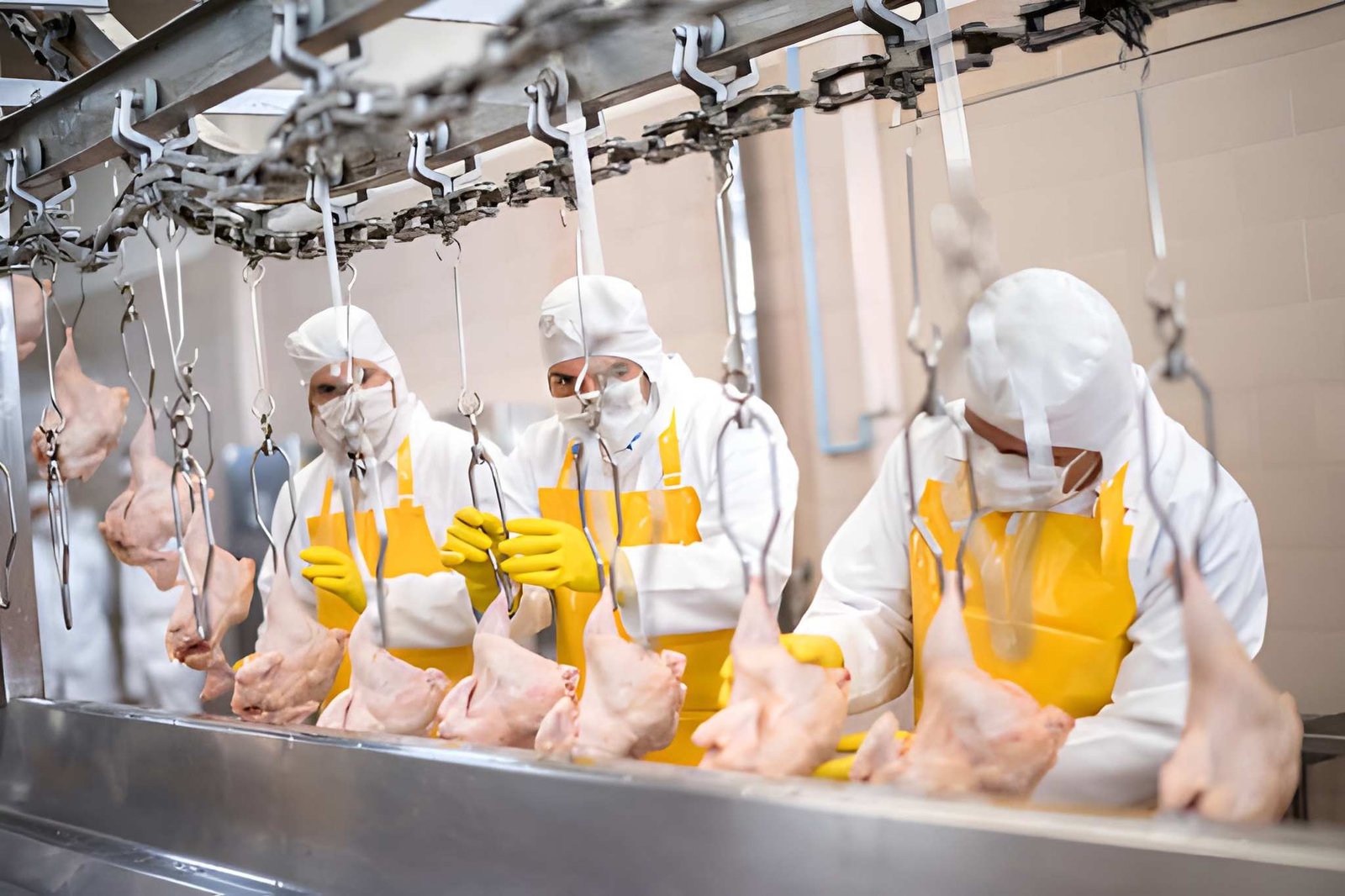
Here is the fundamental challenge most software vendors ignore: poultry processing is disassembly, not assembly. Standard manufacturing ERPs are designed for assembly workflows, think of a car factory where you take hundreds of discrete parts, bolt them together, and produce one finished vehicle. The bill of materials flows upward from many components to one product.
Your poultry plant operates in the exact opposite direction. You start with one raw material, a live bird and break it down into dozens of outputs: premium boneless breasts, wings, thighs, drumsticks, trim for ground product, offal for rendering, and feathers for processing. Each of these outputs carries a different market value, a different weight, and a different buyer. A generic ERP has no mechanism to handle this inverse BOM logic, the by-product tracking, or the real-time yield calculations that determine whether your plant made money today.
On top of that, poultry is perishable. Unlike a car sitting on a lot, your finished goods begin losing value the moment they leave the chill tank. A system built for discrete manufacturing cannot manage First-Expiry-First-Out (FEFO) inventory allocation, catch weight pricing, or the HACCP-based inspection requirements that USDA-FSIS mandates for every processing facility.
Core Modules Every ERP for Poultry Processors Must Have
An ERP for poultry processors must go far beyond standard inventory and accounting. It needs to handle the biological, regulatory, and operational realities of turning a live bird into retail-ready protein. Here are the four core modules you should demand.
Catch Weight & Yield Management
In poultry, no two birds weigh the same, and no two batches yield the same percentage of breast meat versus dark meat. Your ERP must integrate directly with factory floor scales to capture exact weights at every stage: live receiving, post-chill, debone, and pack-out.
The system should automatically calculate yield percentages in real-time, comparing what enters the line against what comes out. Even a 1% yield improvement on a high-volume line processing 200,000 birds per week can translate to hundreds of thousands of dollars annually. Without automated catch weight management, you are flying blind on your most important profitability metric.
End-to-End Bi-Directional Traceability
Recalls are not a theoretical risk; they are a when, not an if. In a single incident in 2024, one U.S. processor was forced to recall nearly 11.8 million pounds of ready-to-eat products due to Listeria contamination. Your ERP must provide bi-directional traceability, meaning it can trace a finished package of nuggets backward to the specific flock, feed batch, and farm of origin and forward from any suspect input to every product it touched.
With FSMA 204 requirements tightening, this capability must operate in minutes, not hours. A poultry farm management system that integrates lot tracking with barcodes and RFID is essential for passing retailer mock audits and USDA inspections.
Recipe & Formulation Management
If your operation produces value-added products; marinated wings, breaded tenders, pre-cooked strips you need robust recipe and formulation management. The ERP should handle complex bills of materials (BOMs) that account for marinades, breading, seasonings, and packaging materials alongside the raw poultry inputs.
Moreover, it should automatically adjust formulations based on ingredient variability and calculate precise manufacturing costs for each SKU, including labor, consumables, and raw material fluctuations. Nutritional labeling, allergen tracking, and regulatory compliance for processed products all flow from this module.
Cold Chain & Expiration Management
Poultry spoils fast. Your ERP must enforce First-Expiry-First-Out (FEFO) inventory allocation across every warehouse and distribution point. It means the system automatically prioritizes shipping the oldest product first, minimizing spoilage and shrinkage. It should also monitor cold chain compliance, integrating with temperature sensors to flag breaks in the cold chain before the product reaches the customer.
For operations managing multiple facilities, livestock management software with real-time cold chain visibility prevents the margin-killing scenario of perfectly good product being discarded because it sat too long in the wrong cooler.
Quick Comparison Matrix: ERP for Poultry Processing
Use this quick-reference table to compare the eight best ERP solutions for poultry processing at a glance. Each tool is evaluated by use case, integration capability, standout feature, and pricing model.
| ERP Name | Best For | Integration | Key Standout Feature | Pricing Model |
| CSB-System | Vertically integrated processors | Marel/Baader hardware + MES | 40+ years of meat-native architecture | License from ~$80K |
| Folio3 AgTech | Multi-site commercial operations | MS Dynamics 365 / NetSuite | Offline sync + AI yield alerts | Custom quote |
| Aptean | Mid-to-large protein processors | Microsoft ecosystem | Catch weight & lot profitability | ~$300/user/mo (cloud) |
| Infor CloudSuite | Large global enterprises | AI/ML + IoT sensors | AI-driven yield optimization | Custom enterprise quote |
| BatchMaster ERP | Value-added / further processing | SAP B1, QuickBooks, Sage | Best-in-class recipe costing | ~$150–$300/user/mo |
| Marel Innova | High-speed automated lines | Marel processing equipment | 15,000 birds/hr line monitoring | Tiered/modular quote |
| CATSquared | Yield-focused plant floors | Hardware-agnostic; SAP/Infor | 3–6 month ROI on yield gains | Custom quote |
| SAP S/4HANA | Multi-national conglomerates | Full SAP ecosystem + IoT | Egg-to-product traceability | Enterprise investment |
The 8 Best ERP for Poultry Processing for 2026 (In-Depth View)
Now that you have the big picture, let’s go deep into each ERP, covering what it does, who it’s for, and whether it’s worth your investment.
1. Infor CloudSuite
Infor CloudSuite Food & Beverage is an enterprise-grade solution that leverages artificial intelligence and machine learning to optimize complex food manufacturing environments. Recognized as a leader in the 2025 Gartner Magic Quadrant, Infor is designed for large organizations that need to unify multi-national operations, speed up time to market, and maximize yield through predictive analytics.
Core Features:
- AI-Driven Yield Optimization: Machine learning manages raw material variability to reduce waste and maximize output.
- Bi-Directional Food Traceability: Rapid recall readiness minimizes disruption and protects brand reputation.
- 3D Warehouse Visualization: Streamlines labor and resource allocation with spatial inventory views.
- Product Lifecycle Management: Accelerates time to market for new products by up to 30%.
- Multi-Country Configuration: Addresses local regulatory requirements and business practices across global sites.
| Pros | Cons |
| AI-driven yield and demand forecasting | High complexity; needs significant IT |
| 30% faster new product launches | Customer service can vary by product |
| Gartner Magic Quadrant leader | Best for large enterprises only |
Best For:
- Large enterprises ($50M+ revenue) with multi-site operations
- Organizations leveraging AI for supply chain agility
Rating: 4.5/5 for functionality. Infor CloudSuite is a top-tier choice for enterprise poultry operations, though its complexity makes it unsuitable for smaller processors.
2. Folio3 AgTech
Folio3 AgTech takes a modern, platform-first approach to poultry ERP by building deep industry-specific layers on top of Microsoft Dynamics 365 and Oracle NetSuite. This dual-platform strategy gives processors the global support of a world-class enterprise system combined with the granular control needed for hatchery, farm, and plant management. Folio3 specializes in connecting fragmented tools into a unified platform for multi-site commercial operations.
Core Features:
- Offline Synchronization: Captures RFID scans and health data in remote areas, syncing automatically when connectivity returns.
- Real-Time Yield Analytics: Dashboards track live yield monitoring with automated cut-up and portioning control.
- FSMA 204 Compliance Suite: Automates safety checks and farm-to-fork lot tracking via barcodes and RFID.
- AI-Powered Downtime Alerts: Detects line slowdowns and triggers real-time notifications to reduce processing bottlenecks.
- Automated Workforce Scheduling: Handles line balancing, labor allocation, and shift optimization for processing crews.
| Pros | Cons |
| Built on robust MS Dynamics/NetSuite | Initial setup is time-consuming |
| Superior offline sync for remote sites | Requires technical training to fully use |
| Excellent 24/7 support (5.0/5 rating) | Pricing requires discovery phase |
Best For:
- Large commercial operations ready for digital transformation
- Multi-yard processors needing real-time remote visibility
- Operations scaling from regional to national distribution
Rating: 4.5/5 overall. Folio3 AgTech earns top marks for service and support while delivering enterprise-grade yield analytics, making it ideal for growth-oriented poultry operations.
3. BatchMaster ERP
BatchMaster ERP is a specialized solution for formula-based process manufacturing, making it an excellent fit for poultry processors focused on value-added further processing, marinated, pre-cooked, or breaded products. With over 40 years in the industry, BatchMaster runs as a standalone system or as an add-on to SAP Business One, QuickBooks, or Sage, giving growing processors the flexibility to build on their existing financial platform.
Core Features:
- Advanced Formula & Recipe Costing: Compares ingredient, labor, and consumable costs side-by-side for precise margin control.
- Graphical Bi-Directional Traceability: Exceeds BRC and SQF codes for rapid, precise recall execution.
- Nutritional Labeling & QC: Integrates allergen tracking and quality tests into receiving and production workflows.
- Planning & Scheduling: Consolidates demand from orders and forecasts to synchronize purchasing and production.
| Pros | Cons |
| Best-in-class recipe management | Interface feels dated and old-school |
| Strong FDA/FSMA/SQF compliance | System is unforgiving with input errors |
| Responsive 24-hour customer support | Standard reports are hard to modify |
Best For:
- Small-to-mid-market processors with heavy further processing
- Operations needing deep recipe costing without enterprise overhead
- Processors already using QuickBooks or SAP Business One
Rating: 4.4/5 overall. BatchMaster excels at formula-based manufacturing with strong support, though its dated interface may frustrate users accustomed to modern software.
4. Aptean
Aptean is a global enterprise software leader with deep specialization in the protein sector. Its Food & Beverage ERP, built on Microsoft Dynamics 365, addresses the mission-critical challenges of raw material variability and food safety traceability. Trusted by major brands like Greggs and Monogram Foods, Aptean positions itself as a comprehensive “By-Your-Side” partner for processors seeking automation and better data visibility across the operation.
Core Features:
- Catch Weight Management: Captures item-level weights end-to-end with automated variability thresholds for accurate COGS.
- Instant Traceability: Identifies lot origins instantly during mock audits and recalls for retailer compliance.
- Integrated Quality Control: Mandatory audits and scoresheets are embedded into every production step.
- Reporting & Analytics: Customizable dashboards replace manual spreadsheets with real-time margin and waste insights.
- Plant Maintenance & OEE: Monitors equipment schedules and sanitation cycles to reduce unplanned downtime.
| Pros | Cons |
| Industry-leading catch weight tools | Can be expensive for smaller teams |
| High customer support ratings (4.2/5) | Minimum 15 users for some versions |
| Proven ROI with major food brands | Pricing is strictly quote-based |
Best For:
- Mid-to-large protein processors needing a Microsoft-based ecosystem
- Operations requiring enterprise-grade catch weight accuracy
Rating: 4.1/5 for functionality. Aptean delivers deep protein-industry capabilities out of the box, though its enterprise pricing model may challenge smaller operations.
5. SAP S/4HANA
SAP S/4HANA is the most recognized enterprise ERP globally, and for poultry, it is deployed with specialized layers like Poultry360 that manage everything from breeder performance to distribution. This is the platform for large-scale conglomerates that need to manage thousands of poultry houses and multi-site processing facilities on a single, secure, global system.
Core Features:
- Real-Time IoT Control Tower: Monitors bird health, growth, FCR, temperature, humidity, and CO2 across all sites.
- Egg-to-Product Traceability: End-to-end tracking ensures food safety compliance from breeder flock to retail shelf.
- Commodity Risk Management: Automated brokerage operations for feed price derivatives and contract management.
- Clean Core Compliance: Systems remain open to future innovation without breaking during upgrades.
- Multi-Language & Multi-Currency: Localized for business best practices across global operations.
| Pros | Cons |
| Most scalable and secure global system | Very high cost of entry and TCO |
| Real-time IoT for thousands of sites | Extremely complex implementation |
| Advanced commodity risk management | Requires dedicated SAP specialist team |
Best For:
- Multi-national vertically integrated agricultural enterprises
- Organizations managing thousands of houses across multiple countries
Rating: 4.0+/5 for enterprise capability. SAP S/4HANA is the gold standard for global scale, but its cost and complexity put it out of reach for all but the largest organizations.
6. CSB-System
CSB-System is a food-native ERP built exclusively for the meat, poultry, and seafood industries for more than 40 years. With over 1,200 installations across 50 countries, it is one of the most field-tested platforms available to poultry processors. CSB unifies ERP, MES, and shop-floor hardware integration into a single system, making it a strong choice for vertically integrated operations that need precision from slaughter scheduling to retail labeling.
Core Features:
- AI-Powered Grading & Portioning: Integrates vision systems and robotics to automate bird grading and boost yield.
- Coverage Planning & Scheduling: Optimizes slaughter schedules based on incoming flock age, weight, and demand forecasts.
- Integrated Quality Management: Built-in HACCP and USDA compliance with electronic data interchange for full traceability.
- Shop-Floor Data Capture: Industrial terminals connect scales and labeling machines directly into the ERP.
- Recipe & BOM Management: Calculates manufacturing costs for finished products, co-products, and by-products.
| Pros | Cons |
| Purpose-built for meat and poultry | High starting price (~$80,000) |
| Covers ERP, MES, and hardware in one | Advanced features can feel complex |
| Fast SME turnkey implementation | Support can lag for ongoing development |
Best For:
- Vertically integrated poultry processors needing end-to-end control
- High-volume operations transitioning to fixed-weight retail trays
- Mid-to-large plants seeking proven, field-tested architecture
Rating: 3.7/5 overall. CSB-System delivers deep meat-industry functionality and strong inventory management, though its complexity and cost make it better suited for established processors than small-scale farms.
7. Marel (Innova Software)
Marel’s Innova is a specialized Manufacturing Execution System (MES) designed specifically for the food processing plant floor. Unlike traditional back-office ERPs, Innova lives where the action happens; controlling equipment, collecting real-time data, and maximizing value creation across the entire processing line. It is the go-to platform for high-speed automated poultry facilities running Marel-integrated lines.
Core Features:
- IMPAQT Line Monitoring: Intelligent software monitors primary processing at speeds up to 15,000 birds per hour.
- Equipment Control Hub: Dictates programs and parameters for every machine from scalding to palletizing.
- Flock-to-Shipment Traceability: Assigns and records lot IDs from farm reception through final shipment.
- Order-Driven Packing: Prioritizes packing sequences to fulfill specific customer orders first.
- KPI & Bottleneck Detection: Monitors throughput, yield, and worker performance to identify inefficiencies.
| Pros | Cons |
| Unmatched machine integration and yield | Requires specialized technical knowledge |
| Handles 15,000 birds/hr effectively | Potential redundancy with back-office ERP |
| Pinpoints recall scope to specific lots | Support response varies by region |
Best For:
- High-volume automated processors using Marel equipment
- Plants prioritizing real-time plant-floor yield control
Rating: Strong specialist tool (no aggregated public score). Innova is the plant-floor powerhouse for high-speed poultry lines, best used alongside a separate financial ERP.
8. CATSquared
CATSquared delivers the Cynergy MES, a real-time plant-floor execution system designed to drive continuous improvement from farm to fork. Known for delivering rapid ROI, most customers report breaking even within 3 to 6 months. CATSquared focuses specifically on yield optimization, automated traceability, and paperless data collection for poultry processors.
Core Features:
- Pre-Chill & Post-Chill Yield Tracking: Captures bird weights, counts, and grades entering and exiting chillers for accurate yields.
- High-Speed Pack-Out: Automated systems weigh and label more than 30 cases per minute with full traceability.
- GS1 Sunrise 2027 Ready: Adopts 2D barcodes for richer data encoding ahead of the compliance deadline.
- CMMS Integration: Auto-generates work orders based on preventative schedules and real-time machine anomalies.
| Pros | Cons |
| Rapid 3–6 month ROI on yield gains | Not a full back-office ERP system |
| Hardware-agnostic; integrates with any ERP | Implementation depends on floor hardware |
| Offline labeling prevents network downtime | Pricing is throughput-based and opaque |
Best For:
- Processors are aggressively targeting yield loss and giveaway
- Facilities moving toward high-speed automation and 2D barcodes
- Plants needing a self-managed, self-updating MES layer
Rating: Highly regarded for plant-floor ROI (no aggregated public score). CATSquared is the yield specialist, ideal for processors who want to maximize every pound on the line.
Mastering the Margins: Accounting for Poultry Business
Poultry accounting is not like accounting for a widget factory. You face financial complexities that generic bookkeeping systems simply cannot handle, and getting them wrong means you are underpricing product or overpaying growers without even knowing it.
Grower Settlements: Most commercial poultry operations rely on contract farmers who raise the birds. Your ERP must automate grower payments based on complex performance metrics: bird weight, livability percentage, feed conversion ratio, and condemnation rates rather than simple flat-rate contracts. Getting this wrong means either overpaying underperformers or losing your best growers to competitors. A capable farm accounting system should calculate settlements automatically from production data, eliminating spreadsheet errors and payment disputes.
Complex Costing: Your input fluctuates in price based on feed costs, market conditions, and flock performance. But your outputs carry vastly different market values: premium boneless breasts might sell for three times the price per pound of dark meat trim. The ERP must calculate the actual cost of goods sold (COGS) by allocating the cost of the whole bird across every output based on yield percentages and current market values, not arbitrary averages.
Automated Financials: Your system should handle general ledger, Accounts Payable (AP), Accounts Receivable (AR), and automated invoicing tailored to food distribution—including catch weight-based invoicing where the final invoice amount is determined by actual delivered weight, not the ordered quantity.
How to Choose the Best ERP for Poultry Processing
Selecting the right ERP is a strategic decision that impacts every department. Here is what your software selection committee should prioritize.
Industry Expertise: Do not settle for a vendor that sells to every industry and bolts on a “food module” as an afterthought. Choose a vendor that understands disassembly manufacturing, catch weight variability, and USDA-FSIS regulatory workflows. Ask for references from other poultry processors, not just food companies in general. The vendor should speak your language: yield, FEFO, grower settlements without needing a translator.
Hardware Integration: Your ERP must talk directly to the processing equipment on your plant floor. Whether you run Marel, Baader, or Meyn lines, the system should integrate with IoT scales, vision grading systems, and labeling equipment without requiring custom middleware. This real-time data capture is what separates a true livestock management platform from a glorified spreadsheet.
Cloud vs. On-Premise: The industry is shifting toward cloud-based ERPs, and for good reason. Cloud deployments give you remote visibility across multiple processing plants without maintaining expensive on-premise servers. For multi-site operations, cloud architecture means your finance team in corporate can see the same real-time yield data as your plant manager on the floor. That said, ensure the system also supports offline data capture for areas with unreliable connectivity.
User Adoption: The most powerful ERP is worthless if your floor workers cannot use it. Prioritize systems with multi-lingual interfaces, touchscreen-friendly designs, and visual workflows that do not require a degree in computer science. Your deboners and packers need to interact with the system hundreds of times per shift. If it slows them down, they will find workarounds, and you will lose the data integrity you are paying for.
Conclusion & Next Steps
Thriving in the low-margin, high-volume poultry sector requires perfect data flowing seamlessly from the farm to the plant floor to the back office. The eight ERP solutions reviewed in this guide represent the best available options for 2026, each with distinct strengths depending on your operation’s size, complexity, and growth trajectory.
Your next step is to define your non-negotiables: catch weight accuracy, traceability depth, recipe management, or global scalability, and shortlist two to three vendors for a live demo. Reach out for a consultation, book a software demonstration, or contact Folio3 AgTech to discuss how a tailored poultry ERP can transform your operation’s margins and compliance posture.
FAQs
How Long Does It Take To Implement a Poultry ERP System?
Most poultry ERP implementations take 3 to 12 months depending on your operation’s complexity. Turnkey solutions for smaller plants can go live in weeks, while multi-site enterprise deployments with custom integrations typically require 6 months or more of phased rollout.
Can a Poultry ERP Integrate With Existing Processing Equipment?
Yes, most modern ERP for poultry processing platforms support direct integration with major equipment brands like Marel, Baader, and Meyn through IoT connectors. Always confirm hardware compatibility during the vendor discovery phase before committing to a contract.
What Is the Average ROI Timeline for a Poultry Processing ERP?
Many processors see measurable returns within 3 to 12 months, primarily through improved yield accuracy and reduced giveaway. Plant-floor MES tools like CATSquared report break-even as fast as 3 months on yield optimization alone.
Is Cloud-Based ERP Secure Enough for Food Safety Data?
Cloud-based poultry ERPs use enterprise-grade encryption, role-based access, and SOC 2 compliance to protect sensitive production and food safety data. Leading vendors also provide automatic security patches and 24/7 monitoring across all connected facilities.
Do Small Poultry Farms Need a Full ERP System?
Not necessarily. Small operations can start with modular solutions like BatchMaster or basic farm management tools and scale up as production grows. The key is choosing a platform that supports incremental module additions without requiring a full system overhaul.
How Does an ERP Handle USDA Audit Preparation for Poultry Plants?
A capable poultry ERP automates HACCP documentation, logs critical control points in real time, and generates audit-ready traceability reports on demand. This reduces preparation time from days to minutes and minimizes the risk of non-compliance findings during inspections.