
The functional dairy market is booming, and you’re watching it happen in real time. The global fermented milk market was valued at USD 202.09 billion in 2024 and is projected to reach USD 295.68 billion by 2030, growing at a CAGR of 6.54%. Behind those numbers sits a massive consumer shift toward probiotics, gut health, and clean-label products.
For dairy processors, plant managers, and entrepreneurs, this isn’t just a trend; it’s an operational mandate. Modern commercial milk fermentation relies on tightly controlled biochemical processes to deliver consistent flavor, texture, and shelf life batch after batch. The margin for error? Nearly zero.
This guide walks you through the entire commercial production process, from standardization to packaging. You’ll also get a clear look at modern microbial innovations, precision fermentation breakthroughs, and the quality control strategies that separate profitable operations from struggling ones. Whether you’re scaling up an existing line or planning a new plant, this is the playbook you need.
What Is Milk Fermentation and Why It Matters for Your Dairy Business
Milk fermentation is far more than simply souring milk. It’s a highly controlled biochemical transformation where specific bacterial cultures convert lactose into lactic acid, lowering the pH and triggering a cascade of structural and flavor changes. Being the most crucial aspect of dairy processing, this process extends shelf life, enhances texture, and multiplies the commercial value of raw milk into premium product categories.
For you as a dairy processor, fermentation transforms a commodity into a portfolio of differentiated SKUs: yogurt, kefir, buttermilk, and labneh, each commanding higher margins than fluid milk. It’s the reason fermented dairy remains one of the most resilient and fastest-growing segments in the global dairy industry.
The Science Behind Bacterial Fermentation of Milk
At the core of every fermentation batch is a group of lactic acid bacteria (LAB). These organisms consume lactose, the primary sugar in milk, and convert it into lactic acid through anaerobic metabolism. As lactic acid accumulates, the pH drops steadily from around 6.5 to approximately 4.5–4.6.
This pH shift triggers casein proteins, which make up roughly 80% of milk protein, to aggregate and form a gel network. That gel is the coagulum you see as the characteristic semi-solid texture in yogurt and similar products. The process also produces aromatic compounds like acetaldehyde (responsible for yogurt’s tangy aroma) and diacetyl (a buttery note found in cultured buttermilk and sour cream).
Temperature, bacterial strain, inoculation rate, and incubation time all influence the final profile. Even small variations in these parameters can shift viscosity, acidity, and flavor, which is why commercial operations invest heavily in process automation and monitoring.
The Nutritional and Functional Edge of Fermented Dairy Foods
Consumer demand is doing your marketing for you. Fermented dairy foods command premium shelf space because they deliver measurable nutritional advantages that consumers actively seek.
During fermentation, LAB partially breaks down lactose. It makes fermented products more accessible to the estimated 65% to 70% of the global population that exhibits lactose intolerance. That’s not a niche market, it’s the majority of the world’s consumers. For processors, it means fermented dairy unlocks demographics that fluid milk simply cannot serve. The result is a premium pricing edge and broader market reach.
Fermentation also increases the bioavailability of B vitamins, enhances calcium absorption, and introduces live probiotic cultures. These are all the features that translate directly into marketable health claims and higher retail margins.
Types of Fermented Dairy Products
Tweaking just a few fermentation variables, culture strains, temperature, incubation time, and post-processing steps creates vastly different cultured dairy products. Each targets a different consumer segment and price point.
Traditional Cultured Dairy Products
These are the core commercial categories that drive the bulk of fermented dairy sales worldwide:
- Yogurt: Produced through thermophilic fermentation (typically 42–44°C) using Streptococcus thermophilus and Lactobacillus delbrueckii subsp. bulgaricus. The symbiotic relationship between these two organisms drives efficient acid production and delivers yogurt’s signature tangy flavor and creamy body.
- Kefir: Uses a mesophilic fermentation at lower temperatures (20–25°C) with a mixed culture of LAB and yeasts. This dual fermentation produces both lactic acid and small amounts of carbon dioxide and ethanol, giving kefir its distinctive effervescence and complex flavor.
- Buttermilk: Traditionally, the liquid remaining after churning butter, commercial cultured buttermilk is now produced by fermenting low-fat milk with mesophilic cultures like Lactococcus lactis. It delivers a mild tang and is widely used in baking and foodservice applications.
Scaling Up Product Formats
The way you process and package fermented milk determines the product format and its market positioning:
- Set type: Milk is inoculated, filled into retail cups, and fermented directly in the package. The coagulum remains intact, giving a firm gel structure. This format suits traditional yogurt markets.
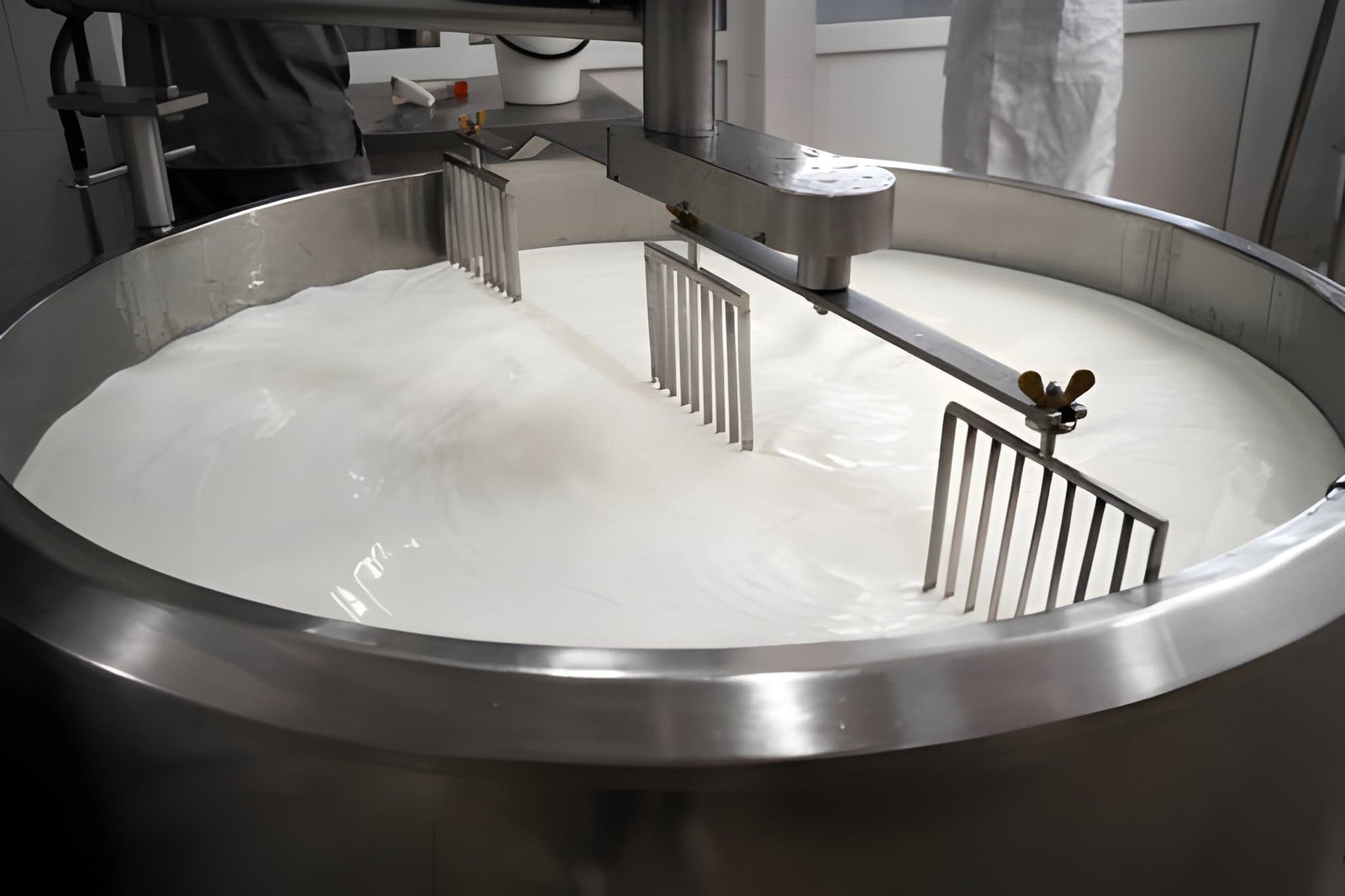
- Stirred type: Fermentation happens in large tanks. After reaching the target pH, the coagulum is broken by gentle stirring before cooling and packaging. This is the most common commercial format and allows inline fruit mixing.
- Concentrated/Greek style: Fermented in tanks, then concentrated using either mechanical separators or dairy membrane filtration systems to remove whey. It produces the thick, high-protein texture consumers associate with Greek yogurt, and it commands some of the highest retail margins in the dairy case.
The Step-by-Step Milk Fermentation Process in Commercial Plants
Turning raw milk into a finished fermented product requires precision at every stage. Mechanical treatment and hygienic design are just as critical as the biology happening inside your tanks. Here’s a breakdown of each step that takes place on the commercial plant floor when fermenting milk.
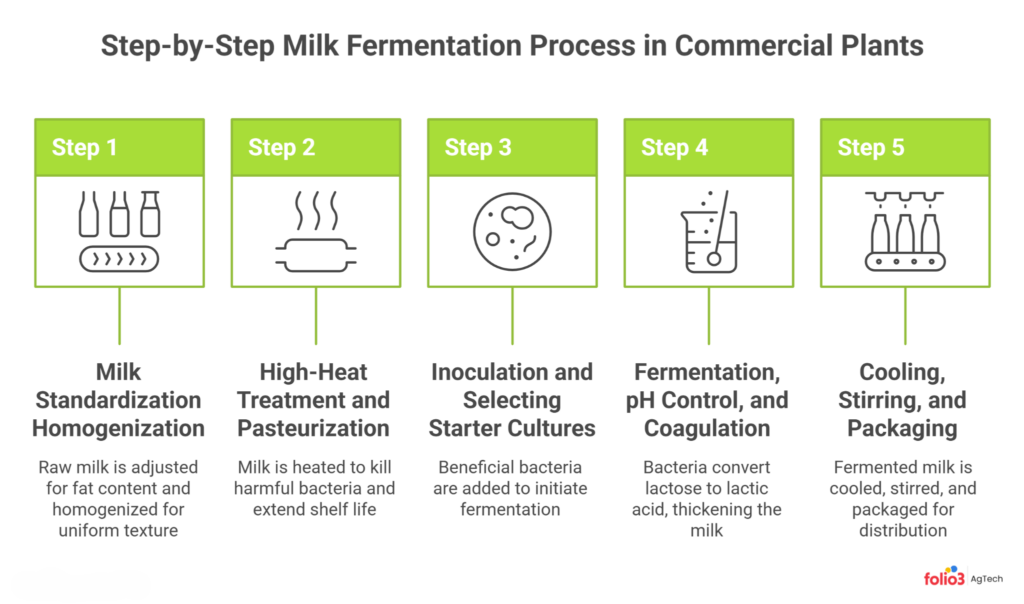
Step 1: Milk Standardization and Homogenization
Before any cultures enter the picture, you need to optimize your milk base. Standardization involves adjusting fat content and dry matter (DM) to precise targets, typically 12–16% total solids for yogurt production.
Higher solids produce a firmer, more viscous coagulum with better water-holding capacity. You can increase DM through evaporation, the addition of milk powder, or dairy membrane filtration. Each method has its own cost and quality implications.
Homogenization follows, typically at pressures of 15–20 MPa. This step breaks fat globules into smaller, uniform particles, preventing cream line formation and ensuring a smooth, consistent texture throughout the product. It also improves the interaction between fat globules and the protein network, resulting in a firmer gel.
Step 2: High-Heat Treatment and Pasteurization
Pasteurization for fermented milk production is deliberately more intense than what you’d use for standard fluid milk. The typical parameters are 90–95°C held for 5 minutes, compared to 72°C for 15 seconds in standard HTST pasteurization.
This higher heat treatment serves two critical purposes. First, it eliminates competitive microflora that could interfere with your starter cultures. Second, and more importantly, it denatures whey proteins, particularly β-lactoglobulin, which then interact with casein micelles. This denaturation significantly improves the viscosity, gel firmness, and water-holding capacity of the final product, reducing whey separation during shelf life.
Step 3: Inoculation and Selecting Starter Cultures
After heat treatment, the milk is cooled to the target inoculation temperature, typically 42–44°C for thermophilic yogurt cultures or 20–25°C for mesophilic products. Starter culture selection is where your product differentiation really begins.
You can work with monocultures (single-strain inoculants) or co-cultures that combine multiple strains. The classic yogurt combination of S. thermophilus and L. bulgaricus is a textbook example of protocooperation: S. thermophilus grows first, reducing oxygen and producing formic acid that stimulates L. bulgaricus, which in turn breaks down casein into peptides and amino acids that feed S. thermophilus.
Direct Vat Set (DVS) cultures, supplied as frozen or freeze-dried concentrates, have become the industry standard because they eliminate the risk and variability of maintaining bulk starter tanks on-site. Your culture supplier’s recommendations on dosing rates and storage conditions are critical to consistent results.
Step 4: Fermentation, pH Control, and Coagulation
Once inoculated, the milk enters fermentation tanks where the temperature is held constant, and the process is monitored continuously. That’s where the dairy management system plays a pivotal role; automated pH meters and temperature sensors track the fermentation curve in real time.
The target pH for most yogurt production sits around 4.5–4.6. The rate at which bacteria drive the pH down depends on culture activity, inoculation rate, and temperature. A typical fermentation cycle for stirred yogurt runs 4–6 hours.
The moment the pH hits the target, the cooling phase must be triggered promptly. Delayed cooling leads to post-acidification, a continued drop in pH that produces an overly sour, harsh flavor and can damage the gel structure. Automated control systems that link pH sensors directly to cooling valves are standard practice in modern plants.
Step 5: Cooling, Stirring, and Packaging
Rapid cooling is non-negotiable. The goal is to drop the product temperature below 20°C as quickly as possible, then continue cooling to 4–5°C for storage and distribution. It halts bacterial metabolism and locks in the target acidity and flavor profile.
For stirred-type products, the coagulum is mechanically sensitive at this stage. Aggressive handling can break the gel network and produce a thin, watery product. Specialized low-shear pumps and plate or tubular coolers are essential. If you’re adding fruit or flavor inclusions, hygienic inline static mixers should be positioned after the cooler but before the filling equipment to maintain product integrity.
Packaging must happen in a clean or ultra-clean environment. Post-contamination with yeasts and molds is the primary spoilage risk for fermented dairy and directly determines your shelf life, which in modern plants typically ranges from 21 to 30 days under refrigeration.
Precision Fermentation Milk: Breakthroughs in Agtech
Agtech and bioengineering are transforming the traditional dairy landscape, and precision fermentation represents the most significant shift in how milk proteins are produced and utilized.
What Is Precision Fermentation in the Dairy Industry?
Precision fermentation uses genetically programmed microflora, typically yeast or fungi, to produce specific milk proteins (like whey or casein) without the cow. These organisms are grown in bioreactors, fed simple sugar-based substrates, and engineered to express dairy-identical proteins.
The precision fermentation dairy proteins market was valued at USD 100.2 million in 2024 and is expected to reach USD 987.6 million by 2034, growing at a CAGR of 24.3%. It isn’t a niche experiment; it’s a rapidly scaling commercial reality.
For traditional dairy processors, it creates a hybrid opportunity. Precision-fermented proteins can be blended into conventional dairy formulations to improve functionality. It also boosts protein content or addresses supply chain volatility without fundamentally changing existing plant infrastructure.
Enhancing Viscosity and Controlling Post-Acidification via Bioengineering
Beyond precision-fermented proteins, strain engineering is advancing within traditional fermentation itself. Researchers have demonstrated that optimizing carbon sources and selecting exopolysaccharide (EPS)-producing strains of S. thermophilus can significantly boost viscosity without relying on artificial stabilizers like gelatin or modified starches.
EPS-producing strains secrete natural polysaccharides during fermentation that integrate into the protein gel network, enhancing texture and mouthfeel. It directly supports the clean-label trend that consumers and retailers are demanding. For you as a processor, it means better texture performance with a simpler ingredient list, a competitive advantage in both retail and foodservice channels.
Additionally, co-culture strategies pairing specific S. thermophilus strains can help manage post-acidification more effectively. As a result, they are extending shelf life and reducing product variability across batches.
How Dairy Software Overcomes Production Bottlenecks in Fermented Milk
If you’re a plant manager or food safety manager, you already know that the gap between a good batch and a failed one often comes down to response time. Here’s how dairy processing software closes that gap.
Continuous Monitoring and Sensors
Modern dairy software integrates with temperature, pH, and pressure sensors to deliver a continuous stream of real-time data. IoT-enabled systems monitor yogurt cultures at 42–44°C and track pH as it falls from around 6.5 down to 4.6. In-line sensors eliminate the need for manual sampling, reducing contamination risk and freeing operators for higher-value tasks.
Real-Time Alerts and Control
Software platforms allow you to set target ranges for pH, temperature, and time, and send instant alerts when any parameter drifts outside tolerance. Operators can intervene immediately, or automated systems can adjust heating and cooling valves without human input. It reduces batch-to-batch variation and prevents costly failures before they happen.
Data Logging and Traceability
Every batch’s fermentation data, temperature curves, pH trajectories, culture lot numbers, and cleaning records are recorded automatically. It creates digital logs that satisfy audit requirements and support food traceability across your entire production chain, from raw milk intake to finished product dispatch.
Predictive Analytics and Optimization
Advanced platforms use historical data and machine learning to predict when fermentation will hit the target pH or when a sensor might need maintenance. Sensors feeding data to cloud platforms enable predictive maintenance and remote oversight. It helps optimize fermentation time, reduce energy consumption, and ensure consistent product quality across shifts and seasons.
Integration with Plant Systems
Fermentation management software interfaces with manufacturing execution systems (MES), quality control labs, and clean-in-place (CIP) systems. This integration ensures fermentation only starts when the equipment is verified clean and the ingredients are staged correctly. It’s adigital food safety layer that lowers contamination risk and tightens your production scheduling.
Health Benefits of Fermented Milk That Are Driving Consumer Demand
The connection between fermentation science and consumer health is the engine behind premium pricing in fermented dairy.
Gut Microbiome, Probiotics, and Lactose Digestion
Clinical consensus supports several key benefits of fermented dairy foods that drive purchasing behavior. Live probiotic cultures, particularly Lactobacillus and Bifidobacterium strains, survive transit to the gut and contribute to a balanced microbiome. It supports digestive regularity, immune function, and may reduce the severity of antibiotic-associated diarrhea.
The global probiotics market is estimated to be valued at USD 76.59 billion in 2025 and is projected to reach USD 114.95 billion by 2030, growing at a CAGR of 8.5%. For processors, adding bioprotective and probiotic strains to your fermentation protocols directly enhances product positioning and expands margins. Every CFU (colony-forming unit) count on your label is a marketable feature.
Market Opportunities for Functional Dairy Products
Functional dairy is where consumer health trends meet commercial strategy. Products positioned around “immunity-boosting,” “gut health,” and “clean label” claims are outperforming conventional dairy in growth rate and margin.
The opportunity is clear: your fermentation method is your marketing story.
- If you’re using EPS-producing strains to avoid stabilizers, that’s a clean-label claim.
- If you’re incorporating clinically validated probiotic strains, that’s a functional health claim.
- If you’re producing lactose-reduced fermented products, you’re accessing the 65–70% of consumers globally who are lactose intolerant.
Processors who align their fermentation expertise with consumer health messaging are capturing disproportionate market share. The technology exists. The market demand is proven. It’s a matter of execution.
Conclusion
Mastering milk fermentation requires a precise balance between biology and engineering. From selecting the right starter cultures and optimizing heat treatment to deploying sensor-driven monitoring and predictive analytics, every decision on the plant floor impacts your product quality, consistency, and profitability.
The fermented dairy market is expanding rapidly, driven by consumer demand for probiotics, functional nutrition, and clean-label products. Processors who invest in modern fermentation controls, embrace precision fermentation technologies, and leverage dairy ERP software for real-time oversight are positioning themselves to capture this growth. If you’re a dairy entrepreneur or plant manager looking to optimize your fermentation line, reduce batch variability, or explore new product formats, the right AgTech partner makes all the difference. Consult with the Folio3 AgTech team to explore how integrated dairy software can streamline your operations and accelerate your path to market.
FAQs
Can You Ferment Milk Without a Starter Culture?
Technically, raw milk can undergo spontaneous fermentation from naturally present bacteria. However, commercial production always uses defined starter cultures to guarantee consistent flavor, texture, and food safety. Relying on wild fermentation introduces unpredictable strains and significant contamination risks.
How Long Does Commercial Milk Fermentation Take?
A typical yogurt fermentation cycle runs 4–6 hours at 42–44°C, depending on culture activity and target acidity. Mesophilic products like kefir or buttermilk may require 12–20 hours at lower temperatures. Precise timing depends on your inoculation rate and process control systems.
What Is the Difference Between Fermented Milk and Cultured Milk?
The terms are often used interchangeably in commercial settings. Both refer to milk that has been inoculated with specific bacterial cultures and incubated to produce lactic acid. “Cultured” tends to emphasize the deliberate addition of defined strains, while “fermented” is the broader technical term.
Why Does Fermented Milk Have a Longer Shelf Life Than Fresh Milk?
Lactic acid produced during fermentation lowers the pH to around 4.5, creating an acidic environment that inhibits the growth of most spoilage bacteria and pathogens. Combined with proper pasteurization and hygienic packaging, it gives fermented products a refrigerated shelf life of 21–30 days.
How Does Fermentation Affect the Protein Content of Milk?
Fermentation does not significantly change total protein content, but it does improve protein digestibility. Bacterial enzymes partially break down casein into peptides and amino acids, making them more bioavailable. Concentrated formats like Greek yogurt further boost protein per serving through whey removal.
What Role Does Temperature Play in Milk Fermentation Quality?
Temperature is the single most critical control parameter. Thermophilic cultures require 42–44°C for optimal activity, while mesophilic cultures perform best at 20–25°C. Even a 2°C deviation can slow acid development, alter texture, or encourage off-flavor production, making automated temperature control essential for consistent results.