

| About This Guide This guide was researched and verified by Folio3 AgTech’s consulting team, which has completed ERP deployments for agribusinesses across North America and globally since 2004. Our evaluators have hands-on implementation experience with livestock operations, feedlot management, crop enterprises, and agri-cooperatives. Clients include Progressive Beef, Cactus Feeders, Zoetis, ADM Agriculture, and Gro Alliance, among others. Folio3 holds Microsoft Gold Partner, Oracle NetSuite Alliance Partner, and AWS Partner certifications. Meet our leadership team. Methodology: Every ERP in this guide was scored against a 10-point checklist covering ag-specific functionality, offline mobile access, compliance, scalability, IoT integration, ESG reporting, and total cost of ownership. Ratings are on a 5-point scale. |
If you are running an agribusiness in 2026, you already know the pressure, volatile commodity prices, unpredictable climate events, tightening food safety mandates, and a labor market that refuses to cooperate with the harvest season.
The global agriculture ERP market is valued at USD 3.8 billion in 2025 and projected to reach USD 9 billion by 2032 at a 13% CAGR. The broader farm management software market is expected to hit $3.73 billion in 2026 alone. These numbers reflect one undeniable trend: farms worldwide are betting on integrated technology to survive and scale.
This is your definitive, expert-reviewed guide to Agriculture ERP. Our AgTech consultants evaluated each platform against a rigorous 10-point checklist so you can make this decision with confidence, not guesswork. Whether you operate a 200-acre row-crop farm, a multi-site feedlot, or a multinational agri-cooperative, one of the 16 platforms below fits your operation.
What Is ERP Software for Agriculture?
Agriculture ERP (Enterprise Resource Planning) is a centralized software system designed to manage every aspect of a farming or agribusiness operation. It connects crop planning, field operations, inventory, sales, accounting, compliance, and logistics into one unified platform. Unlike generic business software, a purpose-built agriculture ERP accounts for the biological rhythms of farming: seasonal labor cycles, perishable inventory, lot traceability, and regulatory compliance with the USDA, FDA, and FSMA.
Core functions of an agriculture ERP include:
- Crop planning, yield forecasting, and harvest scheduling
- Livestock health records, feed tracking, and herd lifecycle management
- Real-time inventory and warehouse visibility across multiple sites
- Financial management, farm accounting, and subsidy tracking
- Supply chain management and food traceability
- Compliance recordkeeping for FDA, USDA, FSMA, and HACCP
- Integration with IoT sensors, precision ag tools, and satellite data
In short, an agriculture ERP replaces disconnected spreadsheets and paper records with a single source of truth, giving every team from the field crew to the CFO, the same real-time operational picture. For more detail on the benefits of ERP for the agriculture industry, see our dedicated guide.
Why Field-Operations-First ERP Is Different from Generic Business Software
Generic ERP platforms such as QuickBooks or even standard Dynamics 365 installations handle finances and HR well. But they were never designed for the realities of running a farm: they have no concept of a growing degree unit, a pen-level cost of gain, a catch-weight item, or a harvest block. Forcing an agribusiness into a generic ERP template means months of expensive customization and a system that still does not behave like a farm.
Field-operations-first ERP, by contrast, is architected around what actually happens on an agribusiness operation. Individual animal health records connect to feed consumption data. Field spray logs tie to crop inventory and compliance reporting. Lot traceability runs automatically from seed purchase to shipping manifest. Offline mobile data capture works in pastures without cell coverage and syncs when the worker returns to Wi-Fi.
The practical consequence: a purpose-built agriculture ERP implementation typically requires 40 to 60 percent less customization than fitting a generic platform to ag workflows, and the resulting system gets adopted by field teams because it matches how they already work, not how an IT consultant expects them to work. Understanding these farm data management challenges is essential before evaluating any platform.
How AI Is Transforming Agriculture ERP in 2026
Artificial intelligence has moved from a marketing buzzword to a functional ERP module in 2026. The best agriculture ERP platforms now embed AI directly into operational workflows, not just dashboards. This matters because farming decisions are time-sensitive: a wrong call on irrigation timing or a delayed disease flag can cost an entire crop.
Modern AI capabilities inside agriculture ERP include predictive yield modeling that adjusts forecasts as field sensor data comes in, anomaly detection in financial transactions that flags unexpected input costs before they compound, and automated pest and disease risk alerts triggered by weather data and historical outbreak patterns. In livestock operations, AI monitors feeding behavior deviations that often precede illness by 24 to 48 hours, giving producers time to intervene before treatment costs escalate.
The convergence of ERP with AI is also changing how compliance is managed. Instead of manual audit trail maintenance, AI-enabled ERP systems auto-generate traceability documentation in real time, making an FDA or USDA inspection a matter of pressing a button rather than a week of scrambling through paper records.
For a comprehensive breakdown of AI use cases across all areas of agriculture, including computer vision, precision ag automation, and predictive livestock health, see our dedicated AI in agriculture guide. When evaluating the platforms below, pay attention to which ones offer native AI functionality versus bolt-on analytics modules, since the depth of integration makes a significant operational difference.
Quick-Reference Comparison: All 16 Agriculture ERP Platforms at a Glance
Before diving into individual reviews, use this table for a rapid side-by-side comparison. It captures each platform’s sweet spot, key differentiator, AI capability, pricing model, and our expert rating.
| ERP Software | Best For | Key Feature | AI Capability | Pricing | Rating |
| 1. AgriERP | Crop farms & orchards | AI crop & harvest management | Native (AI yield forecast) | Custom quote | 4.6 / 5 |
| 2. Folio3 AgTech | Livestock, crop & input agribusinesses | Dual-side: livestock + crop ERP | AI health alerts, IoT, field BI | Project-based | 4.5 / 5 |
| 3. Oracle NetSuite | Mid-to-large agribusinesses | Unified cloud finance & ops | AI analytics, SuiteAnalytics | Subscription | 4.4 / 5 |
| 4. Microsoft D365 | Multi-entity enterprises | AI cash-flow forecasting | Copilot, Power BI AI | Per-user tiers | 4.4 / 5 |
| 5. Acumatica | Scaling mid-market farms | Unlimited-user licensing | AP automation, anomaly detect | Consumption | 4.3 / 5 |
| 6. SAP S/4HANA | Global agri-corporations | Sustainability Control Tower | HANA AI, Business AI | Enterprise | 4.3 / 5 |
| 7. Infor M3 | Food & beverage processors | Food traceability & shelf-life | Velocity AI, demand forecast | Custom | 4.0 / 5 |
| 8. FarmERP | Commercial farms & co-ops | Crop lifecycle management | FarmGyan AI module | Custom | 4.2 / 5 |
| 9. Odoo | Small farms & startups | Open-source modular flexibility | Third-party AI add-ons | Per-user + apps | 4.2 / 5 |
| 10. Sage X3 | Mid-large food manufacturers | Recipe & process manufacturing | Sage Copilot AI | Custom | 4.0 / 5 |
| 11. BatchMaster | Formula-based processors | Bi-directional lot traceback | Limited, formula-focused | Subscription | 4.4 / 5 |
| 12. Agvance | Agri-retailers & co-ops | Finance + agronomy integration | Limited | Custom | 4.1 / 5 |
| 13. Agrivi | Precision ag & data-driven farms | Yield forecast & ROI analysis | Predictive analytics | Subscription | 4.1 / 5 |
| 14. Croptracker | Fresh produce & horticulture | Spray records & harvest tracing | Limited | Subscription | 3.9 / 5 |
| 15. AgriChain | Grain traders & bulk handlers | Supply-chain contract automation | Limited | Subscription | 3.9 / 5 |
| 16. Priority Software | Multi-site agri-enterprises | End-to-end traceability | IoT + real-time analytics | Custom | 4.0 / 5 |
How We Evaluated the Top 16 Agriculture ERPs: Our 10-Point Checklist
Not every ERP that works for a retailer or a factory works for a farm. Agriculture has biological assets, seasonal rhythms, and compliance requirements that demand a specialized lens. Our AgTech consultants scored every platform against the following 10 criteria, each weighted equally on a 5-point scale.
- Ag-Specific Functionality: Does the platform natively handle crop planning, livestock health records, yield tracking, and harvest scheduling, or does it require expensive customization?
- Offline Mobile Functionality: Farm teams operate in areas with no cell coverage. We evaluated whether data entry, GPS tagging, and photo capture work reliably offline with auto-sync.
- Seasonal Labor & Piece-Rate Management: Agriculture depends on seasonal workers. We checked for piece-rate payroll, time tracking by task, and crew scheduling.
- Inventory & Supply Chain Management: From seed in storage to produce on a truck, the ERP must handle perishable goods, lot tracking, catch-weight items, and multi-warehouse visibility.
- Financial Management & Subsidy Tracking: Beyond standard GL, we looked for multi-entity consolidation, grant/subsidy tracking, cash-flow forecasting, and seasonal budgeting.
- Ecosystem Integrations: Can the system connect to weather APIs, soil sensors, variable-rate controllers, and satellite imagery platforms via open APIs?
- Compliance, Traceability & Food Safety: FSMA, HACCP, GFSI, and organic certification demand bidirectional lot tracing, automated audit logs, and recall-ready data retrieval.
- AI & Predictive Analytics: Does the platform offer native AI for yield forecasting, pest risk alerts, financial anomaly detection, or livestock health monitoring?
- Scalability & Multi-Farm Support: A system that works for one site must scale to 50 without re-architecture. Multi-entity, multi-currency, and multi-language support matter.
- TCO & Ag-Expert Implementation Support: We weighed total cost of ownership against whether the vendor provides agriculture-experienced implementation consultants.
The 16 Best ERP Software for Agriculture in 2026 — In-Depth Reviews
Each platform below is reviewed against our 10-point evaluation checklist. Ratings are on a 5-point scale. Platforms are ordered by overall suitability for the broadest range of agribusiness types, not alphabetically.
1. AgriERP
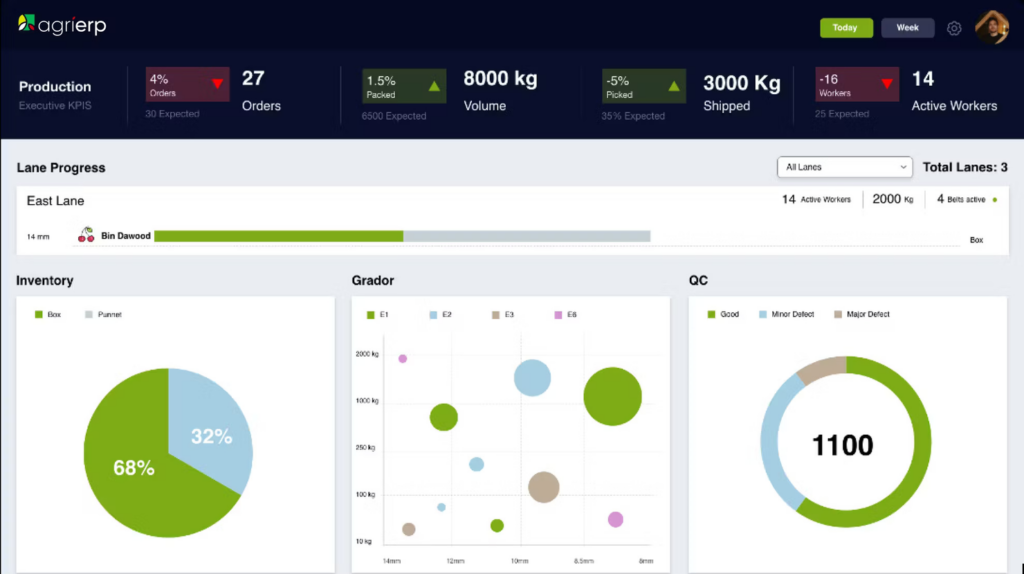
AI-powered, award-winning ERP built exclusively for crop farms and orchards.
| Why we included it: AgriERP earned the ERP Solution of the Year 2025 award from the AgTech Breakthrough Awards and was featured in Forbes. It is purpose-built for agriculture workflows, available on Microsoft Business Central, Dynamics 365, and Oracle NetSuite, and remains the only cloud ag ERP offering AI-powered analytics natively across crop, harvest, and financial modules in a single unified platform. |
Agriculture Features
- End-to-end crop and harvest management with AI-driven yield forecasting
- Farm financial management with seasonal budgeting and subsidy tracking
- Real-time warehouse and inventory management with lot tracing
- Geospatial field mapping with NDVI and soil health visualization
- Weather API integration for irrigation and spray scheduling
- USDA/FSA regulatory compliance tracking and report generation
- Mobile-ready with offline capability for remote field operations
| Pros | Cons |
| ✓ Purpose-built for agriculture workflows | ✗ Pricing requires custom consultation |
| ✓ Available on BC, D365, and NetSuite | ✗ Primarily crop-focused; less livestock depth |
| ✓ Award-winning with Forbes recognition | ✗ Newer entrant vs legacy ERP brands |
| ✓ Strong crop, harvest, and irrigation modules | ✗ Requires meaningful IT involvement for setup |
| ✓ Native AI companion for field and financial decisions |
Best For: Mid-to-large crop farms, orchards, and fresh produce operations seeking a platform-flexible, AI-enhanced ERP.
Rating: 4.6/5
| Our take: AgriERP is currently the strongest purpose-built option for crop-focused agribusinesses. The platform’s multi-platform deployment flexibility means you are not locked into a single ERP ecosystem, and the AI yield forecasting is genuinely field-tested, not just a marketing claim. The weak spot is livestock: if your operation is mixed crop-livestock, you will need supplemental tools. |
2. Folio3 AgTech
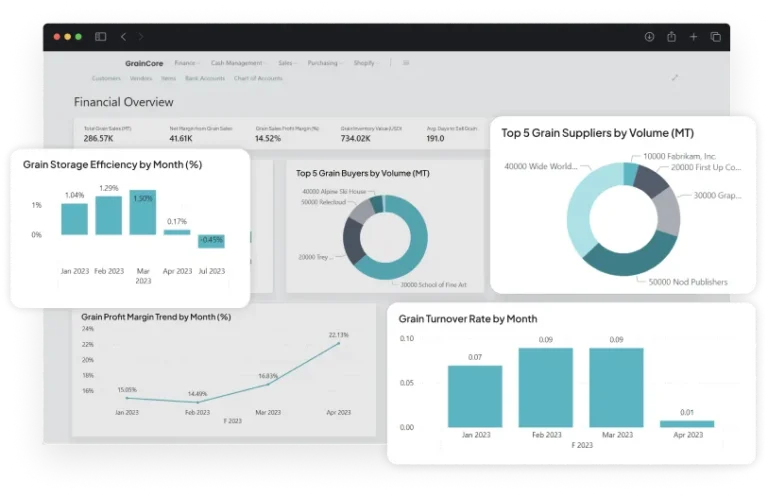
Full-spectrum ag-native ERP serving livestock, crop, and input agribusinesses, built on 20+ years of field deployment experience.
| Why we included it: Folio3 AgTech is the only platform in this guide that delivers a genuinely full-spectrum agriculture ERP, equal depth on both the livestock side (feedlots, beef cattle, dairy, swine) and the crop and input agribusiness side (row crops, seed production, grain handling, agri-cooperatives, and input distribution). This dual coverage is backed by proprietary tools, Cattlytics for beef and dairy herd management, FarmDocs for harvest and crop lifecycle management, and EcoDocs for food safety and compliance, plus full ERP deployment services across Oracle NetSuite, Microsoft Dynamics 365, and custom Azure builds. Real-world clients span both sides: Progressive Beef, Cactus Feeders, and Zoetis on the livestock side; Gro Alliance, Weaver Popcorn, and ADM Agriculture on the crop and input side. |
Agriculture Features
- Recall-ready lot and batch tracing with instant data retrieval for safety recalls
- Offline mobile field app: GPS-tagged, timestamped data capture with auto-sync
- Individual animal health records, vaccination logs, and treatment tracking
- Feed consumption tracking, ration formulation, and cost-of-gain analysis by pen
- Crop lifecycle management: planting, input tracking, field monitoring, and harvest
- Seed and agronomy management with variety tracking, germination rates, and planting allocations
- Input agribusiness and agri-cooperative management: member accounts, contract settlement, inventory
- Grain ERP workflows: delivery intake, quality grading, commodity contracts, and settlement
- Multi-platform ERP deployment: NetSuite, Dynamics 365, and Azure
- Power BI integration for cross-operation business intelligence across all ag verticals
| Pros | Cons |
| ✓ Full-spectrum coverage: livestock, crop, and input agribusinesses | ✗ Project-based pricing, not transparent online |
| ✓ Deep livestock, feedlot, and dairy capabilities via Cattlytics | ✗ Requires digital transformation commitment |
| ✓ Crop and harvest management depth via FarmDocs and custom builds | ✗ Not suited for very small, low-complexity farms |
| ✓ Input ag and agri-cooperative ERP expertise | ✗ Smaller global brand recognition than SAP/Microsoft |
| ✓ Offline mobile app for remote field and pasture operations | |
| ✓ Microsoft Gold Partner and Oracle NetSuite Alliance Partner | |
| ✓ Affordable vs Tier-1 ERP vendors at comparable functionality |
Best For: Feedlots, livestock operations, and dairy producers needing deep animal health and feed intelligence and crop enterprises, seed producers, grain handlers, and input agribusinesses needing field-to-finance visibility. Also well-suited for agri-cooperatives managing members on both sides of the operation.
Rating: 4.5/5
Folio3 AgTech’s real-world deployments span both sides of agribusiness. On the livestock side, when a multi-million-dollar, multi-entity feedlot needed to retire QuickBooks and consolidate into a finance-first ERP with pen-level cost intelligence, Folio3 delivered the implementation. Read the full feedlot ERP case study.
On the crop and input side, Gro Alliance partnered with Folio3 AgTech to digitize field data collection and improve hybrid seed production efficiency with a custom crop cycle management solution. Weaver Popcorn similarly partnered with Folio3 to centralize crop and supply chain operations across a complex multi-site production network.
Folio3’s ERP for agriculture platform connects livestock and crop operations under one financial core. The feedlot management software, livestock management suite, and crop management software are each available as standalone products that integrate directly into a broader ERP deployment, meaning you can start with the vertical that matters most and expand from there.
| Our take: Folio3 AgTech’s biggest competitive advantage is that it is the only platform in this guide that genuinely serves all three sides of agribusiness: livestock, crop, and input with purpose-built tools for each rather than a single generic ERP stretched to cover all. On the livestock side, Cattlytics and the feedlot ERP depth are unmatched. On the crop side, FarmDocs and custom crop lifecycle deployments serve seed producers and row-crop operations with equal rigor. For input agribusinesses and co-ops, the grain and agri-cooperative ERP work is similarly specialized. The offline mobile capability and implementation partnership model are consistent advantages across all three. |
3. Oracle NetSuite
The world’s most widely adopted cloud ERP, trusted by agribusinesses across every continent.
| Why we included it: Oracle NetSuite is the most-searched cloud ERP for agriculture in 2026, and for good reason: it is the only platform in this guide that is equally capable at running a 50-acre specialty crop operation and a multinational grain cooperative with 40 subsidiaries. Folio3 AgTech is an Oracle NetSuite Alliance Partner, which means we can implement, customize, and support NetSuite deployments with agriculture-specific configurations that out-of-the-box NetSuite does not provide. |
Agriculture Features
- Unified cloud platform integrating finance, supply chain, production, sales, and compliance
- Real-time financial visibility: multi-entity, multi-currency, multi-country consolidation
- Crop and yield planning with input utilization forecasting and waste reduction tools
- Inventory management across seeds, fertilizers, machinery, and produce storage
- IoT and sensor data integration for irrigation, pest monitoring, and environmental control
- SuiteAnalytics: embedded real-time dashboards and advanced reporting
- IFRS/ASC 606 and local agricultural regulatory compliance
- SuiteSuccess: pre-configured industry editions that reduce implementation time
| Pros | Cons |
| ✓ Highly scalable from mid-sized farms to global enterprises | ✗ Higher implementation cost than niche ag ERPs |
| ✓ Modular: add CRM, HCM, advanced manufacturing as needed | ✗ Complex configuration for small farms with limited IT resources |
| ✓ Certified Oracle NetSuite Alliance Partners available for ag customization | ✗ Requires expert customization for highly specific livestock workflows |
| ✓ Automation-ready: invoicing, order fulfillment, and crop costing | ✗ Not livestock-native; ag specifics need partner-built customizations |
| ✓ Robust partner network with agriculture-domain expertise |
Best For: Mid-to-large agribusinesses, cooperatives, food processors, and export-oriented operations that need enterprise-grade financial management alongside field operations.
Rating: 4.4/5
| Our take: Oracle NetSuite is the closest thing to a universal answer in this guide: it scales from a seed company running $5M in revenue to a multinational agri-corporation managing 200 entities. The catch is that it needs agricultural customization to reach its potential on-farm; out of the box, it is a finance and supply chain platform that happens to work for agriculture. Partnering with an ag-domain NetSuite implementer is not optional, it is a prerequisite. |
4. Microsoft Dynamics 365
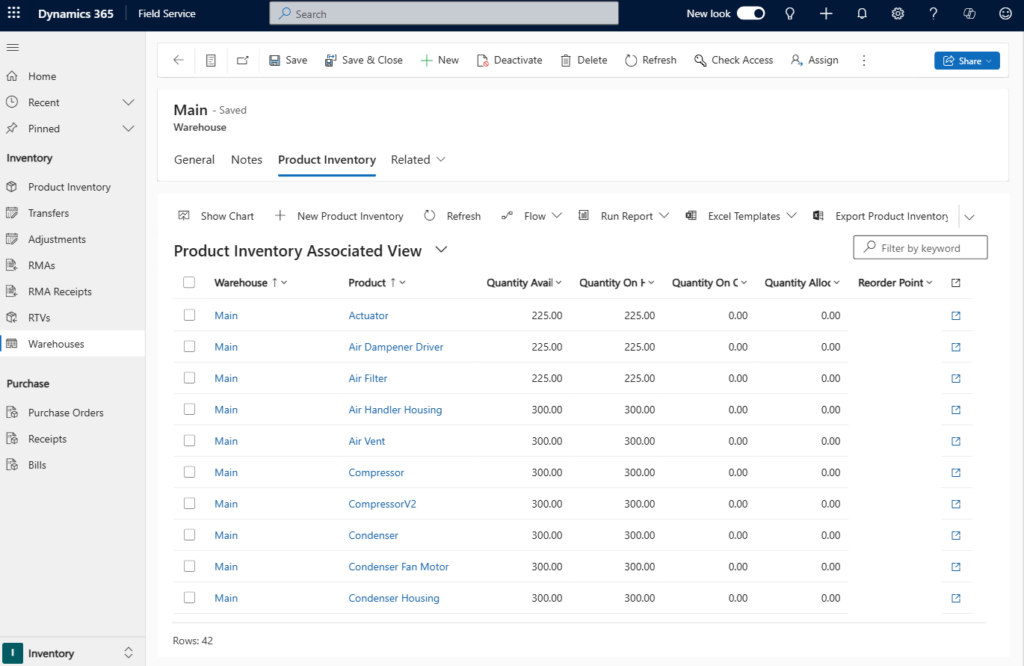
Enterprise-grade ERP and CRM suite for multi-entity agribusinesses in the Microsoft ecosystem.
| Why we included it: Microsoft Dynamics 365 is the natural choice for agribusinesses that have already invested in the Microsoft stack. Its integration with Office 365, Power BI, Teams, and Azure IoT means that the ERP becomes a digital core that connects every department, from field crews using mobile apps to executives running Power BI dashboards, without requiring data exports or manual reconciliation. |
Agriculture Features
- AI-powered cash-flow forecasting with seasonal liquidity modeling
- Automated procurement for ag inputs with centralized supplier contract management
- Batch, lot, and perishable goods tracking across warehouses and distribution centers
- Real-time equipment health monitoring via Azure IoT for predictive maintenance
- Power BI embedded analytics for cross-entity operational and financial reporting
- Field Service module for equipment scheduling during planting and harvest windows
- Multi-entity, multi-currency, multi-language support for global operations
| Pros | Cons |
| ✓ Seamless Microsoft ecosystem integration | ✗ High implementation costs with certified partners |
| ✓ Enterprise-grade scalability | ✗ Steep learning curve for non-technical users |
| ✓ Powerful BI and AI-driven analytics via Copilot and Power BI | ✗ Constant update cycle requires IT oversight |
| ✓ Strong multi-entity and multi-currency support | ✗ Not suited for small farms without internal IT support |
| ✓ Continuous updates with Microsoft’s AI roadmap | ✗ Requires ag add-ons for field-level crop/livestock features |
Best For: Mid-to-large enterprises already invested in Microsoft infrastructure, and multi-entity agribusinesses consolidating crop, logistics, and retail operations.
Rating: 4.4/5
| Our take: Dynamics 365 is a world-class ERP for the enterprise layer of agribusiness. Where it falls short is the field layer: crop scouting, livestock health records, and offline mobile are not native capabilities. Budget for a certified Microsoft partner with agriculture experience and a defined scope for ag-specific customizations. |
5. Acumatica Cloud ERP
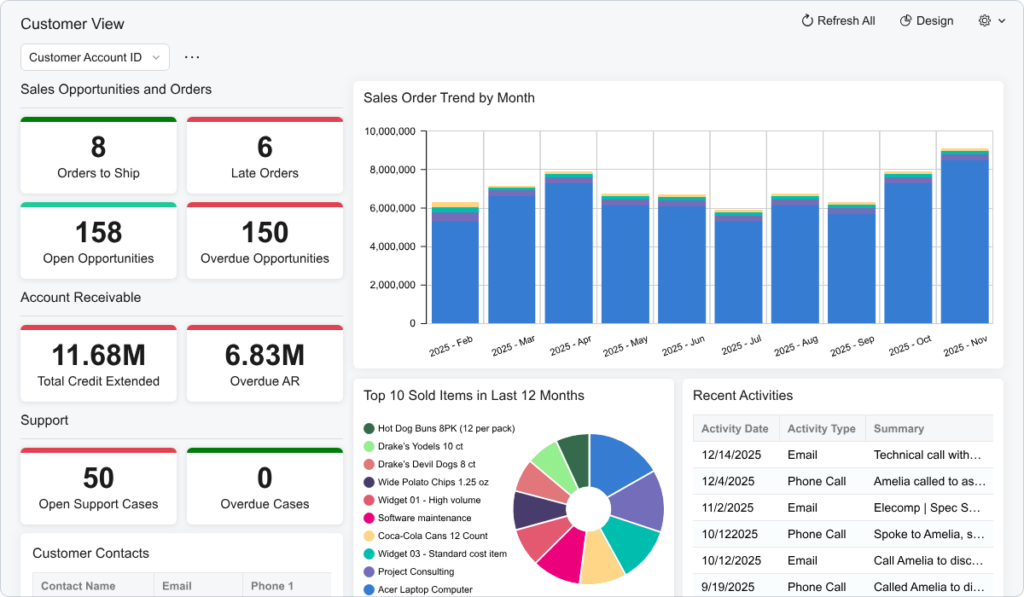
Cloud-first ERP that disrupted the market with unlimited-user licensing, ideal for scaling farms.
| Why we included it: Acumatica’s unlimited-user licensing model is a genuine competitive advantage for agriculture, where seasonal workforce fluctuations make per-user pricing painful. Adding 50 harvest workers to the system during October and removing them in November is a normal operating rhythm for many farms; paying per seat for that cycle is not. Acumatica charges based on computational resources consumed, not headcount. |
Agriculture Features
- Unlimited-user licensing: pay for resources consumed, not per seat
- Distribution management with automated reorder rules and warehouse management
- Open API architecture: integrates with Shopify, precision ag sensors, and marketplaces
- AP document recognition and anomaly detection via AI automation
- Real-time dashboards accessible from any device in the field or office
- Customer Bill of Rights preventing arbitrary price increases after contract
| Pros | Cons |
| ✓ No per-user fees; scales cost-effectively with seasonal staffing | ✗ Implementation starts around $60K minimum |
| ✓ Open API integrates with ag-specific precision tools | ✗ Lacks deep native ag-specific crop and livestock modules |
| ✓ Strong distribution and manufacturing modules | ✗ Requires third-party add-ons for livestock tracking |
| ✓ Transparent contractual pricing protections | ✗ Not suited for large-enterprise rigid governance requirements |
| ✓ Mid-market friendly implementation costs |
Best For: Mid-sized agribusinesses scaling rapidly, operations with significant seasonal workforce variation, and farms combining production and distribution.
Rating: 4.3/5
| Our take: Acumatica is the best unlimited-user ERP value proposition in this guide. If your operation doubles its workforce for three months every year, the licensing math alone justifies serious evaluation. The ag-specific depth requires add-ons, so budget for those during scoping. |
6. SAP S/4HANA
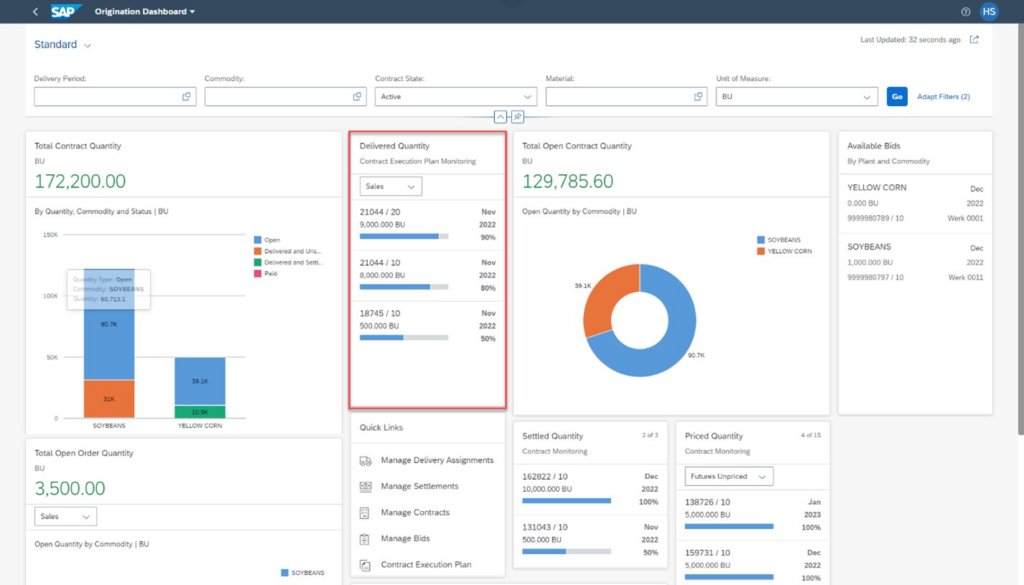
The gold standard enterprise digital core for global agri-corporations and large cooperatives.
| Why we included it: SAP S/4HANA is the most powerful ERP in this guide and also the most demanding. It is designed for the largest agribusinesses in the world: global cooperatives managing 100+ entities, multinational agri-corporations navigating 15 regulatory environments simultaneously, and large-scale commodity traders who need real-time risk management across millions of tones of product. If your operation is at that scale, no other platform matches it. If it is not, the TCO is unjustifiable. |
Agriculture Features
- Sustainability Control Tower: global ESG tracking for carbon, soil fertility, and water usage
- Agricultural Contract Management with real-time commodity risk and financial integration
- Plan-to-Harvest Optimization using satellite data and crop simulation
- Business AI: personalized data-driven advice for fertilizer and pesticide optimization
- Agricultural Origination Portal for grower network collaboration
- Multi-entity, multi-currency, multi-regulation financial consolidation
- HANA in-memory database for real-time analytics across massive data volumes
| Pros | Cons |
| ✓ Gold standard for global agri-corporations | ✗ Highest TCO in the ERP market |
| ✓ Unmatched commodity risk management depth | ✗ Multi-year implementation timelines are common |
| ✓ Built-in sustainability, ESG, and carbon reporting | ✗ Overkill for operations under $200M revenue |
| ✓ Handles extreme multi-entity consolidation | ✗ Requires large dedicated internal IT teams |
| ✓ SAP AI deeply integrated into operational workflows | ✗ Heavy change management burden on agribusiness staff |
Best For: Multinational agribusinesses, large cooperatives, and enterprises requiring unified compliance across multiple global regulatory environments.
Rating: 4.3/5
| Our take: SAP S/4HANA is an exceptional platform for the 1% of agribusinesses that genuinely need its capabilities. For everyone else, the implementation timeline, cost, and organizational burden outweigh the functional advantages. If you are considering SAP, be brutally honest about whether your operational complexity actually requires it before committing. |
7. Infor M3 (CloudSuite Food & Beverage)
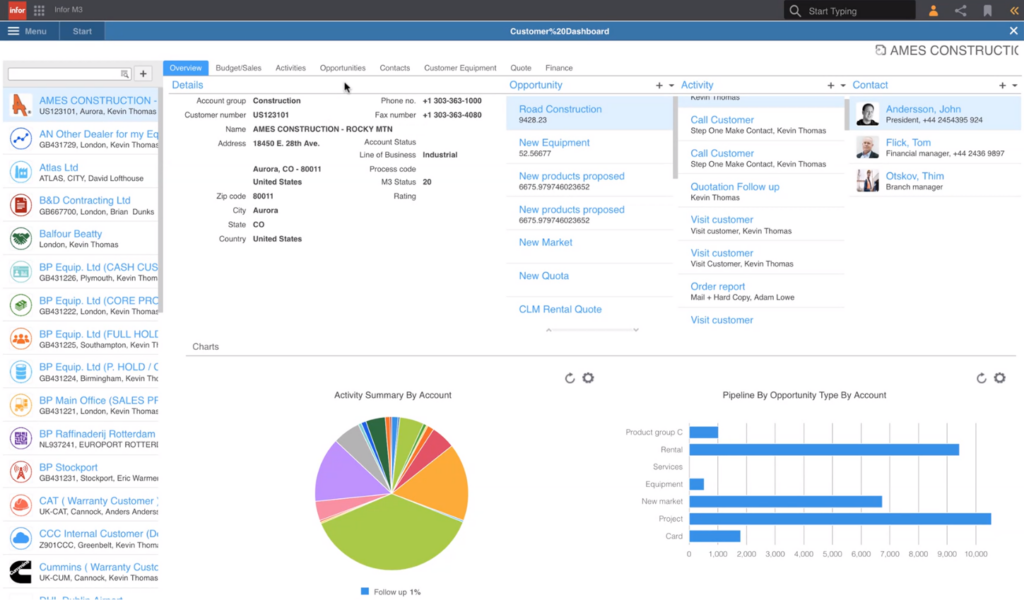
ERP engineered for large-scale food manufacturers and agricultural product distributors.
| Why we included it: Infor M3’s CloudSuite Food & Beverage is the deepest process manufacturing ERP in this guide. It understands the operational realities of converting raw farm produce into shelf-ready products: variable input quality, perishable inventory rotation, catch-weight management, and shelf-life compliance. For large-scale processors managing the intersection of raw production and sophisticated manufacturing, M3 is a strong choice. |
Agriculture Features
- Full ingredient-level traceability through every supply chain step
- Advanced Planning and Scheduling with seasonality-aware production optimization
- CloudSuite Equipment: machinery, parts, and dealer/distributor network visibility
- Multi-country financial consolidation with multi-company and multi-currency support
- Velocity AI for demand forecasting and production optimization
- Shelf-life management and FIFO/FEFO inventory rotation
| Pros | Cons |
| ✓ Deep process manufacturing and food safety capabilities | ✗ Complex setup requires disciplined implementation |
| ✓ Cloud-native: no major upgrade cycles | ✗ Not designed for field-level crop management |
| ✓ Strong ag equipment and dealer network management | ✗ Pricing available only on request |
| ✓ Proven at enterprise scale globally | ✗ Smaller partner ecosystem than SAP or Microsoft |
Best For: Large-scale food processors, agricultural product manufacturers, and agricultural equipment distributors managing multi-site dealer networks.
Rating: 4.0/5
| Our take: Infor M3 is the right answer for a processor, not a producer. If your agribusiness sits downstream from the farm gate, turning raw commodities into packaged or processed products, M3’s manufacturing depth is hard to beat. For operations that primarily grow and harvest, the lack of field-level modules is a genuine limitation. |
8. FarmERP (by Shivrai Technologies)
Globally deployed, purpose-built agricultural ERP covering the full farming lifecycle.
| Why we included it: FarmERP is one of the most comprehensively deployed purpose-built agricultural ERP platforms globally, operating in 20+ countries across commercial farms, plantations, cooperatives, and food producers. It distinguishes itself through deep crop lifecycle specialization and its FarmGyan AI module, which converts complex farm data into actionable production insights integrated natively into the ERP. |
Agriculture Features
- Field activity management and crop planning across annual, perennial, and high-value horticulture
- Contract farming and grower coordination with traceability from field to customer
- Input logistics, resource inventory tracking, and procurement management
- Sustainability monitoring and compliance reports for export and certification requirements
- FarmGyan AI: predictive intelligence for yield optimization and risk assessment
- IoT-based data capture and Field Connect platform for sensor integration
- Mobile access for field teams with real-time operational visibility
| Pros | Cons |
| ✓ Deep specialization in agriculture and allied sectors | ✗ Smaller integration and partner ecosystem than Tier-1 ERPs |
| ✓ Advanced traceability and environmental tracking | ✗ May require customization for financial or CRM connectivity |
| ✓ Scalable from single farms to global plantations and cooperatives | ✗ Less known in North America than in Asia-Pacific and Europe |
| ✓ FarmGyan AI natively integrated for production decisions | ✗ Implementation timeline varies significantly by operation size |
| ✓ Active in 20+ countries with proven global deployment record |
Best For: Large commercial farms, plantations, greenhouses, agri-cooperatives, and food producers seeking a purpose-built platform with native AI.
Rating: 4.2/5
| Our take: FarmERP belongs in every serious agribusiness evaluation that the mainstream ERP guides overlook. Its global deployment depth demonstrates genuine operational maturity, and the FarmGyan AI module is one of the most agriculture-specific AI implementations we reviewed. The North American partner ecosystem is thinner than for SAP or Microsoft, which is worth factoring into your implementation planning. |
9. Odoo
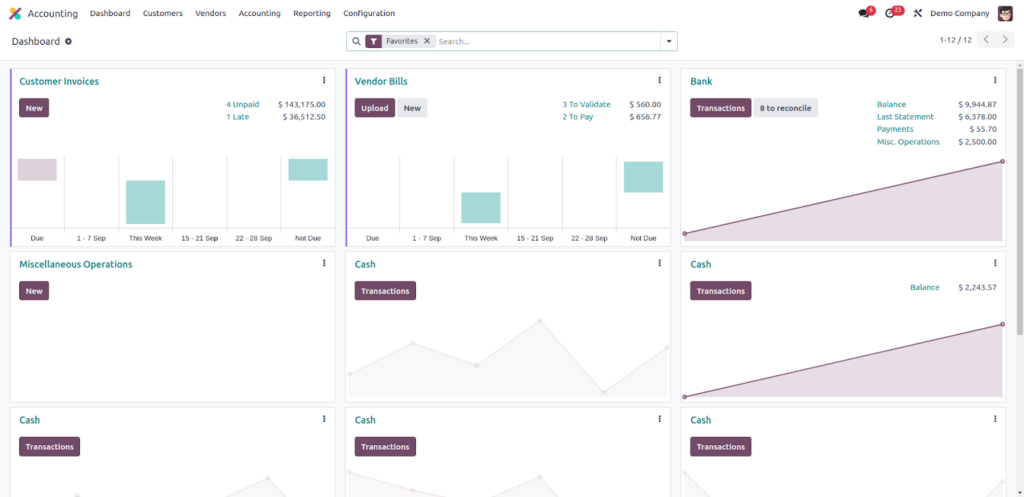
Open-source, modular ERP delivering cost-effective digital transformation for small farms and cooperatives.
| Why we included it: Odoo offers a compelling entry point for agribusinesses that have outgrown spreadsheets but are not ready for the investment of a Tier-1 ERP. Its open-source architecture means there is no vendor lock-in, and its modular design lets operations start with the two or three modules they actually need today and expand as the business grows. |
Agriculture Features
- Agriculture Management Module: manage farmers, locations, animals, and vehicles from one dashboard
- Crop Order Lifecycle: link specific field tasks to inventory movements and financial costs
- Integrated D2C Marketing: built-in email and social tools for direct-to-consumer farm brands
- Modular App Store: add CRM, accounting, manufacturing, and field modules as needed
- One App Free plan for unlimited users to start digital transformation immediately
- Community-developed extensions for crop cycle management, fertilizer planning, and equipment tracking
| Pros | Cons |
| ✓ Extremely budget-friendly with transparent pricing | ✗ Ag modules from third-party developers vary in quality |
| ✓ Open-source with large community ecosystem | ✗ Lacks deep native livestock or yield analytics |
| ✓ Modular design scales from startup to enterprise | ✗ Requires technical patience for modular setup and integration |
| ✓ Strong D2C marketing tools built in | ✗ Not suited for rigid global enterprise governance requirements |
| ✓ No vendor lock-in; full data portability | ✗ AI capabilities depend on community add-on quality |
Best For: Small-to-mid-sized farms, agri-cooperatives, direct-to-consumer farm brands, and agtech startups on a defined budget.
Rating: 4.2/5
| Our take: Odoo is the best budget entry point in this guide, full stop. If your operation is under $5M in revenue, the ROI of a $250K SAP implementation is extremely hard to justify. Start with Odoo’s accounting, inventory, and crop planning modules, validate your ERP processes on a real system, and scale up when the business demands it. |
10. Sage X3
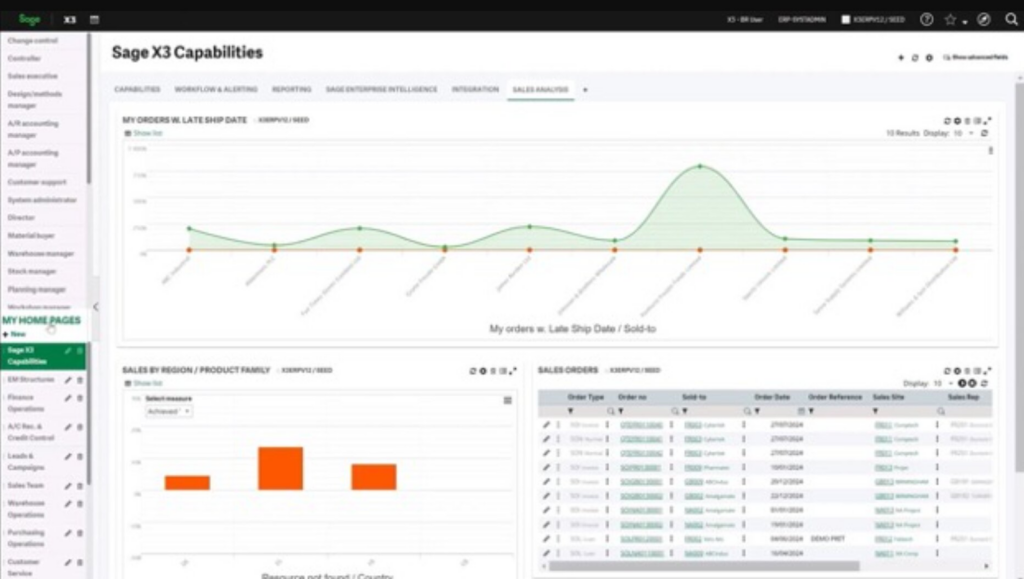
Comprehensive ERP for mid-to-large food manufacturers and agricultural distributors with global operations.
| Why we included it: Sage X3 is a proven ERP for food manufacturers and agri-processors that need multi-country financial management and robust recipe-based production in a single system. It bridges the gap between manufacturing workflow requirements and agricultural processing needs, particularly for operations between 50 and 1,000 employees. |
Agriculture Features
- Recipe and process manufacturing: BOM management, shop floor control, and batch production
- Multi-country financial management: native multi-currency, multi-legislation GL and consolidation
- Real-time inventory visibility with shelf-life monitoring and waste reduction dashboards
- Sage Copilot AI for automated task assistance and operational decision support
- Sales and CRM integration with unified quotation, order, and pricing management
- Customizable to complex ag processing workflows
| Pros | Cons |
| ✓ Strong process manufacturing for food operations | ✗ Pricing not publicly listed; premium cost tier |
| ✓ Native multi-country and multi-currency support | ✗ Requires dedicated IT team for configuration |
| ✓ Sage Copilot AI enhances data-driven decisions | ✗ Not suitable for small farms or startups |
| ✓ Highly customizable to complex ag workflows | ✗ Limited native crop or livestock field modules |
Best For: Mid-to-large food processors and agricultural distributors with global operations, particularly those with 50 to 1,000 employees.
Rating: 4.0/5
| Our take: Sage X3 earns its place for processors and distributors, not growers. The multi-country financial depth and manufacturing module quality are genuinely strong, and Sage Copilot is a well-integrated AI layer rather than a marketing afterthought. The gap is field operations: if your ERP needs to reach from the farm field to the processing floor, you will need supplemental tools. |
11. BatchMaster Manufacturing
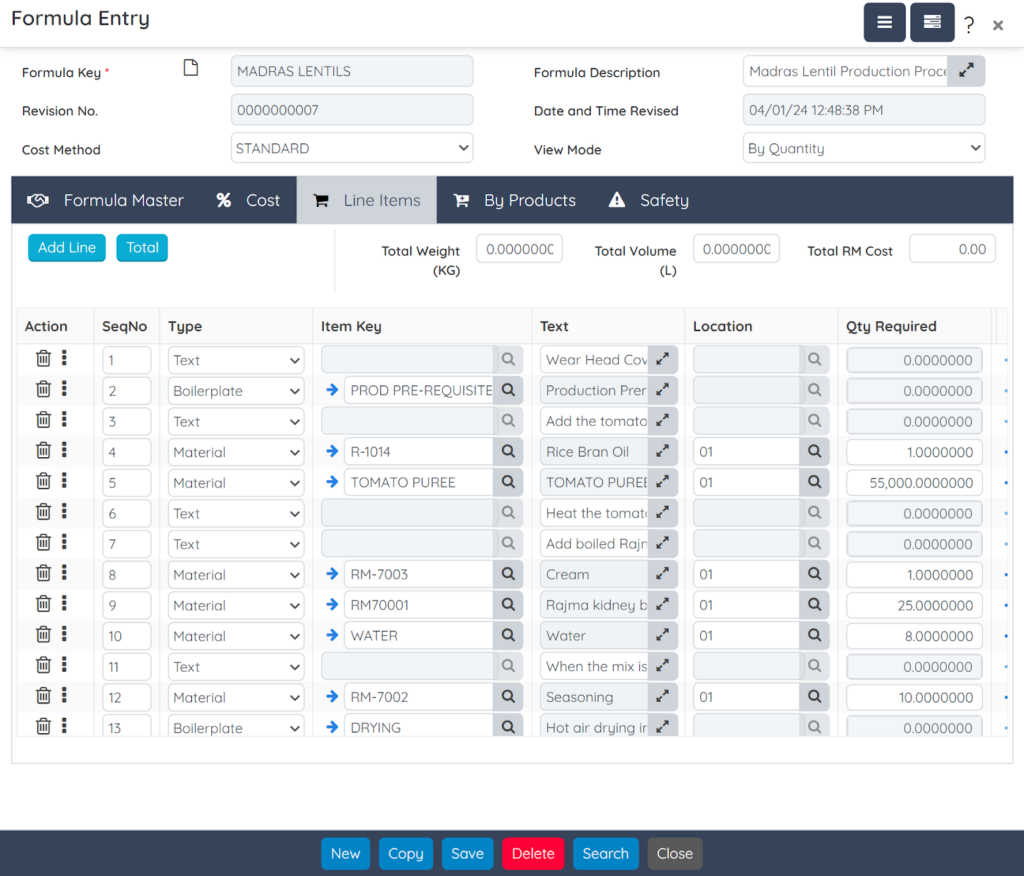
Specialized process ERP for formula-based agricultural manufacturers: grain mills, feed producers, and food processors.
| Why we included it: BatchMaster is the deepest process manufacturing ERP in this guide for formula-based production. It is purpose-built for operations that transform raw farm commodities into finished goods through recipe-based or formula-based manufacturing, including grain milling, juice processing, animal feed manufacturing, and food ingredient processing. Critically, it embeds into existing accounting systems (SAP Business One, Dynamics GP, Sage) rather than replacing them. |
Agriculture Features
- Recipe and formula management with version control, batch scaling, and ingredient substitution
- Bi-directional lot tracking: traceback and traceforward from raw material to finished product delivery
- Variable-weight item support with precise costing for catch-weight products
- Quality management with automated holds for non-compliant production batches
- Shelf-life and expiration tracking for FSMA/HACCP compliance
- Integration with SAP B1, Microsoft Dynamics GP, and Sage ERP platforms
| Pros | Cons |
| ✓ Unmatched recipe and formula management depth | ✗ Not designed for field-level farming operations |
| ✓ Embeds into existing ERP systems, preserving prior investment | ✗ Limited CRM and marketing capabilities |
| ✓ Strong FSMA/HACCP compliance automation | ✗ Niche focus narrows broad operational use |
| ✓ Accessible to mid-market with low user minimums | ✗ UI can feel dated compared to modern platforms |
| ✓ Bidirectional lot tracing is best-in-class for processors |
Best For: Agricultural food processors with complex recipe-based production: grain mills, feed manufacturers, meat processors, and beverage producers.
Rating: 4.4/5
| Our take: BatchMaster occupies a very specific and very valuable niche: if your agribusiness involves processing raw commodities into finished goods using formula or batch logic, and you already have an accounting ERP in place, BatchMaster is the most cost-effective way to add manufacturing intelligence without a full ERP replacement. |
12. Agvance
Finance-first ERP purpose-built for agri-retailers, grain handlers, and agricultural cooperatives.
| Why we included it: Agvance is the dominant ERP solution for agri-service providers and co-ops across North America. Unlike general-purpose ERPs adapted for agriculture, Agvance was built specifically for the agri-retail sector and understands the operational realities of grain handling, fuel management, agronomy services, and customer account management that other platforms handle awkwardly or not at all. |
Agriculture Features
- Detailed financial and accounting modules including grain settlement and patronage processing
- Contract and inventory tracking designed for agri-retail and cooperative operations
- Customer relationship and billing management for grower accounts
- Integration with grain, fuel, and agronomy operations in a single system
- Agronomic data management for crop input recommendations and application records
- Agri-retail point-of-sale and customer credit management
| Pros | Cons |
| ✓ Excellent financial and accounting depth for agri-retail | ✗ Limited scalability for large enterprises outside agri-retail |
| ✓ Tailored for agri-retail and co-op management workflows | ✗ Fewer advanced automation and analytics tools |
| ✓ Easy to use for smaller agricultural operations | ✗ Less known outside the North American co-op market |
| ✓ Deep grain, fuel, and agronomy integration | ✗ AI capabilities are limited compared to Tier-1 platforms |
Best For: Small to mid-sized agri-retailers, grain handlers, and agricultural cooperatives needing finance-first ERP designed for the agri-service sector.
Rating: 4.1/5
| Our take: Agvance is the right tool for a specific and important segment that larger ERP vendors consistently underserve: the agri-retailer or cooperative that manages grain handling, agronomy services, fuel distribution, and grower accounts simultaneously. If that describes your operation, the fact that Agvance was built for you rather than adapted to you matters enormously in daily workflow. |
13. Agrivi
Data-driven farm management ERP built around precision agriculture and yield analytics.
| Why we included it: Agrivi distinguishes itself by focusing on the analytical layer of farm management: rather than simply recording what happened in the field, it builds predictive models from historical data to optimize what should happen next season. Its integrations with major ERP platforms (NetSuite, SAP, Microsoft Dynamics, and Xero) position it as a best-of-breed field intelligence layer that complements, rather than replaces, a core finance ERP. |
Agriculture Features
- Crop management and rotation planning with soil health analysis
- Farm budgeting and cost tracking with ROI assessment by field and crop variety
- Weather monitoring and pest/disease risk alerts for proactive decision-making
- Yield forecasting with benchmarking across fields, seasons, and practices
- Sustainability and regulatory compliance reporting for certifications
- Native integrations with NetSuite, SAP, Dynamics 365, and Xero
| Pros | Cons |
| ✓ Advanced analytics for data-driven farm decisions | ✗ Limited offline access in remote field areas |
| ✓ Excellent budgeting, cost visibility, and ROI tracking | ✗ Requires regular system updates for full AI functionality |
| ✓ Real-time operational insights by field, crop, and season | ✗ Best deployed as a complement to, not replacement for, a finance ERP |
| ✓ Supports sustainable and traceable farming practices | ✗ Implementation scope can expand quickly for complex operations |
| ✓ Integrates with all major ERP platforms |
Best For: Precision-agriculture-focused farms, mid-sized crop operations transitioning to data-driven management, and agribusinesses augmenting an existing finance ERP with field intelligence.
Rating: 4.1/5
| Our take: Agrivi is one of the most analytically sophisticated platforms in this guide. If your operation is already running a core finance ERP and you need to add serious field-level decision intelligence without a full ERP replacement, Agrivi’s integration depth makes it a compelling layer on top of your existing stack. |
14. Croptracker
Specialist farm management and traceability platform for fresh produce and horticulture growers.
| Why we included it: Croptracker has served growers of fruits and vegetables since 2006, giving it nearly two decades of operational refinement in a market segment that larger ERP vendors consistently treat as an afterthought. Its traceability, labor tracking, and compliance capabilities are built around the specific rhythms of fresh produce: spray records, harvest yields by picker and block, packing line traceability, and GIS field mapping. |
Agriculture Features
- Spray and fertilizer application records with cost tracking and safe re-entry compliance alerts
- Harvest yield recording by block and by picker, including piece-rate calculations and lot linking
- GIS field mapping with parcel-level tracking and activity history
- Packing and shipping traceability from field to shipment with quality control records
- Storage and quality control records for fresh produce compliance
- Mobile-friendly for real-time field entry on any device
| Pros | Cons |
| ✓ Strong traceability and compliance for fresh produce growers | ✗ Narrowly focused on horticulture, not broad crop/livestock farming |
| ✓ Mobile-friendly with real-time field record entry | ✗ Lacks full ERP features: no deep financial management or supply chain |
| ✓ Modular and scalable for growers and packers of various sizes | ✗ Less known outside the fresh produce segment |
| ✓ Purpose-built for horticulture workflows since 2006 | ✗ Limited AI and predictive analytics capabilities |
| ✓ Excellent piece-rate labor management for harvest crews |
Best For: Fruit, vegetable, and orchard growers; fresh produce packers and exporters needing detailed operational tracking and supply chain traceability.
Rating: 3.9/5
| Our take: Croptracker is the right specialist tool for fresh produce operations that have been underserved by the broader ERP market for years. Its compliance and labor tracking depth, earned over nearly two decades in the fresh produce sector, is genuinely differentiated. The tradeoff is breadth: it is not a full ERP and works best as a field operations and traceability layer alongside a core accounting system. |
15. AgriChain
Cloud-based agricultural supply-chain software for grain traders, bulk handlers, and grower cooperatives.
| Why we included it: AgriChain addresses a critical gap in the agricultural software market: the operational layer between the farm gate and the commodity buyer. Grain handlers, bulk commodity traders, and export-oriented cooperatives regularly find that generic supply chain software cannot handle auto-weighing, digital commodity contracts, or multi-site bulk inventory management with the precision their operations require. AgriChain was built specifically for these workflows. |
Agriculture Features
- Stock, contracts, logistics, and payment management across farms, growers, bulk handlers, and traders
- Auto-weighing and bulk inventory management for grain handling and multi-location operations
- Digital contracts and subscriptions with procure-to-pay automation
- Container packing management for export-oriented operations
- Grower payment and settlement management with subscription delivery tracking
- Web and mobile applications for growers, carriers, brokers, and exporters
| Pros | Cons |
| ✓ Specialized supply-chain transparency for agricultural commodities | ✗ Primarily focused on supply chain and trading, not field-level farming |
| ✓ Strong procure-to-pay automation including contracts and invoicing | ✗ Limited crop planning or livestock management functionality |
| ✓ Advanced site, stock, and logistics management for grain and bulk handling | ✗ Less known outside the Australasian and export-ag market |
| ✓ Mobile and web-friendly for all supply chain participants | ✗ May require integration with a separate core ERP for finance |
| ✓ Critical for export-oriented operations facing compliance pressures |
Best For: Agribusinesses, grain traders, grower cooperatives, and bulk commodity handlers needing specialized supply-chain transparency and contract management.
Rating: 3.9/5
| Our take: AgriChain fills a narrow but genuinely underserved niche. Operations that ship bulk commodities internationally, managing complex grower contracts and multi-site inventories, will find capabilities here that simply do not exist elsewhere in this guide. For primary farming operations without significant trading or logistics complexity, the platform is likely more than what is needed. |
16. Priority Software
Cloud-ready ERP with strong agricultural traceability and multi-site management for agri-enterprises.
| Why we included it: Priority Software brings enterprise-grade traceability, compliance management, and real-time cost visibility to mid-to-large agribusinesses that need farm-to-fork operational control without the TCO of SAP or Oracle. Its IoT integration layer and multi-unit inventory handling capabilities make it particularly suited for operations managing multiple processing sites with variable produce weights and complex export compliance requirements. |
Agriculture Features
- Crop production, harvesting, and processing management in a unified workflow
- End-to-end traceability and recall management meeting global export standards
- Multi-unit inventory tracking for varied produce types and multiple facility locations
- IoT and peripheral integration for real-time field data capture
- Advanced financials with profitability tracking by product, site, and customer
- Customer service tips and order management tools for B2B agri-operations
| Pros | Cons |
| ✓ Real-time insights into crop, cost, and compliance data | ✗ UI can be complex for smaller operators |
| ✓ Multi-unit and multi-facility product handling | ✗ May require dedicated training for advanced modules |
| ✓ Cloud and mobile accessibility for field and office operations | ✗ Less partner ecosystem depth than SAP or Microsoft |
| ✓ Strong traceability for export compliance requirements | ✗ Pricing requires custom engagement |
Best For: Agri-input suppliers, mid-to-large agribusinesses managing multiple sites, and producers needing traceability and export compliance depth.
Rating: 4.0/5
| Our take: Priority Software is a strong option for the often-overlooked mid-tier agribusiness: too large for Odoo, not large enough to justify SAP. Its traceability and IoT integration capabilities are mature, and the multi-site financial management is well-suited for operations with processing plants across multiple locations. |
How to Choose the Right Agriculture ERP for Your Operation Type
The best ERP depends entirely on what you grow or raise, how many sites you manage, and where you are in your digital transformation journey. Use this guide to narrow your shortlist.
For Crop Producers, Orchards, and Row-Crop Farms
Your operation lives and dies by the growing season. Prioritize platforms with:
- Land management modules with parcel-level tracking and GIS field mapping
- Weather API integrations feeding real-time forecasts into crop planning
- Yield forecasting using historical data, soil analysis, and satellite imagery
- Seasonal labor modules with piece-rate payroll and harvest crew scheduling
- Precision ag integration with variable-rate controllers and soil sensors
Top picks: AgriERP, Microsoft Dynamics 365, FarmERP, Odoo for budget-conscious operations.
For further reading on precision agriculture technology and how it integrates with ERP platforms, see our dedicated guide.
For Livestock and Dairy Operations
Your inventory is alive, and that changes everything. Look for:
- Individual animal health records, vaccination schedules, and treatment logs
- Feed consumption tracking and ration formulation tools tied to cost-of-gain analysis
- Herd lifecycle management covering breeding, calving, weaning, and culling
- Genetics tracking for bull selection, semen inventory, and expected progeny differences
- Offline mobile capability for remote pasture and pen-level data entry
Top picks: Folio3 AgTech, Microsoft Dynamics 365, SAP S/4HANA for large-scale dairies.
For Feedlots
Pen-level cost of gain, ration formulation accuracy, and multi-entity financial consolidation are non-negotiable. A feedlot operating at scale cannot afford to run finance in QuickBooks and operations in a disconnected system. See how a multi-million-dollar feedlot replaced QuickBooks with a finance-first ERP to understand what a purpose-built feedlot ERP implementation looks like in practice.
Top picks: Folio3 AgTech, Microsoft Dynamics 365.
For Agricultural Process Manufacturers and Food Distributors
You are transforming raw commodities into shelf-ready products. Focus on:
- Shelf-life tracking and FIFO/FEFO inventory rotation to reduce spoilage and waste
- Catch-weight management for variable-weight items like meat, produce, and seafood
- FDA/USDA/FSMA compliance with automated audit trails and recall-ready tracing
- Recipe management with version control, batch scaling, and ingredient substitution
Top picks: BatchMaster, Infor M3, Sage X3, Priority Software for complex manufacturing and distribution.
For Agricultural Cooperatives
Member account management, commodity contract settlement, and multi-member patronage accounting are requirements that generic ERPs handle poorly. Look for co-op-specific financial tools and grain ERP software capabilities for grain-handling co-ops.
For co-ops managing both input supply and commodity handling, Folio3 AgTech’s agri-cooperative ERP is purpose-configured for these dual-mandate operations.
Top picks: Agvance for North American agri-retail co-ops. Oracle NetSuite or Folio3 AgTech for multi-entity cooperatives with grain and livestock operations.
Full Agriculture ERP Evaluation Framework
Use this table when building your internal business case or vendor shortlist. Each criterion maps directly to the 10-point checklist used in the ERP reviews above.
| Evaluation Criteria | What It Means | Why It Matters for Farms | What to Look For |
| Farm size and type | Whether you manage crops, livestock, processing, or all three | Determines module fit: crop management vs. manufacturing vs. livestock | ERPs with modules specific to your primary operation type |
| Deployment model | Cloud-based or on-premise | Cloud offers scalability and remote access; on-premise gives data control | Default to cloud unless you have strict data sovereignty requirements |
| Ag-specific functionality | Built-in crop planning, livestock health, yield tracking | Generic ERPs require 40-60% more customization for ag workflows | Modules that work like a farm, not a factory adapted for farming |
| Integration capabilities | Connects to IoT sensors, precision ag tools, and accounting systems | Smooth data flow reduces manual entry and reconciliation errors | Open API, pre-built connectors for John Deere, Climate FieldView, Trimble Ag |
| Data and analytics | Real-time dashboards, forecasting, and cost-of-production reporting | Enables informed decisions on inputs, yields, and financial performance | Native BI dashboards plus AI-driven forecasting, not just historical reports |
| Offline mobile support | Field data capture without cell coverage | Farm teams work in remote areas; data entry cannot wait for Wi-Fi | GPS-tagged, auto-syncing offline app tested in areas with no connectivity |
| Compliance and traceability | Lot tracing, audit trails, recall readiness, certification support | Regulatory penalties and food safety incidents are existential risks | Bidirectional lot traceback, automated FSMA/HACCP logs, one-click recall |
| Scalability | Handles growth from one site to 50 without re-architecture | Avoids costly platform migrations as the business grows | Multi-entity, multi-currency, and multi-language support from day one |
| Support and vendor expertise | Implementation team understands agriculture, not just software | Ag implementation errors compound quickly; wrong configurations cost seasons | Vendors with verifiable ag-domain deployment references in your operation type |
| Total cost of ownership | All-in cost: licensing, implementation, training, and ongoing support | ERP costs are often underestimated by 40-60% when only licensing is quoted | Request multi-year TCO scenarios including upgrade cycles and support contracts |
| Not sure which platform fits your operation? Folio3’s AgTech consulting team has evaluated ERPs across livestock, crop, feedlot, and food processing operations for 20+ years. Book a free consultation. |
Cloud vs. On-Premise ERP for Agriculture: Which Is Right in 2026?
The cloud vs. on-premise debate has largely been settled in 2026, but the answer is not one-size-fits-all for agriculture.
Cloud ERP advantages for agribusinesses: Remote access from the field, office, or a truck cab. Automatic software updates without IT intervention. Lower upfront capital expenditure. Scales easily across multiple farm sites without server infrastructure at each location. All 16 platforms in this guide offer cloud-based deployment.
When on-premise still makes sense: Operations with strict data sovereignty requirements, such as government contracts or regulated seed production, may require on-premise or private-cloud deployment. Farms in extremely remote regions with no reliable internet connectivity may also need on-premise for certain modules, particularly inventory and field data capture.
The hybrid approach: Many large agribusinesses in 2026 run a cloud-based ERP for their financial and supply chain core while deploying on-premise or edge computing modules for offline field data capture. This architecture gives you cloud scalability for enterprise functions and operational reliability in areas with no connectivity.
For an in-depth look at how digital transformation in agriculture is changing infrastructure decisions across farm sizes and operation types, see our dedicated resource.
The ROI of Implementing an Agriculture ERP: What the Data Shows
For CFOs and decision-makers building the internal business case, the ROI question is paramount. Here is what verified deployment patterns show across three core value drivers.
Reduced Input Costs Through Precision Integration
When your ERP connects to variable-rate controllers and soil sensors, you apply fertilizer, seed, and chemicals only where they are needed in the required quantities. Agribusinesses using ERP-integrated precision tools have reported input cost reductions of 15 to 20% by eliminating blanket application across entire fields. Across a multi-thousand-acre operation, that translates to six-figure annual savings. See how precision agriculture technology connects to ERP platforms in our dedicated overview.
Lower Administrative Overhead via Automated Compliance
Manual compliance documentation, FSMA logs, audit reports, and traceability records consume hundreds of labor hours per year. ERP automation of these workflows has been shown to cut administrative overhead by 25 to 30% across industry implementations. Your compliance team shifts from reactive data-gathering during inspections to proactive risk management throughout the season.
Reduced Post-Harvest Losses and Inventory Waste
Farms using ERP for supply chain traceability have been able to reduce post-harvest losses by up to 20% through improved FIFO/FEFO visibility and real-time shelf-life dashboards. For perishable operations, the cumulative effect on inventory carrying costs and spoilage reduction often delivers full ROI within 18 to 24 months of deployment.
For a full breakdown of all financial variables in an agriculture ERP investment, including implementation costs, payback periods, and financing structures, read our ERP cost-benefit analysis in agriculture. If you are already past the decision stage and planning the rollout, our guide to ERP implementation in agriculture covers the full project lifecycle from scoping to go-live.
Real-World Results: How Folio3 AgTech Transforms Agribusiness Operations
Feedlot Case Study: Retiring QuickBooks Across a Multi-Entity Operation
A multi-million-dollar feedlot with operations across multiple entities reached a point where QuickBooks could no longer provide the pen-level financial intelligence needed to manage cost of gain, feed conversion ratios, and multi-entity P&L simultaneously. Folio3 deployed a finance-first feedlot ERP that consolidated all entities into a single financial core, automated pen-level cost tracking, and delivered live dashboards that management could act on the same day, not the same quarter. Read the full feedlot ERP story.
Crop Case Study: Digitizing Hybrid Seed Production at Gro Alliance
Gro Alliance, a leading hybrid seed producer, partnered with Folio3 AgTech to replace disconnected field data collection processes with a custom crop cycle management solution. The deployment digitized inbred and hybrid management, field activity tracking, and data analytics across the full crop lifecycle, improving operational efficiency and enabling data-driven decisions on hybrid seed production. Read the Gro Alliance case study.
Lamb Processing: Centralizing Operations for a Leading Processor
A leading American lamb processing plant worked with Folio3 to centralize multi-site operations, automate data management, and achieve superior traceability and decision-making across the entire production cycle, from livestock receiving through slaughter, fabrication, and final shipment. Read the lamb processor case study.
Conclusion
Choosing the right ERP software for agriculture in 2026 is not about picking the most feature-rich platform. It is about matching your operation’s scale, complexity, and growth trajectory to the system that delivers real visibility from field to finance without requiring a team of IT consultants to maintain it.
For crop-focused operations, AgriERP and FarmERP lead the purpose-built field. For feedlots and livestock operations, Folio3 AgTech’s depth of experience and proprietary tooling is unmatched. For enterprises that need to consolidate multi-entity financials across a global operation, Oracle NetSuite and SAP S/4HANA remain the definitive platforms. And for operations constrained by budget, Odoo provides a credible entry point that grows with you.
Whatever your operation type, the 10-point evaluation checklist in this guide, the decision framework table, and the real-world case studies from Folio3’s deployments give you the tools to cut through vendor noise and make a decision grounded in operational reality. Understanding the full picture of ERP implementation in agriculture, and having a partner with the ag-domain experience to execute it, is the difference between an ERP that transforms your operation and one that sits underused.
| Ready to identify the right ERP for your operation? Folio3 AgTech’s consultants have deployed ERP solutions for feedlots, livestock operations, crop enterprises, and cooperatives across North America for 20+ years. Book a free consultation today. |
Frequently Asked Questions About Agriculture ERP Software
What is the average implementation timeline for an agriculture ERP?
Most agriculture ERP implementations take between 3 and 12 months, depending on platform complexity and the number of modules deployed. Simpler cloud setups like Odoo or Agvance for a single-site operation can go live in 8 to 12 weeks. Mid-market platforms like Acumatica or Folio3 AgTech for a multi-site operation typically run 4 to 8 months. Enterprise-grade systems like SAP S/4HANA commonly require 12 to 24 months for a full deployment.
Can small farms benefit from ERP software, or is it only for large enterprises?
Small farms absolutely benefit from ERP software. Cloud-based platforms like Odoo and Acumatica offer scalable, affordable entry points that work for operations as small as 50 acres. The key is starting with core modules, accounting, inventory, and crop planning, and expanding as the business grows. The discipline of running your farm from a single data system, not a collection of spreadsheets, pays dividends at any scale.
How does ERP improve food safety compliance for agribusinesses?
ERP systems automate lot tracing, audit trail generation, and recall-ready data retrieval. Instead of manually pulling records during an FDA or USDA inspection, you can retrieve full traceability data within minutes. Automated FSMA, HACCP, and GFSI documentation reduces compliance labor by 25 to 30% and dramatically reduces the risk of regulatory penalties from missing or incomplete records. For more on how food safety management integrates with ERP, see our dedicated resource.
What is the difference between a generic ERP and an agriculture-specific ERP?
Generic ERPs handle standard business functions like accounting and HR but lack modules for crop planning, livestock health, yield forecasting, catch-weight inventory, and seasonal labor management. Agriculture-specific ERPs are architected around the biological and seasonal realities of farming, which typically reduces the customization required by 40 to 60% and produces a system that farm teams actually use because it matches how they work.
How does AI fit into modern agriculture ERP systems?
In 2026, AI is embedded in ERP as operational intelligence rather than as a separate analytics tool. Leading platforms use AI for yield forecasting that updates in real time from field sensor data, pest and disease risk alerts triggered by weather and historical outbreak patterns, financial anomaly detection that flags unexpected input costs before they compound, and livestock health monitoring that detects behavioral deviations 24 to 48 hours before clinical symptoms appear. For a full breakdown, see our AI in agriculture guide.
Should I choose cloud-based or on-premise ERP for my farm?
For most agribusinesses in 2026, cloud-based ERP is the better choice. It offers lower upfront costs, remote access from the field, automatic updates, and scales easily across multiple sites. On-premise may suit operations with strict data sovereignty requirements or unreliable internet infrastructure in core operational areas. A hybrid approach, cloud for finance and supply chain, edge computing for offline field data capture, is increasingly the most pragmatic architecture for large operations in remote locations.
What ERP system do large farms and agri-cooperatives typically use?
The most commonly deployed ERP platforms among large North American agribusinesses are Oracle NetSuite, Microsoft Dynamics 365, and SAP S/4HANA for enterprise-scale operations, with Folio3 AgTech being the leading specialized ag ERP for feedlots and livestock. Agri-cooperatives frequently use Agvance for agri-retail co-op functions and Oracle NetSuite or Dynamics 365 for broader multi-entity financial management.
How do I manage farm inventory effectively with an ERP?
An agriculture ERP manages farm inventory by tracking seeds, fertilizers, chemicals, equipment parts, harvested goods, and finished products in real time across all storage locations. Lot traceability connects every inventory item from purchase order to final delivery, enabling instant recall response and FIFO/FEFO rotation to reduce spoilage. For practical guidance on how to manage farm inventory, see our step-by-step resource.