
Plant diseases are one of the most persistent threats to crop production worldwide. According to the Food and Agriculture Organization (FAO), up to 40 percent of global food crops are lost to plant pests and diseases every year, costing the global economy over USD 220 billion annually. For farmers and growers, those numbers are not just statistics. They represent seasons of work wiped out by a disease that could have been caught early.
Identifying plant diseases correctly, and acting on that identification quickly, is where the difference between a managed outbreak and a total crop loss often lies. The challenge is that many plant diseases look similar in early stages, and the wrong treatment can make things worse.
This guide covers the most common plant diseases across fungal, bacterial, and viral categories. You will find a reference chart, symptom descriptions, affected crops, and practical treatment options. Whether you are managing a commercial operation or a smallholder farm, this resource is designed to help you identify what you are dealing with and respond effectively.
Why Accurate Identification Matters Before You Treat
Reaching for the nearest fungicide spray before you know what you are dealing with is a costly mistake. Fungal plant diseases require fungicides. Bacterial plant diseases respond to bactericides. Viral plant diseases have no chemical cure at all. Using the wrong product wastes money, can harm the plant further, and contributes to pesticide resistance.
The first step in managing any plant disease is to identify the pathogen type: fungal, bacterial, or viral. Then you look at the specific symptoms, the affected crop, and the environmental conditions at the time the disease appeared. This three-part approach gives you the information you need to choose the right treatment and prevent spread.
Misidentification is also how plant diseases spread undetected. If you mistake early blight for a nutrient deficiency, you lose the window to contain it. The same is true for common plant deficiencies, which can look nearly identical to fungal infection in early stages.
Common Plant Diseases Chart: Quick-Reference by Type and Symptoms
The table below covers 12 of the most common plant diseases across field and horticultural crops. Use it as a first-pass reference when you see symptoms developing in your crop.
| Disease Name | Type | Crops Affected | Key Symptoms | Treatment |
| Powdery Mildew | Fungal | Wheat, grapes, cucumbers, squash | White powdery coating on leaves and stems | Sulfur-based or potassium bicarbonate fungicides; improve air circulation |
| Downy Mildew | Fungal (Oomycete) | Grapes, lettuce, spinach, brassicas | Yellow patches on upper leaves; grayish fuzz underneath | Copper-based fungicides; avoid overhead irrigation |
| Black Spot | Fungal | Roses, stone fruits, mangoes | Dark circular spots on leaves; yellowing and leaf drop | Fungicide sprays; remove infected debris |
| Gray Mold (Botrytis) | Fungal | Strawberries, tomatoes, grapes, flowers | Grayish-brown fuzzy mold on stems, flowers, and fruit | Remove infected tissue; apply fungicides at early signs |
| Fusarium Wilt | Fungal (Soilborne) | Tomatoes, bananas, cotton, soybeans | Yellowing from lower leaves upward; wilting despite moisture | Resistant varieties; crop rotation; soil solarization |
| Early Blight | Fungal | Tomatoes, potatoes, peppers | Dark concentric rings on lower leaves; defoliation | Fungicide applications; remove infected leaves early |
| Late Blight | Fungal (Oomycete) | Potatoes, tomatoes | Water-soaked gray-green lesions; white mold on undersides | Copper or mancozeb fungicides; monitor closely in wet weather |
| Bacterial Leaf Spot | Bacterial | Tomatoes, peppers, stone fruits | Water-soaked spots turning brown/black with yellow halos | Copper bactericides; avoid working in wet plants |
| Fire Blight | Bacterial | Apples, pears, quince | Blossoms and shoots turn brown and curl; ‘shepherd’s crook’ wilting | Prune infected branches 12 inches below visible damage; copper sprays |
| Mosaic Virus | Viral | Tomatoes, cucumbers, beans, peppers | Mottled yellow-green mosaic pattern; leaf curl and stunting | No chemical cure; remove infected plants; control aphid vectors |
| Root Rot | Fungal / Oomycete | Most vegetable and field crops | Wilting, yellowing, brown/black roots, stunted growth | Improve drainage; reduce overwatering; apply biological fungicides |
| Rust | Fungal | Wheat, corn, soybeans, coffee, beans | Pustules of orange, red, or brown powder on leaf undersides | Resistant varieties; triazole or strobilurin fungicides |
This plant diseases chart is a starting point. Many of these diseases overlap in appearance, especially in early stages. Field confirmation, and in some cases laboratory testing, is important before committing to a treatment program.
Fungal Plant Diseases: The Most Common Category
The majority of plant diseases are caused by fungi or fungal-like organisms. Fungi thrive in warm, humid conditions and spread through spores carried by wind, water, insects, and infected equipment. Most can overwinter in crop debris, soil, or seed, making them recurring problems year after year if not managed.
Powdery Mildew
Powdery mildew is one of the most recognizable plant diseases. Infected plants display a white, dusty coating on leaf surfaces, stems, and flower buds. Unlike many fungal plant diseases, powdery mildew does not need wet conditions to develop. It thrives in warm days, cool nights, and low soil moisture combined with high humidity on leaf surfaces.
It affects a wide range of crops: wheat, barley, grapes, cucumbers, squash, roses, and ornamentals. Yield losses in wheat attributed to powdery mildew can reach 30 to 40 percent in severe infections. Management includes improving air circulation, applying sulfur-based or potassium bicarbonate fungicides, and removing infected plant material.
Early Blight and Late Blight
These two diseases are often confused but are caused by different pathogens and require different management. Early blight, caused by Alternaria solani, produces dark concentric rings that look like a target on leaves of tomatoes and potatoes. It typically starts on older, lower leaves and moves upward.
Late blight, caused by Phytophthora infestans, is the same pathogen responsible for the Irish Potato Famine. It produces gray-green, water-soaked lesions that spread rapidly in cool, wet weather. White mold appears on the undersides of leaves. Late blight can destroy an entire field within days under the right conditions. Monitoring your crop through consistent agricultural data management practices is one of the best ways to catch these diseases before they escalate.
Fusarium Wilt
Fusarium wilt is a soilborne fungal disease that enters plants through the roots and colonizes the vascular system. Infected plants wilt even when soil moisture is adequate, which is often the first clue that something is wrong below the surface. Yellowing typically starts on lower leaves and progresses upward.
Fusarium wilt affects tomatoes, bananas, cotton, soybeans, and many other crops. There is no effective chemical treatment once the disease is established in a plant. Management relies on planting resistant varieties, practicing crop rotation, and in severe cases, soil solarization to reduce soilborne pathogen loads.
Rust Diseases
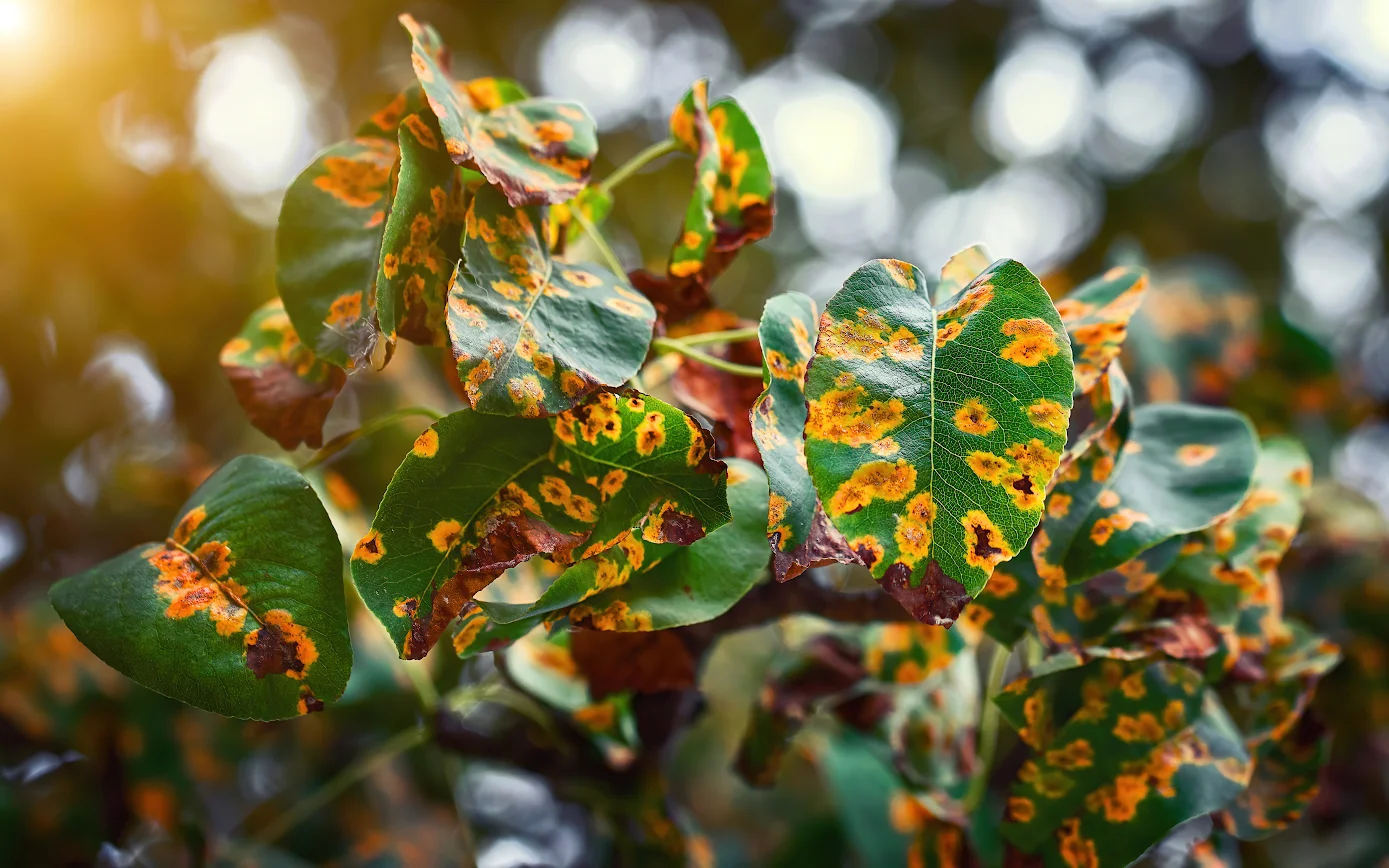
Rust diseases are caused by highly specialized fungal pathogens that produce distinctive pustules of orange, red, brown, or black powder on leaf undersides. Different rust species attack specific crops: wheat rust, soybean rust, coffee leaf rust, and bean rust each require different management approaches. In wheat, rust epidemics can cause yield losses exceeding 70 percent in highly susceptible varieties. Triazole and strobilurin fungicides are the primary chemical controls.
Gray Mold (Botrytis cinerea)
Gray mold is one of the most economically damaging plant diseases in high-value crops including strawberries, grapes, tomatoes, and cut flowers. It causes grayish-brown fuzzy mold to form on blossoms, stems, and fruit, particularly in cool, humid, or overcrowded growing conditions. Botrytis thrives on wounded tissue and can infect through natural openings or insect damage. Early removal of infected material and targeted fungicide applications are the main management tools.
Bacterial Plant Diseases: Harder to See, Faster to Spread
Bacterial plant diseases are often misidentified because their early symptoms, water-soaked spots, wilting, and discoloration, look similar to fungal issues. The key difference is that bacteria spread most aggressively through water, particularly overhead irrigation and rain splash, and enter plants through wounds, stomata, and natural openings.
Bacterial Leaf Spot
Bacterial leaf spot is one of the most common plant diseases in tomatoes and peppers. It produces small, water-soaked spots that enlarge and turn brown or black with yellow halos around them. The spots may dry out and fall away, leaving ragged holes in the leaf. Warm, wet weather accelerates spread significantly.
Management includes using disease-free seed, avoiding overhead irrigation, applying copper-based bactericides preventively, and rotating crops. Once the disease is well established in a field, it is very difficult to control with chemical applications alone.
Fire Blight
Fire blight is one of the most destructive bacterial plant diseases affecting apple and pear orchards. It is caused by Erwinia amylovora and spreads rapidly during warm, wet flowering periods. Blossoms turn brown and die quickly. Infected shoots wilt and bend into a characteristic ‘shepherd’s crook’ shape. The disease can kill entire branches and young trees within a single season. Pruning infected wood at least 12 inches below visible symptoms, sterilizing tools between cuts, and applying copper sprays or biological bactericides during bloom are the standard management practices. Understanding how precision agriculture technology can support early disease scouting helps orchardists catch fire blight before it spreads tree to tree.
Viral Plant Diseases: No Chemical Cure, Only Prevention
Viral plant diseases present a different challenge from fungal and bacterial infections. There is no fungicide, bactericide, or treatment that eliminates a plant virus. Once a plant is infected, management is entirely about containing spread and preventing new infections.
Mosaic Viruses
Mosaic viruses are among the most widespread plant diseases globally. They produce a characteristic mottled pattern of light green and dark green, sometimes yellow, on leaves. Leaves may also curl, pucker, or remain stunted. Tomato mosaic virus, cucumber mosaic virus, and tobacco mosaic virus affect a broad range of vegetable and field crops.
Most mosaic viruses spread through sap contact during pruning, planting, or transplanting, and through insect vectors, primarily aphids and whiteflies. Infected plants should be removed and destroyed. Controlling insect populations, washing hands and tools, and using certified disease-free transplants are the primary prevention methods.
Curly Top Virus
Curly top virus causes leaves to curl upward, become leathery, and take on a yellow or bronze color. It is transmitted by beet leafhoppers and primarily affects tomatoes, beets, beans, and squash in arid and semi-arid regions. There is no cure. Management focuses on controlling the leafhopper vector through insecticides and reducing weed hosts near growing areas.
Root Diseases: The Threats You Cannot See Until It Is Too Late
Root diseases are among the most difficult plant diseases to manage because symptoms above ground only appear once the damage below is already severe. Plants may wilt in the afternoon despite adequate moisture, yellow slowly over several weeks, or simply fail to thrive without obvious cause.
Root Rot
Root rot is caused by a group of soilborne pathogens including Pythium, Phytophthora, Fusarium, and Rhizoctonia. Overwatering and poor drainage are the two biggest contributing factors. Infected roots turn brown or black and become soft and mushy. Improving agricultural water management is one of the most effective long-term strategies for preventing root rot across all crop types.
Management includes improving soil drainage, avoiding overwatering, applying biological fungicides based on Trichoderma or Bacillus species, and removing severely affected plants before the pathogen spreads in the root zone.
Environmental Conditions That Trigger Plant Diseases
Most plant diseases do not appear out of nowhere. They develop when three factors align: a susceptible host plant, the presence of a pathogen, and environmental conditions that favor disease development. This is called the disease triangle, and understanding it helps you predict and prevent outbreaks.
The environmental conditions most commonly linked to plant disease outbreaks include:
• High humidity and extended leaf wetness (over 6 hours) favor most fungal diseases
• Cool, wet weather in spring or fall creates ideal conditions for downy mildew and late blight
• Warm, dry conditions with high leaf-level humidity promote powdery mildew
• Waterlogged soil and overwatering accelerate root rot and soilborne pathogen activity
• Dense plant spacing reduces air circulation and keeps humidity high within the canopy
• Nutrient imbalances weaken plant immunity, making plants more vulnerable to infection
Soil erosion that disrupts root systems also increases susceptibility to soil-borne plant diseases. Good soil erosion control practices directly support overall plant health.
Practical Prevention Strategies for Plant Diseases
Most plant diseases are more manageable when prevention is built into your standard farming practice, not treated as an emergency response. These strategies apply across crop types and scales of operation.
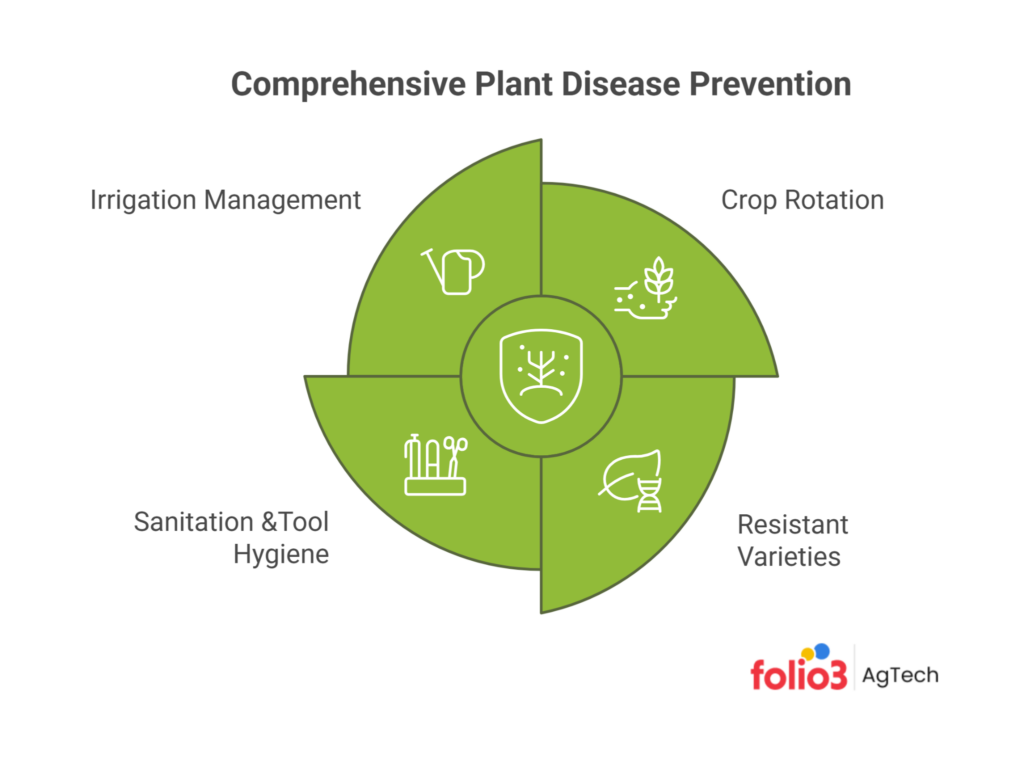
Crop Rotation
Rotating crops prevents the buildup of soilborne pathogens that target specific plant families. A three to four year rotation between unrelated crop families is enough to significantly reduce infection pressure from diseases like Fusarium wilt, early blight, and bacterial spot.
Resistant Varieties
Planting disease-resistant varieties is the most cost-effective long-term management strategy for many plant diseases. Seed suppliers and extension services publish resistance ratings for major diseases by variety. For high-pressure diseases like late blight or Fusarium wilt, varietal resistance is often the difference between a successful harvest and a complete loss.
Sanitation and Tool Hygiene
Infected plant debris, soil on equipment, and contaminated pruning tools are the primary ways plant diseases spread within a field and between seasons. Removing crop debris after harvest, sterilizing pruning tools between plants, and cleaning equipment before moving between fields significantly reduce pathogen transfer.
Irrigation Management
Switching from overhead irrigation to drip or subsurface irrigation eliminates the leaf wetness that most fungal and bacterial plant diseases require to spread. Timing irrigation for early morning, so leaves dry before nightfall, also reduces infection periods. Consistent monitoring of soil moisture helps avoid the waterlogging that triggers root rot, which is one of the hardest plant diseases to recover from once it is established.
How Technology Is Changing Plant Disease Management
Early detection remains one of the biggest gaps in plant disease management on commercial farms. Scouting large acreages manually is time-consuming and often catches disease too late to prevent significant yield loss. Modern precision agriculture technology is changing that by giving growers better tools to identify and respond to plant diseases before they reach damaging levels.
Remote sensing and multispectral imaging from drones or satellites can detect changes in plant reflectance caused by disease stress weeks before visible symptoms appear. Predictive disease models built into farm management software use weather data to alert growers when conditions are optimal for specific disease outbreaks. IoT sensors in the field provide continuous humidity and temperature readings that can trigger disease risk alerts automatically.
For operations managing large fields or multiple crop types, centralizing this data in an agricultural software platform makes it far easier to catch patterns that manual scouting misses. The digital transformation in agriculture that has taken hold across major farming regions has proven particularly valuable in reducing plant disease losses at scale.
Crop management software, like the solutions offered through Folio3 AgTech’s crop management platform, helps growers record field observations, track treatment history, and build a data record that makes plant disease patterns visible across seasons. This kind of historical data is valuable not just for managing current outbreaks, but for building a prevention program that addresses the specific disease pressures on your land.
When to Call a Plant Pathologist
Not every plant disease situation can be resolved with a chart and a bottle of fungicide. There are situations where professional diagnosis is the right call:
• Symptoms are unusual or do not match common plant diseases in your region
• Multiple diseases appear to be present at the same time
• Treatment has been applied correctly but symptoms continue to spread
• You are seeing a new pattern of decline across multiple fields or multiple crop species
• You suspect a new or emerging pathogen that is not well documented locally
University extension services, agricultural colleges, and national plant health networks offer diagnostic services. Many accept leaf and soil samples by mail. Early professional diagnosis saves time and money compared to applying multiple treatments based on an incorrect identification. Biosecurity practices across your whole operation also matter here: strict biosecurity measures reduce the risk of introducing pathogens through purchased transplants, soil inputs, or equipment from other farms.
Conclusion
Plant diseases cause significant yield losses every growing season, and most of those losses are preventable with early identification and the right response. The most common plant diseases fall into three categories: fungal, bacterial, and viral. Each requires a different management approach, and using the right tool for the right disease is essential.
The plant diseases chart in this guide gives you a quick-reference starting point for identifying symptoms by disease type and affected crop. From there, accurate identification leads to targeted treatment, whether that is a fungicide for powdery mildew, a copper bactericide for bacterial leaf spot, or removal and vector control for a viral infection.
Beyond treatment, prevention through crop rotation, resistant varieties, proper irrigation, and good sanitation practices builds a foundation that reduces how often you face a disease outbreak in the first place. And as precision agriculture tools become more accessible, the ability to catch plant diseases in their early stages through remote sensing and predictive modeling is closing the gap between what growers can see and what is actually happening across a field.
FAQs
What Are The Most Common Plant Diseases Affecting Crops Worldwide?
The most common plant diseases worldwide include powdery mildew, early and late blight, Fusarium wilt, gray mold (Botrytis), bacterial leaf spot, rust diseases, mosaic viruses, and root rot. Fungal diseases make up the largest category and are responsible for the majority of crop losses globally. The specific diseases most relevant to your operation depend on your crop type, climate, and soil conditions.
How Do You Identify A Plant Disease From Symptoms Alone?
Start by noting where on the plant the symptoms appear, whether they are spots, wilting, discoloration, mold, or pustules, and whether they are on leaves, stems, roots, or fruit. Then consider the crop type and recent weather conditions. Compare your observations to a plant diseases chart that organizes symptoms by pathogen type. For confirmation, send a sample to a local extension office or plant diagnostic lab, especially for unusual or rapidly spreading symptoms.
What Is The Difference Between Powdery Mildew And Downy Mildew?
Powdery mildew produces a white, powdery coating on the upper surfaces of leaves and thrives in warm, dry conditions with high ambient humidity. Downy mildew produces a gray or purple fuzzy growth on the undersides of leaves and develops in cool, wet weather. Both are common plant diseases but they require different fungicide classes. Some products effective against powdery mildew have no activity against downy mildew.
Can Plant Diseases Spread From One Crop Type To Another?
Some plant diseases are highly host-specific and only infect one plant family or even one species. Others, like gray mold and certain bacterial diseases, can infect a wide range of crops. Soil-borne diseases like Fusarium and root rot pathogens can persist in soil and infect successive crops. Mosaic viruses can spread across multiple plant families through insect vectors. This is why crop rotation, field sanitation, and vector control are all important parts of a plant disease management program.
When Should You Apply Fungicides To Prevent Plant Diseases?
Preventive fungicide applications are most effective when applied before or immediately after conditions favorable for disease development occur, not after visible symptoms are widespread. Many fungal plant diseases have a short window between infection and symptom expression. For weather-driven diseases like late blight and downy mildew, disease forecasting models help predict high-risk periods. Always follow label directions for timing, rate, and rotation between fungicide classes to manage the risk of resistance.