
Cattle prices are at historic highs. The USDA projects fed steer prices will average$250.16 per hundredweight in 2026, with the total U.S. cattle inventory sitting at a 75-year low of 86.2 million head. Every calf on your place is worth more than it has ever been. Yet your winter feed bill keeps climbing right alongside those calf checks.
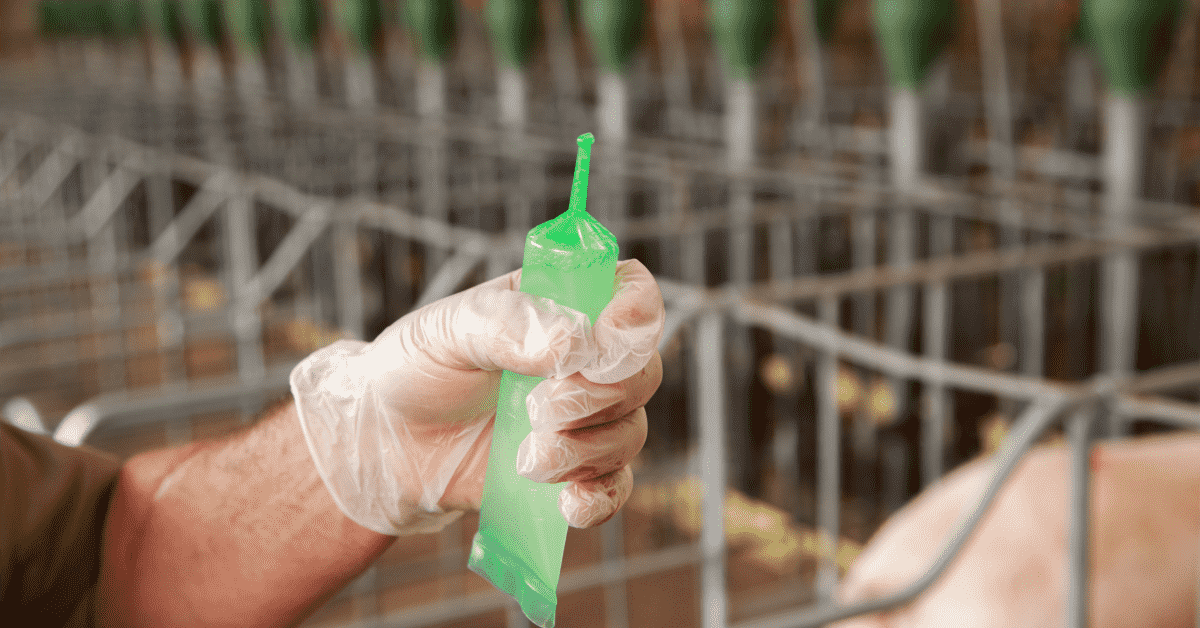
This is where liquid feed for cattle changes the math. It is not a sweetener. It is not sugar water. Liquid feed is a precision delivery vehicle that puts rapidly available energy, nitrogen, and minerals directly into the rumen, where your microbes can use them. The result? Your cows pull more nutrition out of the same low-quality forage you already own.
If you are still treating liquid cattle feed as an afterthought, you are likely leaving 15% or more of your forage’s digestible value on the ground. This guide breaks down what liquid feed actually is, how to mix and deploy it, what it costs compared to dry alternatives, and why the economics tilt harder in your favor the more cows you run.
What Is Liquid Cattle Feed? (Moving Beyond the “Sugar Water” Myth)
Liquid cattle feed is a homogenized, suspended liquid carrier designed to deliver three things at once: rapidly fermentable carbohydrates (energy), true protein or non-protein nitrogen (NPN), and micro-minerals. The base is typically molasses, but modern formulations go well beyond a jug of blackstrap.
Think of it this way. A dry supplement cube sits in the rumen and slowly dissolves. A liquid feed hits the rumen environment immediately, coating the forage particles that are already there and providing instant fuel for the microbial population. That speed matters. Rumen bugs work on a timeline, and the faster they get what they need, the faster they break down fiber.
The old myth that liquid feed is just “sugar water” comes from producers who saw straight molasses being poured over hay 30 years ago. Today’s commercial liquid feed formulations are engineered blends. They carry specific ratios of sugar to nitrogen to phosphorus, all suspended in a form that stays mixed in the tank instead of settling out like a dry mineral block would.
The Rumen Bug Connection (How It Actually Works)
Here is the biology in plain terms. When your cow eats low-quality dormant winter forage, that forage is locked behind lignin cell walls. The fiber is there, but the cow’s digestive system cannot access it without microbial help.
Rumen microbes need two things to break those walls down: rapidly fermentable carbohydrates and soluble nitrogen. The carbohydrates from the liquid feed give the bugs an instant energy hit. The nitrogen, usually from urea or natural protein, gives them the building blocks to multiply. More microbes mean more enzymes attacking those lignin walls.
When you pour liquid feed on dry grass or make it available in a lick tank, you are essentially providing rocket fuel for the rumen microflora. Your cow digests more roughage faster and extracts more energy from the same bale of hay. Research shows that when supplemental protein meets at least 25% to 30% crude protein, forage intake and nutrient utilization both improve meaningfully. That is the entire point of a well-formulated livestock feed program.
Anatomy of a Liquid Ration: Common Bases and Additives
The first thing to understand about liquid molasses for cattle or any liquid supplement is that there are two layers to every formulation: the carrier (the liquid base) and the payload (the additives blended into it). Different bases bring different nutrient profiles, and each one has operational trade-offs you need to plan for.
Table 1: Liquid Feed Base Commodities
| Liquid Base | Primary Value | Best Suited For | Operational Watch-Out |
| Cane/Beet Molasses | High palatability and fast sugars | Cow-calf wintering; TMR binding | High viscosity in sub-zero weather |
| Corn Steep Liquor (CSL) | High natural protein and phosphorus | Growing cattle; low-phosphorus ranges | Requires regular tank agitation |
| Whey (Sweet/Acid) | Cheap, highly digestible calcium | Backgrounding operations near dairies | Shorter shelf life; high water weight |
| Crude Glycerin | Extremely dense energy | Feedlot finishing stages | Can depress fiber digestion if overfed |
Cane and beet molasses remain the most common base for cow-calf operations because cattle find them highly palatable, and the sugars ferment quickly in the rumen. Corn steep liquor is gaining ground in regions with ethanol plants because it is a cost-effective byproduct that brings natural protein levels up without adding synthetic nitrogen.
The “Payload”: Precision Additives
Once you have your base, the real customization happens in the payload. These additives turn a simple molasses product into a targeted nutritional tool:
- Urea/Non-Protein Nitrogen (NPN): Urea converts to ammonia in the rumen, which microbes then use to build microbial protein. It is cheap and effective, but it must be delivered at controlled rates to avoid toxicity.
- Phosphorus and Trace Minerals: Liquid suspension keeps minerals evenly distributed throughout the product. Unlike dry blocks, where heavy minerals settle to the bottom over time, liquid feed delivers a consistent dose with every lick.
- Ionophores (Rumensin/Bovatec): These shift the volatile fatty acid (VFA) profile in the rumen toward more propionate, which translates to better energy efficiency. They also help control coccidiosis. If you are running ionophores in your cattle program, liquid delivery ensures uniform intake across the herd.
- Larvicides (Altosid): For operations dealing with horn fly pressure, adding a larvicide to the liquid feed gives you pass-through fly control without a separate mineral program.
5 Bottom-Line Benefits of Liquid Feed for Beef, Cow-Calf, and Feedlot Operations
The advantages of the liquid feed shift depend on your operation type. Here is how cattle liquid feed pays for itself across the production chain.
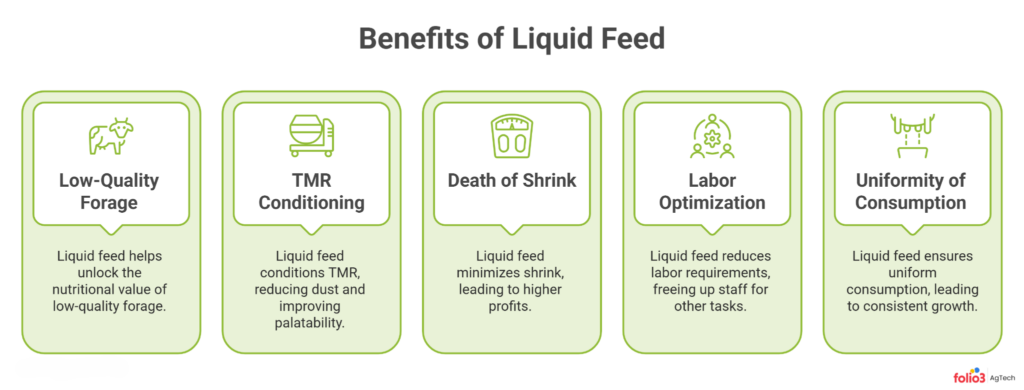
Unlocking Low-Quality Forage
This is the biggest win. A 30% crude protein liquid lick tank can turn 5% CP dormant winter range into a maintenance-level diet. Your cow’s rumen bugs finally have the nitrogen and energy they need to break down that mature forage. The result is protected body condition scores heading into calving season. That matters because a cow that calves at a BCS of 5 or above breeds back 10 to 15 days sooner than one that calves thin. With calf prices averaging $449 per hundredweight in 2025, every extra day open costs you real money.
TMR Conditioning and Dust Control
In a feedlot setting, 2% to 4% liquid inclusion in the total mixed ration glues the powdery fines (minerals, medications, feed additives) to the rolled corn. It stops cattle from sorting the ration and picking through for the grain while leaving the expensive supplements behind. The result is a more uniform feed conversion across the pen, which directly improves your cost of gain. Liquid also controls dust in the bunk, reducing respiratory irritation during dry weather.
The Death of Shrink
Dry commodity blocks and loose meal suffer 3% to 6% shrink from wind, trampling, and rain. A 250-pound tub sitting in a pasture through a week of rain can lose a significant chunk of its weight and nutritional value. Liquid feed stored in an enclosed poly-tank has virtually zero shrinkage. Every dollar you put in the tank is a dollar that goes into a cow.
Labor Optimization
Compare the person-hours of driving a tractor out to drop heavy dry tubs every 4 days versus having your feed co-op top off a 500-gallon pasture lick tank once every 3 weeks. For operations managing multiple pastures across thousands of acres, the labor savings alone can justify the switch. That is time you can redirect toward herd checks, fence repair, or simply running your cattle operation more efficiently.
Uniformity of Consumption
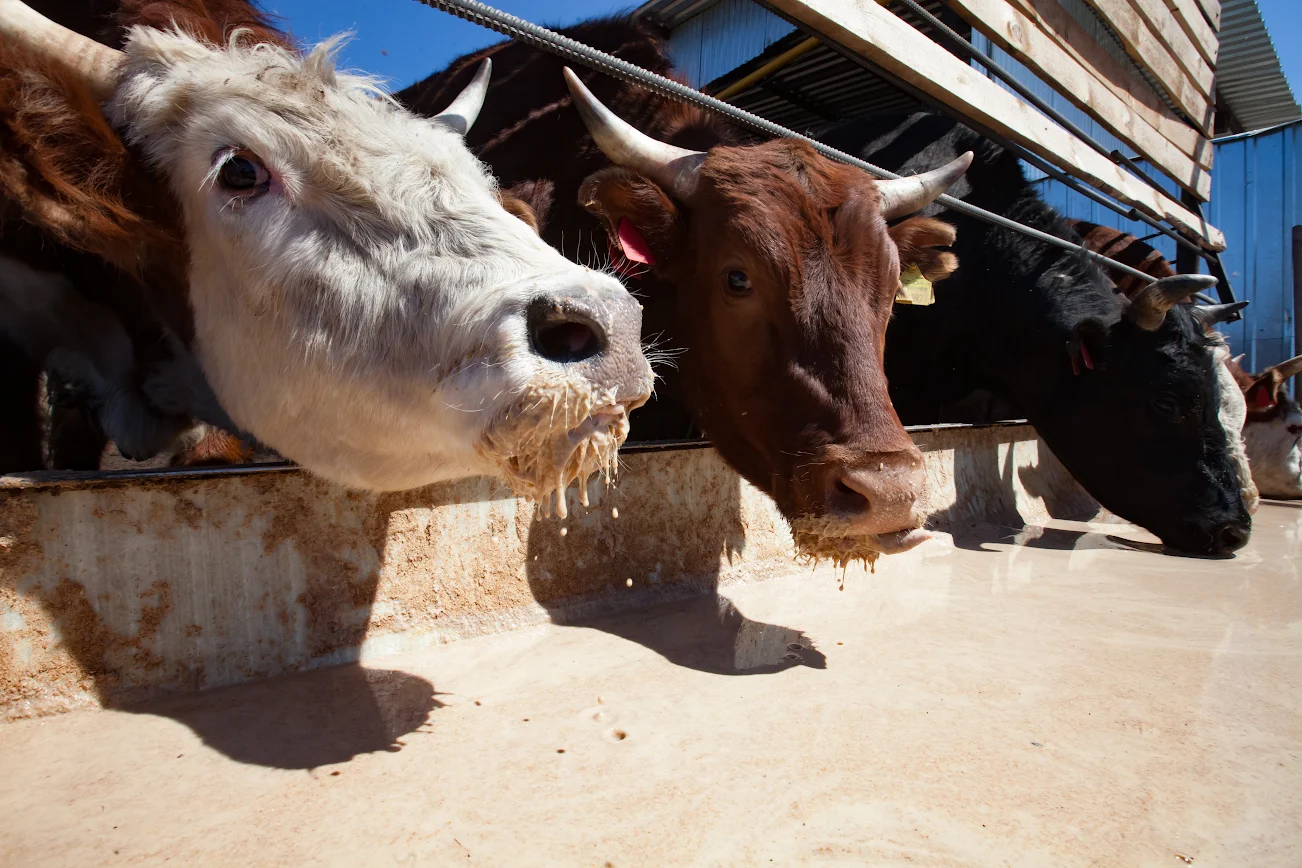
Dominant boss cows push timid heifers off dry tubs. You have seen it. The biggest, fattest cows camp on the supplement while your first-calf heifers (the ones that need it most) stand back and wait. Open-top wheel lick tanks solve this problem. The lick wheel regulates intake speed, and multiple cattle can access the tank simultaneously throughout a 24-hour cycle. Timid cattle sneak in and lick when the dominant animals are loafing. The result is more uniform nutrition across your entire herd, not just your bossiest cows.
Application Protocols: Mixing Liquid Feed for Cattle
The right protocol depends on your operation size, infrastructure, and what you are trying to accomplish. Each method below is field-tested and practical.
Method A: The Free-Choice Lick Tank (Pasture)
It is the most common setup for cow-calf operations. Place a polyethylene lick tank with a mechanical lick wheel in the pasture, and let the cattle self-regulate their intake.
Set up rules to follow:
- Allow 1 lick wheel per 15 to 20 head. If you are running 60 cows in a pasture, you need 3 to 4 wheels.
- Position the tank on well-drained ground to prevent mud buildup around the base.
Managing intake is straightforward. If cows are eating too much liquid cow feed, move the tank further from the water source. Cattle are lazy; they will not walk an extra quarter-mile just for a lick. If they are not touching it, move the tank right next to the loafing area or the water trough. The proximity trick alone will get reluctant cattle started.
Method B: Top-Dressing / Bale Pouring (Wintering)
It is the manual method for operations that do not want to invest in lick tanks. Think of it as the poor man’s TMR.
Pour 10 to 15 pounds of liquid molasses mix directly onto the flat side of a big round bale about 24 hours before feeding it out. The liquid wicks into the dry stems overnight, coating the fiber and making the entire bale more palatable and digestible. When you roll that bale out the next morning, cows eat it aggressively because it tastes better, and their rumen microbes have an immediate carbohydrate source to start working on the fiber.
This method works well for smaller herds and operations that manage feed rations on a bale-by-bale basis. The drawback is that it requires daily labor and does not scale well past 75 to 100 cows.
Method C: Total Mixed Ration (TMR) Injection
For feedlots and larger backgrounding operations, liquid feed is injected directly into the TMR mixer. The goal is to bring an 88% dry ration down to the sweet spot of 80% to 82% dry matter. That moisture reduction stops cattle from sorting through the ration, which is one of the highest hidden costs in feedlot nutrition management.
Calibrate your mixer’s liquid injection system to deliver the target volume per batch. Most modern TMR mixers have a liquid manifold that sprays evenly as the augers turn. If yours does not, a gravity-feed system with a ball valve above the mixer works as a low-cost alternative.
Overcoming the Physics: Pumping, Storage, and Winter Handling
Liquid cattle feed brings real logistics challenges, especially in cold weather. Here is how to handle them before they cost you time and money.
The Viscosity Trap
Viscosity is measured in centipoise, but you do not need to remember the number. Just understand this: molasses at 70°F flows like syrup. Molasses at 10°F flows like wet concrete. If you are running a cattle operation in the Northern Plains or Upper Midwest, this will be the single biggest frustration you face with liquid feed.
The solution is planning your infrastructure for your worst weather, not your average weather. Here is what that looks like in practice.
Equipment Specs to Give Your Dealer
- Use positive displacement gear pumps. Never use centrifugal water pumps. Centrifugal pumps cannot generate the suction needed to pull cold molasses, and they will burn out within weeks during winter.
- Plumb all transfer lines with 3-inch internal diameter (ID) hoses minimum. A 2-inch hose will cavitate under cold, viscous product and kill your pump by January.
- Install heat tracing tape on all exposed hose runs and valve bodies. A $50 roll of heat tape saves you a $400 pump replacement.
- If your bulk storage tank is outdoors, insulate it or position it where it gets afternoon sun exposure. Dark-colored tanks absorb solar heat better than light ones.
Tank Hygiene: Avoiding “Top-Off Syndrome”
Here is a mistake that catches a lot of producers. You keep topping off the pasture lick tank week after week without ever letting it run empty. Over months, the sludge layer at the bottom of the tank becomes a breeding ground for wild yeast fermentation. The product starts to smell off, palatability drops, and cattle reduce their intake.
The fix is simple. At least once a year, and ideally twice, let every lick tank get completely sucked dry. Pull the wheel, rinse the tank with a pressure washer, and let it dry before refilling. This 30-minute chore prevents months of poor intake down the line.
The Financial Showdown: Liquid Supplement vs. Dry Tubs and Cubes
Here is the cost comparison most producers have been waiting for. Liquid feed for cows wins on cost-per-ton of nutrient delivered, but the upfront investment changes the math for smaller herds.
Table 2: The Supplementation Decision Matrix
| Metric / Feature | 250 lb Dry Cooked Tub | 20% Range Cubes | 32% Liquid Poly-Tank |
| Upfront Capital Cost | Low ($0 equipment) | Medium (cake feeder) | High ($500 to $900 tank) |
| Cost per Ton of Nutrient | Highest (~$850/ton) | Moderate (~$420/ton) | Lowest (~$310/ton) |
| Labor Hours per Month | High (constant hauling) | High (daily driving) | Low (vendor filled) |
| Weather Vulnerability | Melts in rain / freezes hard | Spoils instantly in mud | Zero (sealed system) |
| Intake Control | Poor (softens in the sun) | Absolute (you portion it) | Controlled via lick wheels |
The takeaway is straightforward. If you are running 40 cows, the convenience of dry tubs may outweigh the cost-per-ton disadvantage. Your volume is too low to justify the tank investment. But if you are running 250 cows, paying for dry tubs instead of setting up a liquid bulk station is costing you the equivalent of a custom-built rifle every single winter. The math only gets worse as your herd grows.
For operations looking to tighten up their cattle ranching profitability, switching from dry to liquid supplementation is one of the fastest ways to cut cost-per-head without cutting nutrition. Pair that with livestock management software that tracks feed costs per head, and you can see exactly where the savings land.
Conclusion and Next Steps
Liquid feed for cattle is not a gimmick or a trend. It is the bridge between your cow’s biological potential and your ranch’s checking account. It puts the right nutrients in front of rumen microbes at the right speed, turns low-quality forage into a productive diet, cuts labor, eliminates shrink, and delivers a lower cost-per-ton of nutrient than any dry alternative on the market.
In a year where fed steer prices are projected at record levels and hay averages around $145 per ton, controlling your supplementation cost is not optional. It is the difference between a profitable winter and a break-even one.
Stop guessing your winter feed burn. Contact our AgTech advisory team today to get a free Ration Cost-Per-Head audit comparing your current dry supplement bill against a localized liquid program.
FAQs
Can You Feed Straight Blackstrap Molasses to Cattle?
Yes, but it is financially and nutritionally inefficient. Straight molasses lacks the digestible protein and NPN that rumen microbes require to break down fiber. You should always use a professionally formulated liquid feed that blends molasses with a nitrogen source like urea for meaningful results.
How Many Pounds of Liquid Feed Will a Cow Consume Per Day?
A mature beef cow on dry pasture will typically consume between 1.5 and 3.0 pounds of liquid feed per day from a regulated wheel lick tank. Actual intake depends on forage quality, ambient temperature, and how far the tank sits from water.
Is Liquid Feed Containing Urea Safe for Pregnant Cows?
Yes, liquid feed containing urea is safe for pregnant cattle provided the lick tank uses a mechanical wheel to restrict intake. The wheel prevents gorging, which is the only scenario where ammonia toxicity becomes a risk with urea-based supplements.
Does Liquid Feed Work in Extreme Cold Weather Below Zero?
Yes, it works, but you need the right equipment. Molasses-based products thicken significantly below freezing, so your system needs positive displacement pumps, 3-inch hoses, and heat tracing on exposed lines. Many producers in northern states successfully use liquid feed year-round with proper winter setup.
Can You Add Medications or Feed Additives to Liquid Cattle Feed?
Yes. Commercial liquid feed formulations routinely carry ionophores for energy efficiency, larvicides for fly control, and trace minerals. Because the product stays in suspension, cattle receive a more uniform dose per lick than they would from a dry block where heavier ingredients settle to the bottom.