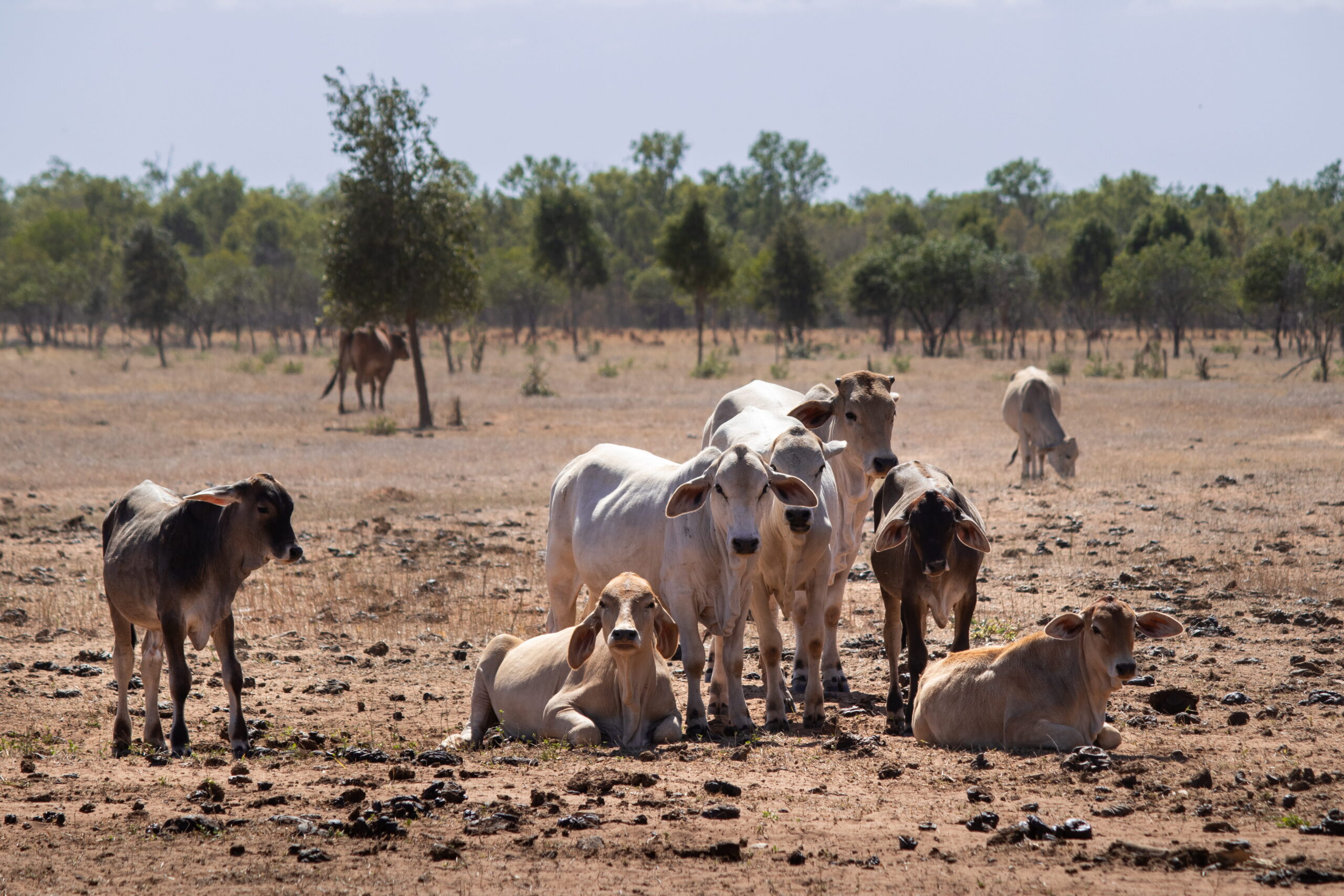

Culling a cow means permanently removing her from the breeding herd through sale, harvest, or euthanasia. It is one of the most impactful management decisions you will make on your ranch, directly affecting both herd genetics and your bottom line.
Nobody likes shipping a cow, but here is the reality: cull cows represent nearly 20% of the revenue to a cow-calf beef operation. That makes culling far more than a loss. When done right, it is a calculated tool for building a more productive, more profitable herd. The sale of cull cows can account for between 15 and 30 percent of gross revenue of the cow-calf enterprise, depending on herd size, market timing, and cow condition at sale.
The challenge is knowing which cows to keep, which to ship, and when to pull the trigger. This guide breaks down the criteria, the economics, and the strategies that separate profitable culling decisions from reactive ones.
Understanding Culling in Cattle: Definition and Core Objectives
Culling in cattle falls into two categories. Knowing the difference helps you build a system instead of making one-off decisions at the chute.
Involuntary culling covers non-negotiable removals. These are cows you have no choice but to ship. Think reproductive failure (open status after pregnancy check), severe injury, advanced dental wear, chronic illness, or cancer eye. The cow’s ability to produce a calf is either gone or compromised beyond repair.
Voluntary culling is where real herd improvement happens. These are management-driven decisions to remove cows that are technically functional but underperforming. Late calvers that stretch your calving season. Cows with poor weaning weight ratios. Females with structural flaws that will worsen over time.
The goal behind every proactive culling strategy is simple: maximize pounds of calf weaned per acre while optimizing your carrying capacity. Each cow occupying space on your pasture needs to earn her keep. If she is not contributing enough calf weight, enough genetic value, or enough reproductive consistency to justify the feed, mineral, and labor she consumes, she is costing you money, even if she looks fine on the surface.
A structured approach to both involuntary and voluntary culling turns your herd into a tighter, more efficient unit year over year, especially when paired with solid livestock record keeping.
The 5 Primary Criteria for Culling Cows: A Beef Herd Diagnostic Blueprint
Every cow that walks through your squeeze chute deserves an honest evaluation. Here are the five areas that matter most when making culling decisions on your beef operation.
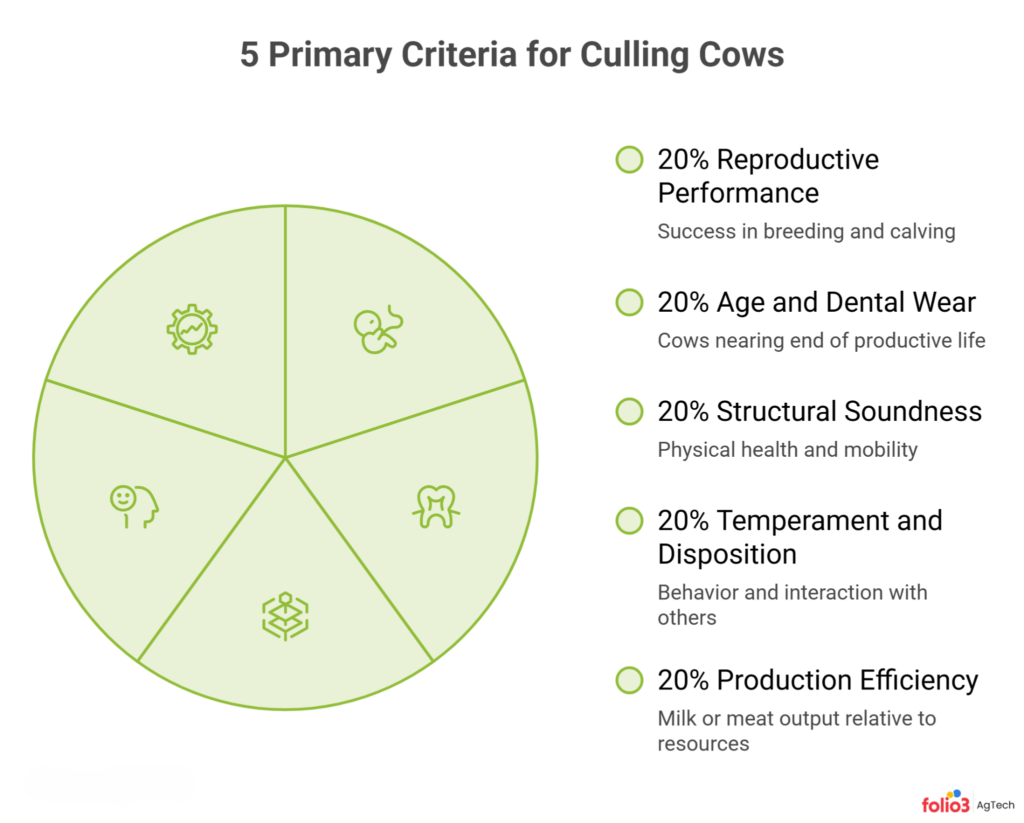
1. Reproductive Performance (The Open Cow Protocol)
Reproduction is the single biggest revenue driver on any cow-calf operation. A cow that does not breed back costs you a full year of maintenance with zero return.
Approximately 41% of beef cattle operations reported that they culled a cow for non-pregnant status, making it the primary determinant of beef cow profitability. That number alone tells you where to start every fall: with a pregnancy check.
The protocol is straightforward. Schedule pregnancy verification at 60 days post-breeding season using rectal palpation, ultrasound, or blood testing. Any cow confirmed open should be a strong candidate for culling. Only about 20% of beef producers in the United States perform pregnancy diagnosis, which means most operations are blindly feeding open cows through winter without knowing it.
The math is brutal. Wintering an open cow costs $500 to $800 in feed alone, depending on your location and forage costs. That is money spent on an animal that will not produce a calf the following spring. So, giving a dam another calving opportunity after failing to wean a calf would likely result in her being unprofitable, and a producer would be better off selling the open dam than giving her another chance to breed.
If you are managing a beef cattle reproduction program, a strict pregnancy-checking protocol is non-negotiable.
2. Age and Dental Wear (Mouth and Teeth Evaluation)
Your cow’s teeth directly determine her ability to harvest forage on native rangeland. Once that system breaks down, her nutritional efficiency drops fast.
Fifty-five percent of beef cattle operations culled a cow due to age or bad teeth, which is an issue that can lead to long-term concerns regarding cow nutrition, body condition score, and reproductive success.
Here is what to check when you run her through the chute:
- Solid-mouthed (8 permanent incisors intact): No concerns. She is grazing efficiently.
- Spreaders (teeth fanning outward with gaps): Early warning sign. Monitor her body condition score closely going into fall.
- Broken-mouthed (missing one or more incisors): Her ability to graze native range is compromised. She will struggle to maintain BCS through winter without supplemental feed.
- Gummers (most or all incisors gone): Cull immediately. She cannot maintain herself on forage alone, and the supplemental feed cost to keep her productive far exceeds her value.
The key rule: cull a broken-mouthed cow before winter, not during it. Shipping a thin cow in January costs you both in animal welfare risk and in the lower salvage value she will bring. A timely fall sale at reasonable body condition protects both your reputation and your revenue.
3. Structural Soundness (Udder Conformation and Feet/Legs)
Structural failures hurt in two ways: they compromise the cow’s welfare, and they directly threaten her calf’s survival in the first 24 hours.
Udder evaluation checklist:
- Pendulous udders that hang below the hock make it nearly impossible for a newborn calf to latch and nurse without human intervention.
- Oversized, balloon-shaped teats are a common problem in older cows. If a calf cannot wrap its mouth around the teat, colostrum intake fails, and that calf is immediately at risk.
- Uneven quarters or blind quarters reduce milk output and increase mastitis risk.
Feet and legs checklist:
- History of recurring foot rot signals ongoing susceptibility that only worsens with age.
- Severe hoof overgrowth, scissor-claw conditions, or chronic lameness limits her ability to travel to water, graze, and breed.
- Stifle injuries or cow-hocked conformation puts the cow at a disadvantage on rough terrain and increases injury risk during breeding.
A cow that cannot walk to water or nurse her own calf without help is not a productive breeding animal. She is a liability. Factor structural evaluations into your annual chute-side assessments alongside your beef cattle vaccination schedule and pregnancy checks.
4. Temperament and Disposition (The “Ornery” Exemption)
Excitable cattle not only have lower body weights, they have slower daily gains, and lower hot carcass weights, yield grades, quality grades, and marbling scores compared to their docile counterparts; they also have higher mortality rates.
The safety issue is obvious. An aggressive cow in the working pen puts your crew, your family, and your facilities at risk. Corral damage from wild cattle is a real and recurring expense.
But the economic impact goes deeper. Research found that docile calves returned $62.19 per head more than their excitable counterparts when accounting for the overall effects of disposition on quality grade, yield grade, feedlot gain, death loss, and treatment costs.
Here is the part that matters for breeding decisions: temperament is heritable. The heritability of temperament in beef cattle has been estimated to range from 0.36 to 0.45. That means a wild cow is likely to produce wild calves. Keeping her in the herd passes that disposition to the next generation, compounding the problem.
Set a clear threshold. Any cow that consistently scores a 4 or 5 on a standard chute-score scale (violently thrashing, attacking, or impossible to handle safely) should be culled regardless of her other traits.
5. Production Efficiency (Weaning Weight Ratios and Forage Adaptability)
Pull your herd records. Identify cows that consistently produce calves weighing in the bottom 10% of the herd’s weaning weight average. These are your “undercover economic drainers.” They consume the same resources as your top producers but deliver significantly less revenue per calf.
Also flag cows that require excessive supplemental feeding to maintain a proper BCS of 5 or above on your forage base. A cow that cannot hold condition on the same pasture as her herdmates is not adapted to your environment. She is consuming extra feed rations without producing enough calf weight to justify the cost.
High-profitability herds had a lower culling percentage of 5.6% compared to 13.8% for low-profitability herds, according to data. That does not mean profitable operations cull less. It means they cull smarter, keeping the right cows and removing the right ones, so involuntary removals stay low.
Reliable production records make this possible. If you are not tracking individual cow performance, you are guessing, and guessing costs money. Using livestock management software can give you the historical data you need to make these decisions with confidence.
Economic Strategy: When and How to Market Cull Cows for Maximum Profit
Once you decide to cull a cow, the marketing decision matters just as much. The right timing can add hundreds of dollars per head to your cull revenue.
The seasonal price problem: Most spring-calving operations ship cull cows in October and November, right after weaning. Everyone sells at once, and the market floods with supply. From a seasonal perspective, cull prices are often at their lowest from November through early January. You are selling at the worst possible time simply because it is convenient.
The strategic alternative: The difference between a canner-cutter cow in November and a utility cow price in February is about a 20% to 25% increase in price. If you have feed available, holding cull cows through winter and marketing in March through May, when processor demand peaks and cow supply is tightest, can significantly increase your returns.
The 4 USDA Cull Cow Carcass Grades
Understanding how meatpackers appraise your cull cows helps you decide whether to sell now or add value first.
| USDA Carcass Grade | Typical BCS | Lean Yield % | Description | Value-Adding Action |
| Commercial | BCS 7-9 | 80-85% | Fat, heavy cows; often young open heifers or mature cows on high nutritional planes. | Sell immediately. Minimal upside to adding more expensive fat. |
| Utility | BCS 5-6 | 80-85% | Smooth, well-fleshed cows. Ideal trade-off of weight and lean product. | Target market standard. Highly responsive to seasonal price peaks. |
| Cutter | BCS 3-4 | 85-90% | Thin, carrying minimal fat cover over ribs. High-percentage lean boneless beef. | High opportunity. Short 50 to 90 day high-energy feeding program to move up to Utility grade. |
| Canner | BCS 1-2 | 90%+ | Emaciated, skeletal structure highly visible. | High transport risk. Feed immediately to add basic body mass or humanely euthanize if injured. |
The biggest opportunity sits with Cutter-grade cows (BCS 3-4). A short feeding program of 50 to 90 days on a high-energy ration can move these cows up to Utility grade, capturing both the weight gain and the grade premium. Cull cows sold in March or April after being held and fed can generate $150 to $300 more per head compared to selling thin cows at the seasonal low.
For a 100-cow operation culling 12 to 15 cows annually, strategic marketing timing alone can add $2,000 to $4,000 in additional annual revenue with no change in herd genetics or management. Learn more about optimizing your cattle marketing strategies to capture these gains.
Best Practices for Handling and Transporting Cull Cattle
Cull cows matter beyond the gate. How you handle and transport them directly impacts both their value at slaughter and your operation’s compliance with industry standards.
The BQA injection protocol: All therapeutic injections must be administered in the neck area only. Cull cows ultimately enter the human food supply as lean ground beef and other products. Injections in the round or loin area cause injection-site lesions that damage high-value cuts and result in trim loss at the packing plant. Following proper Beef Quality Assurance guidelines protects carcass value and your reputation with buyers.
The strict “downer” policy: Non-ambulatory animals, those that cannot stand or walk on their own, must never be loaded onto a transport trailer. Period. These animals must either be treated on-site by a veterinarian or humanely euthanized. Attempting to transport a downer cow is both a welfare violation and a food safety risk. The 2022 National Beef Quality Audit revealed that cow condition and quality have been on a decline, with 70.4% of beef cull cows recorded as inadequately muscled, making proper handling even more critical.
Pre-transport preparation:
- Observe all drug withdrawal periods before shipping. Sending a cow to slaughter with residual antibiotics or hormones in her system can result in a condemned carcass and regulatory consequences.
- Avoid loading severely dehydrated or exhausted cattle. Provide water access before transport and plan haul times to avoid extreme heat. Review best practices for livestock transportation to keep your operation compliant.
- Follow proper trailer density guidelines. Overcrowding causes stress, bruising, and injury that reduce carcass value.
Market-Responsive Culling: Adjusting Herd Size to Weather and Feed Costs
When drought hits and pastures dry up, waiting too long to destock is one of the costliest mistakes a producer can make. Strategic destocking through accelerated culling of marginal cows, those on the bubble of voluntary culling criteria, protects your core breeding herd by preserving grass and water resources for your best females.
The flip side is equally important. During high-market cattle cycles like the current environment, where average cow-calf profit margins increased by $614 per head in 2025 compared to 2024, you have a window to aggressively cull marginal producers and reinvest those pre-tax earnings into superior genetics or improved ranch infrastructure.
Think of culling as a management lever, not a reaction to crisis. Producers who use heat stress management and proactive destocking plans consistently outperform those who wait until conditions force their hand.
Conclusion: Turn Cow Subtractions Into Ranch Additions
Culling is not a sign of failure. It is one of the clearest signs of proactive, professional herd management.
Every cow you remove for the right reason opens space for a better female. Every well-timed cull sale adds revenue that funds genetic improvement, infrastructure upgrades, or simply tighter operating margins. The producers who treat culling as a strategic tool, rather than an uncomfortable necessity, are the ones building herds that perform year after year.
Ready to take a more data-driven approach to your herd management decisions? Consult with our agtech experts to explore how technology can support smarter culling, better record keeping, and stronger profitability across your operation.
FAQs
How Often Should You Evaluate Your Cow Herd for Culling?
Evaluate your herd at least twice per year: once at pregnancy check (60 days post-breeding) and once at weaning. These two touchpoints capture both reproductive status and production performance data you need for sound decisions.
What Is the Average Culling Rate for a Healthy Beef Cow Herd?
A well-managed beef cow herd typically runs a 12% to 18% annual culling rate. This range allows for adequate replacement while keeping herd age structure balanced and genetic progress moving forward.
Can You Improve a Cow’s Body Condition Score Before Selling Her?
Yes. A short 50- to 90-day feeding program on a high-energy ration can move a thin cow from Cutter to Utility grade, adding both weight and carcass grade value. This works best for otherwise healthy cows culled for production reasons, not for cows with serious health issues.
Should First-Calf Heifers Get a Second Chance if They Fail to Rebreed?
In most cases, no. The cost of carrying an open first-calf heifer through another winter without calf revenue rarely pays off. The exception is if a specific, correctable factor caused the failure, such as a difficult first calving followed by poor nutrition during recovery.
How Does Culling Affect Long-Term Herd Genetics?
Every culling decision is also a selection decision. Removing cows with poor temperament, low weaning weights, or structural faults while retaining your top performers steadily shifts the herd’s genetic baseline. Over five to seven years of disciplined culling, the cumulative effect on herd quality and profitability is substantial.