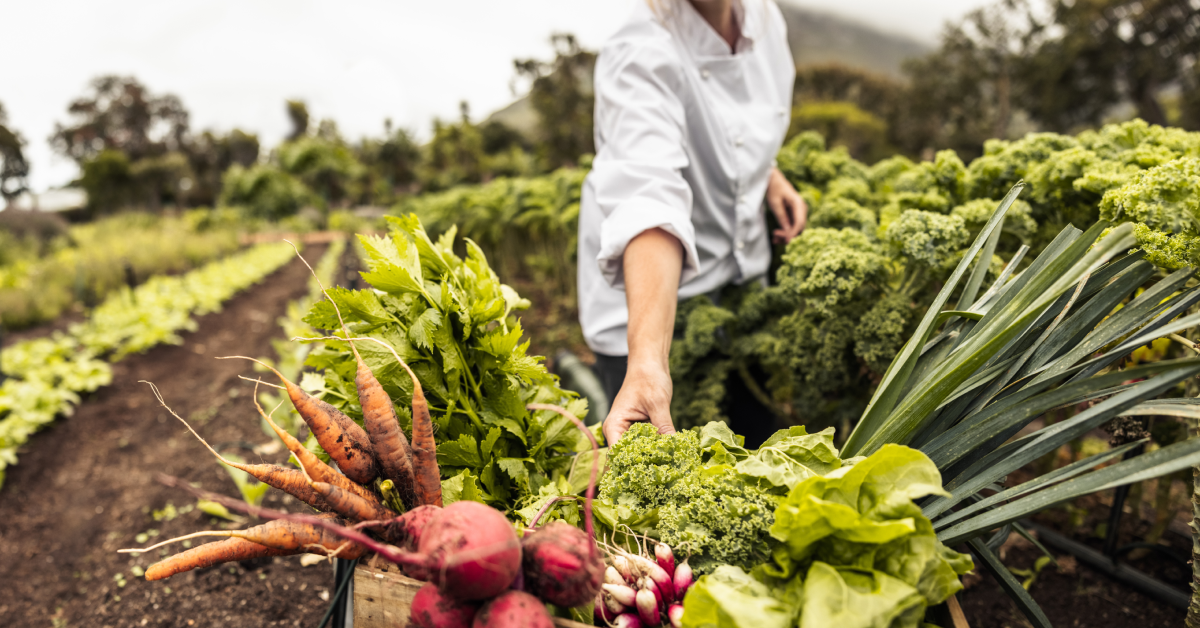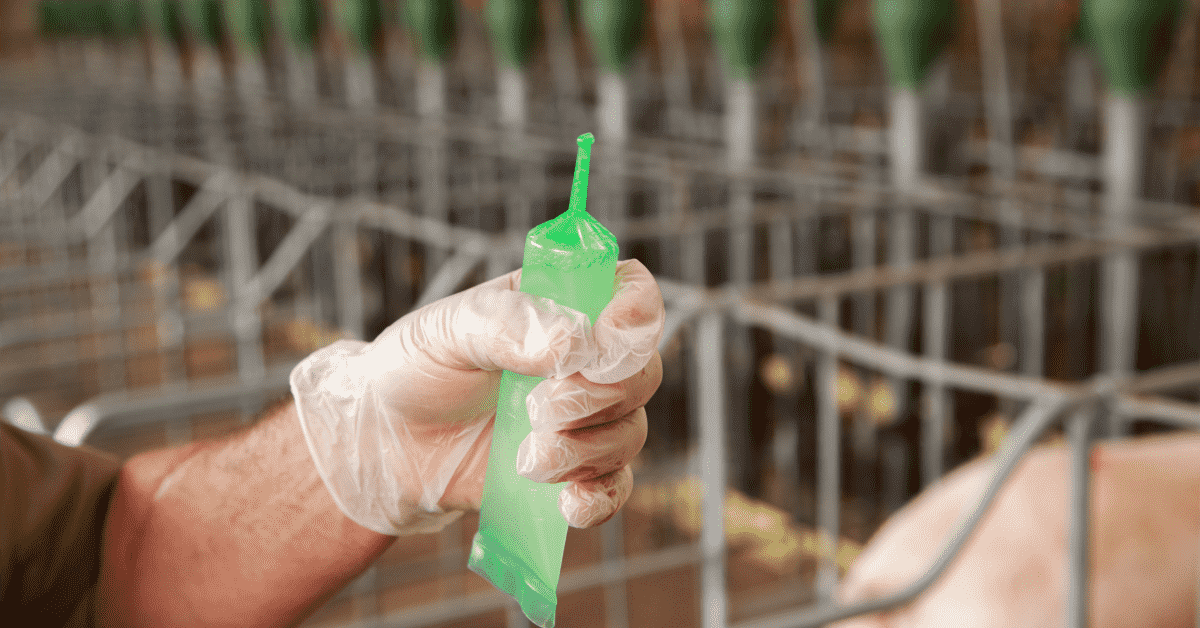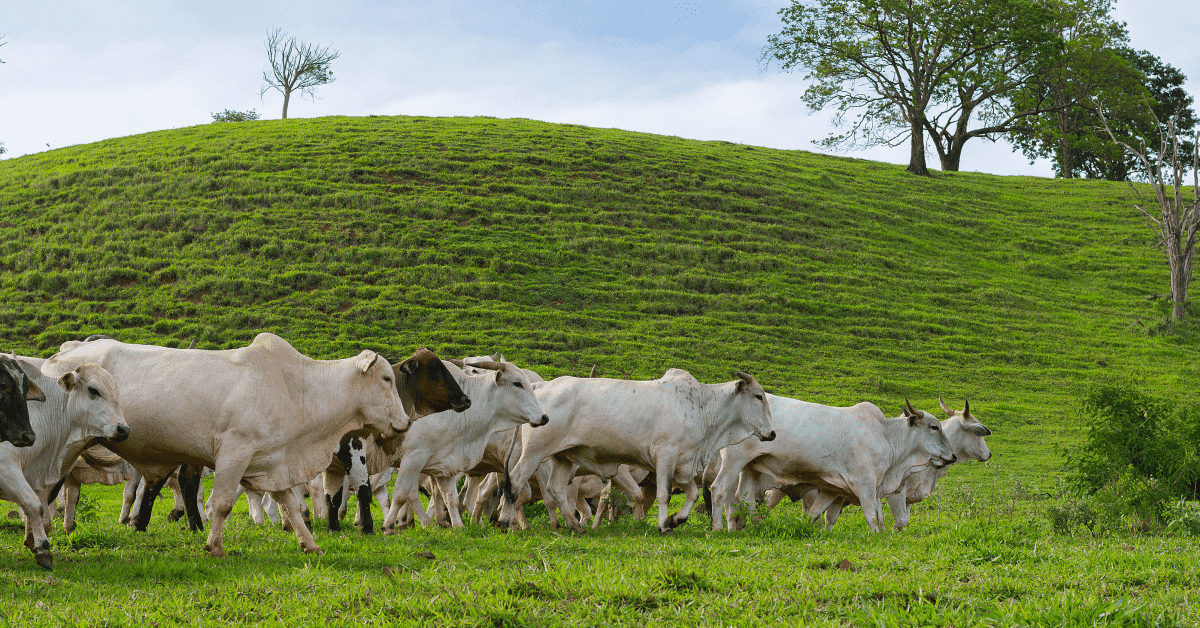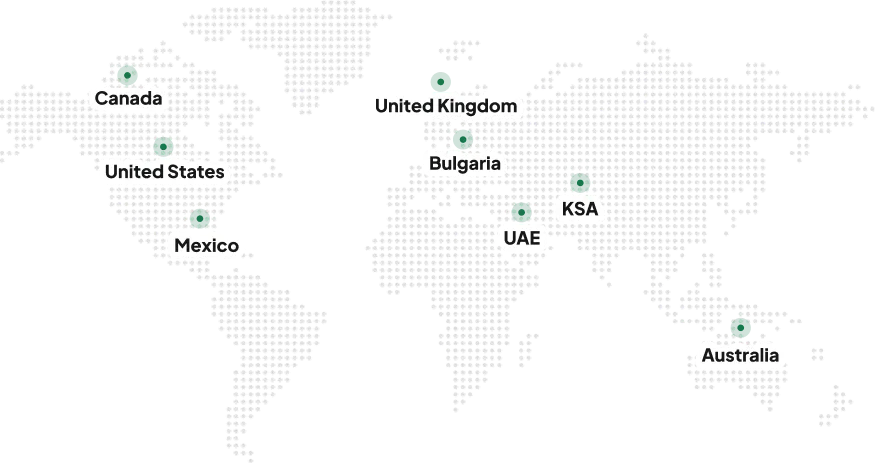
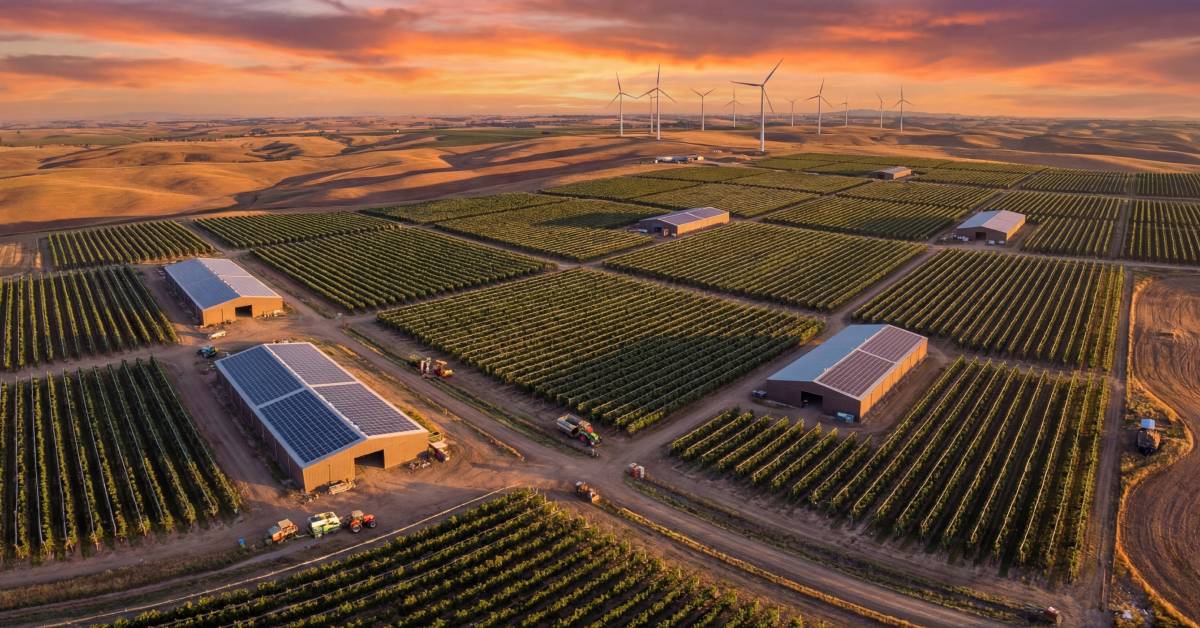

Agricultural technology in 2026 is not defined by funding headlines. It is defined by what is actually working on farms and ranches. After a rough 2025 that saw dozens of once-funded startups in vertical farming, drones, and insect-based ingredients shut down, the companies that survived have one thing in common: operators kept paying for their product, season after season.
This list covers the top AgTech companies operating across livestock and crop operations in 2026. Every company was selected against six published criteria. The list spans hardware, software platforms, AI monitoring systems, and field robotics, because transforming an operation typically requires more than one category.
Why Livestock and Crop Operations Need Better Technology in 2026
You are running an operation against rising input costs, tighter labor availability, and weather patterns that make season-to-season planning harder than it was a decade ago. A significant share of farms and agribusinesses still run critical decisions through spreadsheets, disconnected apps, and paper records nobody fully trusts.
The capital is moving. In Q1 2026 alone, 163 AgTech startups raised $1.89 billion, averaging $11.6 million per deal. That is not speculative money. It is capital concentrating in companies with real commercial traction. According to a January 2026 market report, AI in precision livestock farming sat at $2.7 billion in 2025, growing to $3.45 billion in 2026 at 27.9% annually. On the machinery side, MarketsandMarkets puts the agricultural robots market at $17.73 billion in 2025, projected to reach $56.26 billion by 2030.
Animal Health Technologies and Farm Automation each accounted for 35% of all disclosed AgTech deals in the 12 months ending May 2026, with Animal Health attracting $415.9 million in total capital. Both categories solve concrete daily operational problems, which is why they are holding investment attention while more speculative categories have contracted.
The farm management software market reached $3.73 billion in 2026, driven by agribusinesses replacing disconnected tools with platforms that connect field data directly to financial reporting. What changed after 2021 is that investors and operators stopped funding ambition and started requiring proof. Every company on this list has it.
How We Selected These 12 AgTech Companies
All six criteria below had to be present for a company to qualify. This section exists so you can evaluate each listing against your own operation’s needs, not just ours.
- Innovation depth: The core technology is purpose-built for agriculture and solves a problem that generic software or manual methods cannot address with the same reliability or cost.
- Deployment and adoption scale: Verified client count, farm count, head count, acres covered, or active commercial users. No projections counted.
- Funding stage or commercial track record: For startups, the most recent round and valuation. For established players, revenue history and market position. For software companies, years of documented client deployments.
- Direct livestock or crop impact: One measurable operational outcome per company. A theoretical use case did not qualify.
- Geographic footprint: Operating commercially in at least two countries, or at significant verified scale within one major agricultural market.
- 2026 relevance: Actively in market, shipping product or deploying software, with confirmed client activity in 2025 or 2026.
The list includes both hardware companies and software platforms because a sensor without software is noise, and a platform without field data is speculation.
Quick Comparison: 12 AgTech Companies at a Glance
| Company | Focus | Livestock / Crop | Core Technology | Founded | Funding Signal | Key Markets |
| Halter | Livestock management | Livestock | AI virtual fencing, IoT solar collars | 2016 | $220M Series E, $2B valuation (Mar 2026) | NZ, AU, US, UK |
| Folio3 AgTech | Agribusiness software | Both | Custom ag software, livestock and crop platforms | 2004 | 20+ years of verified deployments | US, Canada, global |
| Carbon Robotics | Crop weed control | Crop | AI laser weeding robots | 2018 | $150M+ total; $100M annual revenue FY2026 | US, 15 countries |
| Ecorobotix | Precision crop spraying | Crop | AI micro-dosing UHP robots | 2014 | ~EUR 128M total raised | EU, expanding |
| John Deere / Blue River | Crop precision machinery | Crop | Computer vision, See and Spray AI | 1946/2012 | Public (NYSE: DEER) | 30+ countries |
| Bayer / Climate FieldView | Crop data analytics | Crop | AI analytics, satellite imagery | 2012 | Division of Bayer AG | US, LATAM, EU |
| Trimble Agriculture | Precision hardware | Both | GNSS, IoT, field analytics | 1978 | Public (NASDAQ: TRMB) | 150+ countries |
| CropX | Soil intelligence | Crop | IoT soil sensors, irrigation AI | 2014 | Series B | US, AU, EU, IL |
| Indigo Agriculture | Regenerative crop | Crop | Microbiology, carbon verification | 2014 | $1.4B+ total raised | US |
| GEA / CattleEye | Livestock health AI | Livestock | Computer vision cattle monitoring | 1881/2017 | Acquired by GEA, March 2024 | EU, UK, global |
| Apollo Agriculture | Smallholder crop | Crop | ML, remote sensing, input fintech | 2016 | Series B, $40M | Kenya, Nigeria |
| Connecterra | Dairy cattle monitoring | Livestock | Wearable sensors, behavioral AI | 2014 | Series B | EU, US, AU |
Funding data sourced from Crunchbase, PitchBook, December 2025, and company announcements.
The Top 12 AgTech Companies in 2026
1. Halter

Headquarters: Boulder, Colorado (founded in New Zealand). Founded: 2016 | Focus: Livestock |
Halter builds solar-powered smart collars and an AI management platform that replaces physical fencing for cattle and sheep operations. Ranchers draw virtual fence lines from a smartphone. No wire, no posts, no labor to restring after a storm or flood.
In March 2026, the company raised $220 million in a Series E round led by Founders Fund, at a $2 billion valuation. That valuation doubled from $1 billion at Series D in June 2025, less than nine months earlier. According to Q1 2026 AgTech VC data, Halter’s single round was larger than what the entire Animal Health sub-sector raised across all of 2025.
Key metrics:
- 1 million solar-powered collars sold across New Zealand, Australia, and the US
- 2,000+ ranchers using the system commercially
- US ranchers have created 60,000+ miles of virtual fencing since the 2024 US launch
- Physical fencing costs approximately $20,000 per mile to install; virtual fencing removes that capital requirement entirely
- April 2026: launched world-first direct-to-satellite collar connectivity, removing the need for cell towers or on-ranch infrastructure
Halter is expanding to the UK and Ireland in H2 2026 and building animal health monitoring and pasture management capabilities on top of its core fencing platform.
2. Folio3 AgTech

Headquarters: San Mateo, California, Founded: 2004 | Focus: Both Livestock and Crop |
While many AgTech companies focus on a single category such as sensors, robotics, or animal monitoring, Folio3 AgTech operates across the broader agricultural software stack. The company develops custom software, ERP solutions, traceability systems, livestock management platforms, and crop operation tools used by producers, processors, cooperatives, and agribusinesses throughout North America.
Founded more than two decades ago, Folio3 AgTech has outlasted multiple waves of agricultural technology investment by focusing on operational systems that producers use every day. Rather than replacing existing farm processes with standalone applications, its platforms are designed to connect production, finance, compliance, inventory, genetics, feed management, and reporting into a single operating environment.
The company’s portfolio spans both livestock and crop agriculture. In livestock, solutions such as Cattlytics help ranchers and feedlot operators manage animal inventory, health treatments, breeding records, feed performance, weight gain tracking, and financial reporting. On the crop side, platforms support field operations, agronomy workflows, inventory management, traceability, and agricultural supply chain visibility.
What differentiates Folio3 from many newer AgTech entrants is its ability to integrate operational technology with enterprise systems. The company has built agriculture-specific implementations around Microsoft Dynamics 365, Oracle NetSuite, and custom cloud platforms, helping agribusinesses replace disconnected spreadsheets and legacy databases with centralized systems capable of supporting growth.
Key metrics:
- More than 20 years of service in agriculture and food businesses
- Solutions deployed across livestock, dairy, feedlot, crop, grain, seed, and agribusiness operations
- Deep expertise in agricultural ERP, traceability, compliance, and supply chain management
- Supports operations across the United States, Canada, Australia, and other international markets
- Custom software and platform deployments for producers, processors, distributors, and agricultural enterprises
As agricultural operations continue consolidating and data volumes increase, software platforms capable of connecting field activity with financial performance are becoming a competitive requirement rather than a technology upgrade. Folio3’s position in 2026 reflects that shift. The company is not competing to automate a single task. It is helping agricultural businesses build the digital infrastructure required to manage increasingly complex operations.
3. Carbon Robotics

Headquarters: Seattle, Washington, Founded: 2018 | Focus: Crop
Carbon Robotics builds autonomous field robots that use high-powered lasers and AI to identify and eliminate weeds, without herbicides and without mechanical soil disturbance. The LaserWeeder platform processes plant images continuously as it moves across a field and fires precisely at weeds only.
For the fiscal year ending January 31, 2026, Carbon Robotics crossed $100 million in annual revenue, confirmed by Business Wire in March 2026. It is the first commercial field-robotics AgTech company built on herbicide elimination to reach that level. In 2026, the company also launched the world’s first Large Plant Model (LPM), an AI foundation model trained for plant identification at the field scale.
Key metrics:
- Operating in 15 countries
- 70 to 80 percent reduction in herbicide use on treated fields
- Series D of approximately $70 million; total funding exceeds $150 million
- $100 million annual revenue reached without a concurrent equity raise
EU Farm to Fork pesticide reduction requirements create direct structural demand for what this platform does.
4. Ecorobotix

Headquarters: Yverdon-les-Bains, Switzerland Founded: 2014 | Focus: Crop
Ecorobotix builds autonomous spraying robots that use AI and computer vision to treat individual plants with precise micro-doses of herbicide or fertilizer. The ARA platform operates at plant-by-plant resolution rather than broadcasting across an entire field, reducing chemical usage by up to 90 percent compared to conventional broadcast spraying.
The company has raised approximately EUR 128 million across Series C and D rounds, making it the European market leader in ultra-high precision (UHP) crop treatment robotics.
Key metrics:
- Up to 90 percent reduction in chemical input per treatment pass
- Best suited to specialty crops: vegetables, sugar beet, sunflowers
- EUR 128 million total funding
- Directly addresses EU Farm to Fork compliance thresholds for pesticide reduction
For European specialty crop producers, Ecorobotix is no longer an efficiency tool. It is a compliance infrastructure.
5. John Deere / Blue River Technology

Headquarters: Moline, Illinois, Founded: 1946 (Blue River: 2012) | Focus: Crop
John Deere (NYSE: DEER) acquired Blue River Technology in 2017, adding computer vision and AI precision spraying to its row-crop machinery platform. The combined entity holds approximately 15 to 18 percent of the agritech market and operates across 30+ countries.
See and Spray Ultimate processes 20+ plant images per second at field speed. It detects weeds and applies herbicide only to the target plant, reducing herbicide applications by 67 percent or more on treated fields. The John Deere Operations Center manages accumulated field data across tens of millions of acres in North America.The The
2025 and 2026 context is worth noting:
- Acquired GUSS Automation (autonomous sprayer) and Sentera (aerial crop scouting) in 2025
- 2025 income declined significantly from 2023 levels due to commodity price pressure
- The maximum value comes with Deere hardware, a real consideration for mixed-fleet operations
For operators already in the Deere ecosystem, the integration depth between machinery, AI scouting, autonomous application, and financial tracking is unmatched at commercial scale. To understand how digital transformation plays out in row-crop operations, this is the most deployed example.
6. Bayer / Climate FieldView

Headquarters: Leverkusen, Germany (FieldView operations: US) Founded: 2012 (FieldView) | Focus: Crop
Climate FieldView, developed by The Climate Corporation and acquired by Bayer in 2019, is the most widely adopted agronomic data platform in North America, holding 8 to 10 percent of the agritech market.
The FieldView drive plugs into the CAN bus port of nearly any modern tractor or combine and captures live field data regardless of brand. The cloud platform converts that data into variable-rate seeding prescriptions, seasonal field performance reports, and fertility recommendations.
What it does:
- Brand-agnostic data collection across mixed equipment fleets
- Variable-rate seeding and fertility prescriptions based on seasonal field history
- Satellite imagery integration for vegetation health monitoring
- Reported 10 to 20 percent yield improvements in specific crop-geography combinations with precision prescription use
Bayer’s parent company traded near 20-year lows in 2025, creating strategic uncertainty around its digital agriculture division. Farmer adoption of FieldView has held steady regardless, a clear signal of the platform’s standalone utility for brand-agnostic data aggregation.
7. Trimble Agriculture

Headquarters: Westminster, Colorado, Founded: 1978 | Focus: Both Livestock and Crop
Trimble (NASDAQ: TRMB) provides the GPS infrastructure most precision agriculture operations depend on: GNSS correction services, automated steering systems, ISOBUS communication software, and field analytics for multi-brand equipment fleets, operating across 150+ countries.
CenterPoint RTX provides the GPS accuracy that enables automated steering, variable-rate application, and field boundary mapping across virtually any modern farm equipment. In 2025, Trimble acquired FarmWise, a mechanical crop thinning startup, integrating it as Trimble Agriculture’s robotic thinning platform for specialty crops.
For operators exploring IoT integration in agriculture, Trimble is often the positioning and connectivity foundation that other precision tools are built on. No other company on this list has an equivalent geographic reach in precision hardware.
8. CropX

Headquarters: Tel Aviv, Israel (global operations) Founded: 2014 | Focus: Crop
CropX installs in-field soil sensors that stream continuous moisture, temperature, and salinity readings to a cloud platform, which converts that data into irrigation recommendations and nutrient scheduling guidance. The sensor installs with its cap at the soil surface and requires no maintenance after installation.
Farmers using CropX-informed scheduling report 10 to 20 percent reductions in water and fertilizer inputs compared to calendar or estimate-based scheduling.
Operation types served:
- Row crops, including corn, soybeans, and wheat
- Vegetables and specialty crops
- Orchards and vineyards
- Active in the US, Australia, the EU, and Israel
As irrigation regulations tighten and water costs rise across key farming regions, soil intelligence-driven scheduling is transitioning from a precision farming premium to an operational baseline. The no-maintenance sensor design reduces the adoption barrier that more complex IoT deployments create.
9. Indigo Agriculture

Headquarters: Boston, Massachusetts, Founded: 2014 | Focus: Crop
Indigo Agriculture operates two connected product lines: microbial seed treatments designed to improve crop resilience under variable weather conditions, and a carbon verification platform that measures and monetizes regenerative farming practices for food companies and grain traders seeking verified sustainability credentials.
Scale and funding:
- $1.4 billion+ total raised since 2014
- Series D in 2016 was the largest private AgTech equity financing at the time
- Series E: $250 million in 2018
The carbon credit market still carries credibility challenges from early low-quality programs, but companies building rigorous, auditable verification infrastructure are separating from that history. For producers exploring regenerative soil practices, Indigo covers both the biological input side and the documentation layer required for verified revenue.
10. GEA Group / CattleEye

Headquarters: Düsseldorf, Germany (CattleEye: Ireland), Founded: 1881 / CattleEye 2017 | Focus: Livestock |
GEA Group (DAX: G1A), a global agricultural equipment company with approximately EUR 5.3 billion in annual revenue, acquired CattleEye Ltd. of Ireland in March 2024. CattleEye developed AI-powered livestock monitoring using overhead cameras and machine learning to detect lameness, disease signs, and behavioral changes in cattle continuously, without requiring manual observation.
What this delivers operationally:
- Early lameness detection reduces treatment cost and involuntary culling rates
- Continuous individual animal health monitoring without proportional labor increase
- EU animal welfare documentation compliance support
- Distribution through GEA’s established global equipment sales network
The acquisition embeds AI cattle health monitoring into standard farm equipment sales. For producers thinking about livestock health and breeding management, early-detection monitoring is the input that makes every downstream health decision more accurate.
11. Apollo Agriculture

Headquarters: Nairobi, Kenya, Founded: 2016 | Focus: Crop
Apollo Agriculture uses machine learning and satellite remote sensing to analyze individual smallholder farms and deliver customized packages of seeds, fertilizer, crop insurance, and financing through a mobile application. The AI underwriting system assesses each farm’s risk profile from satellite data and provides financing calibrated to that specific field’s conditions, without requiring credit history.
- Series B: $40 million raised
- Backed by Breakthrough Energy Ventures
- Operating in Kenya and Nigeria
- Mobile-first, designed for low-connectivity environments
Smallholder farmers manage approximately 70 percent of food production in Sub-Saharan Africa. Apollo Agriculture scales crop intelligence and financial access to this segment without requiring physical branch infrastructure. To understand where technology delivers the highest agricultural productivity impact relative to the size of the population it serves, this is a meaningful data point.
12. Connecterra

Headquarters: Amsterdam, Netherlands, Founded: 2014 | Focus: Livestock
Connecterra builds wearable sensor collars for dairy cattle that monitor individual animal movement, rumination, and feeding behavior. The Ida AI platform processes that behavioral data to predict estrus windows, flag disease onset before visible symptoms appear, and identify productivity changes at the individual animal level.
A missed estrus window costs 21 days in the breeding cycle. A health issue identified two days late means a longer treatment course and reduced milk production during recovery. Connecterra’s system targets both gaps at the individual cow level.
- Early estrus detection improves conception rates
- Disease early warning reduces treatment delays and output loss
- Individual monitoring that scales with herd size without proportional labor increase
- Series B; active deployments in the EU, the US, and Australia
For producers evaluating dairy management options, behavioral AI monitoring pairs with operational software infrastructure to give you visibility from the individual animal through to financial reporting.
Which AgTech Company Is Right for Your Operation?
Every company on this list solves a specific problem. Your decision comes down to which problem is costing you the most right now.
The companies above were selected because operators kept paying for the product in real conditions. That is the only qualifier that matters in 2026. There are no pilots, no pre-revenue companies, and no companies selected on funding size alone.
If you run a livestock operation, the clearest options by category are: Halter for fencing and grazing management, Connecterra for dairy health monitoring, GEA / CattleEye for continuous cattle observation, and Folio3 AgTech for livestock ERP covering feedlot management, dairy production, swine operations, feed mill management, and animal records at any scale. If your operation is crop-focused, Carbon Robotics and Ecorobotix address chemical input reduction directly, CropX addresses irrigation scheduling, and Trimble and John Deere address field-level precision across large acreage.
When the software challenge is connecting field data, animal records, and financial reporting into one system, rather than managing them across three separate tools, that is where Folio3 AgTech’s 20 years of agriculture-specific deployments are most relevant. Whether you are running a single-species livestock operation, a crop and seed business, or an agribusiness that spans multiple production types, the question is the same: do your systems give your operations team and finance team the same accurate picture at the same time? If not, the Folio3 AgTech team is worth a conversation.
For everyone else, the list above gives you the field-tested options across each category. Pick the problem first, then the company.
FAQs
What is the largest AgTech company in 2026?
By market capitalization and annual revenue, John Deere (Deere and Company) is the largest, with revenues above $50 billion and deployments across 30+ countries. Among private startups, Halter holds the highest valuation of any livestock technology company in 2026 at $2 billion following its March 2026 Series E. Among software providers serving both livestock and crop operations, Folio3 AgTech has the broadest deployment scope, covering feedlot, dairy, swine, grain, seed, and crop lifecycle operations within a single platform.
What is the fastest-growing segment in agricultural technology right now?
AI-driven livestock monitoring is growing at 27.9% CAGR through 2026 and 23.4% through 2030, per January 2026 market data. It also led all AgTech sub-sectors in total venture capital raised over the 12 months ending May 2026, with $415.9 million across seven deals. Farm automation and precision agriculture software are the next highest-growth categories by both deal count and capital.
What is precision agriculture, and which companies lead it in 2026?
Precision agriculture applies field-level data from GPS equipment, soil sensors, satellite imagery, and weather stations to vary inputs like seed, water, and fertilizer at sub-field resolution. You apply what each zone of the field actually needs, rather than a flat rate across the whole field. Leading precision agriculture companies in 2026 include John Deere (See and Spray), Trimble Agriculture (GNSS and field analytics across 150+ countries), Bayer / Climate FieldView (agronomic data platform), and CropX (soil intelligence and irrigation optimization).
Which AgTech companies serve both livestock and crop operations?
Few companies operate across both domains at a verified scale. Folio3 AgTech is the primary example of a software provider with documented deployments on both sides, covering livestock management software, feedlot management, dairy, and crop management software within a single platform ecosystem. Trimble Agriculture supplies precision hardware used across both production types. AGCO Corporation manufactures farm machinery deployed in both sectors globally.
Is AgTech a good investment in 2026?
The sector rewards selectivity. Global funding is down over 70 percent from 2021 peak levels, and companies without verified commercial traction are finding capital access difficult. The sub-sectors drawing sustained investment, AI livestock monitoring, autonomous field robotics, and agricultural biologicals, are generating real operational revenue. Investors with deep agriculture domain knowledge are still actively writing checks. Generalist investors who entered during the 2020 to 2022 period largely have not returned.
What does agricultural software actually do for an agribusiness?
Purpose-built agriculture software connects the core functions of a farming or agribusiness operation, including field operations, inventory, animal records, feeding, compliance documentation, supply chain, and financial reporting, in one place. Unlike generic business software adapted for farming, a purpose-built platform accounts for lot traceability, perishable inventory, seasonal labor cycles, and regulatory requirements under USDA and FDA. For operations managing both livestock and crop production, integrated platforms reduce vendor count and eliminate the manual data transfers that create errors between disconnected systems.