

| Element | Details |
| Operation Type | High-capacity Commercial Feedyard (beef finishing) |
| Capacity | 60,000 head |
| Active Pens | 12 finishing pens |
| Team | General Manager, Nutritionist, Head of Cattle Marketing, CFO |
| Pre-Implementation Crisis | Kill sheet data arriving as static PDFs, disconnected from live feeding and lot records |
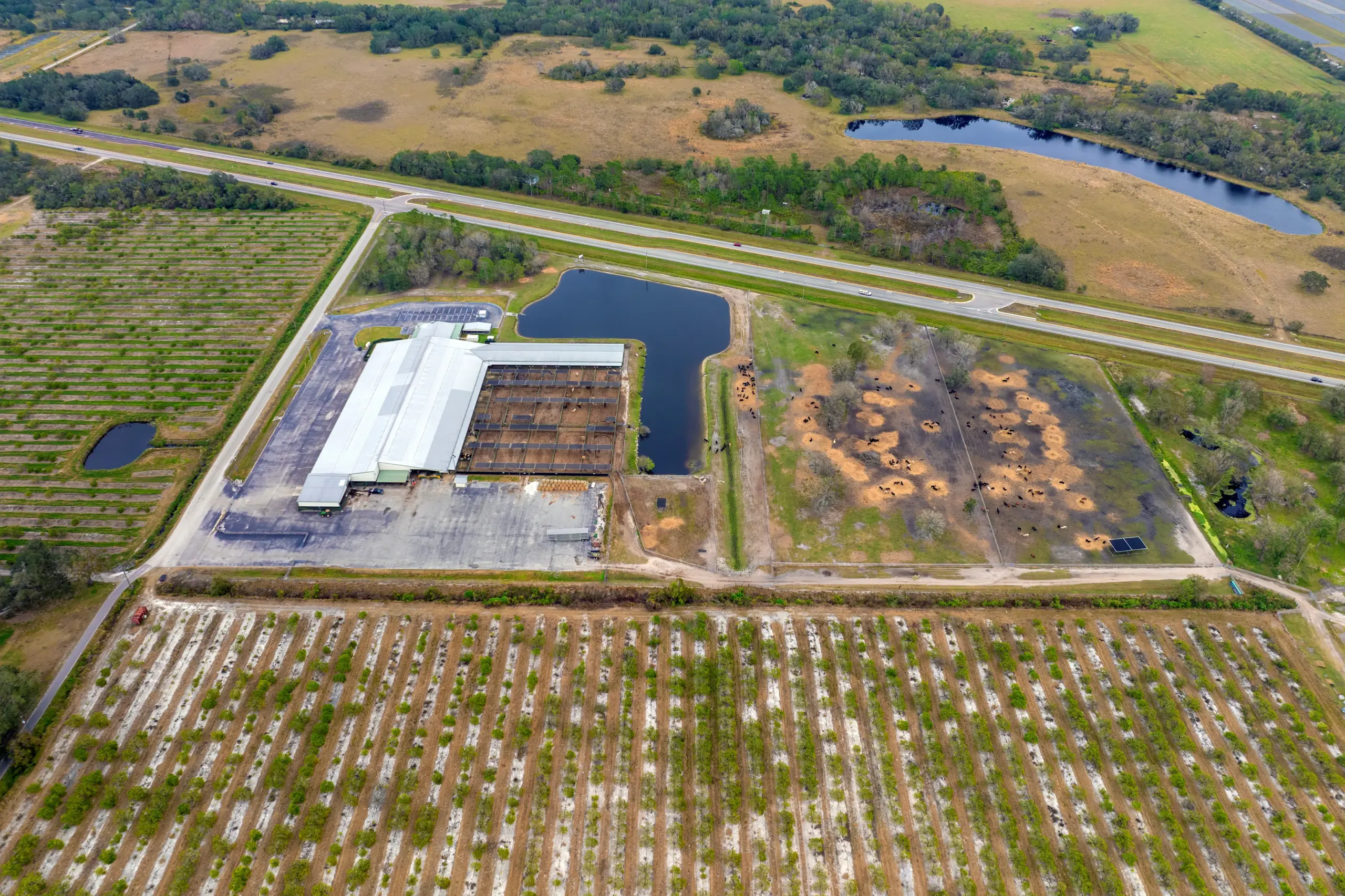
Disclaimer: This discovery is based on real feedyard operations and challenges documented across multiple Folio3 AgTech implementations. The operation profile, metrics, and outcomes are composites drawn from actual customer data, anonymized to protect client confidentiality per NDA agreements. Individual results will vary based on operation-specific conditions.
A high-capacity, 60,000-head feedyard in Western Kansas had a data problem with a price tag. Every time a lot was shipped to the packer, a PDF kill sheet arrived days later. It documented carcass outcomes in detail but that data lived entirely in accounting spreadsheets, completely disconnected from the live feeding records, ration histories, and medical logs that drove those outcomes in the first place.
The result was costly and repeatable: Yield Grade 4 (YG4) and heavyweight carcass discounts eroding pen margins week after week. The feedyard’s marketing team was shipping cattle based on visual appraisal. Its nutritionist was adjusting rations without knowing how previous protocols performed at the rail. They were celebrating low Cost of Gain (COG) while some of those “high-performing” pens were quietly losing money on the hook.
By deploying Folio3’s unified feedlot management software, the feedyard eliminated the PDF trap. Kill sheet data from the packer’s EDI (Electronic Data Interchange) files was automatically ingested and matched by lot, by pen, by Electronic ID (EID) tag to the complete lifecycle record of every animal. The bunk was finally connected to the hook.
It was a Tuesday morning at the main office, and the General Manager was reviewing a settlement check from a regional meat packer. Attached: a 15-page PDF kill sheet for a lot of 200 steers shipped the previous week. The data was detailed: Hot Carcass Weight (HCW), Marbling Score, Backfat thickness, Ribeye Area (REA), Yield Grade by animal, but it was already days old, and the pen was empty.
The settlement told a brutal story: 60% of the cattle hit Choice, which was acceptable. But 20% were penalized with Yield Grade 4 (YG4) and heavyweight carcass discounts, erasing $12,000, roughly $60 per head from the pen’s margin in a single payout. The PDF did not explain. It was a financial receipt for decisions that could no longer be changed.
“I am looking at $12,000 in yield grade discounts, but I have no systemic way to know which specific cattle caused it or why,” the General Manager said. “By the time accounting keys this into a spreadsheet, the pen is empty, and the next lot is already eating. If we can’t tie this carcass data back to the live animal data, we are doomed to repeat the same feeding mistakes next month.”
This is the structural reality of digitizing feedlot operations end-to-end: carcass data and live-yard data are generated by completely separate systems, and without a bridge between them. Every kill sheet is a post-mortem rather than a learning event. The fix wasn’t a better spreadsheet, it was eliminating the time lag and the system disconnect entirely.
An automated EDI/API Packer Integration eliminates the PDF trap entirely. Instead of waiting for a static document, the ERP ingests the packer’s digital kill sheet file the moment cattle are graded at the processing plant.
Identity Matching Logic then parses the incoming data, cross-referencing packer sequence numbers, lot IDs, and individual EID (Electronic Identification) tags against the ERP’s Master Lot Record. Within minutes, carcass attributes; HCW, Marbling Score, Backfat, Ribeye Area, and all grid premiums or discounts are appended to individual animal and lot profiles in the feedlot’s database. The kill sheet transforms from a delayed financial receipt into an active, queryable biological dataset that can be analyzed, filtered, and benchmarked against future lots.
Once carcass data was flowing into the system automatically, the yard’s consulting nutritionist visited to review the quarter’s performance. In the past, a pen underperforming at the packer meant guessing: genetics? weather? the finisher ratio? Now, the nutritionist and feed manager were looking at a unified dashboard, feed curve overlaid with final carcass outcomes for every lot that shipped.
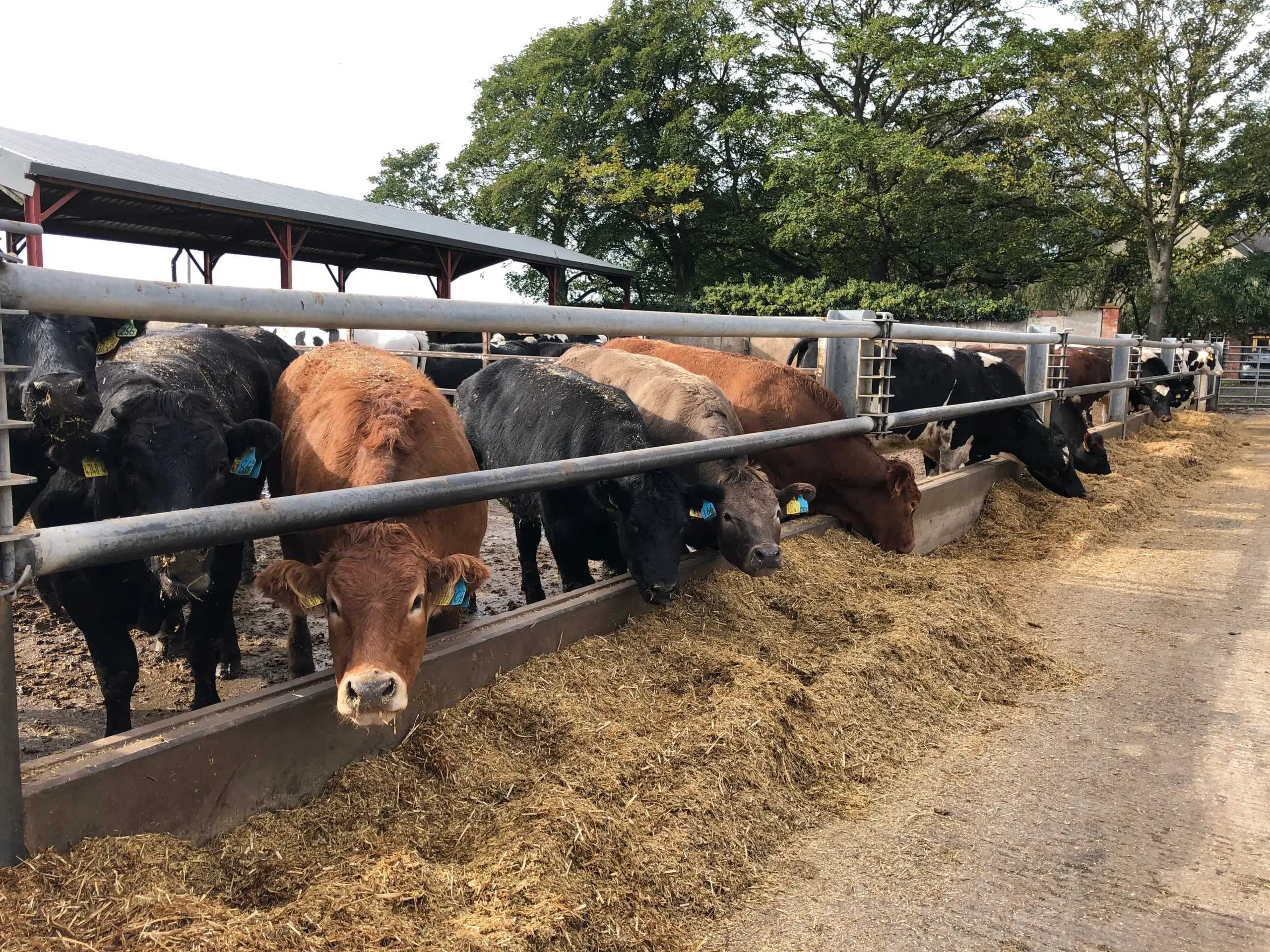
The comparison was immediate and conclusive. Understanding how cattle feed rations affect carcass quality outcomes is the foundation of profitable finishing,and the integrated data made that connection visible for the first time.
“Look at Lot 804,” the Nutritionist said, pointing to the monitor. “Identical genetic profile to Lot 805, but Lot 804 received the finisher ration 14 days earlier. We assumed it would boost marbling. But the kill sheet integration shows it triggered heavy backfat and YG4 discounts instead, that was $8,400 in lost premium versus Lot 805. The data proves we pushed them too hard, too fast.”
The ability to correlate specific feeding decisions to specific carcass outcomes is also what drives meaningful improvements in feed conversion ratio over time, because the feedback loop finally closes. Prior to ERP integration, nutritionists were adjusting protocols based on general industry data. Now they were adjusting based on localized, lot-specific, rail-verified evidence.
A unified Production and Performance Sub-ledger maps Inputs (ration schedules, Days on Feed, dry matter intake, medical treatments) to Outputs (carcass grade, Yield Grade, HCW, grid premium earned) within a single system.
The ERP’s Business Intelligence (BI) engine enables a Regression Analysis Dashboard. A nutritionist can select a specific outcome. For example, Certified Angus Beef (CAB) qualification and the system filters the historical database to show every feeding protocol, DOF (Days on Feed) range, weather period, and health treatment associated with cattle that hit that premium tier. This closed-loop data architecture turns localized slaughter history into a precision nutrition decision tool, replacing generic industry assumptions with yard-specific, packer-verified evidence.
The most operationally consequential gap was in the marketing department. Selling cattle is the highest-stakes decision a feedyard makes, and historically, pen riders were deciding when to “sort and ship” by eyeballing the cattle in the pen. In the previous quarter, late shipping decisions had cost the feedyard roughly $2,800 per pen in avoidable heavyweight discounts. Over 12 active pens, that was $33,600 in preventable losses in a single quarter.
“Eyeballing a 1,400-pound steer to guess its backfat thickness is a losing game,” the Head of Cattle Marketing said during the weekly shipping meeting. “We need to sort our pens based on biological data and historical growth curves. If we ship the whole pen today, we leave money on the table for the green ones. If we wait, we get penalized for the heavy ones.”

Data-driven cattle marketing strategies at the commercial feedlot level require exactly this predictive sort windows backed by historical carcass intelligence. The ability to segment a pen and ship optimally is what separates consistent premium capture from chronic heavyweight penalty.
Predictive Growth Algorithms powered by historical kill sheet intelligence drive the Marketing Readiness Dashboard. The system looks at the current live inventory including genetic origin, intake weight, current feed consumption, and Days on Feed. Then compares it against historical carcass outcomes for cattle of identical origin in the database.
The ERP generates a Sort and Ship Recommendation with projected outcomes. For example: ‘Top off Pen 12 this week (heaviest 30%) to capture the optimal grid premium. Hold the remaining 70% for 14 additional days.’ By standardizing sort decisions with data-backed projections rather than pen-rider appraisals, the feedyard narrows the marketing window with precision. It consistently hits the packer’s weight sweet spot and eliminating the heavyweight discount cycle.
Improving feedlot efficiency at this scale depends on connecting every decision, from nutrition, health, and marketing to a single longitudinal data record. The Marketing Readiness Dashboard is where that data pays out directly in captured premiums.
At month-end, the financial impact of this intelligence reached the CFO’s desk. In the legacy system, the feedyard’s headline KPI was Cost of Gain (COG), the expense to add a pound of live weight. A low COG felt like a win. But COG had no visibility into grid economics: a pen could carry an excellent COG and still lose money if the cattle graded poorly at the packer.
“We used to celebrate pens with massive Average Daily Gains,” the CFO admitted, reviewing the new closeout reports. “But the ERP’s unified ledger showed us that some of those ‘high-performing’ pens were actually losing money because their rapid growth pushed them out of the packer’s desired weight grid. We were chasing the wrong financial metrics, and not knowing it.”
Understanding true cattle ranching profitability at the pen level requires connecting feeding costs to grid revenue in a single ledger. That connection is exactly what the ERP’s unified closeout architecture provides.
A Unified Record-to-Report (R2R) Architecture maintains a live financial balance for every lot from placement to closeout. The ERP aggregates the initial purchase cost, prorated daily feed drops (tracked through the cattle feeding software), yardage fees, medical treatments, and interest charges into a fully burdened Total Cost per head.
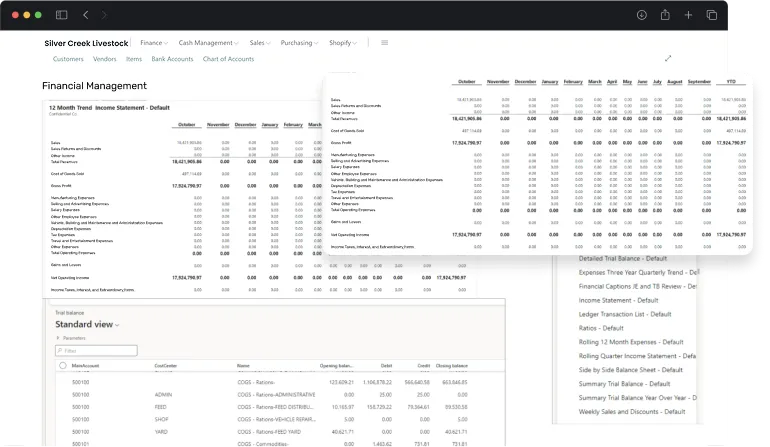
When the EDI kill sheet is ingested, the ERP’s financial engine maps net packer revenue; base price plus all premiums, minus all grid discounts and freight against that Total Cost. It instantly generates a Net Return per Head and Net Return per Lot closeout report. Because biological and financial data share the same system, the CFO can analyze profitability by grid performance, enabling the yard to financially incentivize the procurement of cattle that perform best on the rail, not just in the bunk.
The integrated procurement data became a supplier scorecard. The feedyard shifted capital toward ranches whose calves consistently yielded higher CAB qualification and lower YG4 exposure. It’s a strategic application of livestock procurement optimization that wouldn’t have been possible without kill sheet data tied to lot origin records.
For feedlot operations evaluating the full scope of what livestock management software features can deliver at enterprise scale. It covers from pen-level cost tracking to predictive closeouts, the capabilities described here represent the operational standard for high-capacity yards.
Replacing post-mortem spreadsheets with a unified Feedlot ERP transformed how the Kansas feedyard managed its marketing, nutrition, and financial decisions in every case, measured by packer outcomes, not just yard metrics:
| Metric | Before ERP | After ERP | Impact |
| YG4/5 Carcass Discounts | 20% of the pen was penalized | ~6% — reduced 14% | $60+/head recovered |
| CAB / Prime qualification | 60% of cattle | 69% of cattle | 9% premium increase |
| Sort & ship decision basis | Visual appraisal | Predictive algorithm | Heavyweight discounts eliminated |
| Time to financial closeout | 4+ days | < 1 hour | 96% faster |
| True net return visibility | COG only — misleading | Full grid economics | Real per-pen profitability is known |
If your packer settlements arrive as static PDFs, your marketing team sorts cattle by eye, and your CFO reports Cost of Gain as the primary profitability metric, this story is your feedyard’s mirror. These aren’t edge cases. They are the default operating state of a commercial feedlot that hasn’t yet connected its biological data to its financial data.
The shift doesn’t require rebuilding everything at once. It starts by asking one question: Is your kill sheet data driving your next feeding and shipping decision, or just documenting the last one?
Explore Folio3’s Feedlot Management Software, purpose-built for high-capacity commercial feedlots that need packer EDI integration, predictive marketing tools, and true net pen return visibility in a single system. Or talk to a Folio3 AgTech Solutions Architect to map out your digital feedyard blueprint.
Get a Free Consultation Within 24 Hours, with a No-Obligation Ballpark Estimate
[contact-form-7 id="5196998" title="Intent Popup Form"]