
A drone identifies disease in Row 47 before you see it. A sensor alerts you that Cow #203 is developing mastitis two days early. Your irrigation system adjusts water delivery field-by-field based on real-time data without you touching a control.
This is AI in agriculture today, not science fiction. Rather than a reserved gadget for corporate mega-farms, it’s becoming a practical tool you can integrate into your existing crop, livestock, and farm operation workflows, only if you know where to start. As highlighted in recent discussions on technological advancements, producers are being pushed to adopt tools that deliver greater precision, resilience, and efficiency.
Artificial intelligence in agriculture is no longer a distant concept; it has become a practical, on-farm ally transforming daily decisions across crop, livestock, and operational workflows. From the emergence of the fourth agricultural revolution to the top trends reshaping agriculture, AI for agriculture is helping farmers monitor fields in real time, detect anomalies earlier, optimize inputs, and streamline resource-intensive tasks.
This guide delivers a farm-oriented roadmap for applying AI solutions for agriculture across three pillars of Agriculture: crop production, livestock management, and farm operations. Plus, the data infrastructure and change-management steps enable its complete implementation on real operations like yours.
Deploy proven AI solutions for crops, livestock, and other farm operations, integrated with your equipment, data, and existing workflows.
When people ask “what is AI in agriculture?”, the most straightforward answer is: AI is software that learns from your farm data and helps you make better decisions, faster. Instead of you manually scanning spreadsheets and notes, AI uses algorithms to find patterns in weather records, sensor readings, yields, and financials. That’s why the role of data in agriculture is so foundational.
A practical artificial intelligence in agriculture definition includes several building blocks: machine learning models, computer vision, predictive analytics, and newer generative AI tools. They are increasingly embedded in farm ERPs and vertical platforms.
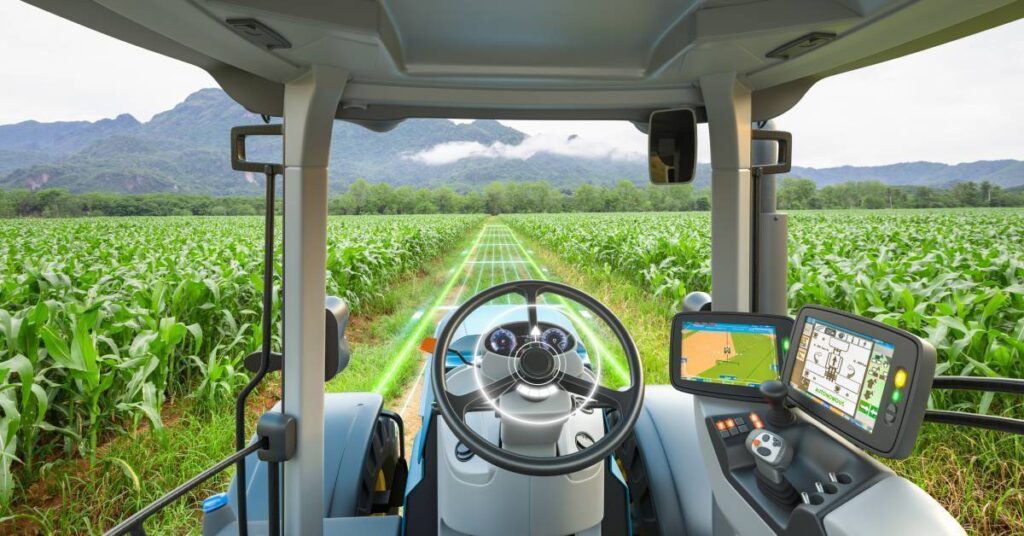
At a practical level, AI in farming usually shows up through four core technologies working behind the scenes.
Machine learning (ML) teaches computers to recognize patterns in historical data and then make predictions. On the crop side, ML powers crop yield prediction using AI, combining weather, soil, and management records to forecast field or zone yields. In livestock and dairy, similar models support data analytics in the dairy industry, turning health, production, and feed data into risk scores and early alerts for individual animals.
Computer vision for agriculture lets software “see” from cameras and drone imagery. In crops, CV systems work with sensors and edge devices, as in IoT-powered crop health monitoring, to detect disease symptoms, nutrient issues, or weed patches early. In livestock, CV underpins automating cattle counting with computer vision, reading video from alleys or pastures to count and classify animals without manual tallies.
Predictive analytics uses statistics, ML, and domain logic to look ahead: “What is likely to happen next?” In agriculture, it often means forecasting demand for inputs, projecting yields, or stress-testing income under different price scenarios. These tools draw heavily on the role of big data in agriculture, pulling together years of weather, satellite, and market data so you can plan planting, marketing, and storage with more confidence.
Generative AI takes structured data and unstructured text and turns them into drafts, summaries, and “what-if” narratives. In farm ERPs, it can summarize season-to-date records, highlight anomalies, or outline best/worst-case scenarios using the clean data models described in your comprehensive guide to ERP data management. You stay in control, but routine reporting and scenario exploration get much faster.
One powerful example of AI in agriculture comes from one of Australia’s leading beef producers. They were struggling with manual cattle counts that were slow, labour-intensive, and often inaccurate across hundreds of thousands of animals. By deploying a computer-vision solution that uses HD drone video and machine-learning models to count cattle in real time, they dramatically reduced human error and saved significant yard time for staff.
Because the AI system integrates counts directly into their digital records, managers now see accurate inventory, pen by pen, without stopping operations. This single use case shows how AI for agriculture can turn a routine, error-prone task into a reliable, automated workflow that pays off in both efficiency and confidence.
Farms are under pressure to produce more with fewer resources. AI helps you respond faster, reduce waste, and stay competitive in a rapidly changing agricultural landscape.
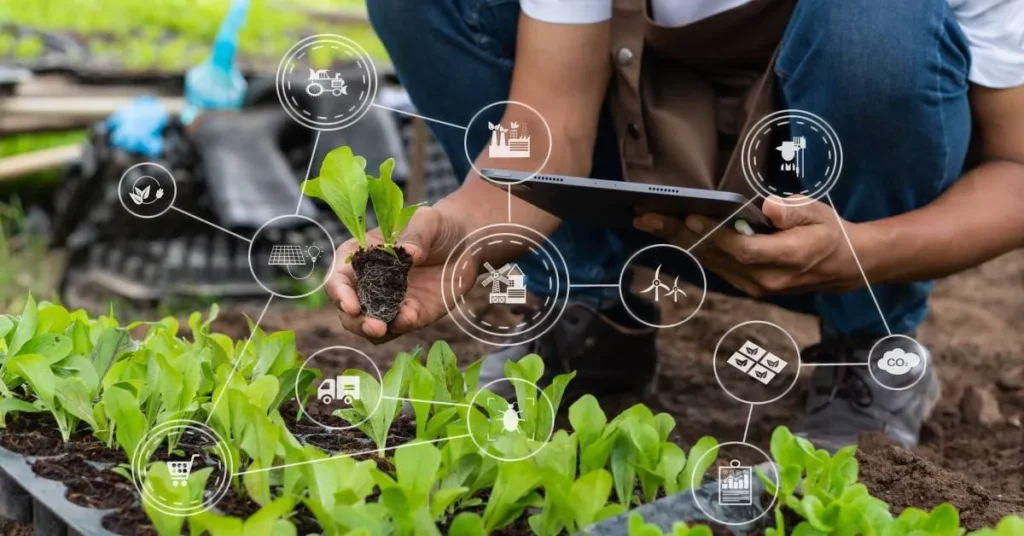
If you are wondering why AI in agriculture is suddenly everywhere, look first at the pressure on your operation. You are being asked to produce more with less land, less water, and less predictable weather.
At the same time, the global AI in agriculture market is now projected to surge from approximately USD 2.8 billion in 2025 to USD 8.5 billion by 2030, growing at a compound annual growth rate (CAGR) of 25% according to BCC Research. That growth reflects real demand from producers, processors, and retailers who need precise, data-driven decisions across the value chain.
You also face labour shortages as recent industry reports highlight a workforce gap of nearly 2.4 million workers in the U.S. agricultural sector alone, alongside tighter retailer specifications and new sustainability expectations. Yet many farms still struggle with basic connectivity and software complexity, as highlighted in common agricultural technology adoption barriers. AI is arriving in that reality, not a blank slate.
Against that backdrop, the AI benefits in agriculture are very concrete. On the productivity side, AI models can combine local weather, soil, and historical yield data to recommend planting windows and variable-rate strategies.
Validated data indicates that AI-enabled precision irrigation can improve yield accuracy by 15%, reduce water consumption by 20–30% and cut fertilizer use by up to 20% to boost overall production. It builds directly on proven practices to increase crop yields and shows up in the numbers when you combine field records with effective farm data.
From a sustainability standpoint, the impact of AI in agriculture goes beyond efficiency. With good data, AI can help you select regenerative rotations, manage cover crops, and track soil-carbon trends. Layered with the best sustainable agriculture practices, AI becomes a tool to document improvements in soil health and emissions, not just meet short-term yield targets.
For all of these benefits of AI in agriculture to be real on your farm, the order matters: digital first, AI next. If your data lives in paper notebooks, disconnected apps, or staff laptops, models cannot see the whole picture. This is precisely the problem outlined in many farm data management challenges.
The first step is to centralize and clean your operational data as part of your broader digital transformation in agriculture. From there, specialized farm data management and analytics for agriculture can turn that information into dashboards, benchmarks, and alerts. Only then does it make sense to layer AI models on top, so the next section of this guide will focus on how to build that foundation to design an AI roadmap you can actually execute.
When you strip away the buzzwords, how AI works in agriculture is simple: you collect good data, organize it, run AI models for agriculture on top, and then deliver clear decisions back to your team. The process is very similar to what you see in the role of data analytics and business intelligence dashboards in agriculture, AI just adds smarter prediction and optimization.
| Layer | Example | What Data Is Needed | Typical Outcome |
| Data capture & record-keeping | Digital field maps, herd records, spray logs, treatment histories | Field boundaries, varieties, events, treatments, inputs, etc. | A complete farm data instead of scattered paper and spreadsheets |
| Integration, storage & dashboards | Unified crop + livestock views in ERP and BI dashboards | Synced data from farm record-keeping, ERP, and sensors | Visual insights, as in agriculture-focused BI dashboards |
| Models & analytics | Yield prediction, lameness risk scores, and bunk intake patterns | Yields, weather, sensor readings, ration data, etc. | Predictive analytics with forecasts, risk scores, and “what if” scenarios |
| Decision & automation layer | Variable-rate seeding, automated health alerts, exception-based tasks | Model outputs plus operational rules | Adjusted plans, alerts, or automated machine system changes |
For any of this to work, your “digital soil” must be healthy. That starts with disciplined agriculture data management: digital field plans, herd lists, inventory, work orders, finances, and compliance logs. Moving from paper to digital record-keeping in agriculture is usually the first step, supported by practical farm record-keeping tips.
On the systems side, tools like Farm Record-Keeping software and a modern ERP for agriculture give you structured, consistent data across crops, livestock, and the back office. As your data volume grows, the principles in the comprehensive guide to ERP data management become critical: clear ownership, clean master data, and solid integrations. Without that layer, farm data for AI stays noisy, and model results will never be as reliable as you need.
Once your records are digitized, the next layer is sensing and connectivity, and this is where IoT in agriculture comes in. Soil-moisture probes, weather stations, and in-field IoT devices, and the role of IoT sensors in agriculture, stream continuous data about conditions on each field. Drones, featured in drones in agriculture, capture high-resolution imagery for crop health and stand counts.
On the livestock side, collars, ear tags, and smart scales support the future of livestock sensor monitoring, which you may have seen in feedlots and dairies, aligned with use cases from drones for livestock management. Video feeds are analyzed through computer vision, powering use cases like crop scouting workflows and automated livestock counting. All of these sensors feed raw signals into your data layer, so AI models for agriculture can understand what is happening in near real time.
With data and sensors in place, the final step in how AI works in agriculture is turning information into decisions. Most models fall into three broad buckets:
Classification models: They answer, “What is this?” For example, disease-spotting tools classify leaf images as healthy or infected, and livestock systems classify behavior patterns as usual or risky.
Prediction models: They answer “what is likely to happen?” Yield-forecast tools, like those in the guide to crop yield prediction using AI, or models predicting lameness risk, use historical and live data to project future outcomes.
Optimization models: They answer, “What is the best option?” They balance constraints to propose irrigation schedules, feeding plans, or labor allocations that maximize profit and minimize risk.
The outputs show up in your BI and decision layer: charts, alerts, and recommendation tiles built on strong data visualization in agriculture practices. In some cases, they can even trigger automated actions like changing a pump setting.
If you want to get ready for AI, the smartest first move is to centralize your data and integrate systems using business intelligence for agriculture alongside a data automation solution. Once that foundation is in place, layering predictive analytics in agriculture becomes far simpler and far more valuable.
When you look at AI in crop production, it helps to treat it as a practical playbook rather than a single gadget. On real farms, AI in precision agriculture connects scouting, disease detection, irrigation, prescriptions, and harvest decisions into one loop.
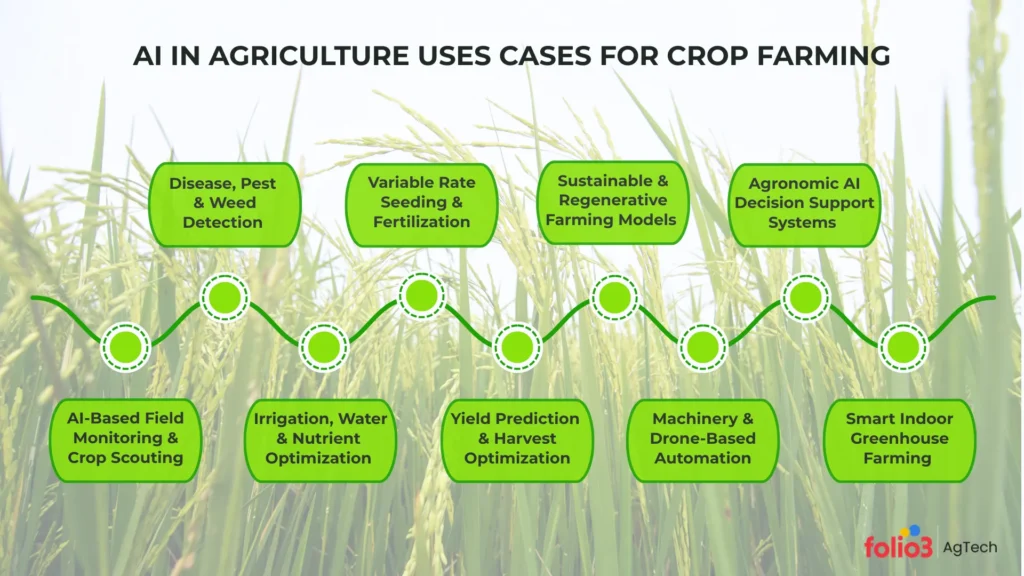
With AI crop monitoring, you stop walking fields blindly. Satellite imagery and drone flyovers are analyzed alongside sensor data to segment fields into zones and highlight NDVI anomalies, weak emergence, or lodging risk early. From there, digital crop scouting workflows help you plan routes, document issues, and trigger follow-ups. This approach builds on modern crop scouting practices and IoT crop health monitoring.
AI for crop disease detection uses computer-vision models trained on leaf and canopy images to recognize early signs of blight, rust, mildew, insect damage, and weed escapes. In the field, that intelligence powers crop disease detection and pest management tools that flag hotspots so you can apply chemistry only where needed. Underneath, a dedicated computer vision for the agriculture layer is informed by guidance on common crop diseases and greenhouse pest control methods.
In smart irrigation agriculture, AI looks at soil-moisture probes, local weather, crop stage, and soil profile data before deciding when and how much to water. Instead of fixed schedules, irrigation management engines recommend precise timings and depths, or even trigger valves automatically. Linked agronomy management modules then align fertigations with crop demand, guided by best practices in modern irrigation systems, vapor pressure deficit, and precision fertilization.
Precision farming is where AI in precision agriculture really shows its value. Models analyze historical yield maps, soil tests, and elevation to design variable-rate prescriptions that you run through precision farming equipment for seeding and fertilization. That means investing more where the response is high and trimming back in poor zones. It’s a practical way for AI for crops to turn precision agriculture technology into better ROI per acre.
Yield prediction AI takes your planting dates, hybrid, growth-stage observations, satellite indices, and weather history, then forecasts potential yield at the field and zone level. Within harvest management dashboards, these forecasts help you prioritize fields, plan labor and equipment, and line up storage or sales. The same data flows support crop yield prediction using AI, smarter harvest planning, and data-driven yield gains through farm data management.
If you are exploring AI for sustainable agriculture, soil and carbon analytics become a core building block. AI tracks trends in organic matter, compaction, erosion risk, and carbon sequestration over time, often visualized inside agronomy management tools. Those insights support regenerative rotations, cover-crop choices, and residue strategies aligned with regenerative agriculture practices and technology-driven improvements in soil health. Over seasons, it becomes easier to document sustainability outcomes for buyers and programmes.
Autonomous machinery and drones are how AI in crop production tackles labor bottlenecks. Computer-vision models running on sprayers, robots, and UAVs interpret rows, weeds, and obstacles so machines can steer, spot-spray, or seed cover crops with minimal supervision. A shared computer vision layer turns imagery into action, informed by real-world experience with the evolving role of drones in farming and robotics in agriculture.
Agronomic AI decision-support systems sit on top of your data and translate it into simple, weekly actions. Instead of juggling weather apps, soil tests, and satellite layers, you see “do X on field Y this week” recommendations for hybrids, planting dates, fertility, or fungicide timing. These engines usually live inside agronomy management platforms and build on data analytics, BI dashboards for ag decision-making, and effective farm data management.
In indoor and greenhouse setups, AI in precision agriculture focuses on environmental control. Sensors track temperature, humidity, CO₂, light, and nutrient flows. Then, greenhouse management software adjusts setpoints automatically by crop stage and variety. That makes high-value crops in CEA or vertical farms more predictable and resource-efficient. It builds on the fundamentals of greenhouse farming, broader controlled environment agriculture, and advanced hydroponic greenhouse systems. You gain tighter control over the consistency, quality, and timing of harvests.
Deploy AI-powered scouting, disease alerts, precision irrigation, and yield forecasting to catch problems early and optimize inputs.
AI in livestock farming becomes an always-on extra set of eyes for beef, dairy, and feedlot operations. Vision systems, wearables, and sensor data watch pens and cows, surfacing health, feed, and welfare risks that you might miss. Meanwhile, a shared data fabric across AI in dairy farming and feedlot management drives earlier decisions, so you protect animals and margins
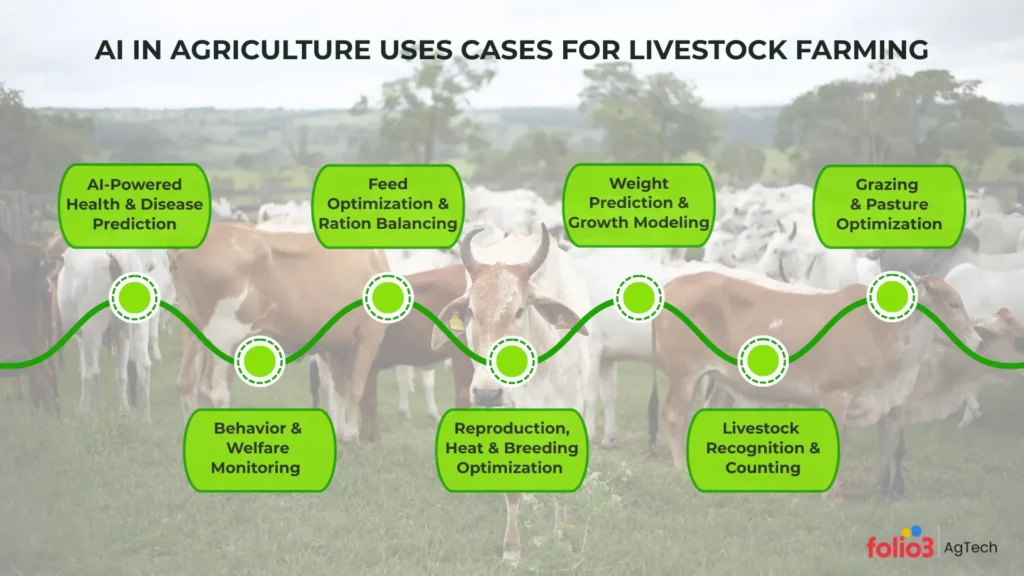
Livestock health monitoring AI turns raw sensor and behavior data into early warnings. A connected animal health monitoring layer tracks steps, rumination, temperature, and intake, then flags animals drifting from the group. When patterns suggest fever, lameness, or respiratory risk, linked animal disease detection workflows guide exams and treatments, building on insights from smart cattle health monitoring and the future of livestock sensor monitoring, where continuous data lifts welfare and lifetime performance.
Animal welfare is hard to manage by pen-walks alone. Computer-vision cameras, RFID, GPS, and environmental sensors turn AI in livestock farming into a 24/7 welfare monitor. A feedyard environment and welfare module highlights overcrowding, abnormal lying times, or heat-stress patterns, so you adjust shade or stocking density sooner. These tools fit within precision livestock farming technologies, combining GPS cattle tracking with practical biosecurity and welfare strategies to support better AI for animal welfare outcomes.
Feed is your largest cost centre, which is why AI for cattle feed and ration balancing matters in dairy and feedlot systems. AI-driven cattle ration balancing engines combine nutrient specs, bunk scores, weather, and gains to fine-tune diets. Integrated cattle feeding software then connects mix, delivery, and refusals back to performance, mirroring best practices on how to manage feed rations for cattle, balance cattle feed rations, and improve feed conversion ratio.
In breeding herds, AI in livestock farming strengthens heat detection and genetic planning. Wearables and vision systems feed into breeding management tools that flag cows in heat, missed heats, and return-to-service patterns. For advanced programs, IVF cattle software supports donor selection, ovum pick-up and ET schedules, and embryo transfer flows. It is aligned with guidance on how IVF in cattle breeding works, and key heat signs and calving stages.
In feedlots, AI in feedlot management focuses heavily on growth and days-on-feed. Models ingest historical close-out data, genetics, ration history, and health events to predict weight curves and optimal shipping windows. A unified feedlot management suite lets you see projected pen-level performance and spot underperforming groups early. It supports better decisions around pulls, re-pens, or diet changes, drawing on proven cattle performance record indicators feedlot efficiency, and broader feedlot optimization.
Accurate counts and traceability are foundational for AI in livestock farming. Computer-vision models inside a livestock counting platform automatically count animals at gates, in alleys, or on pasture videos, reducing manual errors. Paired with RFID and EID, they support livestock identification and traceability requirements and automate audit trails. Meanwhile, aerial imaging and drones for livestock management streamline counting and tighten traceability and compliance.
For grazing systems, AI in dairy farming and beef operations can optimize pasture use. A grazing and pasture management layer combines satellite imagery, fence maps, and herd movements to suggest when to move groups, protect regrowth, or rest paddocks. Over time, analytics link rotational grazing schedules with soil health and forage productivity. It resonates with sustainable crop production and broader farm efficiency, so AI for animal welfare and pasture resilience move in step.
Use AI to monitor welfare, optimize rations, and improve performance across dairy, ranches, and feedlots daily.
If crop and livestock tools are the “front line,” AI in farm management is the back office and backbone. It helps you organize tasks, people, inventory, logistics, compliance, and finances so day-to-day work is profitable and auditable.
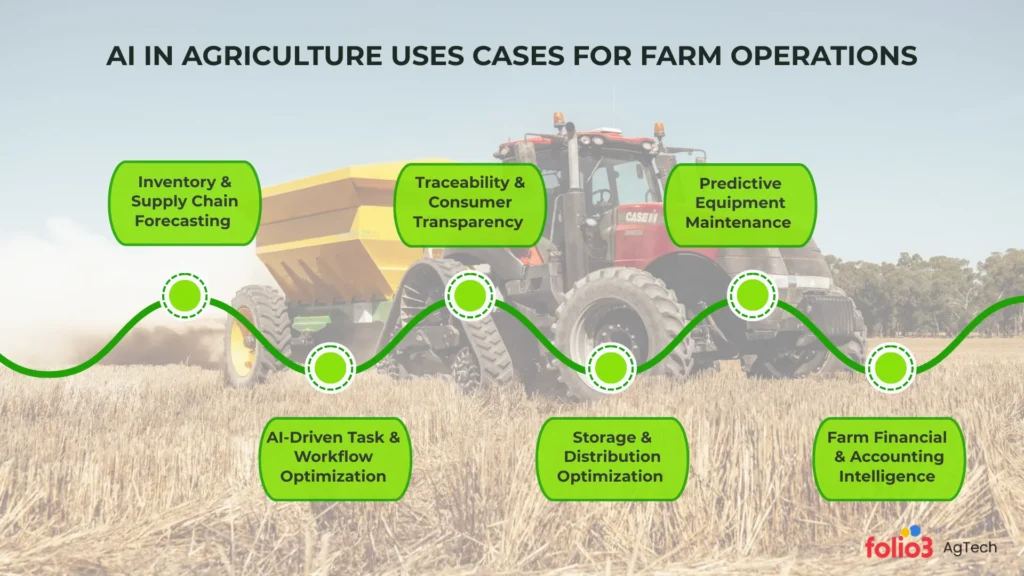
On busy farms, work falls through the cracks when everything lives in notebooks and group chats. AI-enabled task and workflow management tools organize jobs by priority, crew, and location, then learn from how long tasks actually take. Over time, they recommend better schedules and staffing, while also improving digital record-keeping and tackling common farm data management challenges that slow decision-making.
If you constantly run short on inputs or over-order, AI for inventory management can stabilize the system. AI-enhanced inventory management modules track real-time stock, expiry dates, and usage patterns. Meanwhile, supply chain management tools connect that view to vendors and contracts. Forecasting models learn from seasonality and orders, aligning with best practices to manage farm inventory and improve the agriculture supply chain end-to-end.
Once a product leaves the field, logistics can make or break margins. AI-driven routing inside transportation and logistics solutions matches loads, trucks, and delivery windows to cut empty miles and delays. Linked procurement and inbound data help reduce bottlenecks at the plant. Combined with insights on fresh produce supply chain challenges and cold chain in agriculture, AI keeps quality higher with fewer surprises.
For processors and brands, AI in food safety and traceability is no longer optional. A central quality and compliance platform ties lot codes, test results, and process checks to each shipment, while the USDA compliance system automates documentation. AI helps link events quickly in a recall, guided by best practices in food traceability and safety, and FSMA-ready traceability in the food industry.
Many profitable farms still feel “cash poor” because numbers are scattered. AI-enabled farm accounting and ERP systems bring sales, costs, and inventories into one view. Further, they use predictive models to flag cash-flow gaps and budget overruns early. It turns classic farm financial management strategies and cash flow and budgeting practices into living dashboards you can act on.
Breakdowns at harvest or feeding time are expensive. AI in farm management uses telemetry, hours, and maintenance history from your farm equipment maintenance module to predict failure risks and suggest service windows when machines are idle. Coupled with broader farm efficiency and uptime and farm management insights, you get higher utilization with fewer crisis repairs.
Automate tasks, inventory, finances, and compliance with AI farm management systems, built for multi-enterprise operations.
Apart from the extensive claims, the real benefits of AI in agriculture show up in five areas you already care about: yield, input costs, labour, risk, and sustainability.
| Impact Area | How AI Helps | Example KPI |
| Yield improvement | Precision irrigation, variable-rate inputs, early disease detection, and stress alerts | +X% yield per acre / per animal unit |
| Input cost reduction | Optimized water, fertilizer, feed, and chemical use based on real-time conditions and models | −X% $/acre on inputs; improved feed conversion |
| Labour efficiency | Automated scouting, monitoring, task assignment, and exception-based alerts | More acres or head managed per FTE |
| Risk mitigation | Forecasts for weather, disease, market scenario, and compliance risks | Fewer loss events; reduced unplanned downtime |
| Sustainability & compliance | Data-backed reporting on water, soil, emissions, and animal welfare | More audits passed; premiums for verified supply |
In the field, the impact of AI on farming might look like better yields from the same water through smart irrigation and stress warnings. In the yard or barn, there might be fewer emergency calls because health and feeding issues are surfaced before they become crises.
All of these advantages depend on connected, digital systems, not standalone gadgets. The farms seeing the strongest advantages of AI in agriculture are typically the ones that first unified their records, sensors, and processes.
If you want these outcomes, the next step is not “buy an algorithm”, it is to design a data integration and AI roadmap that fits your operation.
As powerful as it is, AI is not a magic wand. The main challenges of AI in agriculture revolve around data, integration, and responsible use. If you understand these risks of AI in agriculture upfront, you can design projects that actually scale instead of becoming “interesting pilots” that never leave the lab.
Most data challenges in agriculture AI are not technical; they’re practical. Incomplete spray logs, offline barns, and staff entering data differently all weaken model accuracy. Many farms still face the issues described in common farm data management challenges: paper records, disconnected apps, and no single source of truth. Moreover, the broader importance of farm management lies in ensuring AI models are fed consistent, high-quality data instead of noisy, siloed information.
Another set of limitations of AI in agriculture comes from the market itself. It is easy to be sold a black-box “AI platform” that looks great in a demo but cannot integrate with your fields, barns, and accounting in real life. This is a common theme in agricultural technology adoption barriers, where early pilots never reach full deployment.
To avoid vendor lock-in, look for solutions that respect data ownership and plug into existing processes. Go for a well-planned ERP implementation in agriculture that connects multiple systems rather than replacing everything overnight.
Finally, AI security in agriculture cannot be an afterthought. As more data flows into cloud systems, you need clarity on who can access herd records, financials, and supply-chain data, and how it is protected. The same mindset that drives digital food safety and frameworks like ISO 22000 for food safety should guide your AI choices: strong governance, clear responsibilities, and auditable controls. Evaluate vendors on encryption, access controls, model transparency, and how they use your data.
Think of this as a practical game plan for running a real AI project in agriculture from first idea to scaled impact. Each step is about what you actually do next, so your AI pilot in agriculture delivers measurable results instead of getting stuck as another experiment.
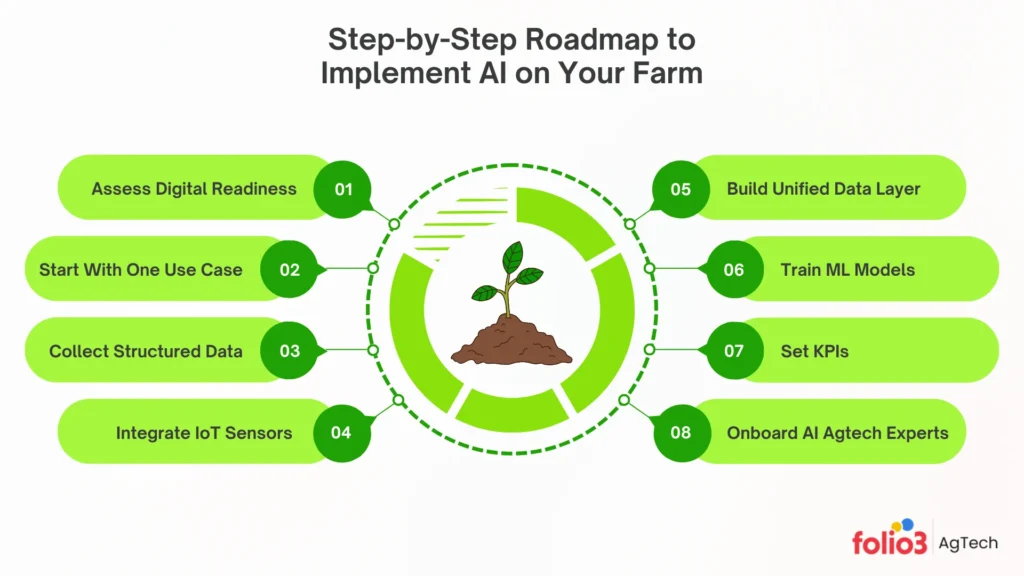
Most AI failures happen when farms try to jump straight to algorithms without fixing the basics. If your records are still mostly on paper, Excel, or scattered apps, your priority is process maturity, not models. Many operations sit in exactly this situation, as highlighted in common agricultural technology adoption barriers.
Before you talk about AI use cases in agriculture, make sure teams are reliably entering data, using existing software, and following standard workflows. That baseline makes everything else faster and less risky.
Next, pick one focused use case, not ten. Tie it to a single team and workflow, like yield prediction for one crop, disease detection in a specific orchard, or smart cattle health monitoring in one yard.
Understanding the role of smart cattle health monitoring is a good starting point for livestock. Choose a problem where you already have at least some data and a clear pain point so you can quantify the ROI of AI in agriculture quickly.
Now make your data usable. “Structured data” simply means you have consistent formats for fields, lots, pens, treatments, yields, feed, costs, and dates, rather than free-text and ad hoc labels.
Clean, repeatable records matter more than “big” data. The role of data in agriculture makes this clear: missing timestamps, inconsistent naming, and scattered spreadsheets are what usually break AI models, not the algorithms themselves.
Only add sensors where they directly support your chosen AI use case. For example, soil moisture probes to optimize irrigation, cameras for disease detection, or collars for health monitoring.
Meanwhile, the role of IoT sensors in agriculture offers good patterns here, so pay close attention to connectivity (Wi-Fi, LTE, LoRa), maintenance, and calibration. Start with a small, well-managed pilot instead of wiring up the entire farm on day one.
To move beyond a single AI pilot in agriculture, you need a unified data layer where field data, livestock events, inventory, costs, compliance, and sensor streams can “talk” to each other. That usually means integrating your ERP, farm management, and livestock systems, then aligning master data. The comprehensive guide to ERP data management explains why this consistency is so important. Without it, your AI project in agriculture ends up learning from fragments rather than reality.
Once the data foundation is solid, you can start training models. In simple terms, ML models learn patterns from historical data and then make predictions or classifications on new data. They might forecast yield, flag high-risk animals, or separate weeds from crops in images. The article on AI and ML in agriculture ERP systems shows how this is embedded in real platforms. Always validate models against real outcomes before using them for operational decisions.
To prove the ROI of AI in agriculture, you need clear KPIs and baselines. Start with economics: percentage yield increase, reduction in water/fertilizer/feed per unit, mortality or treatment-rate reduction, vet cost savings, labour hours saved, or compliance time reduced. Use guidance from farm cash flow and budgeting, and the best farm finance tracking tools to frame these metrics. Document your starting point, define realistic target ranges, and review results on a fixed cadence.
Finally, do not hesitate to bring in experts. The right partner helps you choose the first AI use cases in agriculture, assess data readiness, design integrations, and set meaningful KPIs. Domain expertise in crops, livestock, and processing matters just as much as AI skills. Reviewing real agriculture case studies can show what worked for operations similar to yours and what to avoid so you do not get stuck in “pilot purgatory.”
Explore AI solutions built for agriculture that are designed to support your pilot, or connect with Agtech experts to measure ROI.
How to start with AI in agriculture? Before you think about specific tools, it helps to see AI readiness in agriculture as a journey. An AI-ready farm management setup starts with good records, then connects systems, and only then layers AI on top.
The first real step is boring but critical: standardize your data. That means consistent field names, herd IDs, product codes, and chart-of-accounts across crops, livestock, finances, and compliance. The principles in the essential tips for farm record keeping apply just as much to digital systems as paper.
Operational areas like feed production show why this matters. When your feed mill, rations, and deliveries are automated, as discussed in why feed mill automation is important, you generate high-quality data that can power future AI. Here, a farm data management system and a capable ERP for agriculture become your “single source of truth” before any AI is added.
Once your records are consistent, AI readiness in agriculture moves into integration and measurement. The goal is to see crops, herds, inventory, and finances in one view, not in separate logins and spreadsheets. This is where agricultural BI comes in. Using patterns from Power BI integration in agriculture and the role of business intelligence dashboards in agriculture, you can connect ERP, FMS, livestock software, compliance tools, and IoT feeds.
Practical example: a single dashboard that shows herd health alerts beside feed conversion, or crop-yield trends beside irrigation volumes. Platforms like business intelligence for agriculture form the bridge between raw data and meaningful KPIs.
Even the best stack will stall without people and process changes. Successful, AI-ready farm management usually includes:
As your own impact of technology in agriculture experience may show, real value comes when people trust and act on the information, not just when tools are deployed. Start with small experiments; a pilot on one farm, one barn, or one workflow to prove ROI, then scale.
Large agribusinesses, food processors, and retailers increasingly use AI for yield forecasting, quality control, logistics, and traceability. You’ll see it in row-crop operations, fruit and vegetable supply chains, integrated beef and dairy systems, and even seed and input companies. Many of your buyers are already using AI to tighten specs and demand better data from suppliers, so it’s moving across the whole value chain, not just on mega-farms.
Yes, often in very practical, targeted ways. Smaller operations typically start with specific problems: reducing input waste, improving record-keeping, or catching health or crop issues earlier. Cloud tools, subscription pricing, and mobile apps mean you don’t need a big IT team to get value. The key is to focus on one or two high-impact use cases first, not “AI everywhere.”
You don’t need “big data,” you need good data. A couple of seasons of consistent records (fields/herds, inputs, yields, key events) is often enough for a focused use case like yield prediction or health risk scoring. What really matters is structure, such as clean names, dates, and units, rather than millions of rows. If your data is scattered in notebooks and spreadsheets, your first step is standardizing and digitizing it.
Look for a partner who understands both agriculture and AI, not just one or the other. Ask how their solution integrates with your existing systems, who owns the data, and what support you get after go-live. Request concrete case studies, clear KPIs, and a phased roadmap (pilot → scale), not just a flashy demo. The right partner should help you start small, prove ROI, and then grow your AI footprint safely.
The future of AI in agriculture will not be defined by algorithms alone, but by how farmers, ranchers, and agribusiness teams choose to use them. This AI in agriculture guide has walked you from data foundations to real AI in agriculture examples across crops, livestock, and farm operations, showing that AI is already a practical tool for smarter decisions, not distant tech hype.
Your next move is simple: pick one problem, one team, and one workflow where AI for agriculture operations can add measurable value, then build from there. With the right data, people, and platforms in place, you can lead the change instead of reacting to it.
Book an AI readiness assessment with our expert team at Agtech and map out the next steps for your operation.
Start Your Success Journey With Folio3 Today!
Get a Free Consultation Within 24 Hours, with a No-Obligation Ballpark Estimate
[contact-form-7 id="5196998" title="Intent Popup Form"]