

| Element | Details |
| Operation Type | Multi-branch crop input and seed distributor |
| Annual Revenue Cycle | $60M cash flow compressed into 90-day planting window |
| Product Lines | Seeds, herbicides, fungicides, crop protection chemicals |
| Team | Lead Buyer, Warehouse Manager, Operations Director, CFO, CEO |
| Pre-Implementation Crisis | $3.5M trapped in excess inventory at season end; simultaneous stockouts of high-demand inputs |
Disclaimer: This discovery is a composite based on actual Folio3 AgTech customer implementations with a crop input distributor. The operation profile, metrics, and outcomes are composites drawn from actual customer data, anonymized to protect client confidentiality per NDA agreements. Individual results will vary based on operation-specific conditions.
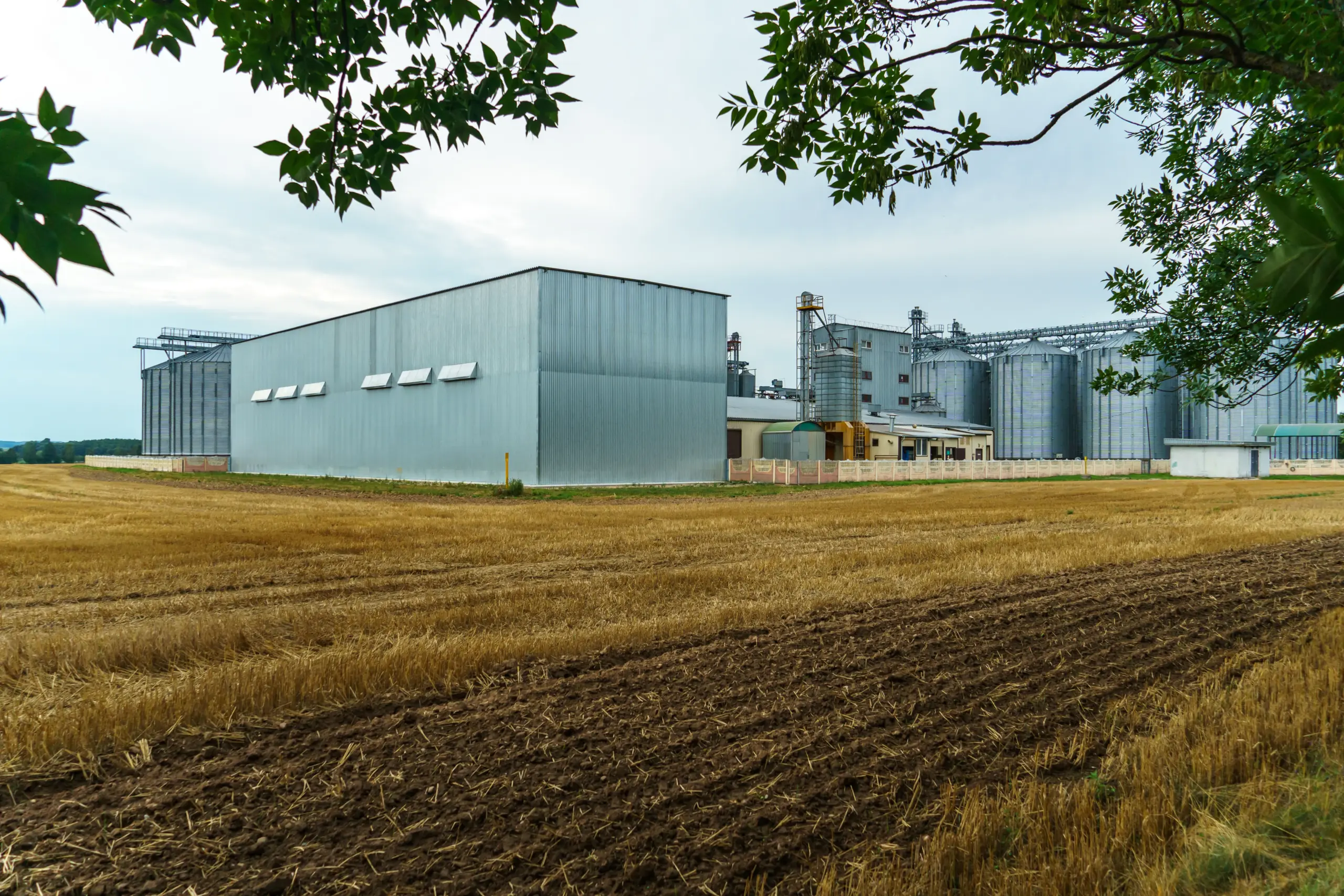
For a major crop input and seed distributor operating across the Midwest, the entire revenue year lives inside a 90-day planting window. Every procurement decision, every supplier negotiation, every branch allocation, and every financial report has to be right, because there is no second chance at the season.
The company was managing a $60 million cash flow cycle with tools that weren’t built for that pressure. Procurement decisions were made from last year’s sales spreadsheets and branch manager email estimates. Pre-season orders were padded “just in case.” Receiving clerks signed bills of lading without real-time access to PO terms. Branches hoarded inventory they didn’t need. Plus, the CFO couldn’t see the company’s true working capital position until the season was already over.
By deploying Folio3’s unified ERP for agriculture, the distributor connected purchasing, supplier management, warehouse receiving, and financial operations into a single Procure-to-Pay ecosystem. Procurement became demand-driven. Receiving became automated. Allocation became rule-based. And working capital became visible in real time.
For a distributor handling agricultural inputs across multiple Midwest states including seeds, herbicides, fungicides, and crop protection chemicals, the pre-season procurement window is the single highest-stakes financial event of the year. Get it wrong in December, and by April the damage is already done.
It was December at the corporate headquarters in Illinois. The Lead Buyer had $3.5 million to commit across pre-pay orders for the spring planting season. Three monitors were open: last year’s sales spreadsheet, a chain of branch manager emails estimating local grower demand, and disconnected PDFs of supplier pricing programs. There was no systemic link between the pre-book orders that field reps had logged and the purchasing desk. The buyer padded every order “just in case”, locking up working capital on demand signals that were already weeks out of date.
“I am committing millions of dollars of crop protection inputs based on gut feelings and outdated Excel files,” the Lead Buyer said during a tense planning meeting. “If I under-buy, we lose our biggest growers to competition in April. If I over-buy, we spend the rest of the year paying storage fees on depreciating assets. I need a system that tells me exactly what our growers have committed to before I issue a single Purchase Order.”
The structural gap between grower commitments and procurement decisions is examined in depth in the guide to smarter inventory planning in agriculture, where reactive, historical-data buying consistently produces both overstock and stockout outcomes at the same time. The fix wasn’t a better spreadsheet. It was removing historical guesswork from the procurement chain entirely.
A Demand-Driven MRP engine bridges the Sales and Procurement modules. All Grower Pre-Books and Sales Orders logged by field reps flow into a live, system-wide demand forecast, replacing last year’s spreadsheet with this season’s actual commitments.
The buyer’s procurement dashboard generates automated Purchase Recommendations by comparing aggregated grower demand against current on-hand inventory, open POs, and vendor lead times. The ERP’s Supplier Management module simultaneously tracks complex rebate tiers and pre-pay deadlines. If a major chemical manufacturer offers a 5% discount for orders placed by January 15th, the system flags the opportunity. It calculates the exact volume needed to hit the rebate threshold without overstocking. Procurement shifts from a capital-risking guess to a mathematically optimized workflow.
By late February, pre-season orders were arriving at the central distribution hub. During that receiving window, one supplier shipped 87 units of a premium fungicide against a contracted 100. The clerk signed the bill of lading. The full invoice for 100 units; $2,800 more than the product received was paid three weeks later. By the time accounting discovered the shortfall, the supplier’s dispute window had closed, and the planting season was already underway.

This wasn’t an isolated incident, because the warehouse management system was disconnected from procurement, receiving clerks had no live visibility into PO terms, contracted quantities, or pricing at the dock. Discrepancies only surfaced during the month-end accounting review, weeks after the trucks had left.
“The trucks are dropping off product, but we have no idea if what’s physically hitting our dock matches the exact terms our buyers negotiated,” the Warehouse Manager said. “By the time accounting catches a short shipment, the invoice is already paid and the season is half over.”
Resolving this requires the ERP to function as the connective layer between dock operations and procurement records, the exact gap that agriculture supply chain management software is designed to close at the point of receipt.
An automated Three-Way Match Workflow eliminates the post-season forensic accounting nightmare. When a truck arrives, the receiving clerk pulls the active PO directly from the ERP on a mobile scanner. As each pallet is scanned, the system cross-references the physical receipt against the authorized PO quantities and the vendor’s digital invoice in real time.
If the supplier ships 87 fungicide units against a contracted 100, the variance is flagged on the clerk’s device before the truck leaves. The system routes the discrepancy to the procurement team for vendor resolution and simultaneously moves the 87 verified units into Available inventory. The business pays only for what is physically confirmed, every time, at every dock, regardless of season volume.
As March arrived and planting season accelerated, a new crisis compounded the existing ones: inventory hoarding. Because branch managers had no visibility into the central warehouse’s true stock levels, each location was inflating its internal transfer requests to build a buffer against the unknown. The Iowa branch pulled pallets of insecticide it didn’t immediately need. Indiana was completely stocked out of the same product and losing grower sales.
“Every branch manager is flying blind, so they are panic-ordering from the central hub,” the Operations Director said, reviewing the fragmented stock reports. “We have enough product to fulfill every grower’s order, but it’s sitting in the wrong warehouses. If we can’t systematically control how inventory is allocated, we are going to bleed margin through emergency inter-branch freight costs.”
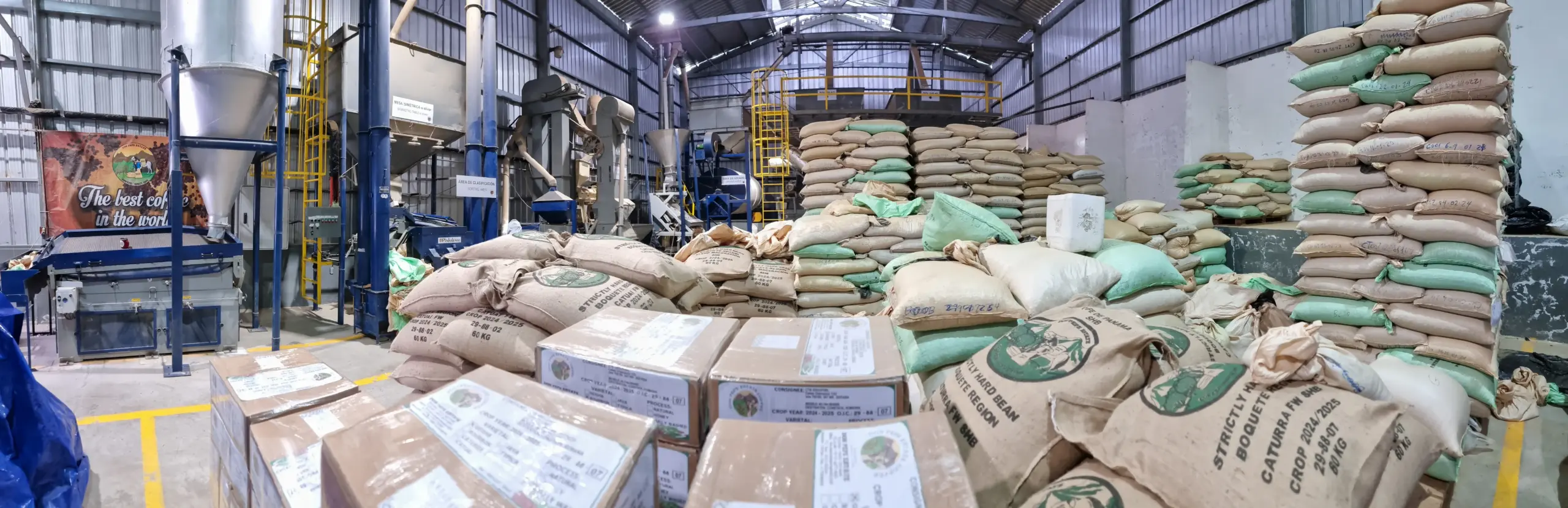
Branch-level hoarding is the predictable behavior of managers operating without shared data. As the guide to farm inventory management best practices explains, siloed inventory records are among the most common drivers of both overstock and emergency reorder costs in seasonal agri-retail operations. The solution isn’t better communication between branches, it’s removing the information asymmetry that makes hoarding rational.
Global Inventory Visibility combined with Automated Allocation Logic replaces the hoarding incentive with system-enforced discipline. Every branch manager and corporate operations sees real-time, live stock counts across every warehouse, bin, and retail storefront in the network simultaneously.
Commitment Rules enforce operational precision. When a grower places an order, the system instantly allocates that specific inventory. If the Iowa branch requests an inter-company transfer for 10 pallets of insecticide, the ERP checks their active grower sales orders. If actual demand justifies only 2 pallets, the system rejects the surplus request, keeping the remaining 8 pallets available for Indiana. Seasonal inputs are deployed based on verified grower demand, not managerial anxiety.
This is precisely what agriculture inventory management software is built to enforce, not just showing stock levels. It applies allocation logic that prevents any branch from pulling more inventory than its live sales orders can justify.
By early May, the season was winding down. The CFO was preparing the executive board update on working capital and seasonal profitability. The process, as always, required weeks of manual data compilation, matching supplier invoices, auditing early-pay discount capture, and calculating the carrying cost of unsold inventory across locations. Because the accounting software was decoupled from operational reality, the report would be a historical autopsy rather than a live view.
Managing a $60 million cash flow cycle compressed into a 90-day seasonal window is exactly the challenge examined in the farm cash flow and budgeting guide. Here the timing mismatch between procurement spend and revenue realization is the defining financial risk for seasonal agribusinesses. For this CFO, the problem wasn’t a lack of data. It was that the data only became usable after it was too late to act on it.
“I am managing a $60 million cash flow cycle, but I can’t tell you our true working capital position until the season is essentially over,” the CFO said. “We need a financial system that sees a purchase order, a warehouse receipt, and a supplier invoice as a single, continuous transaction, not three separate spreadsheets I reconcile six weeks later.”
That unification of procurement, receiving, and financial accrual is precisely how ERP transforms agricultural supply chain management. When every operational trigger automatically generates its corresponding financial entry, the CFO’s dashboard reflects reality today, not last month.
Unified General Ledger executing a seamless Procure-to-Pay cycle means every operational action generates an immediate financial journal entry. When the warehouse receives seasonal inputs, the ERP instantly accrues the AP liability and updates the inventory asset value on the balance sheet.
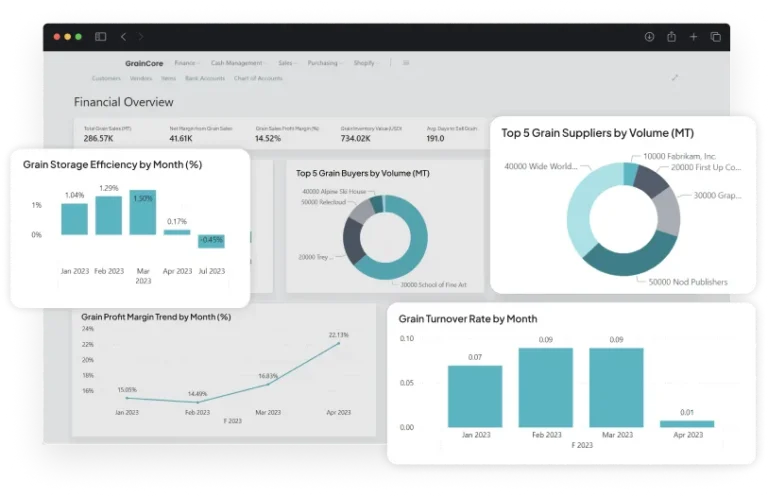
The CFO’s Executive Financial Dashboard provides live metrics on Working Capital Tied to Inventory and Upcoming AP Obligations. The system automatically prioritizes vendor payments against early-pay discount windows, so a 2% Net 10 discount is never missed because an invoice sat in an approval queue. The finance team shifts from reactive spreadsheet compilers to proactive margin-control operators. Month-end AP reconciliation drops from 14 days to 24 hours.
For operations weighing where to begin their ERP transition, the guide to benefits of ERP for the agriculture industry makes the financial case across different operation types and scales. Teams past the decision stage will find the ERP implementation guide for agriculture covers the full project lifecycle from scoping to go-live.
Replacing the fragmented legacy architecture with a unified Agriculture ERP gave the distributor operational precision across its entire seasonal supply chain for the first time measured in real time, not in retrospect:
| Metric | Before ERP | After ERP | Impact |
| Excess seasonal inventory carryover | $3.5M trapped | Reduced 18% | Working capital freed |
| Supplier early-pay / rebate capture | Missed / partial | 100% captured | Full discount yield |
| Receiving discrepancy detection | Weeks post-invoice | At the dock — real-time | Zero overpayments |
| AP reconciliation cycle | 14 days | 24 hours | 96% faster |
| Pre-season stockouts during peak weeks | Recurring | Eliminated | Zero lost grower sales |
If your buyers are committing pre-season capital from last year’s spreadsheet, your receiving clerks are signing bills of lading blind, and your CFO is building working capital reports from CSV exports, this story is your operation’s mirror. These aren’t edge cases. They are the default state of a multi-branch crop input distributor that hasn’t connected its procurement, receiving, and financial systems.
The shift doesn’t start with replacing everything at once. It starts with identifying the highest-cost disconnect in your seasonal cycle, and deciding whether a spreadsheet, an email, or a clipboard should still be governing it.
Explore Folio3’s ERP for Agriculture, or talk to a Folio3 AgTech Solutions Architect to map out your seasonal supply chain transformation.
Get a Free Consultation Within 24 Hours, with a No-Obligation Ballpark Estimate
[contact-form-7 id="5196998" title="Intent Popup Form"]