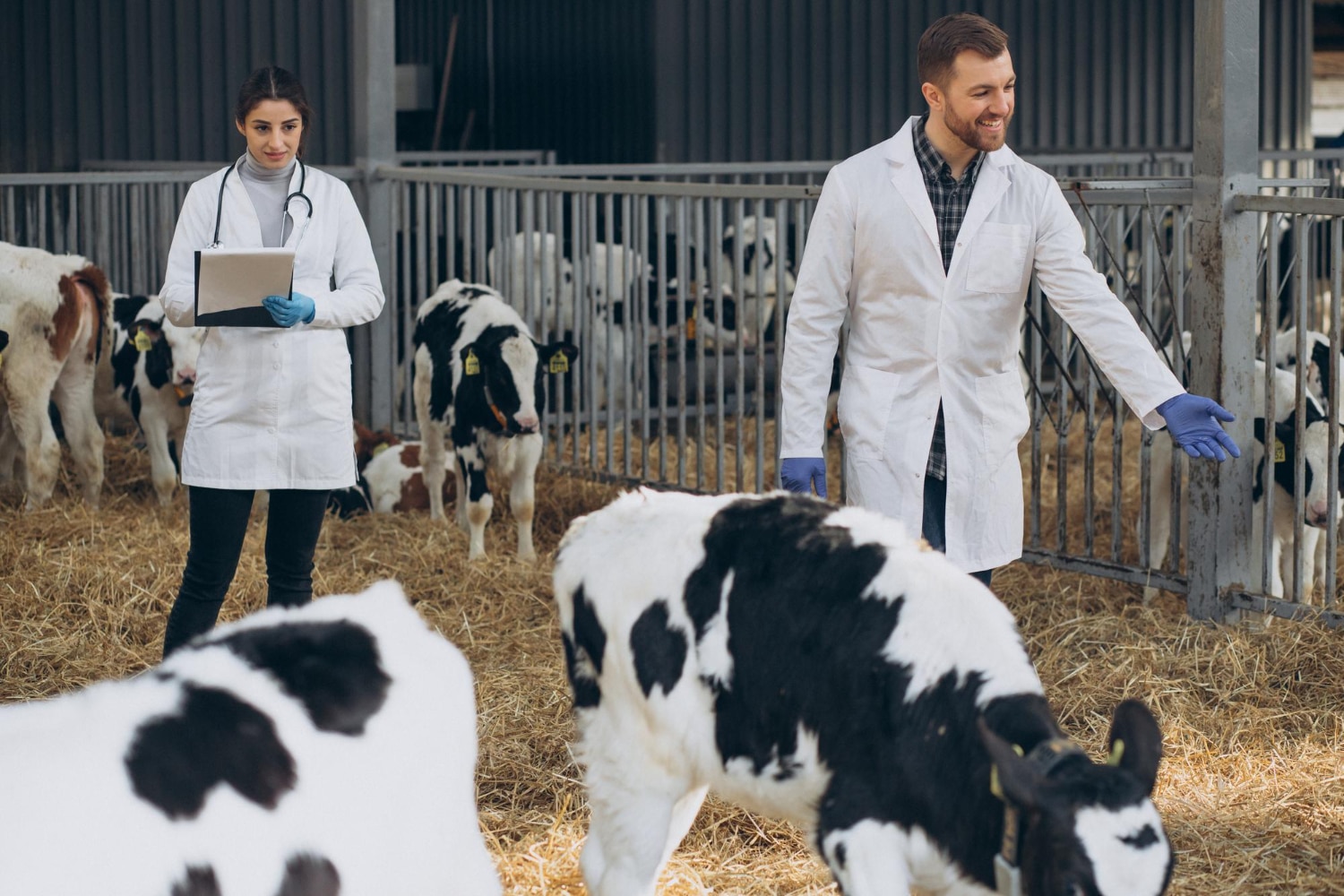

You’ve built your operation season by season through tough weather, fluctuating markets, and long days in the pen. But there’s one threat that can erase years of hard work almost overnight: a disease outbreak.
A single infected animal entering your herd can set off a chain reaction that costs thousands in treatment and collapses reproductive performance before you react. AI-driven disease detection and spread mapping gives you the earliest possible warning so that chain reaction stops at pen one rather than spreading across your entire operation
This guide gives you a modern, practical framework around biosecurity measures in livestock farming, one that combines veterinary best practices with today’s farm technology. Whether you manage a cow-calf operation, a feedlot, or a dairy herd, what follows is built for you.
What is Biosecurity in Livestock?
The word “biosecurity” breaks down to its roots: bio (life) and security (protection). In the context of a livestock farm, biosecurity refers to a proactive, systematic set of practices designed to prevent infectious diseases like viruses, bacteria, and parasites from entering your farm and spreading among your animals.
This isn’t just about responding when animals get sick. It’s about building a wall of defense so strong that pathogens rarely get the chance to breach it in the first place. Think of it less like a fire extinguisher and more like a fire-resistant building.
A well-designed biosecurity program covers everything from who drives onto your property to how you dispose of mortalities. Every gap in that wall is a potential entry point for a pathogen that could cost you your herd.
External vs. Internal Biosecurity
Veterinary professionals typically divide biosecurity into two categories, and understanding both is essential for biosecurity in livestock farming:
- External biosecurity focuses on keeping disease off the farm entirely. It includes controlling who and what enters your operation as new animals, vehicles, visitors, feed deliveries, and wildlife.
- Internal biosecurity focuses on containing disease within the farm if a pathogen does manage to get in. It means preventing a sick animal in one pen from spreading illness across the entire herd through proper pen separation, dedicated equipment, and movement protocols.
Both layers must work together. External biosecurity buys you time; internal biosecurity limits the damage if time runs out.
The Importance of Biosecurity in Livestock
Theory is useful, but ranchers make decisions based on dollars and cents. So, let’s talk about what poor biosecurity actually costs you and what strong biosecurity can protect.
The Hidden Costs of Disease Outbreaks
The importance of biosecurity in livestock becomes clearest when you look at the true economic toll of a disease event. These costs go well beyond your vet bill:
- Treatment and veterinary costs: Medications, diagnostics, labor, and repeated farm visits add up fast, especially for diseases that require sustained treatment protocols.
- Lost production: Sick cattle produce less milk, gain weight more slowly, and underperform on every productivity metric. Research estimates direct losses from Bovine Viral Diarrhea (BVD) alone at approximately €42 per animal per year, and that’s before accounting for indirect costs.
- Reproductive failures: Abortions, embryonic losses, and infertility are among the most financially devastating consequences of disease outbreaks. A meta-analysis of 44 studies across 15 countries found that direct BVD losses in a naïve herd ranged from $0.50 to $688 per animal, depending on herd vulnerability.
- Trade embargoes and market restrictions: A confirmed disease event on your farm can shut you out of premium markets, trigger mandatory reporting, and lead to movement restrictions that freeze your operation for weeks or months.
- Mortality and depopulation: In severe outbreak scenarios, entire herds may need to be culled, a loss no farm can quickly absorb.
The FAO has noted that the economic costs of disease outbreaks routinely surpass the direct losses caused by the disease itself, once you factor in control, surveillance, and trade disruptions. Prevention is always cheaper than the cure.
Consumer Trust and Market Access
Strong biosecurity measures in livestock farming do more than protect your animals; they protect your market position. Documented biosecurity practices demonstrate compliance with food safety regulations, which is increasingly required for access to premium buyer programs.
If you’re targeting antibiotic-free, natural, or organic market segments, your biosecurity framework is the proof of concept. Buyers and processors want evidence that your operation is managed to prevent disease, not just treat it. A written biosecurity plan with documented records of quarantine periods, vaccination schedules, and visitor logs is your competitive edge in premium markets. Digital farm record keeping for compliance and audits ensures those records are structured, searchable, and audit-ready rather than buried in a binder.
How Many Levels of Biosecurity Are There in Livestock?
One of the most common questions among farm managers is: how many levels of biosecurity are there in livestock, and how do they apply on a real farm?
The internationally recognized framework used by veterinary professionals and regulatory bodies organizes biosecurity into three distinct levels. Each builds on the last.
The 3 Levels of Biosecurity in Livestock
| Biosecurity Level | Definition | Real-World Farm Example |
| Conceptual | Strategic decisions about farm location and layout that reduce inherent disease risk | Siting a feedlot away from public roads, busy highways, and neighboring livestock operations to minimize exposure to passing traffic and airborne pathogens |
| Structural | Physical design elements of the farm that create barriers to disease introduction and spread | Installing perimeter fencing, constructing quarantine pens at a distance from main housing, paving high-traffic areas for easier disinfection, and designing drainage that flows away from animal areas |
| Operational | Day-to-day management practices that maintain biosecurity on an ongoing basis | Maintaining boot-washing stations at pen entries, enforcing coverall changes when moving between the clean and dirty zones, following vaccination schedules, and logging all animal movements |
Conceptual and structural biosecurity are often one-time investments made during farm planning or renovation. Operational biosecurity is where most farms either succeed or fail because it requires consistent human behavior, every single day. It is also where technology has the greatest opportunity to close the gap.
Core Biosecurity Measures in Livestock Farming
Knowing the levels is step one. Executing the daily practices is where your herd’s protection actually happens. Here are the most critical biosecurity measures in livestock farming that every operation should have in place.
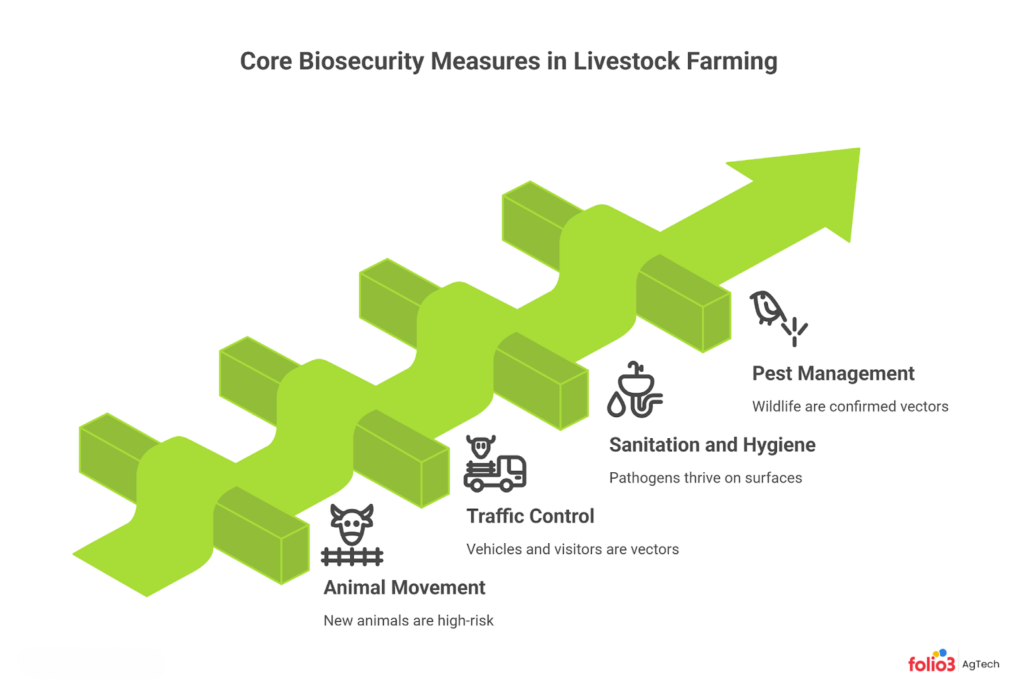
1. Animal Movement and Quarantine (Isolation)
The single highest-risk moment in biosecurity is when a new animal enters your herd. Purchased cattle, returning show animals, and borrowed breeding bulls are all potential carriers, even if they look perfectly healthy.
The standard protocol: isolate all new arrivals for a minimum of 21 to 30 days before allowing contact with your main herd. This quarantine period should take place in a dedicated pen that is physically separated from your main housing, ideally with its own equipment and feed delivery pathway.
During the isolation period:
- Observe the animal daily for clinical signs of illness
- Administer booster vaccinations, especially if vaccine history is uncertain
- Have your veterinarian conduct a health examination before integration
- Test for diseases relevant to your region, such as BVD, Johne’s Disease, and respiratory pathogens
Note: isolating all new arrivals for two to three weeks in a well-ventilated area away from the rest of the herd. This simple step is one of the most effective ways to prevent the introduction of costly diseases like BVD into your operation.
2. Traffic Control (Vehicles and Visitors)
Every vehicle that rolls onto your farm is a potential disease vector. Tires and undercarriages carry mud, manure, and pathogens from the last farm they visited. The same goes for any person who walks through your gates.
Establish a clear traffic control protocol:
- Designated parking areas away from animal housing and feed storage, so visitors never park near your animals or feed bunks.
- Mandatory visitor logs documenting name, date, time, and the last livestock operation they visited before yours.
- Prohibit foreign vehicles from entering the core farm area, as feed deliveries, equipment operators, and veterinarians should follow a defined pathway.
- Establish a clean/dirty line, a clear physical or signposted boundary that separates the “clean” (animal and feed) zone from the “dirty” (incoming traffic and visitor) zone.
- Require all visitors to wear clean coveralls and boots provided on-site, or to use boot covers before crossing the clean line.
3. Sanitation and Hygiene
Pathogens thrive on surfaces, in standing water, and in equipment that moves between different areas of your farm. A disciplined sanitation routine is non-negotiable.
Key practices include:
- Footbaths at every pen entry: Use an effective disinfectant solution and change the solution regularly; a dirty footbath is often worse than no footbath.
- Equipment disinfection: Any piece of equipment that handles both manure and feed, like skid steers, loaders, and feed wagons, must be thoroughly cleaned and disinfected before switching functions.
- Clean water troughs: Standing, stale water harbors bacteria and parasites. Flush and scrub water troughs regularly, and inspect for sources of contamination like dead rodents or fecal contamination.
- Disinfection protocols for veterinary equipment: Any needles, dehorning tools, or pregnancy check equipment used across multiple animals must be sterile. Use single-use needles wherever practical.
4. Pest, Wildlife, and Carcass Management
Wild animals don’t respect your fence line. Rodents, birds, and feral animals are confirmed vectors for serious pathogens, including Leptospirosis, Salmonella, and critically, Highly Pathogenic Avian Influenza (HPAI).
In 2024, HPAI was detected in dairy herds across the United States, with confirmed outbreaks in over 300 dairy herds across 14 states. The primary vector? Wild birds are an ever-present threat to open operations. It is a reminder that wildlife management isn’t optional.
Practical measures:
- Secure all feed storage in covered, rodent-proof containers.
- Install bird netting over feed bunks and water troughs where feasible.
- Maintain a rodent control program with regular monitoring and baiting.
- Dead animals must be removed and disposed of immediately, as carcasses attract scavengers and create concentrated disease reservoirs.
Note: Follow your state’s regulations for proper disposal, whether that’s composting, burial, or rendering
Developing a Bulletproof Biosecurity Plan for Your Livestock Farm
All the measures above mean nothing if they’re not written down, systematically applied, and regularly reviewed. Here’s how to build a biosecurity plan for your livestock farm that actually holds up under pressure.
Conducting a Farm Risk Assessment
Start by working with your herd veterinarian to conduct a structured risk assessment. Walk your entire operation together and identify your weakest points. Common vulnerabilities include:
- Shared fence lines with neighboring livestock operations are often overlooked as direct disease transmission routes.
- Multi-use equipment shared with neighboring farms or contractors
- Water sources that run across multiple properties.
- High-traffic entry points with no established clean/dirty protocol.
- Auction or show cattle that regularly leave and return to the farm.
Once you’ve identified the risks, prioritize them by likelihood and potential impact. Not every gap needs an expensive structural fix, a simple protocol change is enough. Document your findings and assign specific corrective actions with deadlines.
For a deeper look at how digital tools support structured cattle health records management, which forms the backbone of any credible biosecurity program, Folio3 AgTech’s resources are a strong starting point.
Training Your Farm Staff
A biosecurity plan is only as strong as the people who execute it. Your farmhands don’t need to understand pathogen biology; they need to know exactly what to do every day, without exception.
Make training practical and clear:
- Post simple, visual signage at every critical control point: pen entries, the footbath station, the clean/dirty boundary line, and the quarantine pen.
- Use multi-lingual signage if your crew includes workers whose first language isn’t English, a sign no one reads doesn’t protect anything.
- Conduct a brief annual refresher with all farm staff, especially when protocols change, or a new disease threat emerges in your region.
- Assign a biosecurity lead on your operation, one person responsible for monitoring compliance, maintaining logs, and flagging issues before they escalate.
Common Biosecurity Threats and Diseases to Watch For
Understanding the specific diseases that biosecurity in livestock is designed to prevent helps you prioritize your protocols and communicate urgency to your team.
Bovine Viral Diarrhea (BVD) is one of the costliest diseases in cattle worldwide, causing reproductive failure, immunosuppression, and persistently infected (PI) calves that silently spread the virus throughout a herd. Research confirms that implementing biosecurity measures is associated with a 28–29% reduction in BVD production losses, making it one of the most financially justified investments on any cattle operation.
Foot and Mouth Disease (FMD) remains one of the most feared transboundary diseases in the world. A confirmed FMD case triggers immediate trade embargoes and can result in the mandatory depopulation of entire herds. The FAO classifies it as a high-priority transboundary disease with consequences that extend far beyond individual farms into national food security.
Johne’s Disease (Paratuberculosis) is a chronic wasting disease caused by Mycobacterium avium subspecies paratuberculosis. It spreads through manure-contaminated feed and water, progresses silently for years, and has no treatment. Early biosecurity protocols, particularly colostrum management and calf isolation, are the primary tools for controlling it.
Highly Pathogenic Avian Influenza (HPAI) has emerged as an urgent concern following widespread detections in U.S. dairy herds in 2024 and 2025. For dairy producers, dairy herd biosecurity and compliance management tools that log movement controls and quarantine protocols have become essential for limiting spread and maintaining regulatory standing. The 2014–2015 HPAI outbreak cost U.S. agriculture over $1 billion, a figure that underlines the financial stakes of outbreak prevention.
The Tech Advantage of Digitizing Biosecurity in Livestock Farms
Many farms still track quarantine countdowns on a whiteboard and rely on memory to stay current with vaccination schedules. Consolidating these tasks into an integrated livestock management platform removes the human error that paper-based biosecurity systems inevitably introduce at scale.
A missed quarantine entry, an outdated vaccination record, or a visitor log that gets rained on can each create legal, financial, and health consequences that far outweigh the cost of a proper system. When regulators, buyers, or auditors come knocking, paper records rarely tell a complete story.
How Folio3 AgTech Secures Your Herd
Folio3’s Livestock Management Software takes the guesswork out of biosecurity by replacing fragmented paper-based processes with a centralized, real-time digital platform. Here’s how it directly supports your biosecurity protocols:
- Automated quarantine alerts: Set quarantine timers for individual animals the moment they arrive. The system alerts you when the isolation period is complete and flags any health events that occurred during that window.
- Digital animal movement traceability: Every movement of every animal is logged with timestamps, pen assignments, and responsible staff. Understanding the full scope of livestock identification and traceability systems helps you choose the right tagging and tracking approach before an outbreak investigation forces you to reconstruct records from scratch.
- Real-time health monitoring: Integration with RFID tags for cattle tracking allows the platform to monitor individual animal health data continuously, flagging deviations before they become herd-wide events.
- Vaccination and treatment scheduling: Automated reminders ensure no animal falls behind on its protocol, and every treatment is documented at the point of administration.
- Visitor and traffic logs: Digital visitor entry records are timestamped, searchable, and exportable, exactly what you need for audits and disease traceback investigations.
For a broader look at what comprehensive animal care software can do across your operation, Folio3 AgTech’s platform covers welfare oversight, compliance, and health management in one system.
Protect your herd and your profits. Discover how Folio3’s Livestock Management Software digitizes your biosecurity protocols. Book a Free Consultation →