

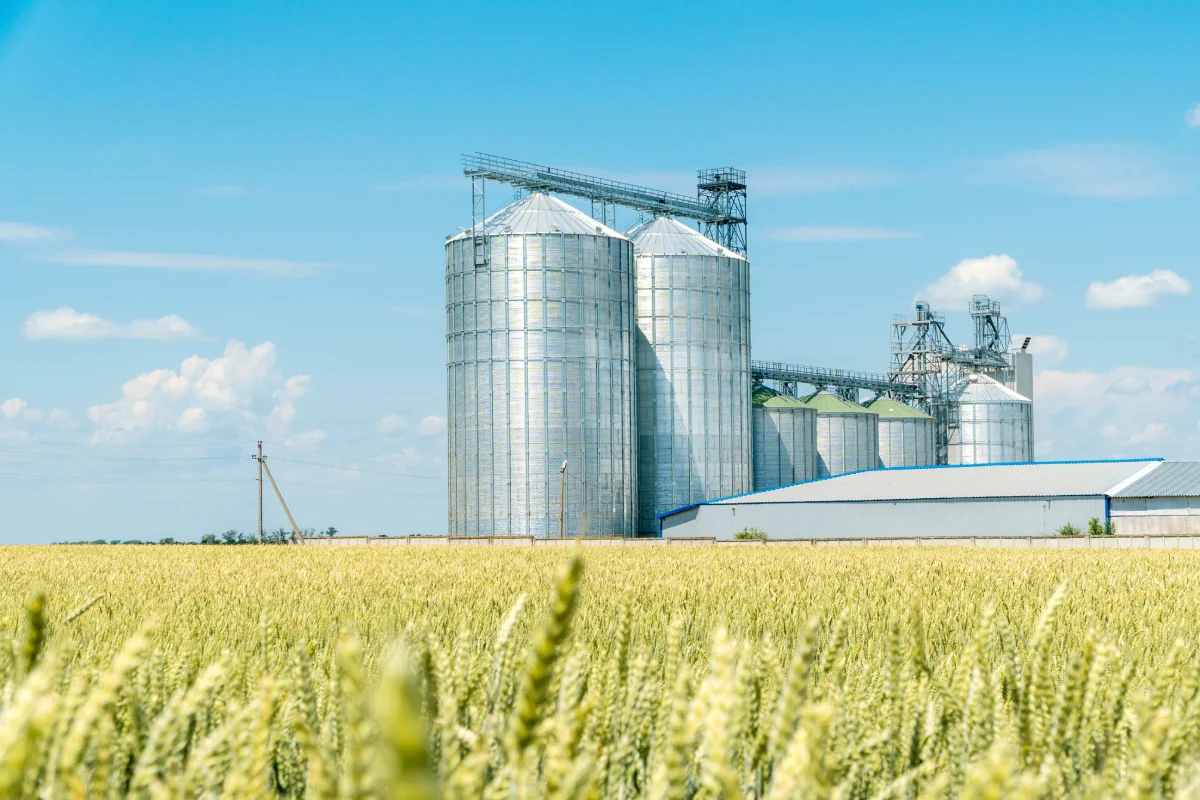
It was the second week of October in Des Moines. Trucks were idling around the county road, sticky notes were piling up in the scale house, and the accounting team was three weeks behind on member settlements. This is the story of how a Midwest crop cooperative, a 1,200-member operation handling roughly 45 million bushels of corn and soybeans annually across six elevator locations. They replaced spreadsheet guesswork with a single nervous system that runs from the weighbridge to the boardroom. A unified Folio3’s Agriculture ERP became the backbone of that transformation. Understanding the realities of ERP implementation in agriculture was the first step.
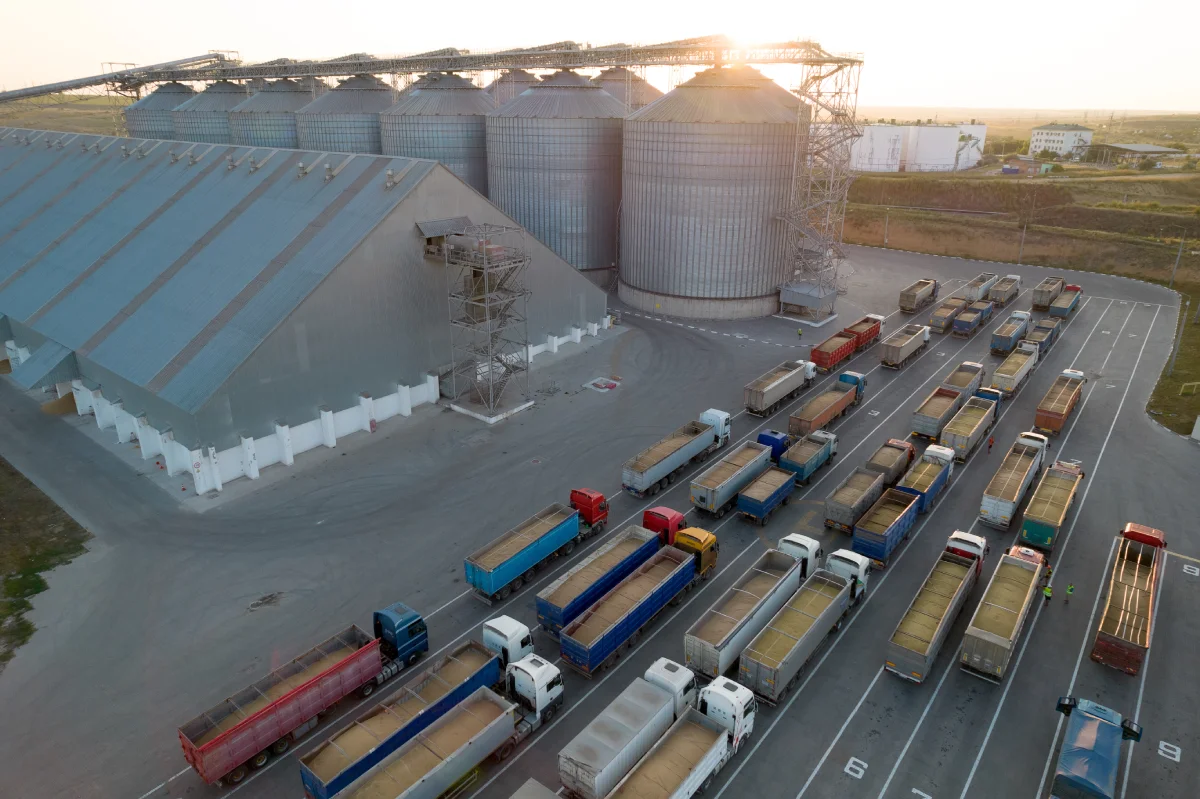
At the flagship grain elevator, a line of semi-trucks wrapped around the county road. Inside the scale house, the operator was frantically printing paper tickets and tossing them into wire baskets. Because the legacy scale software didn’t communicate with the contract management database, no one knew in real time whether a delivery was fulfilling a forward contract or hitting the spot market.
“Trucks are idling for hours, and my team is writing ticket numbers on sticky notes.” — Elevator Manager
The deeper problem ran underneath the chaos: until accounting caught up the next month, the cooperative’s entire inventory liability report was fictional. Modern automated weighing systems are designed to close exactly this gap.
To eliminate delivery bottlenecks, an Agriculture ERP must feature direct API integrations with weighbridge IoT systems (scale indicators and RFID truck tags). When a truck rolls onto the scale, the ERP captures gross, tare, and net weights instantly, creating a digital “Inbound Ticket Record.” The system then uses “Auto-Application Logic”, scanning the member’s profile, cross-referencing the delivered crop type against existing forward contracts, and applying inbound bushels to the oldest open contract first. If the delivery exceeds the contracted amount, the ERP automatically segments the overflow into a “Spot/Cash” bucket or “Delayed Pricing” storage based on member preferences. The moment the truck leaves the scale, both inventory liability and contract status are 100% accurate.
Once the trucks dumped their loads, the grain traveled up the leg into a million-bushel concrete silo. Cooperative reality is that member crops are commingled, Farmer A’s corn mixes with Farmer B’s. But the legacy inventory system treated the silo as a single unowned mass, while a separate spreadsheet tried to track who owned what percentage based on deliveries.
“The silo is full, but if you ask me to generate a real-time equity report, I have to cross-reference three different systems.” — Inventory Controller
Without proper grain storage accounting practices tied directly to member equity, millions of dollars of commingled inventory remained financially invisible.
Managing commingled inventory requires a “Mass Balance and Sub-Ledger” architecture. While the physical inventory module tracks total volume and average quality metrics of a specific silo, the ERP simultaneously maintains a virtual “Member Equity Sub-Ledger.” Strong ERP data management is what makes this dual-tracking possible at scale. When a digital scale ticket is approved, the ERP executes a dual-entry transaction: it debits the physical inventory asset account. It credits the specific member’s equity account in the sub-ledger, recording their exact contribution. As the cooperative later outsources grain to a terminal, the ERP proportionally draws down inventory while calculating collective margin. The physical grain remains indistinguishably mixed, but financial ownership, patronage dividends, and equity shares stay mathematically segregated and audit-ready.
The physical grain was secured, but the administrative nightmare was just beginning. Two weeks post-delivery, the finance team was drowning in settlement calculations. Every scale ticket required manual adjustments for moisture shrink, foreign material dockage, and test weight premiums. Many deliveries also required split payments between the farm operator, the landlord, and the lien-holding bank.
“The farmers are calling every day asking for their checks. One typo in these spreadsheets means we either shortchange a member or bleed cooperative capital.” — Cooperative Controller
Modern grain quality control techniques only deliver value when the grading data flows automatically into the settlement engine, not when it lives in a separate spreadsheet.
To eliminate the 21-day backlog, the ERP uses an “Automated Settlement Engine” driven by pre-configured Quality Matrices. When grading data (moisture, test weight, damage) is attached to the ticket, the ERP runs it through the matrix automatically. If moisture exceeds the 15% standard, the system calculates the mathematical “shrink” deduction and applies the corresponding drying fee without human intervention. For payouts, “Split-Payment Logic” checks the member’s profile for active liens or landlord agreements. If a field is split 60/40 between operator and landlord, the ERP divides the net settlement, generates two AP vouchers, and triggers ACH payments to the respective bank accounts. It also deducts outstanding member receivables before finalizing payout, entirely automating a process that previously took weeks. Sound farm bookkeeping and accounting is no longer a manual exercise; it’s a workflow.
By month-end, the true power of the unified system was on display in the boardroom. In previous years, close took up to three weeks of reconciling scale data, inventory spreadsheets, and standalone accounting software. Board members had complained for years about the lack of real-time financial transparency.
“We used to run this cooperative on trust and Excel. Now we have a unified General Ledger that proves every penny, bushel, and equity share in real time.” — CFO, Iowa Crop Cooperative
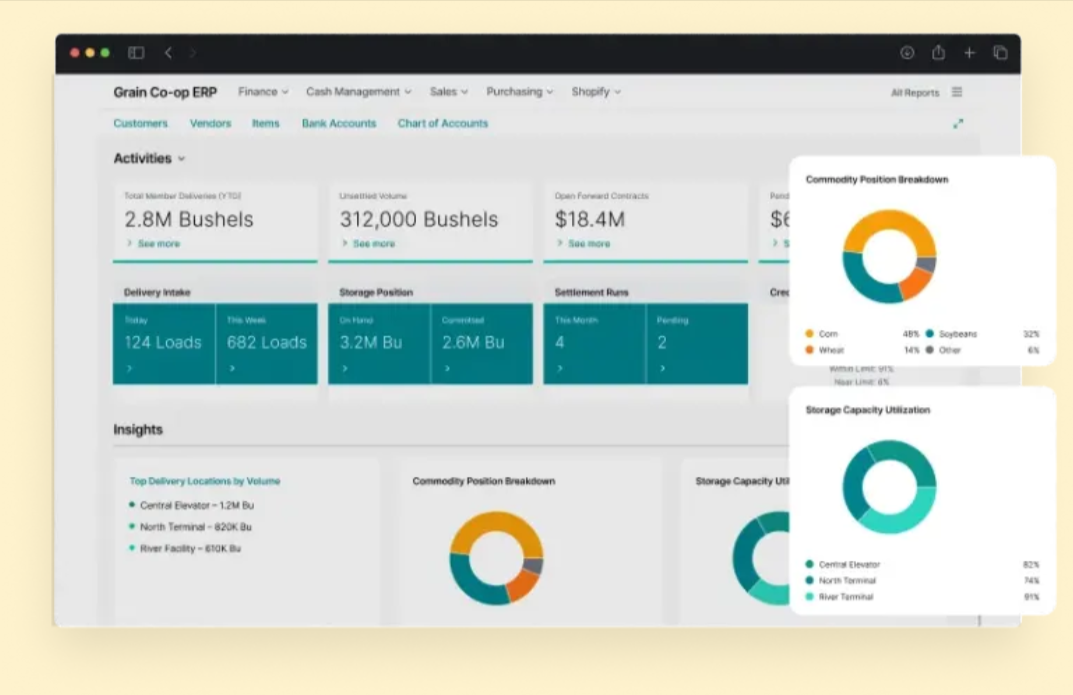
That kind of supply chain visibility in agriculture is what separates modern cooperatives from those still managing through the rearview mirror.
The culmination of a cooperative ERP is the automated “Record-to-Report” (R2R) cycle. Because the system is natively unified, every operational trigger, from a truck crossing the scale to a settlement voucher being generated, posts to the General Ledger in real time. For cooperatives, the ERP automates “Equity Retention Logic”. When a settlement is processed, the system routes a pre-determined percentage into the member’s allocated equity or retained patronage GL accounts rather than paying it out in cash. At month-end, finance no longer reconciles disparate systems; they simply run variance analysis on a unified ledger. The architecture compresses the month-end close from weeks to a 48-hour cycle, giving the board an accurate, real-time balance sheet. A purpose-built supply chain management module is what makes this end-to-end posting possible.
The transition to a unified Agriculture ERP completely revolutionized the cooperative’s operational velocity and financial integrity:
These outcomes reflect the broader benefits of ERP for the agriculture industry when the system is purpose-built for cooperative workflows rather than retrofitted from generic enterprise software.

“Replacing our legacy systems wasn’t just a software upgrade; it was a structural modernization. We eliminated the friction between the scale and the ledger, protecting our margins while delivering unprecedented transparency to our farmers.” — General Manager, Iowa Crop Cooperative.
When your scale house, your silos, and your finance office each speak a different language, every harvest turns into a reconciliation marathon. The cooperatives winning the next decade aren’t the ones with the most software; they’re the ones with one system that runs from the weighbridge to the boardroom.
Discover how Folio3’s Agriculture ERP unifies cooperative operations, or talk to a Folio3 AgTech Solutions Architect to map your cooperative’s digital transformation.
Get a Free Consultation Within 24 Hours, with a No-Obligation Ballpark Estimate
[contact-form-7 id="5196998" title="Intent Popup Form"]