

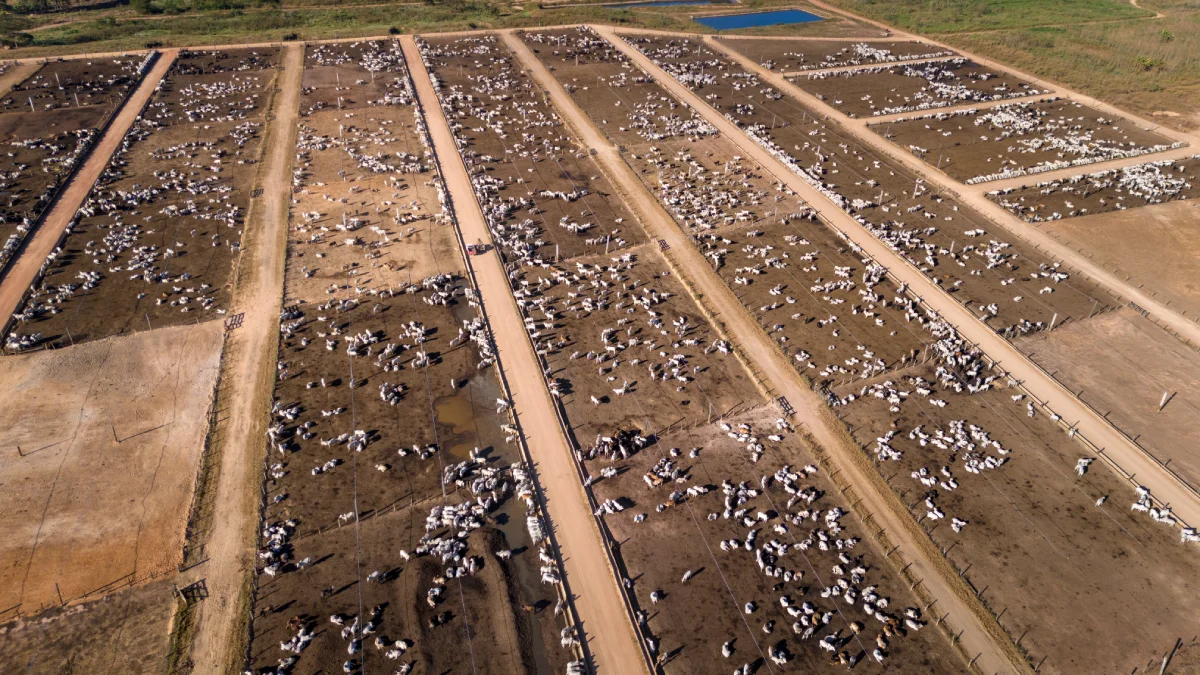
The lead buyer sat in front of four monitors in Amarillo, trying to decide whether to lock in another 50,000 bushels of corn with nothing to guide him but a week-old spreadsheet and a gut feeling. Meanwhile, $2 million a month in commodity spend, $150,000 of vaccines on whiteboards, and three yards of cattle across the Texas Panhandle and Western Kansas all ran on disconnected systems. This is the story of how a 150,000-head cattle feeding group turned commodity buying from a guessing game into a margin discipline. Addressing the biggest challenges in feedlot management today requires more than new software. It required a unified planning loop, built on a single principle: in the cattle business, you don’t make your money when you sell, you make it when you buy.
The procurement office was the epicenter of the stress. The lead buyer sat before four monitors, trying to decide whether to lock in another 50,000 bushels of corn. His only data was a week-old spreadsheet and a gut feeling about market volatility. The system didn’t show live bunk-read trends or current silo levels across the three yards; he was essentially gambling with the group’s capital.
“We’re spending $2 million a month on commodities based on a best guess. If I overbuy corn, I’m tying up cash in a silo. If I underbuy, I’m paying spot-market premiums that eat up our entire margin.”
— Lead Buyer
The fundamental issue was that improving feedlot operational efficiency required the procurement desk to see what the cattle were actually eating today to know what to buy for tomorrow, a loop that no legacy system could close.
Solving blind procurement requires an ERP architecture that links the Production/Batching sub-ledger directly to the Purchasing Module. A feedlot management system aggregates head count and ration assignments from the yard to generate a “Rolling Demand Forecast.” The ERP calculates the “Burn Rate” of commodities such as corn, silage, hay, and compares it against contract balances and on-hand inventory.
When current contracts will be exhausted within a 14-day window based on actual consumption, the system triggers an automated Contract Alert. Buyers can then negotiate new positions from a place of data-driven strength, avoiding high-priced spot markets during usage spikes. Proper management of feed rations across yards feeds directly into this forecast.
Once the commodities were purchased, a second problem emerged: True Cost. Freight, fuel surcharges, and moisture adjustments were often billed weeks after the corn had arrived in the bunk. The legacy system only tracked the base contract price, leaving the CFO blind to the actual landed cost of the feed. There was also no way to track which vendors were consistently delivering late or with high moisture content.
“A cheap bushel isn’t cheap if the freight is double and the moisture is 18%. We’re scoring our vendors based on personality, not performance.”
— CFO
This is where optimizing livestock procurement costs and pen-level cost tracking in feedlots converge. Because a landed cost that isn’t captured at receipt quietly destroys margin long before it shows up in month-end reports.
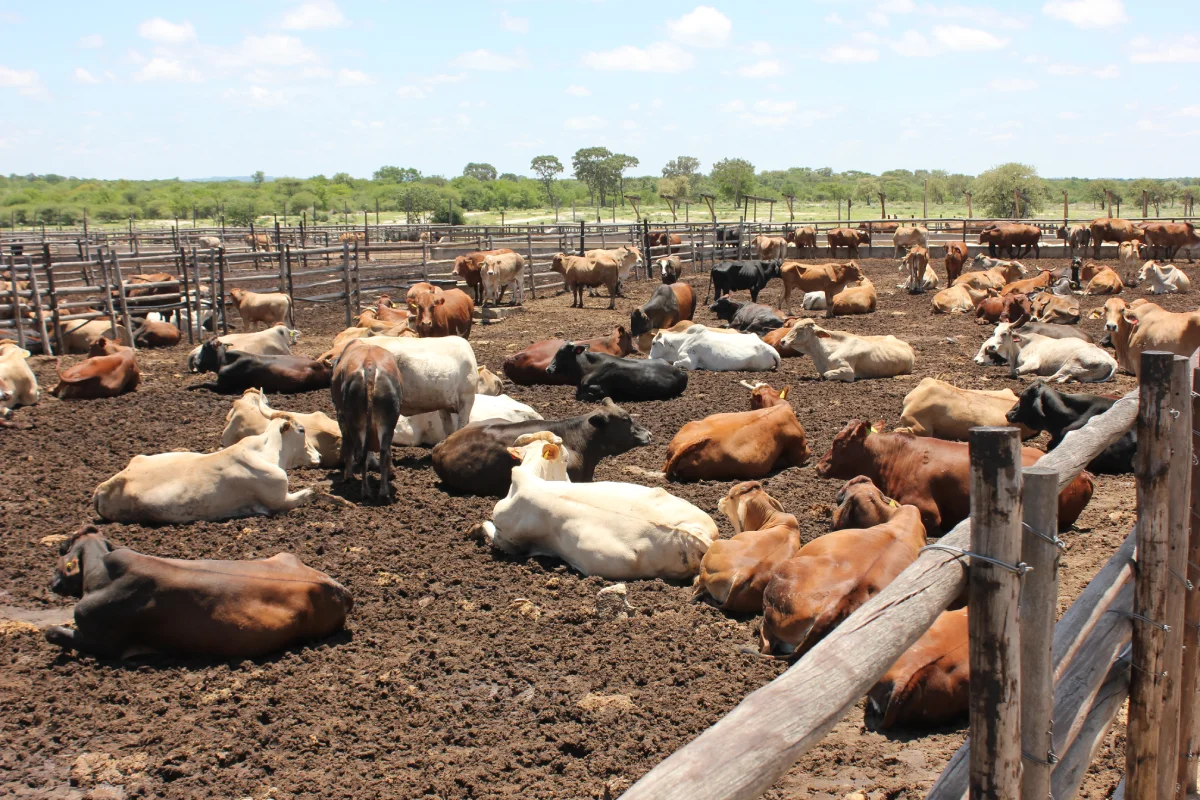
Accurate margin management in a feedlot requires a robust Landed Cost Engine. When a commodity is received, the ERP allows for Landed Cost Templates that estimate freight, duties, and surcharges at the point of receipt. These costs are accrued against inventory value, providing an immediate, realistic COGS. For vendor scoring, the ERP uses Quality Attribute Tracking at the scale house.
As grain is sampled, moisture, protein, and foreign material data are logged directly against the PO. The system generates a Vendor Performance Scorecard comparing ordered vs. received quantity and quality. It allows the procurement team to shift volume to vendors with the highest ROI, not just the lowest base price.
The crisis wasn’t limited to the grain silos. In the yard’s medical warehouse, $150,000 worth of vaccines and supplements were managed on a whiteboard. Because the order-to-cash cycle wasn’t linked to treatment records, the warehouse manager often found himself either with an expired surplus of expensive medication or zero stock during a respiratory outbreak.
“We just found $12,000 of expired vaccines in the back of the cooler. The treatment crews are using it, but they aren’t reporting it to the office until Friday. By then, I’ve already re-ordered what we didn’t need and missed what we did.”
— Warehouse Manager
Tying proper livestock vaccination management to live inventory and treating medical supplies with the same rigor as commodities is what separates modern feedlot operations from those still running on whiteboards.
Managing high-value, perishable medical inventory requires Lot-Level Traceability and FEFO picking logic. Every vaccine shipment is assigned a Lot Number and Expiration Date upon receipt. To close the visibility gap, the ERP’s Inventory Module links to Yard Treatment Records. As crews scan a bottle for use in the chute, inventory depletes in real time.
The Replenishment Logic then triggers a Reorder Point based on Safety Stock levels and vendor lead times. The warehouse maintains the minimum stock needed to handle outbreaks without risking capital on products that will expire on the shelf. A purpose-built agriculture supply chain management software connects cooler inventory to the chute.
By the end of the first quarter post-implementation, the transformation was evident in the executive suite. Historically, reconciling feed usage, commodity contracts, and yard labor took three weeks. Now, the data flowed in a single loop.
“We used to operate in 30-day increments of regret, finding out what we overspent a month too late. Now, the planning loop is closed. The buyer sees what the yard needs; the yard sees what the buyer bought; and I see the margin on every head, every day.”
— CEO
Running ERP for agriculture gave the group the financial backbone to close books in days, not weeks, and meet feedlot cattle compliance standards with audit-ready data.
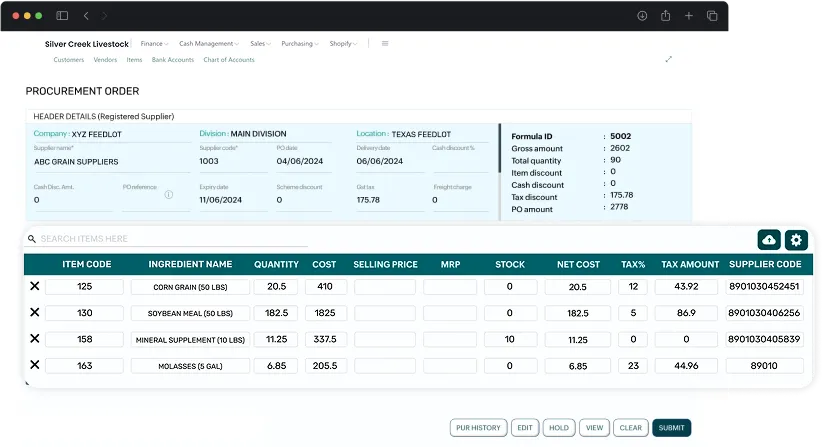
The planning loop is finalized through Integrated Financial Consolidation. Because procurement, inventory, and yard usage execute on a single database, the ERP automates the usage-to-invoice process. Feed usage from the mill is journaled to the General Ledger automatically as an expense and a reduction in asset value.
For multi-site groups, the ERP handles Inter-company Allocations, ensuring a centralized corn purchase in Amarillo is correctly expensed to the specific yard in Kansas that consumed it. It removes manual month-end reconciliations. The result is a unified Record-to-Report cycle that closes the books in 48 hours, providing a live view of “Equity in Cattle” and “Commodity Position” that is audit-ready at any moment.
The transition to a data-driven margin discipline provided the feedlot group with a structural advantage in a volatile market:
These outcomes reflect what’s possible when selecting a feedlot ERP for large operations is treated as a strategic decision, not a software purchase, and when optimizing feedlot operations end-to-end becomes the organizing principle.
“The ERP took the noise out of our supply chain. We no longer buy based on what we think we need; we buy based on what the cattle tell us they need. That is how you protect a margin in this industry.”
— VP of Operations, Texas Feedlot Group.
When your procurement desk, mill, and medical warehouse each speak a different language, every market swing turns into a margin leak. The feedlots winning the next decade aren’t the ones with the cheapest bushel; they’re the ones whose buyer, yard, and CFO all see the same number at the same time.
Talk to a Folio3 AgTech Solutions Architect to design your own data-driven planning loop and discover how Folio3’s Agriculture ERP unifies feedlot procurement and commodity inventory.
Get a Free Consultation Within 24 Hours, with a No-Obligation Ballpark Estimate
[contact-form-7 id="5196998" title="Intent Popup Form"]