
Fertilizer costs are climbing, environmental regulations are tightening, and the margin for error on your farm keeps shrinking. If you’re feeling the squeeze between rising input prices and the pressure to produce more sustainably, you’re not alone. Precision fertilization is emerging as the practical answer to these converging challenges.
At its core, precision fertilization replaces the old “apply everywhere equally” mindset with a data-driven approach: delivering the right nutrients, in the right amounts, at the right time, to the right place in your field. With global food production needing to rise by roughly 60% by 2050 to feed a projected 9.3 billion people, simply using more fertilizer isn’t an option. The answer lies in using it smarter.
This blog walks you through the latest precision agriculture fertilization technologies, frameworks, and decision-support tools that are helping farmers worldwide cut waste, protect their land, and improve profitability. Whether you manage a 200-acre specialty crop operation or a 10,000-acre row crop enterprise, there’s a precision fertilization strategy that fits your needs.
Why Precision Fertilization Matters in 2026
The global farming landscape is under mounting pressure from all sides. Here’s why precision fertilization has moved from “nice to have” to “non-negotiable” for forward-thinking growers:
Population and Cropland Constraints: The world’s population is projected to reach 9.1 billion by 2050, yet per capita arable land continues to decline. Sustainable intensification is producing more from the same land without degrading it. Precision fertilization sits at the center of this strategy, enabling you to maximize output per hectare without exhausting your soils.
Environmental Accountability: Synthetic nitrogen fertilizer alone accounts for roughly 2.1% of global greenhouse gas emissions, with nearly 59% of those emissions occurring after application in the field. Nutrient runoff fuels algal blooms, contaminates groundwater, and degrades waterways. Precision approaches directly address these issues by minimizing over-application.
Economic Gains: Fertilizer can represent 30% or more of a farm’s total input costs. By applying nutrients only where and when crops need them, precision fertilization can save 15–20% on fertilizer inputs while maintaining or improving yields, which is a direct boost to your bottom line.
Regulatory Trends: From the EU’s Carbon Border Adjustment Mechanism targeting nitrogen fertilizer trade to national nutrient management regulations, the policy environment is shifting. It now favors precision over blanket application. Understanding the full suite of precision agriculture technology available today helps you stay ahead of these regulatory shifts.
The 4Rs Foundation of Precision Fertilization Management
Before investing in any technology, every effective precision fertilization management strategy starts with a solid agronomic foundation. The 4R Nutrient Stewardship framework provides that foundation, guiding you to make smarter decisions about every nutrient application.
Right Source: Match the Fertilizer to Your Soil
Not every fertilizer formulation works the same way in every soil. The “Right Source” principle means selecting products based on your specific soil chemistry, crop requirements, and environmental conditions.
Controlled-release fertilizers (CRFs), for instance, release nutrients gradually over weeks, reducing leaching in sandy or high-rainfall soils. Multi-nutrient formulations supply sulfur, potassium, magnesium, and calcium together, cutting down application passes and ensuring balanced nutrition.
The key is letting your soil test results. Building that foundation starts with soil health itself; these practical ways to improve soil fertility can complement your precision fertilization strategy from the ground up.
Right Rate: Let the Data Decide
Guesswork is the enemy of profitability. The “Right Rate” means using actual data to determine exactly how much nutrient each zone of your field needs. It includes soil tests, tissue analyses, yield maps, and sensor readings.
Fields are rarely uniform; spatial variability in organic matter, pH, and texture can cause nutrient requirements to vary dramatically within a single paddock. Applying a flat rate across the board inevitably means over-fertilizing some areas and under-fertilizing others. For a deeper look at the factors that affect nutrient uptake, explore these proven strategies to improve fertilizer efficiency on your operation.
Right Time: Sync with the Crop’s Life Cycle
Crops don’t need the same nutrient load at every growth stage. Nitrogen demand spikes during vegetative growth and again during grain fill, while phosphorus is critical in early root development.
Timing applications to match these biological windows ensures maximum uptake and minimum waste. Split applications by dividing the total dose across two or three growth stages rather than a single dump. It consistently outperforms one-shot strategies in both yield and nutrient efficiency.
Right Place: Target the Root Zone
Where you place the fertilizer matters as much as what you apply. Banding nutrients near the root zone places them where crops can access them, rather than broadcasting across the soil surface, where volatilization and runoff losses are highest.
Sub-surface placement and deep banding are especially effective in no-till systems. The right combination of placement method, formulation, and timing creates a nutrient management plan that genuinely works for your soil and crop.
Advanced Precision Fertilization Methods and Technologies
Understanding what’s possible today goes far beyond textbook principles. These precision fertilization methods represent the current state of the art, moving from research plots into real fields.
Multispectral Drones and NDVI Mapping
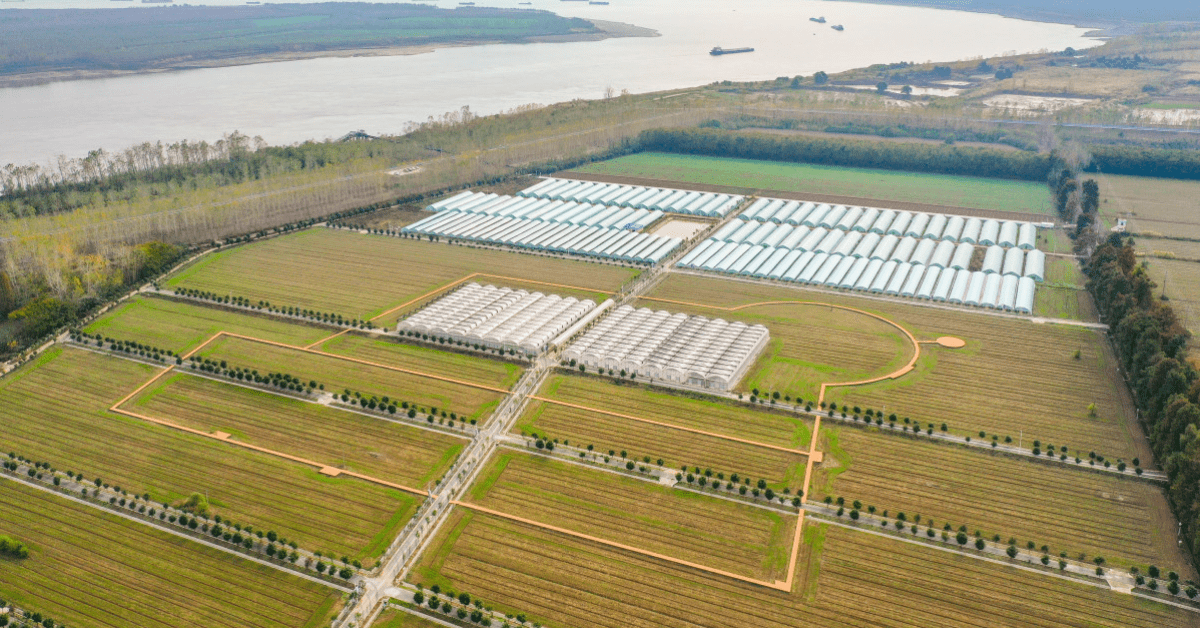
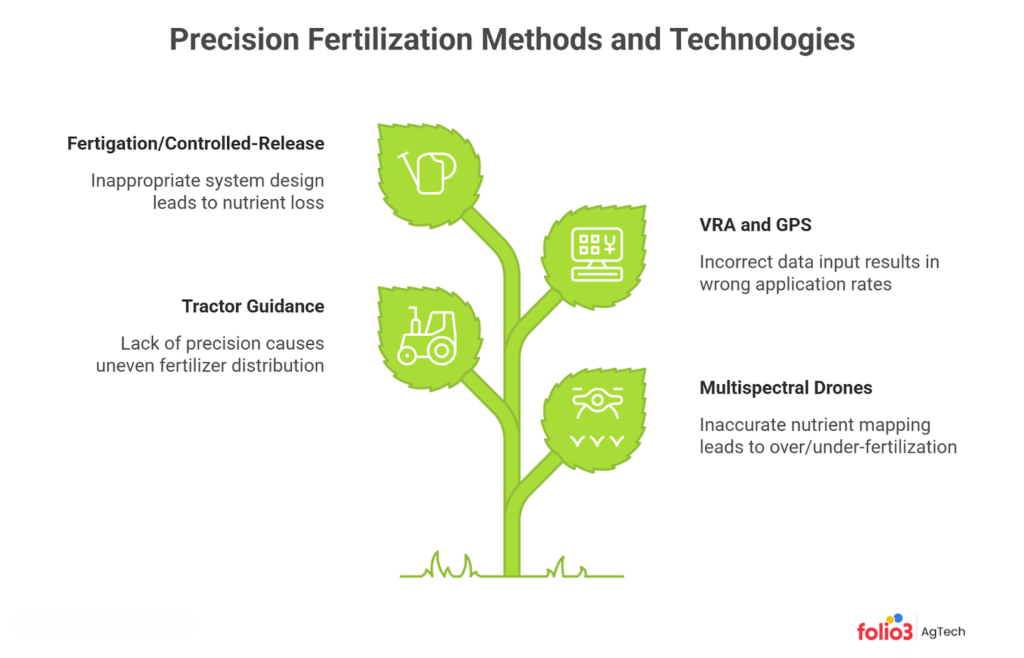
Drones equipped with multispectral cameras (capturing RGB, near-infrared, and red-edge wavelengths) have become one of the most accessible entry points into precision fertilization. By flying over your fields, these systems generate vegetation index maps, especially the Normalized Difference Vegetation Index (NDVI). They detect nutrient deficiencies, water stress, and crop variability before symptoms become visible to the naked eye.
The practical impact is significant. Rather than scouting a 500-acre field on foot, a single drone flight can produce a high-resolution crop health map in under an hour, highlighting zones that need attention. These maps can then feed directly into variable-rate application equipment, creating a seamless workflow from diagnosis to prescription.
Tractor Guidance and Autosteer Systems
Overlap and gaps during fertilizer application are hidden profit killers. Tractor guidance systems using GPS/GNSS signals achieve centimeter-level accuracy, ensuring every pass lines up precisely with the last. According to USDA research, this technology improves on-farm efficiency by up to 20% on small farms, reducing fertilizer overlap, diesel consumption, and operator fatigue.
What’s notable is the scalability. While roughly half of large-scale row crop producers already use autosteer, adoption among small farms remains low. Yet the economics are compelling: reduced fuel, fewer repair costs, and the ability to work longer days in poor visibility conditions. It means this technology often pays for itself within a few seasons, even for smaller operations.
Variable-Rate Application (VRA) and GPS Guidance
VRA in precision agriculture represents the convergence of everything discussed above. GPS-guided spreaders automatically adjust nutrient rates on the move. They respond to prescription maps built from soil data, drone imagery, or real-time sensor readings. Instead of applying 150 kg N/ha uniformly, the spreader might deliver 180 kg/ha in a depleted zone and 120 kg/ha in a nutrient-rich pocket, all within a single pass.
Meanwhile, multi-year, large-scale pilots across Greece, the USA, and Australia found that VRA of nitrogen in wheat fields achieved fertilizer savings of 7–11% on average without statistically significant yield loss. Plus, winter wheat demonstrated that VRA treatments used roughly half the nitrogen input of uniform-rate application while maintaining comparable grain yields and plant nitrogen content. These aren’t theoretical projections; they’re field-validated outcomes from commercial farming conditions.
For small farms, the entry barrier is lower than you might expect. Plug-and-play sensor systems that mount on existing spreaders can bring VRA capability to standard equipment without a full fleet upgrade.
Fertigation and Controlled-Release Fertilizers
Fertigation, delivering dissolved nutrients through drip irrigation lines, combines water and nutrient management into a single, precise system. This method is particularly effective for high-value crops like vegetables, fruits, and greenhouse operations, where controlled nutrient delivery translates directly into quality and yield gains.
Controlled-release fertilizers complement this approach by encapsulating nutrients in polymer coatings. They degrade gradually, releasing nutrients over 3–6 months depending on soil temperature. This slow-release mechanism dramatically reduces leaching losses and the number of application passes required.
Choosing the Right Precision Fertilization Tool for Your Farm
With so many options available, selecting the right precision fertilization tool depends on your operation’s size, crops, budget, and existing infrastructure. Here’s how to navigate the landscape.
IoT Environmental Sensors
The foundation of any precision system is reliable field data. IoT sensors monitoring soil moisture, electrical conductivity, pH, temperature, and nutrient levels feed continuous data streams to centralized hubs or cloud platforms. These sensors eliminate the guesswork of “When should I apply?” and “How much does this zone need?” by providing real-time, zone-specific answers.
Moreover, modern sensor networks are increasingly affordable, with battery-powered units. They last multiple growing seasons and are integrated wirelessly with farm management platforms.
Data, AI, and Decision-Support Platforms
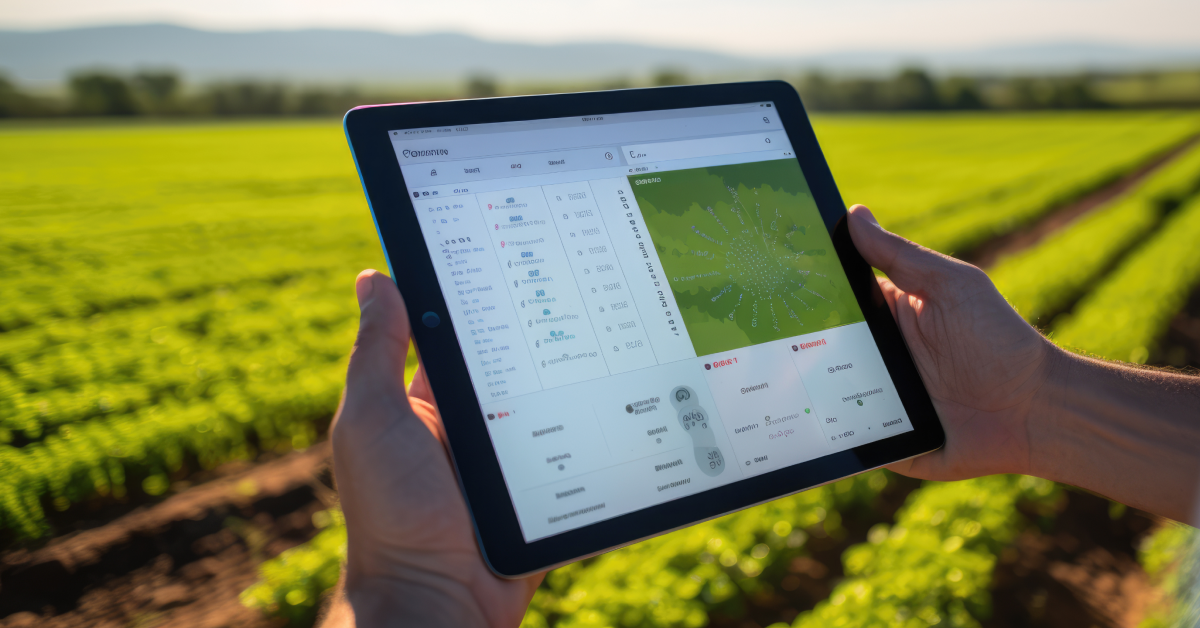
Raw data from sensors, soil tests, weather stations, and yield monitors means nothing without intelligent analysis. AI-driven platforms and decision-support systems convert this information into actionable fertilization plans. These platforms process historical yield data alongside real-time inputs. As a result, they generate zone-specific prescriptions, predict nutrient demand, and alert you to emerging deficiencies before they impact yield.
Improved soil and tissue testing protocols also play a critical role here. Regular testing creates the baseline data that AI models need to calibrate their recommendations accurately. The more seasons of data you feed into these platforms, the better their prescriptions become.
Traditional vs. Precision Fertilization: A Comparison
| Metric | Traditional Approach | Precision Fertilization |
| Application Method | Uniform rate across the entire field | Variable rate by zone, based on data |
| Data Source | Regional averages, farmer experience | Soil tests, sensors, NDVI maps, yield data |
| Cost Efficiency | Higher input costs due to over-application | Optimized inputs; 15–20% fertilizer savings are typical |
| Environmental Impact | Higher runoff, leaching, and GHG emissions | Reduced nutrient loss, lower emissions footprint |
| Yield Optimization | Inconsistent yields across zones | Improved uniformity and higher average yields |
| Technology Required | Standard spreader, minimal tech | GPS, sensors, VRA equipment, software platform |
Implementation Roadmap From Soil Test to Smart Field
Adopting precision fertilization management doesn’t require an overnight overhaul. A phased approach reduces risk and lets you build on what’s working. Here’s a practical roadmap.
- Field Assessment: Start with comprehensive soil sampling and mapping. Grid sampling or zone-based sampling reveals spatial variability in pH, organic matter, nutrient levels, and texture. This baseline map becomes the foundation for every subsequent decision. Pair it with historical yield data if available.
- Goal Setting: Define your objectives clearly. Are you targeting a 10% reduction in nitrogen use? A specific yield benchmark? Environmental compliance? Clear goals help you evaluate which technologies and methods justify the investment.
- Selecting Technologies: Match your tech to your scale and crop. A 300-acre vegetable operation may benefit most from fertigation and IoT soil sensors, while a 5,000-acre grain farm may prioritize VRA spreaders and drone-based monitoring.
- Data Integration and Software: Choose a crop management platform that integrates soil data, weather feeds, sensor inputs, and yield maps into a unified dashboard. Interoperability matters as your platform should work with the equipment you already own.
- Training and Support: Technology is only as effective as the people using it. Invest in farmer training through workshops, extension services, and vendor-led programs. Understanding how to interpret sensor data and adjust prescriptions is what separates adoption from actual impact.
Overcoming Challenges in Precision Fertilization
No technology transition is without hurdles. Here’s how to address the most common barriers to precision fertilization management adoption.
Cost and Capital: The initial investment in sensors, VRA equipment, and software can be significant. However, financing options such as cooperative purchasing, equipment leasing, and government subsidies can offset these costs. Remember, tractor guidance alone can recoup its cost rapidly through fuel and input savings. Focus on technologies with the shortest payback period first and scale from there.
Training and Knowledge Gaps: Precision tools generate a lot of data, and data without understanding creates confusion. Participate in digital agriculture workshops, university extension programs, and vendor training. Many smart farming platforms now offer built-in tutorials and decision-support features that simplify interpretation.
Data Privacy and Security: Your field data is a valuable asset. Ensure that any platform you use employs encryption, role-based access controls, and clear data ownership policies. Ask vendors directly: Who owns the data? Where is it stored? Can you export it? These are non-negotiable questions in an increasingly data-driven farming environment.
Integration with Existing Systems: Not every new tool plays well with your current equipment. Prioritize interoperable solutions that support industry standards like ISOBUS. Some plug-and-play sensor systems are specifically designed to retrofit onto existing machinery, avoiding the need for a complete equipment overhaul.
The Economic ROI and Environmental Impact
Precision fertilization is not just about technology; it’s about measurable returns on both your balance sheet and the environment.
Boosting Yields While Slashing Input Costs
The financial case is straightforward. When you stop over-applying nitrogen to zones that don’t need it, you immediately reduce your fertilizer bill. When you properly feed underperforming zones, yields in those areas improve. The net effect is a tighter spread between input cost and revenue per hectare.
Research consistently shows that variable-rate technology can boost nutrient use efficiency by 20–40% while reducing nitrogen losses. On a commercial wheat operation, that can translate to meaningful savings per season that compound year over year as soil health improves and nutrient reserves become more balanced.
GHG Emissions and Carbon Methodologies
The environmental equation is equally compelling. The synthetic nitrogen fertilizer supply chain is responsible for an estimated 1.13 GtCO2e annually, with field emissions accounting for the largest share. However, increasing nitrogen-use efficiency is the single most effective strategy to reduce these emissions, and combined interventions could cut fertilizer-related GHG emissions by up to 80% by 2050.
For you, precision fertilization is about future-proofing your operation against carbon regulations and potentially accessing carbon credit markets. It creates a framework for farmers to earn credits by documenting measurable emission reductions.
Future Trends and Innovations in Precision Fertilization
The precision fertilization landscape is evolving rapidly. Here are the developments that will shape the next wave of precision fertilization methods and management.
Low-Cost, High-Precision Sensors: Sensor prices continue to drop while accuracy improves. Expect real-time, field-level monitoring to become standard even on smaller farms within the next 3–5 years. Miniaturized nutrient sensors and multi-parameter probes will make continuous soil health tracking as routine as checking the weather.
Integrated AI and Predictive Systems: Next-generation AI platforms will move beyond reactive recommendations to predictive nutrient management. They will forecast deficiency days or weeks in advance using weather models, growth-stage data, and historical field behavior. AI-powered precision farming solutions are already making this shift a reality for early adopters.
Site-Specific Fertilizer Formulations: Fertilizer manufacturers are beginning to develop products tailored to individual field conditions. They address the specific nutrient gaps identified by soil testing and sensor data, rather than off-the-shelf formulations.
Robotics and Autonomous Machines: Small autonomous vehicles capable of spot-applying fertilizer with centimeter-level precision are moving from research trials to early commercial availability. These machines are particularly promising for specialty crops and small-farm operations where large VRA equipment isn’t practical.
Accessibility for Small and Specialty Farms: Future adoption will increasingly focus on making precision fertilization technologies affordable and user-friendly for farms that have historically been underserved by precision agriculture. Shared equipment models, subscription-based sensor services, and mobile-first platforms will drive this shift.
Cultivate Smarter Nutrition with Agtech Folio3
Precision fertilization isn’t a trend; it’s the future of responsible, profitable farming. By building on the 4Rs, investing in data-driven technologies, and committing to continuous improvement, you can feed more people while preserving the ecosystems your farm depends on. The tools exist today: from simple soil sensors and tractor guidance to sophisticated VRA systems and AI-powered platforms. Start with a soil test, define your goals, and take the first step toward smarter crop nutrition. Ready to bring precision into your operation? Explore how Folio3’s Agtech can help you integrate soil data, sensor inputs, and nutrient planning into a unified platform built for modern agriculture.
FAQs
What Is the Difference Between Precision Fertilization and Traditional Fertilization?
Traditional fertilization applies a uniform nutrient rate across an entire field, regardless of variability. Precision fertilization uses soil data, sensors, and GPS-guided equipment to tailor application rates zone by zone, reducing waste and improving nutrient uptake.
How Much Does It Cost to Get Started with Precision Fertilization?
Entry costs vary widely. Basic soil testing and GPS tractor guidance can start at a few thousand dollars, while full VRA setups with drone mapping and IoT sensors may range higher. Cooperative purchasing and leasing options make these tools accessible for smaller budgets.
Can Small Farms Benefit from Precision Fertilization Methods?
Yes. USDA research shows that even tractor guidance alone can improve small-farm efficiency by up to 20%. Plug-and-play sensor systems and drone-as-a-service models bring advanced precision fertilization methods within reach of smaller operations.
How Does Precision Fertilization Help Reduce Greenhouse Gas Emissions?
By delivering only the nitrogen a crop needs, precision fertilization minimizes excess nitrogen that would otherwise convert to nitrous oxide, a greenhouse gas nearly 300 times more potent than CO2. This directly reduces your farm’s carbon footprint.
What Role Does AI Play in Precision Fertilization Management?
AI platforms analyze soil tests, weather data, sensor inputs, and historical yields to generate zone-specific nutrient prescriptions. Over time, these systems learn from each season’s outcomes, improving their recommendations and helping you optimize both yield and efficiency.