
Climate change is no longer a distant threat; it’s reshaping your fields right now. Unpredictable heat waves, prolonged droughts, sudden flooding, and shifting pest patterns are pushing crops to their limits. And with the global population projected to reach 9.7 billion by 2050, the pressure on every acre you farm has never been greater.
Here’s the hard truth: abiotic stresses like drought, extreme heat, salinity, and nutrient imbalances already account for roughly 50% of all crop yield losses worldwide. Meanwhile, pests and diseases claim up to 40% of global crop production annually, costing the global economy over $220 billion each year. Left unmanaged, crop stress doesn’t just shrink your harvest; it erodes your profitability season after season.
This guide walks you through the science behind crop stress, shows you how to detect it early, and lays out practical, proven strategies to protect your yields. Whether you’re dealing with scorching summers, waterlogged fields, or mounting pest pressure, you’ll find actionable solutions here.
What Is Crop Stress?
Crop stress is any environmental or biological condition that disrupts normal plant growth, development, or yield. Think of it as anything that forces your plants to divert energy from producing grain, fruit, or fiber toward simply surviving.
There are two broad categories. Abiotic stresses come from non-living factors: drought, extreme temperatures, soil salinity, nutrient imbalances, waterlogging, heavy metal contamination, and excessive or insufficient light. Biotic stresses involve living organisms like pests, diseases, and weeds that attack your crops directly.
Under climate change, abiotic stresses are intensifying rapidly. The first line of defense? Choosing stress-tolerant crop varieties and building healthier soils. These steps won’t eliminate stress, but they give your plants a fighting chance before conditions turn extreme.
Types of Crop Stress and Their Impacts
Understanding what you’re up against is the foundation of effective crop stress management. Here’s a breakdown of the major abiotic stress types and the damage they cause.
Temperature Stress (Heat and Cold)
When temperatures climb beyond a crop’s comfort zone, water demand spikes, photosynthesis declines, and oxidative damage sets in. Heat waves can be devastating; research shows that wheat yield can decline by 80–90% under severe heat stress. On the cold end, freezing temperatures cause cellular dehydration and frost injury, disrupting enzyme activity and membrane function.
Water Stress (Drought and Waterlogging)
Drought triggers a cascade of biochemical changes, including reduced cell division, stunted seedling growth, lower biomass, and ultimately, significant yield losses. Waterlogging is equally damaging; it starves roots of oxygen, triggers ethylene production, and leads to chlorosis and nutrient imbalances. Under adverse conditions, overall yield losses can reach approximately 70%.
Salinity and Nutrient Stress
High salt concentrations in soil create a physiological drought—even when water is present, your plants can’t absorb it efficiently. Salt toxicity disrupts ion balance and inhibits growth. Nutrient deficiencies (or toxicities) interfere with chlorophyll production, photosynthesis, and biomass accumulation, leaving crops visibly stunted and pale.
Light, UV, and Solar Radiation Stress
Too much light overwhelms photosynthetic machinery and generates reactive oxygen species that damage cells. Too little light slows photosynthesis and delays development. Both extremes reduce your crop’s ability to convert sunlight into yield.
Heavy Metal and Chemical Stress
Contamination with metals like cadmium or lead inhibits root function, enzyme activity, and nutrient uptake. Herbicide misuse, spray drift, and poor agronomic practices can cause phytotoxic stress that mimics disease symptoms and sets crops back weeks.
Biotic Versus Abiotic Stress: Economic Significance
There’s an important practical difference between these two categories. Abiotic stresses tend to affect entire fields uniformly; every plant in a drought-stressed field suffers. Biotic stresses usually show up in patches, targeting specific tissues or spreading from localized infection points.
Economically, the numbers are staggering. Abiotic stresses alone are responsible for around half of all crop yield losses globally, with high temperatures contributing about 20%, salinity around 10%, and drought roughly 9%. As climate change accelerates, these losses will likely grow, making proactive crop stress management not just smart farming, but a financial necessity.
How Plants Respond to Stress and How Tolerance Mechanisms Work
Your crops aren’t passive victims of stress; they fight back with built-in defense mechanisms. Understanding these responses helps you support your plants when it matters most.
Physiological and Biochemical Responses to Stress
When stress hits, plants activate a series of survival responses. The first visible reaction is often stomatal closure, your crops shut down their leaf pores to conserve water. While this reduces water loss, it also limits carbon dioxide intake, slowing photosynthesis.
Beyond that, stressed plants ramp up osmotic adjustment by accumulating compatible solutes like proline and glycine betaine, which help maintain cell turgor. They also boost antioxidant production to neutralize the reactive oxygen species that heat, drought, and salinity generate.
Drought reduces cell division and stunts seedling development. Waterlogging triggers ethylene production, leading to chlorosis and root decay. Heat stress denatures proteins and disrupts metabolic pathways. Salinity creates osmotic stress and ion toxicity simultaneously, while nutrient deficiencies alter photosynthesis and limit biomass accumulation. Recognizing these responses in your fields is the first step toward timely intervention.
Genetic, Breeding, and Biostimulant Approaches to Stress Tolerance
Modern breeding programs are accelerating crop stress tolerance. Researchers have identified traits like deep, branched root systems that significantly improve drought resistance. Genes such as DRO1, which modulate root angle, have shown measurable improvements in drought tolerance in rice. Some crops are naturally more resilient; barley, for instance, handles salinity better than most cereals.
Biostimulants and seed treatments are emerging as practical tools for farmers. Products that enhance germination, root development, and early-season vigor give your crops a head start against cold, heat, excess moisture, and drought. The key takeaway? Integrating genetic resistance with sound agronomic management delivers the most durable resilience.
How to Detect and Monitor Crop Stress
Early crop disease detection is always your best insurance policy against yield loss. The sooner you spot stress, the more options you have to respond effectively.
Field Observation and Manual Scouting
Before reaching for any technology, start with your eyes. Regular field walks remain the foundation of effective crop scouting. Train yourself (and your team) to spot early stress indicators:
- Leaf discoloration: yellowing, browning, or purpling that deviates from the crop’s normal color
- Wilting and curling: leaves rolling inward or drooping, especially during midday heat
- Stunted growth: plants are visibly shorter or smaller than their surrounding neighbors
- Irregular canopy: uneven stand heights, premature leaf drop, or patchy emergence
- Abnormal flowering: delayed, uneven, or absent flowering patterns
Record your observations consistently and compare them against previous growth data. Patterns over time reveal more than any single snapshot.
Digital Tools, Remote Sensing, and AI-Based Monitoring
Modern agriculture has moved well beyond the clipboard. Here’s how cutting-edge technology enables crop stress detection at scale:
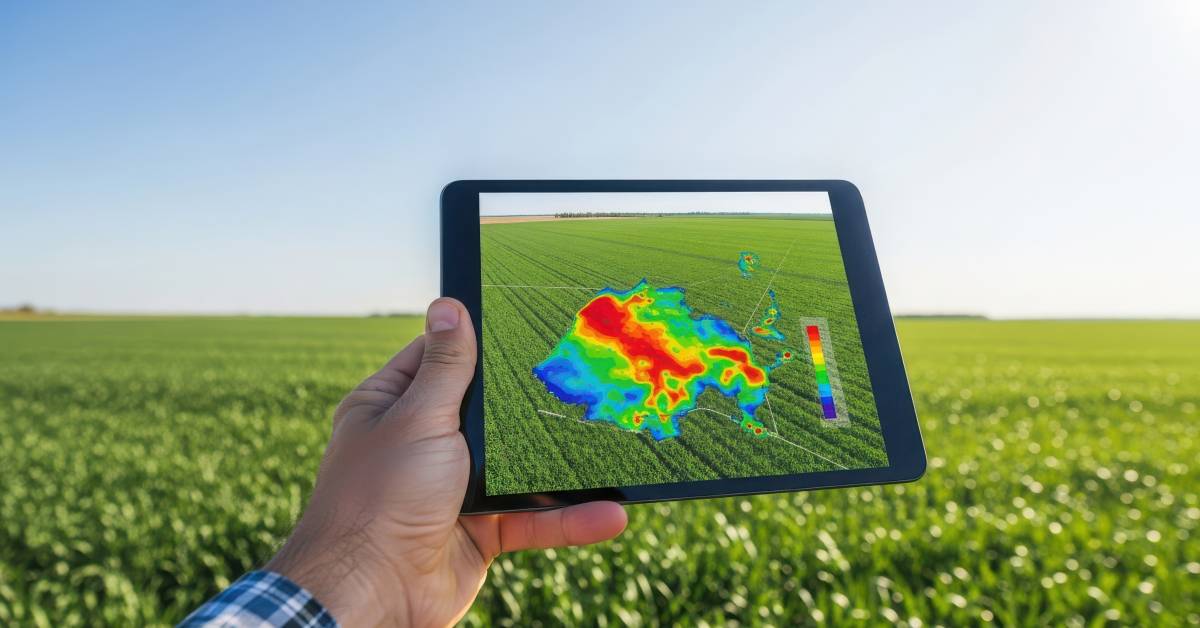
- Hyperspectral and Multispectral Imaging: These sensors capture data across dozens of spectral bands, revealing stress signatures invisible to the human eye. They can differentiate between drought stress, nutrient deficiency, and disease before visible symptoms appear.
- Thermal Infrared Sensing: Thermal cameras detect canopy temperature variations. Stressed crops typically run hotter because they’ve closed their stomata and stopped transpiring. This makes thermal imaging a powerful tool for identifying water and heat stress early.
- Chlorophyll Fluorescence: Non-destructive fluorescence sensors measure photosystem efficiency in real time, flagging salinity stress, nutrient deficiency, and early disease onset without damaging plant tissue.
- Machine Learning Integration: ML algorithms in agriculture trained on spectral, thermal, or image-based data can classify stress types, forecast events, and support precision agriculture decisions with remarkable accuracy. They detect subtle changes days or weeks before symptoms become obvious.
- Drones, Satellites, and Ground Sensors: Agricultural drones equipped with multispectral cameras, satellite imagery platforms, and ground-based IoT sensor networks provide high-resolution data across large areas, enabling proactive intervention before stress spreads.
Table: Remote Sensing Indices and Sensors for Crop Stress Detection
| Index / Sensor | Stress Type Detected | Key Feature |
| NDVI (Normalized Difference Vegetation Index) | General vigor, drought stress | Measures chlorophyll and canopy greenness changes |
| Thermal Imaging | Heat and water stress | Detects canopy temperature; higher temperatures indicate stress |
| Chlorophyll Fluorescence Sensors | Salinity, nutrient deficiency | Non-destructive measurement of photosystem efficiency |
| Hyperspectral Imaging | Multiple stresses (heat, salinity, disease) | Captures detailed spectral signatures for ML classification |
How to Manage Abiotic and Biotic Stress in Crops
Detection tells you what’s wrong. Management tells you what to do about it. Here are targeted strategies for each major abiotic and biotic stressor.
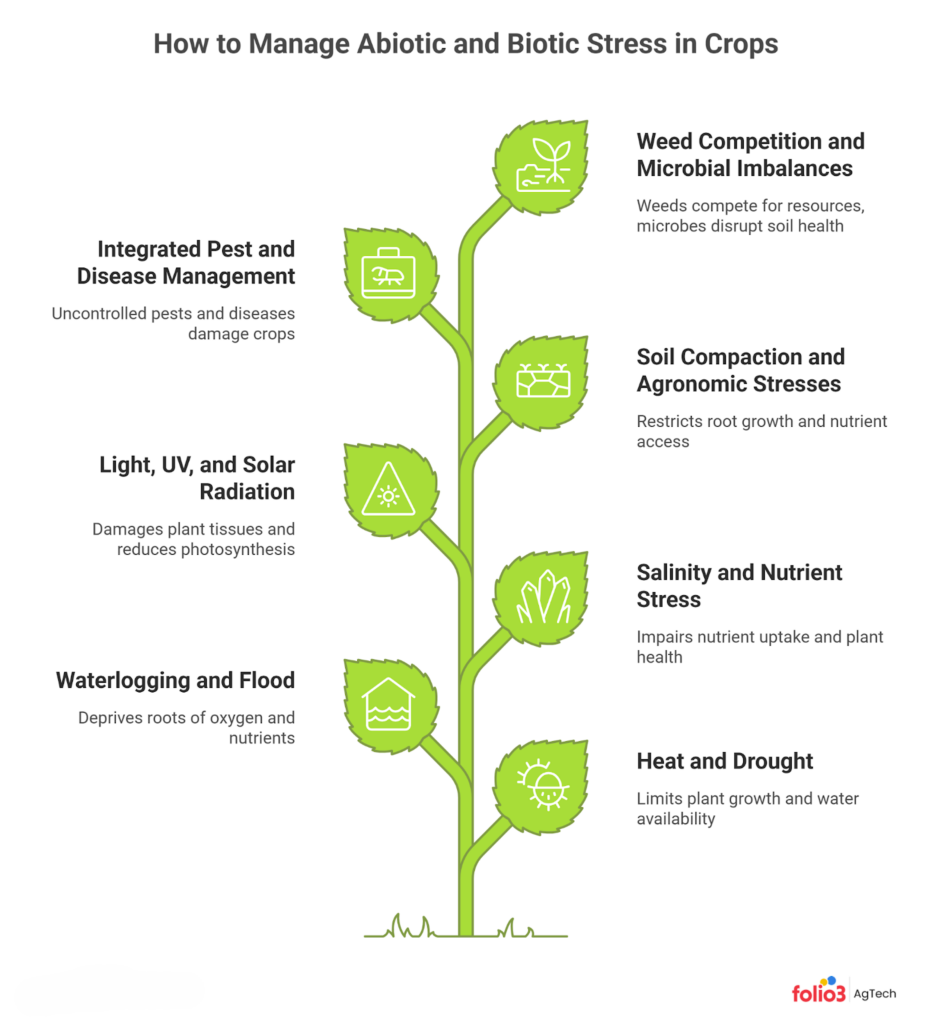
Heat and Drought Stress Management
Heat and drought often strike together, compounding damage. Your management plan should address both simultaneously:
- Select heat- and drought-tolerant cultivars proven in your region
- Adjust planting dates to avoid peak heat during critical reproductive stages
- Use reflective mulches or shade nets to reduce canopy temperature by several degrees
- Implement deficit irrigation strategies that strategically withhold water to build tolerance without sacrificing yield
- Deploy soil moisture sensors and adaptive scheduling to match water delivery to actual crop demand
Biostimulants and foliar products can also help maintain photosynthesis and reduce oxidative damage under extreme conditions. The goal isn’t to eliminate stress—it’s to keep your plants productive through it.
Waterlogging and Flood Stress Management
When water sits on your fields, roots suffocate. Ethylene builds up, chlorosis sets in, and development stalls. To manage this:
- Improve field drainage with grassed waterways, subsurface drains, or raised beds
- Choose flood-tolerant cultivars for low-lying or flood-prone areas
- Prioritize rapid water removal after flooding events to restore soil aeration
Speed matters here. Every extra hour of standing water increases the risk of permanent root damage.
Salinity and Nutrient Stress Management
Managing salinity requires an integrated approach:
- Apply gypsum or organic amendments to displace sodium from soil exchange sites
- Improve irrigation water quality and use controlled leaching to flush excess salts below the root zone
- Plant salt-tolerant varieties where salinity is a recurring issue
- Use precision fertilization based on soil tests and foliar sprays to correct nutrient imbalances without causing toxicity
Light, UV, and Solar Radiation Stress Management
Light extremes damage photosynthetic structures and generate harmful reactive oxygen species. Practical solutions include adjustable shading systems, anti-solar films, strategic row orientation, and trellising to optimize light distribution. In greenhouse environments, controlled lighting systems offer precise management. Proper canopy management through pruning and training helps balance light exposure across the entire plant.
Soil Compaction and Agronomic Stresses
Heavy machinery, poor field traffic patterns, and inappropriate chemical applications compound existing stress. Reduce tillage where possible, adopt controlled traffic farming, incorporate organic matter to improve soil structure, and avoid spraying under extreme temperatures to prevent phytotoxicity.
Integrated Pest and Disease Management
Pests and diseases exact a heavy toll. According to the FAO, pests and diseases destroy up to 40% of global crop production annually. Integrated pest management (IPM) remains the gold standard:
- Conduct regular monitoring to catch infestations early
- Deploy biological control agents alongside resistant cultivars
- Use pheromone traps for targeted pest surveillance
- Apply pesticides judiciously, only when thresholds are exceeded
- Maintain field sanitation, manage crop residue, and rotate crops to break pathogen cycles
Weed Competition and Microbial Imbalances
Weeds are silent yield thieves, competing for light, water, and nutrients at every growth stage. Timely mechanical or chemical weed control is essential, and cover crops can suppress weed emergence while improving soil health.
Soil microbiome health matters too. Promote beneficial microbes through organic amendments, reduced tillage, and diverse rotations. A healthy soil microbiome enhances nutrient cycling, suppresses pathogens, and improves your crop’s natural resilience.
Innovations in Crop Stress Management: AI, Remote Sensing, and Decision Support Systems
Technology is transforming how farmers detect, predict, and respond to crop stress. These innovations aren’t just for large operations; they’re becoming accessible to farms of every size.
- AI-Powered Stress Classification: Machine learning models trained on hyperspectral, multispectral, and thermal datasets can classify stress types: drought, salinity, disease, and nutrient deficiency with high accuracy. These models analyze time-series data to detect subtle changes before symptoms become visible, giving you a critical early-warning advantage. Explore how AI is transforming agriculture for deeper insights.
- Vegetation Indices and Sensor Fusion: Indices like NDVI (Normalized Difference Vegetation Index) and NDRE (Normalized Difference Red Edge) quantify crop health from satellite or drone imagery. Combined with thermal cameras and chlorophyll fluorescence sensors, these tools create a multi-layered picture of field conditions that no single sensor can provide alone.
- Cloud-Based Decision Support Platforms: Modern platforms integrate sensor data with weather forecasts, soil information, and historical field records to deliver actionable recommendations, adjusting irrigation systems, optimizing nutrient application, or flagging high-risk zones before stress escalates.
- IoT Devices and Mobile Alerts: Soil moisture probes, canopy temperature sensors, and weather stations connected through IoT networks feed real-time data to mobile apps that alert you to stress hotspots instantly. No more guessing, you know exactly which blocks need attention and when.
- Drone-Based Scouting at Scale: Drones equipped with multispectral sensors cover hundreds of acres in a single flight, slashing scouting costs and delivering data that manual walks simply can’t match. For regions with limited access to extension services, drone-based monitoring offers a practical, scalable alternative.
- Predictive Analytics and Early Warning: AI algorithms process weather forecasts, historical stress patterns, and real-time sensor inputs to predict stress events before they happen. This proactive approach enables preventive action, not just reactive management.
Early adoption of these technologies is the differentiator for climate-resilient agriculture. The farms that invest in AI-driven crop monitoring today will be the ones still profitable a decade from now.
Building Resilience Against Crop Stress: Integrated Agronomic Practices
True resilience isn’t built with a single intervention; it comes from the synergy of multiple practices working together across your entire operation.
Water Management
Precision irrigation, rainwater harvesting, and greywater recycling help optimize every drop. Soil moisture sensors and weather-integrated scheduling ensure you’re irrigating based on actual crop demand, not guesswork. Deficit irrigation strategies, when timed correctly, can actually strengthen root systems and build drought tolerance.
Soil Health Improvement
Regularly adding compost, biochar, and manure improves soil structure, water-holding capacity, and microbial diversity. Mulching retains moisture, moderates soil temperature, and suppresses weed emergence, addressing multiple stressors simultaneously.
Crop Rotation and Cover Crops
Rotating with legumes and deep-rooted species breaks pest and disease cycles while enriching soil nitrogen and organic matter. Cover crops protect bare soil from erosion, improve infiltration, and feed the beneficial microbes that drive nutrient cycling.
Microclimate Modifications
Strategic use of windbreaks, shade nets, and proper row orientation can regulate temperature and humidity at the field level. These low-cost interventions reduce evapotranspiration and protect crops during critical growth stages.
Balanced Fertilization and Organic Matter
Apply nutrients based on soil tests, not habit. Over-fertilization causes salt buildup and microbial imbalance, both of which amplify stress. Organic matter additions buffer against nutrient extremes and sustain long-term fertility. Implementing a robust farm record-keeping system ensures that your fertilization history informs every future decision.
Stress Preconditioning
“Hardening” techniques are gaining traction. Regulated deficit irrigation or controlled exposure to mild stress during early growth stages primes plants to tolerate harsher conditions later. Seed priming with biostimulants and hormonal treatments is an emerging practices that show real promise for enhancing crop stress tolerance before planting.
How Folio3 AgTech Empowers Modern Farmers
Managing crop stress effectively demands more than knowledge; it demands the right tools. Folio3 AgTech delivers custom-built crop management software, integrated with centralized agriculture ERP systems.
Moreover, we excel in AI-powered solutions designed specifically for the challenges modern farmers face. With real-time dashboards that consolidate field data, weather forecasts, and sensor inputs into a single view, you can spot stress hotspots the moment they emerge. Predictive analytics models process historical and live data to forecast drought events, pest outbreaks, and nutrient imbalances before they impact your bottom line.
Folio3’s platform integrates seamlessly with your existing hardware,e like drones, soil sensors, weather stations, and irrigation controllers, so you don’t have to overhaul your operation to start gaining insights. Whether you grow row crops, manage orchards, or run large-scale grain operations, the software adapts to your workflows. Ready to take control of crop stress before it takes control of your yields? Book a free demo with Folio3 AgTech and see how precision technology can strengthen every acre of your farm.
FAQs
What Is The Most Damaging Type Of Crop Stress?
Drought and heat stress typically cause the most severe yield losses. Under extreme heat, wheat yields alone can drop by up to 90%. However, the most damaging stress type varies by region, crop, and season. That’s why integrated management that addresses multiple stressors simultaneously delivers the best protection.
Can AI Really Detect Crop Stress Before It Becomes Visible?
Yes. Machine learning models trained on hyperspectral and thermal sensor data can identify stress signatures days to weeks before visible symptoms appear. This early detection window gives you time to intervene with targeted irrigation, nutrient application, or pest management before yield loss becomes irreversible.
How Does Soil Health Affect Crop Stress Tolerance?
Healthy soil with strong organic matter content, diverse microbial communities, and good structure acts as a buffer against multiple stresses. It holds moisture longer during drought, drains better during excess rain, and supplies nutrients more consistently, reducing your crop’s vulnerability to both abiotic and biotic pressures.
What Is Stress Preconditioning, and Does It Work?
Stress preconditioning, or hardening, involves exposing crops to mild, controlled stress early in their growth cycle. It triggers the plant’s natural defense mechanisms, making it better prepared for more severe conditions later. Techniques like regulated deficit irrigation and seed priming have shown measurable improvements in stress tolerance across multiple crop types.
How Can Small Farms Afford Advanced Crop Stress Monitoring?
Costs have dropped significantly. Affordable drone platforms, smartphone-based scouting apps, and cloud-based analytics tools make precision monitoring accessible even for small operations. Many providers, including Folio3 AgTech, offer scalable solutions that grow with your farm’s needs and budget.