
If you manage a feedlot, run a dairy operation, or oversee sustainability for an agricultural enterprise, you already know the pressure is mounting. Regulators, investors, and consumers are all asking the same question: What is your operation doing about its environmental footprint? The scrutiny has intensified dramatically over the past few years, and it shows no signs of slowing down.
The relationship between livestock farming and climate change is complex, but it does not have to be overwhelming. The science is clear, and more importantly, the solutions are within reach. Modern agtech is helping forward-thinking producers reduce emissions while actually improving profitability. This is not about choosing between environmental responsibility and business success. It is about recognizing that the two are increasingly intertwined.
This guide breaks down exactly how farming livestock contributes to greenhouse gas emissions, and explores how a changing climate threatens your operations in return. Whether you are looking to get ahead of regulations, access new markets, or simply run a more efficient operation, you will find actionable insights here.
The Current Landscape: Animal Farming and Climate Change by the Numbers
Let us start with the data. According to the Food and Agriculture Organization (FAO), the global livestock sector contributes approximately 14.5% of all human-caused greenhouse gas emissions. That is a significant share, roughly equivalent to the entire transportation sector, including all cars, trucks, ships, and airplanes combined.
But here is where understanding animal farming and climate change gets nuanced: not all livestock are equal contributors. Cattle dominate the emissions profile, responsible for about 65% of the sector’s total. Pigs account for roughly 9%, poultry 8%, and buffalo and small ruminants like sheep and goats contribute the remaining share. This breakdown matters because it helps you understand where the biggest improvement opportunities exist.
These numbers are not meant to point fingers. They represent an industry-wide challenge and, for those who act early, a significant opportunity. The operations that understand these emissions drivers and address them proactively will be the ones positioned for long-term success in an increasingly sustainability-conscious marketplace.
Breaking Down the Greenhouse Gases: CO₂, CH₄, and N₂O Explained
When we talk about climate change and livestock, we are really talking about three main gases, each with different warming impacts measured by Global Warming Potential (GWP). Understanding these differences is essential for prioritizing your mitigation efforts effectively.
- Carbon dioxide (CO₂) serves as the baseline with a GWP of 1. In livestock operations, it comes primarily from energy use in barns and equipment, feed production, including fertilizer manufacturing, and land clearing for pastures or feed crops.
- Methane (CH₄) is the big one for cattle producers. According to the IPCC, it is 28 times more potent than CO₂ over a 100-year period. The good news? Methane only persists in the atmosphere for about 12 years, which means reducing it delivers faster climate benefits than cutting CO₂. This makes methane reduction a high-impact priority.
- Nitrous oxide (N₂O) is the most potent of the three, at 265 times CO₂ equivalent, and it persists for approximately 114 years. It comes mainly from manure management and fertilizer applications on feed crops. While harder to address, N₂O reduction offers substantial climate benefits per unit reduced.
How Does Animal Farming Contribute to Climate Change? The Core Emission Drivers
Understanding how farming livestock causes climate change requires looking at three primary sources. Each represents a distinct operational area where targeted interventions can make a real difference. The good news is that addressing these drivers often improves operational efficiency simultaneously.
Enteric Fermentation: The Methane Challenge in Ruminant Digestion
If you raise cattle, sheep, or goats, enteric fermentation is your largest emissions source. These ruminants have a specialized four-compartment stomach system that allows them to digest fibrous plants that humans cannot eat. This remarkable biological adaptation is what makes cattle so valuable for converting grass and forage into high-quality protein. The downside? Microorganisms in the rumen produce methane as a natural byproduct of this fermentation process.
According to research, a single dairy cow can produce between 70 and 120 kilograms of methane annually. Multiply that across your herd, and you start to see the scale of the challenge. A 500-head dairy operation might produce 40,000 to 60,000 kilograms of methane per year from digestion alone.
But here is what makes this exciting from an operations standpoint: dietary modifications and feed additives can reduce these emissions by 20% to 80%, depending on the intervention. That is a massive lever you can pull without fundamentally changing your business model. These solutions are increasingly affordable and practically implementable with modern cattle feeding software that optimizes ration delivery.
Manure Management and Nitrous Oxide Emissions
Your manure handling practices directly impact your emissions profile. When manure sits in liquid storage systems or lagoons, the anaerobic conditions create ideal environments for methane production. When that manure is later applied to fields, the nitrogen content drives nitrous oxide emissions through nitrification and denitrification processes in the soil.
The FAO estimates that manure management accounts for approximately 10% of livestock sector emissions. While smaller than enteric fermentation, this source presents a unique opportunity. Unlike the biological necessity of rumen fermentation, manure emissions can be captured and converted into valuable products.
Biogas capture systems do not just reduce emissions; they generate renewable energy and create nutrient-rich fertilizers your operation can use or sell. This transforms a waste management cost center into a potential profit center while simultaneously addressing your environmental footprint.
Feed Production and Land Use Change
The carbon cost of feeding your animals extends far beyond your farm gate. Synthetic fertilizer production for feed crops is energy-intensive. Tractors burn diesel. Irrigation requires power. And in some regions, forests and grasslands, which are natural carbon sinks, continue to be converted for grazing or feed crop production.
Feed production and processing account for roughly 45% of the livestock sector’s total emissions, according to FAO data. This is precisely where precision agriculture and optimized cattle ration management can deliver both environmental and economic returns. Better feed conversion ratios mean less feed required per pound of product, which reduces your upstream emissions and your input costs simultaneously.
How Does Raising Cattle Affect the Environment? A Closer Look at Beef and Dairy
Given that cattle farming and climate change are so closely linked in public discourse, it is worth examining beef and dairy operations specifically. Understanding these dynamics helps you communicate more effectively with stakeholders and identify the most impactful improvement opportunities.
The carbon footprint comparison is stark. According to peer-reviewed research published in Science, beef production generates approximately 27 kg of CO₂ equivalent per kilogram of protein, compared to roughly 12 kg for pork and 6 kg for poultry. But this does not tell the whole story.
Well-managed cattle operations can provide genuine ecosystem services. Regenerative grazing practices can sequester carbon, support biodiversity, and improve soil health. The key is understanding how does raising cattle affect the environment under different management systems and making informed decisions accordingly. Context matters enormously.
High Water Footprints and Runoff Pollution
Water usage is another critical environmental consideration. Data from the Water Footprint Network indicates that beef production requires approximately 15,400 liters of water per kilogram of product, compared to about 4,300 liters for chicken. Most of this goes toward growing feed crops rather than direct animal consumption, which means improvements in feed efficiency directly reduce your water footprint.
Then there is runoff. Concentrated animal feeding operations can generate significant nitrogen and phosphorus loads that, if not properly managed, contribute to eutrophication, algal blooms, and aquatic dead zones. Modern feedlot management software with integrated environmental monitoring can help you track and address these risks before they become regulatory problems or community relations issues.
Soil Degradation and Biodiversity Loss
Overgrazing remains one of the most significant environmental risks in cattle production. When pastures are overstocked or animals remain in one area too long, the result is soil compaction, reduced water infiltration, loss of organic matter, and diminished carbon sequestration capacity. These effects can take years or decades to reverse.
Habitat fragmentation follows when native vegetation gives way to managed pastures. The solution is not to abandon cattle production but to manage it better. Advanced grazing management systems can help you implement rotational practices that restore degraded land while maintaining productive operations. The data shows that well-managed grazing can actually improve land quality over time.
The Reverse Effect: How Climate Change Impacts Livestock Production
Here is what most discussions about climate change and livestock miss: this is a two-way street. A warming climate directly threatens your animals, your operations, and your bottom line. Understanding these impacts is essential for building operational resilience.
- Heat stress is perhaps the most immediate concern. According to the USDA Climate Hubs, temperatures outside the optimal 2-3°C range significantly impact livestock performance. Fertility drops in breeding stock. Milk yields can decrease by up to 25% in dairy operations. Weight gains slow dramatically in finishing cattle. The U.S. swine industry alone loses over $300 million annually due to heat stress impacts.
- Feed scarcity and quality become increasingly problematic as weather patterns shift. Droughts reduce forage yields and nutritional content. Extreme weather events disrupt grain supply chains and drive input costs higher. Your feed budget becomes less predictable precisely when you need stability for financial planning.
- Disease vector shifts present emerging risks that many operations are not prepared for. Warmer, wetter conditions expand habitats for ticks, flies, and mosquitoes, bringing new pathogens into regions where they were previously rare. Your animal health monitoring protocols need to adapt accordingly to catch unfamiliar disease presentations early.
- Water availability is shifting as precipitation patterns change across regions. Some areas face more frequent and severe droughts while others deal with flooding that contaminates water supplies. Both scenarios complicate livestock management and feed crop production in ways that require new planning approaches.
The business implication is clear: climate adaptation is not just an environmental consideration. It is an operational necessity that directly impacts your productivity, your costs, and your long-term profitability.
The Cost of Inaction: How Does Increasing Livestock Farming Affect Climate Change Long-Term?
The global population is projected to reach nearly 10 billion by 2050, with meat and dairy demand expected to increase by approximately 70% according to FAO projections. If we are asking how increasing livestock farming affects climate change under business-as-usual scenarios, the answer is concerning.
Without sustainable intensification, scaling up production means compounding emissions. More animals mean more enteric methane. More manure. More feed requirements. More pressure on land and water resources. This trajectory is not sustainable from either an environmental or business perspective.
Regulatory pressure is already mounting. The EU’s Farm to Fork Strategy includes explicit emissions reduction targets for agriculture. USDA climate-smart agriculture programs are incentivizing sustainable practices with funding and market access. Carbon pricing mechanisms are expanding globally. Operations that fail to adapt face regulatory penalties, market access restrictions, and increasing scrutiny from ESG-focused investors who control trillions in capital.
This is your crossroads: proactive transformation or reactive compliance. The former positions you as an industry leader with access to premium markets and investor confidence. The latter puts you perpetually behind the curve, scrambling to meet requirements others saw coming.
The Agtech Edge: Mitigating the Environmental Impact of Livestock
Here is the good news about livestock farming and climate change: the industry is innovating rapidly. Climate-smart livestock farming is not a future concept; it is happening now on operations around the world. Plus, the technology is proving that sustainability and profitability are not trade-offs, they are complements that reinforce each other.
Precision Livestock Farming (PLF) and AI-Powered Monitoring
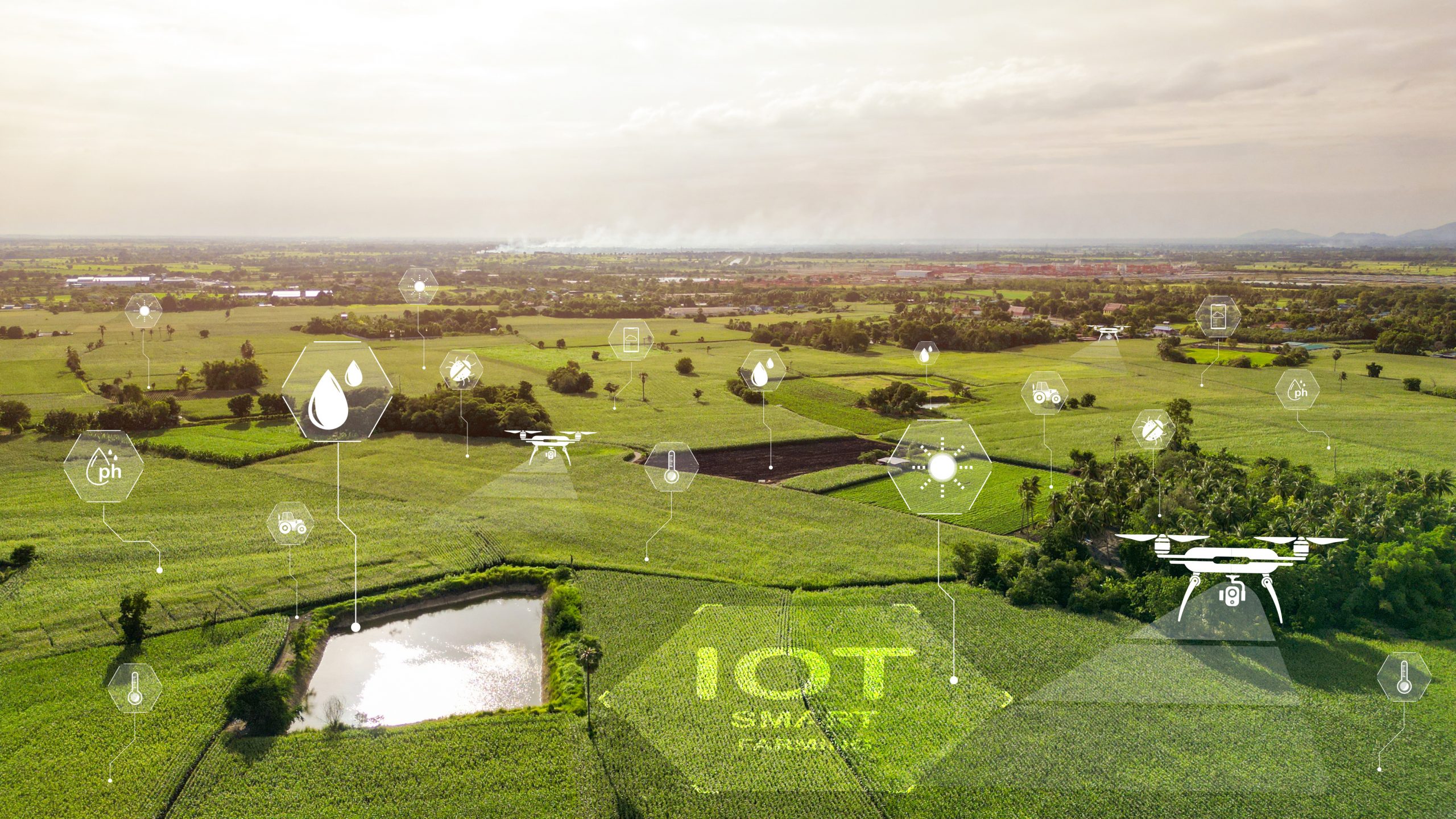
Precision livestock farming represents a fundamental shift in how you manage animals. Smart sensors, IoT-enabled collars, RFID ear tags, and AI-powered analytics work together to optimize every aspect of your operation. This is not about replacing stockmanship with technology. It is about augmenting your expertise with data that was previously impossible to collect.
The emissions benefits are direct and measurable. Optimized feeding schedules reduce waste and improve feed conversion ratios. Early disease detection through AI-powered health monitoring means fewer resources spent on treatment and less productive loss. Better breeding decisions enabled by a comprehensive livestock management system produce more efficient animals over generations.
The ROI case is compelling. PLF implementations routinely reduce feed costs by 10-15% while improving animal productivity and reducing mortality. When you need fewer inputs to produce the same outputs, your environmental footprint shrinks alongside your operating costs. This is the definition of a win-win investment.
Next-Gen Feed Additives and Dietary Interventions
Cutting-edge nutritional science is delivering dramatic methane reductions that seemed impossible just a decade ago. Red seaweed (Asparagopsis taxiformis) has demonstrated up to 80% reduction in enteric methane emissions in research trials by inhibiting the enzymes that produce methane in the rumen. Commercial scaling is underway, with several companies now producing seaweed supplements for livestock.
3-NOP, marketed as Bovaer, is an enzyme inhibitor that has received regulatory approval in multiple markets, including the EU, and is progressing toward approval in the U.S. It delivers consistent 30% or greater methane reductions without affecting animal performance or product quality. Essential oils, tannins, and other natural compounds are showing promise in ongoing trials.
The key for your operation is staying current on regulatory approvals and commercial availability. What works in research settings needs to be economically viable and legally permitted in your jurisdiction before you can implement it. But the pipeline of solutions is robust and moving quickly.
Manure Valorization and Biogas Systems
Anaerobic digesters transform your manure management challenge into a revenue opportunity. Instead of allowing organic waste to off-gas methane into the atmosphere, these systems capture it and convert it to renewable natural gas (RNG) or electricity. The economics have improved dramatically as carbon credit markets have matured and renewable energy incentives have expanded.
The outputs are valuable across multiple channels. RNG can be sold to utilities or used on-farm to reduce energy costs. The digestate that remains is a nutrient-dense fertilizer that reduces your synthetic fertilizer costs and can be sold to neighboring crop operations. Some operations even sell excess bedding material derived from the process.
Real-world success stories are accumulating. Dairy operations in California, the Midwest, and Europe have achieved carbon-neutral or even carbon-negative status through comprehensive manure management combined with other sustainability practices. These operations are not just meeting environmental targets; they are accessing premium markets and favorable financing.
Regenerative Grazing and Carbon Sequestration
Technology solutions are powerful, but they work best when combined with improved land management practices. Adaptive multi-paddock (AMP) grazing and holistic planned grazing represent proven approaches to regenerating degraded pastureland while maintaining productive livestock operations.
The carbon sequestration potential is significant. Healthy, well-managed grasslands can store 1-3 tons of carbon per acre annually. This soil carbon storage partially offsets enteric emissions while delivering additional benefits: improved water retention, enhanced biodiversity, and reduced input requirements.
Think of regenerative practices as complementary to technology solutions. They are an ‘and,’ not an ‘or.’ The most successful operations combine precision monitoring with improved grazing management to maximize both environmental and economic returns. Carbon credit programs are increasingly available to compensate landowners for verified sequestration.
Traditional vs. Climate-Smart Livestock Farming: A Side-by-Side Comparison
For a quick reference on how modern approaches compare to traditional practices, consider this overview of key operational areas. Each row represents an opportunity to improve both your environmental footprint and your operational efficiency.
| Operational Area | Traditional Practice | Environmental Impact | Climate-Smart Solution |
| Feeding | Fixed rations, minimal monitoring | High feed waste, poor conversion efficiency | AI-optimized precision feeding with methane-reducing additives |
| Manure Management | Open lagoons, direct land application | Methane and N₂O off-gassing, runoff risk | Anaerobic digesters capturing biogas, creating value |
| Grazing | Continuous set-stocking | Overgrazing, soil compaction, carbon loss | Rotational/AMP grazing with carbon sequestration |
| Health Monitoring | Visual inspection, reactive treatment | Higher mortality, overuse of treatments | IoT sensors with AI-powered early detection |
| Data & Reporting | Manual records, siloed systems | No emissions tracking, compliance gaps | Integrated ERP with real-time sustainability dashboards |
Paving the Way for Climate-Resilient Animal Agriculture
The relationship between animal farming and climate change presents both challenges and opportunities for your operation. The emissions drivers are real and measurable. The climate impacts on livestock production are accelerating. And the regulatory and market pressures are intensifying with each passing year.
But the solutions are equally real and increasingly accessible. Precision livestock farming, next-generation feed technologies, manure valorization systems, and regenerative practices are proving that you can reduce your environmental footprint while improving your bottom line. This is not theoretical; operations around the world are demonstrating it daily.
The operations that thrive in the coming decades will be those that embrace this transformation early. They will access premium markets that value sustainability. They will satisfy ESG-conscious investors seeking agricultural investments. They will stay ahead of regulations rather than scrambling to comply. And they will build more resilient businesses in the process.
Ready to reduce your operation’s carbon footprint while improving ROI? Explore how integrated livestock management solutions and agricultural ERP systems can transform your sustainability strategy while driving operational efficiency.
FAQs
What Percentage Of Climate Change Is Caused By Livestock?
The global livestock sector contributes approximately 14.5% of all human-caused greenhouse gas emissions according to FAO data. This includes emissions from enteric fermentation, manure management, feed production, and land-use change associated with animal agriculture.
Is Cattle Farming Worse For The Environment Than Driving Cars?
The comparison is complex and depends heavily on regional context. While the global livestock sector’s emissions are roughly equivalent to transportation, direct comparisons vary significantly by production system and location. What matters more for your operation is understanding your specific footprint and implementing available reduction strategies.
Can Livestock Farming Be Sustainable?
Yes. Climate-smart livestock farming combines precision technology, improved genetics, feed innovations, and regenerative land management to significantly reduce emissions while maintaining or improving productivity. Many operations are already demonstrating that sustainability and profitability can coexist and reinforce each other.
How Can Farmers Reduce Methane Emissions From Cattle?
Key strategies include feed additives like 3-NOP or red seaweed supplements, optimized ration management that improves digestive efficiency, selective breeding for lower-emission animals, and improved manure management, including biogas capture systems. Each approach offers different levels of reduction and implementation complexity.