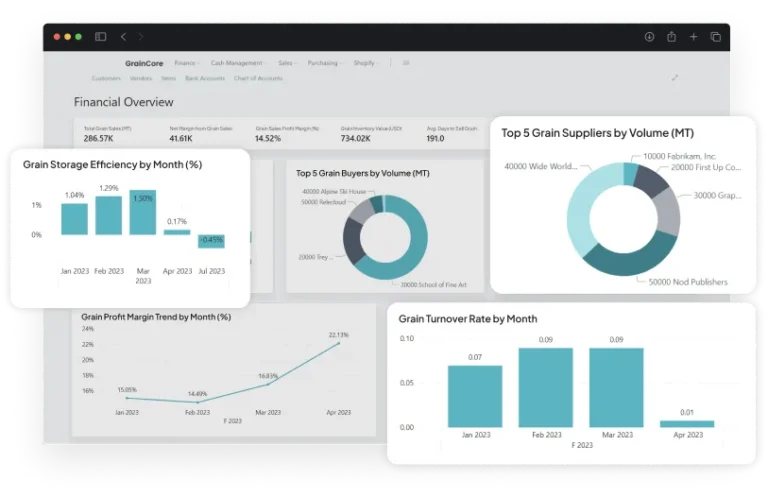
Your inputs, equipment, livestock, and labour costs belong in farm-specific categories, not forced into a generic chart of accounts that was designed for retail. Folio3 AgTech’s farm accounting software tracks every dollar against the enterprises, seasons, and locations that actually drive your operation, so you see real profitability when it matters, not months after the fact.


Explore our measurable impact in agriculture—empowering agribusinesses to boost yield & drive sustainable growth.
Spreadsheets separate your transactions from what actually happens in the field and barn. When input purchases, equipment hours, feed costs, and livestock events live in different files or tabs, you cannot see profit by enterprise or season until the year is nearly over. That delay costs you decisions on feed sourcing, input timing, herd culling, and cash reserves.
From strategic planning to daily operations, our accounting tools simplify budgeting, forecasting, and reporting, empowering better farm management.
Align your farm's financial planning with production cycles, ensuring that costs and revenues are forecasted based on planting schedules, harvest times, and seasonal factors.
Create customized financial plans that accommodate the varying needs of crop seasons and livestock growth periods, giving you control over short- and long-term budgets.
Easily create, track, and adjust budgets with intuitive tools designed for farmers. Stay on top of finances without complex software.
Predict and budget for variable input costs such as seeds, feed, fertilizers, and equipment. Make informed purchasing decisions ahead of time.
Identify potential risks, such as weather events or market fluctuations, and create contingency plans to mitigate their impact.
Forecast crop yields and livestock outputs using historical data and trends. Estimate potential revenue and plan accordingly for seasonal cash flow.
Track the costs associated with field upkeep and equipment usage. Maximize the life and value of your assets while controlling maintenance expenses.
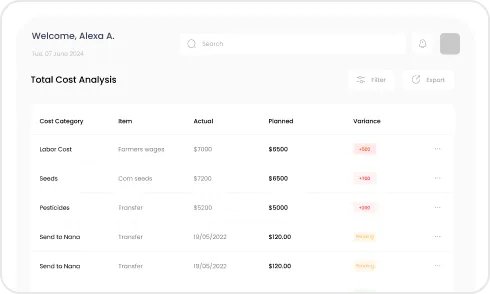
Monitor and compare costs across all areas of your farm. Ensure all resources are allocated effectively to maximize profitability.
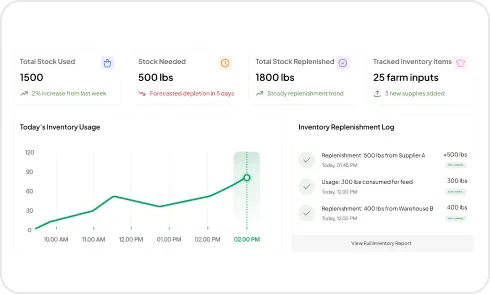
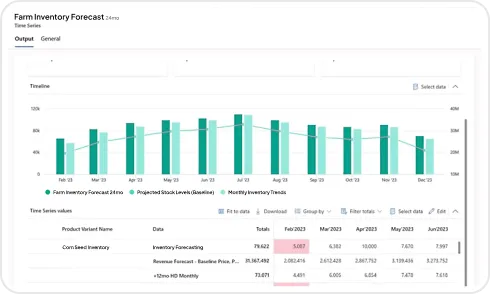
Manage and optimize your inventory of seeds, feed, fertilizers, and other inputs in real time and ensure timely purchases to maintain healthy stock levels at all times.
Generate detailed financial summaries at the end of each season to assess performance & compare against forecasts. Make informed decisions for the next cycle.
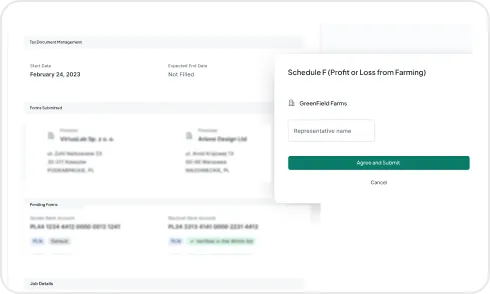
Keep all financial records and documents organized and ready for audit. Ensure your farm meets all regulatory requirements and easily passes inspections.
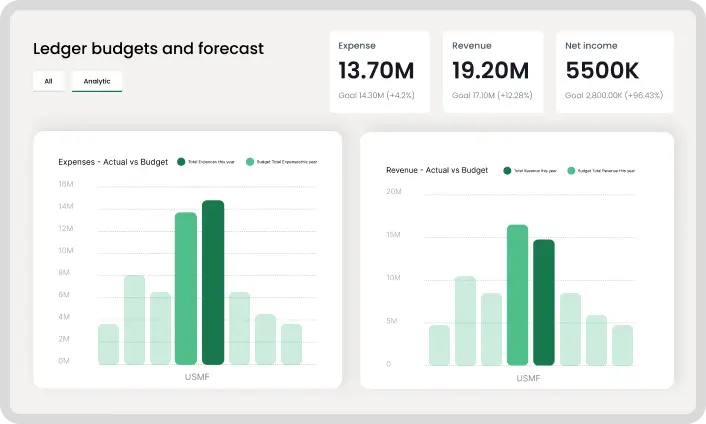
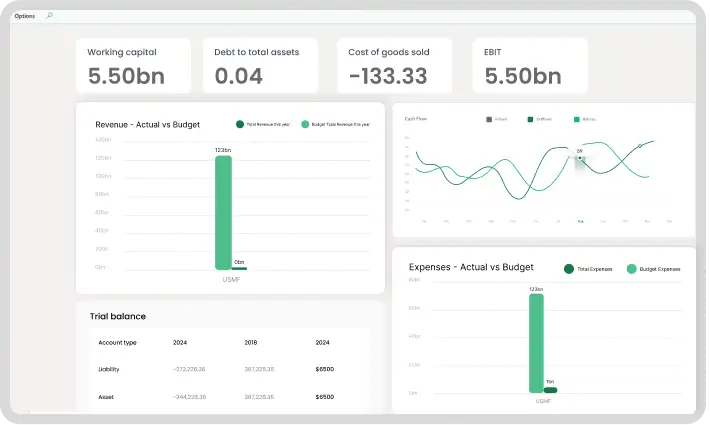
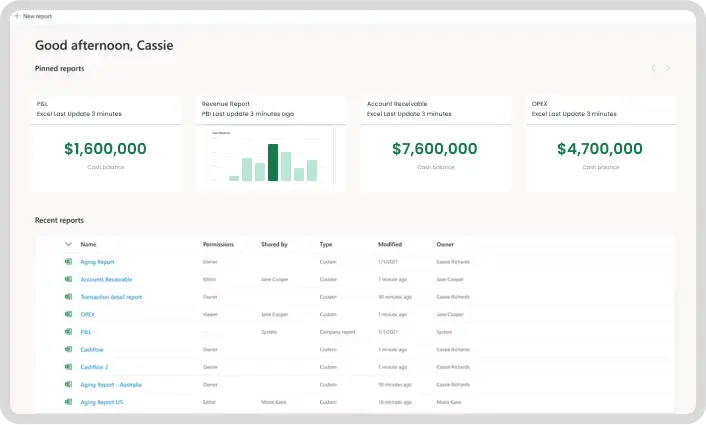
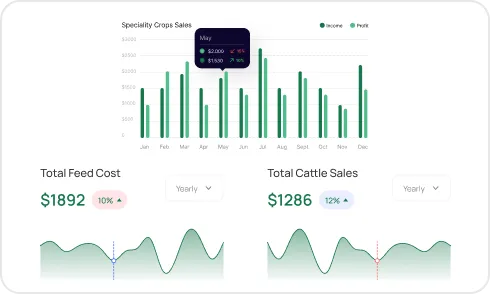
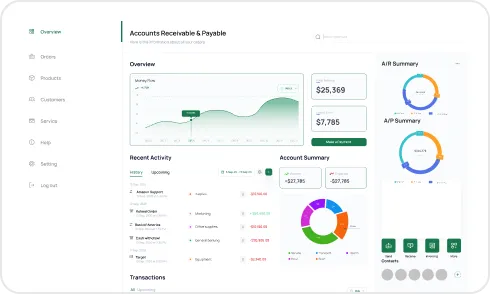
Create customizable dashboards to monitor key performance indicators relevant to your farm's operations. Get quick insights into financial health.
Generic accounting tools list features by financial function. Farm accounting software features should map to the workflows you actually run by categorizing costs by enterprise, tracking inputs against budgets, managing seasonal labour, and generating reports that reflect the cost of production. Here is what to look for and where each capability delivers the most value.
Capture Receipts and Invoices
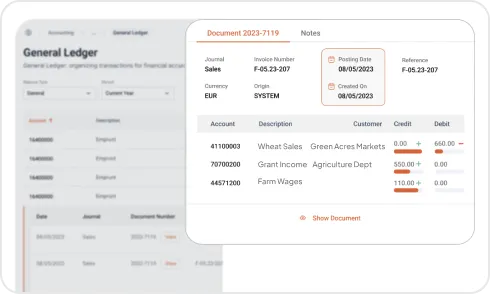
Photograph receipts at the fuel pump, feed store, or equipment dealer. Bank transactions import automatically. Every cost enters the system once, where it happens, when it happens.
Set rules that map purchases to your farm-specific chart of accounts, inputs, equipment, livestock, and labour, so transactions land in the right category without manual sorting each month.
Assign every cost to the enterprise and season it belongs to. It is what separates farm accounting from general bookkeeping; your profitability view matches how you actually run the operation.
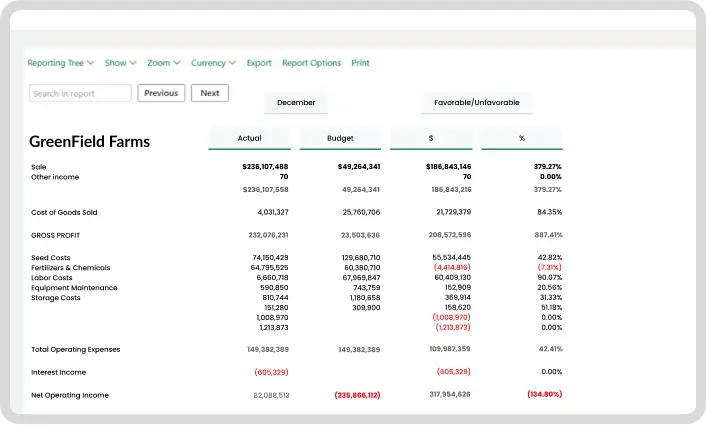
Pull enterprise P&L, compliance-ready exports, and lender packages on demand. Share directly with your accountant or advisor, no manual assembly from multiple spreadsheets.
The biggest barrier to better farm accounting is not the software; it is the migration. Transaction history, chart of accounts structures, enterprise allocations, and years of compliance records need to transfer cleanly. That is why migration scope is assessed in discovery, not assumed from a sales deck.
The right farm accounting software depends on what you run. A dairy operation tracking feed conversion against milk revenue has different reporting needs than a grain farm measuring cost per bushel by field, or a ranch allocating carrying cost per head across grazing leases. Here is how the platform maps to each operation type.
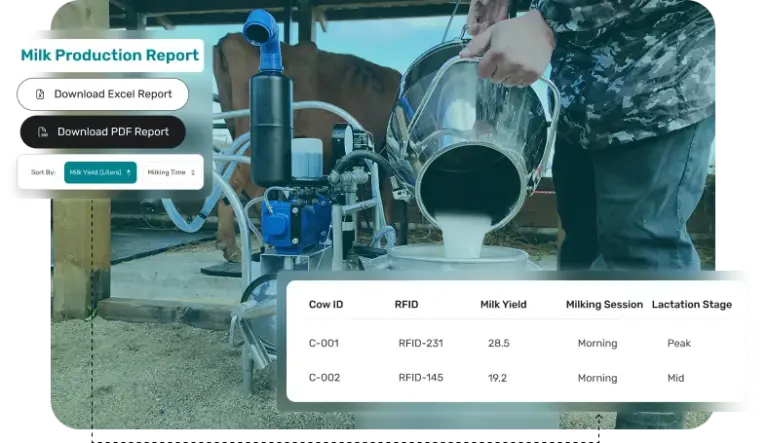
Dairy farm accounting software needs to connect financial records to production cycles, not just track what you spent, but show why your margins moved. When feed costs, veterinary expenses, and labour hours are tied to output by period, you can explain margin shifts to lenders and advisors with reports, not guesswork.
Grain farm accounting software should show you the cost per bushel by field and season, not just a yearly total across the entire operation. When input price volatility hits, you need scenario-level budgeting that models how seed, fertilizer, and fuel costs affect margin by enterprise before you commit capital.
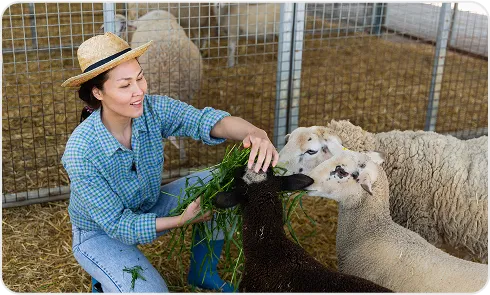
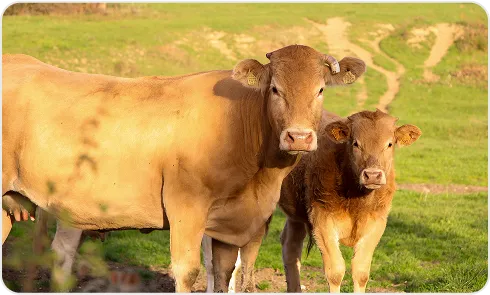
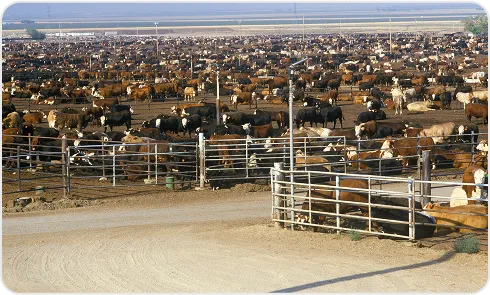
Farm and ranch accounting software must handle what general ledgers ignore: livestock movement costs across locations, grazing lease allocations, and equipment depreciation spread across dispersed enterprises. When your cattle move between pastures and your costs follow, profitability stays accurate at the herd level.
Small farm accounting software should be simple to start and practical to grow. Capture costs on mobile, categorise against a straightforward chart of accounts, and export clean reports for your accountant at tax time. Start with the core categories that matter now and add modules as your operation scales.
Multi-entity operations need consolidated reporting across farms, locations, and business units without sacrificing each entity’s P&L granularity. When your finance team closes books across all entities from one platform with audit trails and ERP integration, month-end stops being a bottleneck and becomes a decision point.
There is no single best farm accounting software for every farm. Folio3 Agtech operates on the management reports you need, how complex your enterprise structure is, and how much manual work you are willing to tolerate. The matrix below compares how four categories of tools handle core farm accounting operations, so you can evaluate fit against your real workflow.
| Accounting Operation | Spreadsheets | General Accounting Tools | Legacy Farm Programs | Folio3 Agtech Farm Accounting Software |
|---|---|---|---|---|
| Income & expense tracking | Manual entry: error-prone at scale | Automated bank feeds; generic categories | Farm-aware categories; manual data entry | Automated feeds with farm-specific category rules |
| Enterprise allocation | Manual formulas per crop or herd; breaks easily | Not supported natively | Basic enterprise tagging; limited flexibility | Automatic allocation by crop, field, herd, and season |
| Season-level cost tracking | Separate tabs or files per season; no rollup | Not designed for seasonal cycles | Partial; calendar-year focus | Built-in season and crop-year structures with rollup |
| Budgeting & forecasting | Static templates; no scenario modelling | Basic budget tools; not enterprise-level | Simple budgets; limited scenario support | Season-level budgets with input cost scenario modelling |
| Cost of production reporting | Manual calculations; per-unit cost is a project | Not available | Basic cost per enterprise; limited per-unit detail | Automated cost per bushel, per head, or per acre by enterprise |

| Inventory & input tracking | Separate sheet; no real-time stock visibility | Basic inventory modules; not farm-specific | Farm-aware inventory; often batch-updated | Real-time input tracking with reorder alerts and cost linkage |
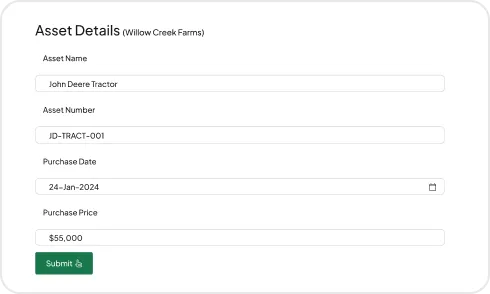
| Equipment & asset management | Depreciation spreadsheets; no usage allocation | Standard depreciation schedules; no enterprise tie | Farm-specific depreciation; limited usage tracking | Usage hours, maintenance, and depreciation allocated by the enterprise |
| Payroll & labour costing | Manual timesheets; no enterprise allocation | Payroll modules; costs land at the entity level only | Basic payroll; limited seasonal labor handling | Enterprise-allocated payroll with seasonal labor and compliance |

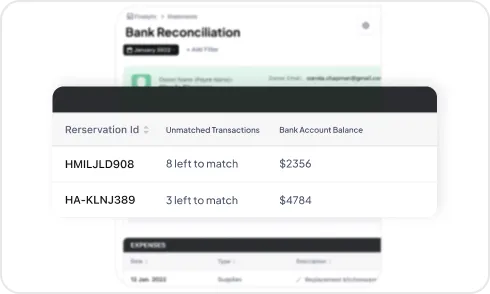
| Bank reconciliation | Manual matching; time-consuming and error-prone | Automated matching and feeds | Manual or semi-automated; desktop-dependent | Automated feeds with rule-based matching and exceptions |


| Compliance & tax exports | Manual assembly every cycle | Standard tax exports; no farm-specific filings | Schedule F support; manual prep still needed | Automated compliance exports and audit-ready records |
| Lender & adviser reporting | Custom assembly from multiple files each time | Standard financial reports; no farm context | Farm-formatted reports; manual export process | On-demand lender packages and adviser-ready reports |
| Multi-entity / multi-farm reporting | Separate files per entity; no consolidated view | Multi-entity available; no farm enterprise context | Limited multi-farm; often single-entity design | Consolidated reporting with per-entity drill-down |
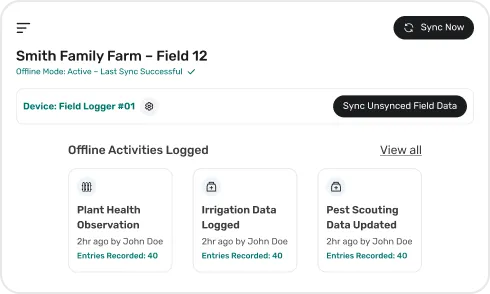
| Mobile access & field capture | Not available without add-ons | Mobile apps available; not field-optimized | Desktop-only in most cases | Mobile capture with offline mode and auto-sync |
| Integrations (ERP, IoT, sensors) | Manual data transfer; no native integrations | API integrations; not farm-system specific | Limited, often closed ecosystems | Connects to ERP, IoT, scales, and field management tools |
| Audit trail & approval workflows | No built-in trail; version control is manual | Basic audit logs; no approval routing | Transaction logs; limited workflow automation | Full audit trail with configurable approval workflows |
Meet our expert advisors, bringing ag industry knowledge and insights to empower your businesses. Together, we navigate challenges and drive growth.
Executive Vice President
UnCommon Farms
Ex-Sen. Associate Director
Boehringer Ingelheim
Ex Chief Operating Officer
National Pork Board
President
Gro Alliance, LLC
Senior Director of Sales & Marketing
UnCommon Farms
Discover how we empower businesses to achieve remarkable growth, streamline operations, and enhance sustainability across the agricultural landscape.
Read what our clients say about their experiences and the difference our solutions have made for them.
VP of Operations
Vice President Information Technology
IT Project Manager
Systems Administrator
Product Manager
Accounting software built for farm realities: seasonal cycles, enterprise costing, and farm-specific categories. So, you track income and expenses by crop, herd, or field and generate management reports that reflect the real cost of production.
Core features include income and expense tracking, bank reconciliation, budgeting, and compliance exports. Farm-specific features add enterprise allocation, input tracking, equipment costing, and livestock cost tracking for true cost-of-production reporting.
There is no single best option for every farm. The best choice produces the management reports you need, matches your operation type, and fits your workflow. Evaluate on enterprise reporting, mobile capture, integrations, and migration support.
Look for enterprise costing tied to production cycles, feed and inventory tracking, labour visibility, and adviser-ready reports that explain margin drivers, not just total spend.
Grain operations need cost per field and per bushel insight across seasons, strong equipment costing, and flexible budgeting for input price volatility. Profitability should be visible to the enterprise, not only as a yearly total.
Small farms benefit from mobile capture, simple categorisation, and clean exports for an accountant. Start with core categories and expand modules as your operation grows, ease comes from workflow design, not fewer features.
Migration typically involves exporting your chart of accounts and history, mapping categories to the new system, importing transactions, and validating reports. A test import and parallel run period confirm accuracy before you switch fully.
The platform connects to ERP, IoT, sensors, and field tools, where it reduces manual entry. Integration scope should be confirmed in a demo using your real workflow, not generic promises.
Get a Free Consultation Within 24 Hours, with a No-Obligation Ballpark Estimate
Error: Contact form not found.