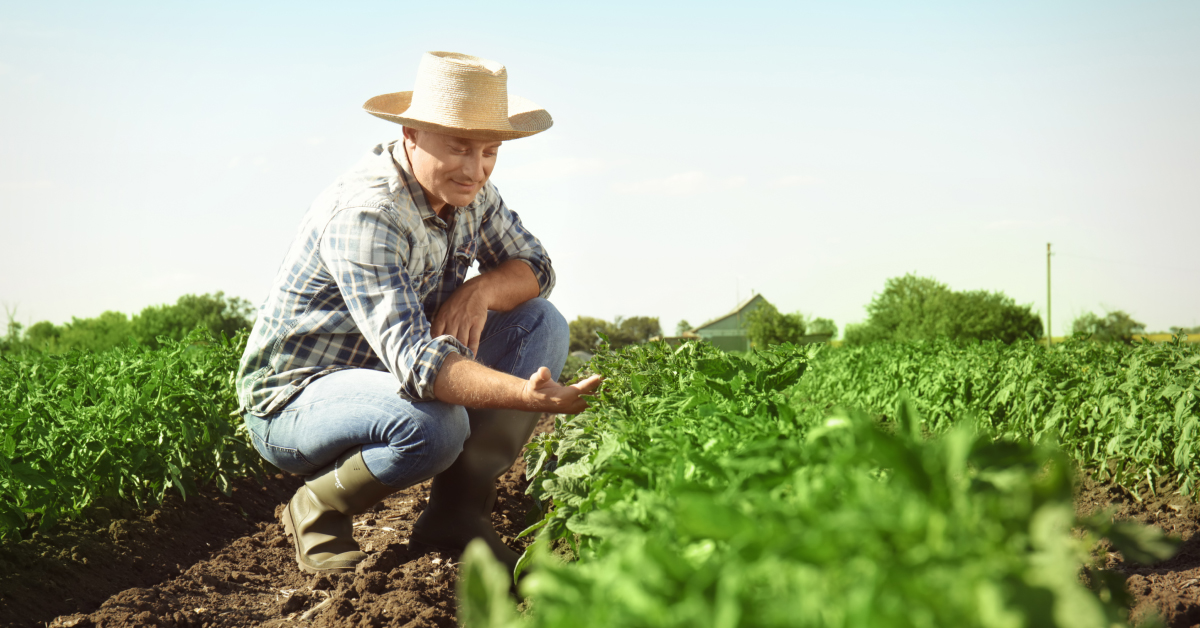

If you’re tired of watching weather forecasts determine whether your season turns a profit, you’re not alone. Across the globe, growers are turning to controlled environment agriculture (CEA) to break free from the unpredictability of open-field farming. The appeal is straightforward: consistent yields, dramatically lower water use, fewer chemicals, and the ability to grow premium crops steps away from the consumer’s plate.
The numbers back up the momentum. The global CEA market was valued at roughly USD 96.1 billion in 2024 and is projected to reach USD 507.3 billion by 2034, expanding at an 18.1 % CAGR. Whether you manage a multi-site agribusiness or a family greenhouse, this guide walks you through definitions, technologies, system types, market data, advantages, challenges, and the latest industry updates so you can decide how CEA fits your operation.
What Is Controlled Environment Agriculture & How Did It Emerge?
At its core, controlled environment agriculture refers to crop production inside structures where key variables such as light, temperature, humidity, CO₂, and nutrients are actively managed to create optimal growing conditions. Unlike conventional field farming, CEA takes place in greenhouses, indoor farms, vertical towers, or even simple hoop houses. The degree of control can range from a basic shade cloth to a fully automated, sensor-driven vertical farm.
CEA is also described as an advanced, intensive form of hydroponically-based agriculture where plants grow within a controlled environment to optimize horticultural practices. The techniques involved are far from simple; they demand sound knowledge of chemistry, horticulture, engineering, plant physiology, and computer systems.
Historical Origins
CEA is not as new as it sounds. The earliest recorded example dates back to the Roman Emperor Tiberius Caesar (14–37 A.D.), whose doctor prescribed a daily cucumber. Movable plant beds were wheeled outdoors on sunny days and covered with transparent mica frames in winter. By the 1500s, European lantern covers were placed over small areas of ground to force vegetables, and by 1670 greenhouse structures similar to modern designs were being described.
In the United States, greenhouses appeared near the time of the American Revolution. George Washington’s conservatory at Mount Vernon was built in 1780. A true turning point came in 1889 when Liberty Hyde Bailey at Cornell University conducted the first scientific experiments on supplemental lighting for greenhouse crops, a practice he called “Electro-culture.”
Decades later, NASA’s Biomass Production Chamber at Kennedy Space Center advanced the science further, proving that food crops grown under controlled conditions could match or exceed the nutritional quality of field-grown produce.
Modern Evolution
Today, rising consumer demand for pesticide-free, locally grown produce, combined with escalating climate risks, has fuelled mainstream adoption. Modern CEA operations range from low-tech high tunnels extending a growing season by a few weeks to fully automated vertical farms producing leafy greens 365 days a year. For growers managing larger or diversified operations, platforms like farm ERP software are helping consolidate crop tracking, scheduling, and financials into a single dashboard.
Key Principles of CEA: Environmental Control Variables
What separates controlled environment agriculture technology from conventional growing is the ability to manipulate the variables that matter most to a plant. Think of it as giving your crops a personalized climate, dialed in to their exact needs. These core variables include:
- Air temperature & root-zone temperature: Balancing canopy warmth with healthy root respiration.
- Relative humidity & vapor-pressure deficit (VPD): Driving transpiration without encouraging mold or fungal growth.
- CO₂ concentration: Enriching carbon dioxide levels accelerates photosynthesis and can boost yields.
- Light intensity, spectrum & photoperiod: Fine-tuning the quantity, quality, and duration of light crops receive.
- Airflow and ventilation: Preventing hot spots, distributing CO₂ evenly, and encouraging sturdy stem growth.
Sophisticated climate-control systems use sensors, actuators, and feedback loops to automate these variables in real time. As you layer on more parameters, such as nutrient dosing, sanitation cycles, and integrated pest management, the system’s complexity and the need for high-tech monitoring increase substantially. That’s why many growers pair environmental controls with greenhouse management software that consolidates sensor data, fertigation schedules, and facility layouts in one place.
Types of Controlled Environment Agriculture Systems & Facilities
From glass greenhouses and high tunnels to vertical farms and shade houses, CEA facilities come in many forms. Here’s how each type compares in cost, control, and crop suitability.
Greenhouses & High Tunnels
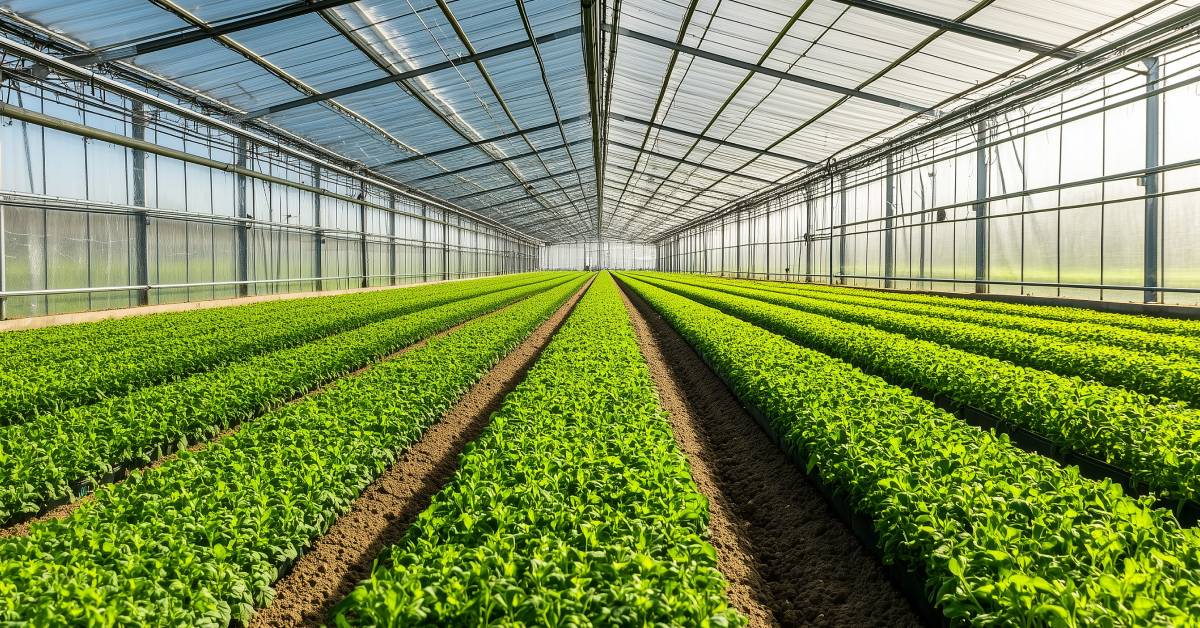
Greenhouses, whether rigid-plastic, polycarbonate, or glass, remain the backbone of CEA worldwide. They harness natural sunlight while allowing precise climate control through ventilation, heating, cooling, and supplemental lighting. High tunnels (also called hoop houses) sit at the lower-tech end: semi-permanent, polyethylene-covered structures that extend growing seasons by several weeks. They rely on passive ventilation and are typically soil-based, although many operators now incorporate hydroponic benches to improve yield density.
Vertical Farms & Indoor Grow Rooms
Indoor farms maximize space by stacking crops in enclosed structures lit entirely by LEDs. Because there’s no sunlight, operators maintain tight control over every environmental variable. However, the heat generated by high-intensity lighting demands substantial cooling infrastructure. Facilities range from repurposed warehouses and shipping-container farms to purpose-built multi-story structures.
According to USDA researchers, vertical farms can yield 10 to 20 times more produce per acre than open-field crops for certain leafy greens. Some industry estimates go even higher, citing potential yields of up to 30 times conventional output for specific high-value crops like strawberries when vertical stacking is fully optimized.
Screen Houses & Shade Houses
Screen houses use mesh or netting to exclude insects and reduce wind stress while allowing natural air exchange. It is a popular choice for pest-sensitive crops in tropical and subtropical regions. Shade houses moderate sunlight and heat through passive cooling, making them common in hot climates where temperature management is the primary concern rather than full environmental control.
Comparison of CEA Facility Types
| Facility Type | Key Characteristics | Advantages | Limitations | Typical Crops |
| Greenhouse | Glass/plastic structures using natural sunlight with supplemental climate control | Year-round growing; proven technology; energy-efficient with solar gain | Moderate capital cost; seasonal heating/cooling expense | Tomatoes, peppers, cucumbers, lettuce, herbs |
| High Tunnel | Polyethylene-covered hoop structures; passive ventilation; often soil-based | Low cost; extends growing season; easy to build and relocate | Limited climate control; not suited for extreme weather | Berries, leafy greens, flowers, specialty crops |
| Vertical Farm / Indoor | Fully enclosed; stacked layers; 100 % artificial LED lighting | Highest yield per sq ft; weather-independent; pesticide-free | High energy & capital cost; limited to fast-growing crops | Leafy greens, herbs, microgreens, strawberries |
| Screen House | Mesh/net enclosure; natural ventilation and airflow | Pest exclusion; low cost; natural air exchange | Minimal climate control; limited temperature moderation | Citrus, tropical fruits, nursery stock |
| Shade House | Shade cloth over frame; passive cooling design | Reduces heat stress; protects from sunscald; affordable | No heating capability; limited environmental regulation | Ornamentals, shade-tolerant greens, seedlings |
Growing Media & Production Systems
Your choice of growing media and production system shapes everything from water use to yield quality. Explore hydroponics, aquaponics, aeroponics, and soil-based options to find your fit.
Growing Media
Every CEA operation needs something to support roots, retain moisture, and provide aeration. In high tunnels and screen houses, traditional soil still works well. But soilless media like clay pebbles, coco coir, rockwool, and perlite are the standard for greenhouses and indoor farms because they allow precise nutrient and pH management. Your choice depends on crop type, budget, availability, and how much control you want over the root zone.
Hydroponic Systems
Hydroponics delivers a nutrient-rich water solution directly to plant roots, bypassing soil entirely. The most common configurations include:
- Nutrient Film Technique (NFT): A thin film of nutrient solution flows continuously over bare roots in sloped channels.
- Deep Water Culture (DWC): Roots are submerged in an aerated nutrient reservoir, ideal for fast-growing leafy greens.
- Ebb & Flow (Flood and Drain): Growing trays are periodically flooded with nutrient solution, then drained.
- Drip Systems: Nutrient solution is delivered drop by drop directly to each plant’s root zone.
- Aeroponics: Roots hang suspended in the air and are misted with a fine nutrient spray, maximizing oxygen exposure.
According to a peer-reviewed analysis, hydroponic systems can reduce water usage by up to 90 % compared to conventional soil-based farming. This efficiency makes hydroponics especially attractive in regions facing water scarcity.
Aquaponics
Aquaponics merges aquaculture with hydroponics into a single closed-loop system. Fish produce nutrient-rich waste, beneficial bacteria convert it into plant-available nitrogen compounds, and the plants filter the water before it recirculates back to the fish tanks. The result is a self-sustaining ecosystem that slashes fertilizer inputs and creates a second revenue stream from fish sales.
Technology & Innovations in CEA
Sensors, AI-driven climate control, LED lighting, and robotics are transforming how CEA operators grow and manage crops. Discover the innovations driving efficiency and precision today.
Sensors & IoT
Networks of temperature, humidity, pH, and electrical-conductivity sensors feed data into cloud-based analytics dashboards for real-time adjustments. Smart greenhouses pair computer vision with AI to analyze plant growth patterns, flag nutrient deficiencies, detect early signs of disease, and predict harvest windows. If you’re exploring how to connect sensors with scheduling and inventory, greenhouse integrations and monitoring platforms offer a practical starting point.
LED Lighting
Modern LED grow lights deliver tunable spectra and automated photoperiods, allowing operators to dial in the exact light recipe each crop needs at every growth stage. The GLASE (Greenhouse Lighting and Systems Engineering) consortium, led by Cornell University and Rensselaer Polytechnic Institute and supported by NYSERDA, is developing energy-efficient lighting and control systems specifically tailored for CEA crops. The consortium’s work extends to integrating LED engineering with CO₂ enrichment strategies for maximum photosynthetic efficiency.
Water & Nutrient Management
Closed-loop hydroponic systems recirculate and sanitize water using advanced oxidation processes (AOP), dramatically cutting consumption. Drip and ebb-and-flow configurations deliver precise nutrient doses to each plant’s root zone, minimizing runoff and waste. For operations managing precision fertilization, integrating sensor data with automated dosing equipment ensures nutrients are delivered at the right rate, right place and right time.
CO₂ Enrichment & IPM
CO₂ generators and sensors monitor and adjust carbon dioxide concentrations to boost photosynthesis rates. Meanwhile, integrated pest management (IPM) protocols leverage the enclosed environment to reduce disease and pest pressure. They use biological controls like beneficial insects instead of chemical sprays whenever possible.
Automation & Robotics
Robotic arms, conveyor systems, and drones are handling seeding, transplanting, and harvesting in larger operations. Real-time inventory management software supports crop forecasts, harvest scheduling, and logistics coordination. It also reduces labor bottlenecks and improves overall throughput across multi-zone facilities.
Advantages of Controlled Environment Agriculture
CEA delivers year-round harvests, water savings, and reduced pesticide dependence for growers. Learn how these benefits translate into real value for your operation.
- Year-round production: CEA delivers consistent harvests regardless of weather, improving supply-chain reliability and enabling growers to command premium pricing during traditional off-seasons.
- Space efficiency: Vertical farms can yield 10 to 20 times more produce per acre than conventional farming for select crops, making urban agriculture viable even in dense city centers.
- Water conservation: Hydroponic and aeroponic systems use up to 90 % less water than traditional methods, and closed-loop reclamation systems cut waste even further. It is critical in drought-prone and arid regions.
- Reduced pesticide use: Enclosed structures prevent most pest intrusion, minimizing or eliminating the need for chemical sprays. The result is cleaner produce that aligns with growing consumer demand for chemical-free food.
- Local & urban production: Growing closer to consumers slashes transport emissions and extends shelf life.
- Climate resilience: Independence from outdoor weather makes CEA far less vulnerable to droughts, floods, hailstorms, and temperature extremes that can devastate open-field operations overnight.
- Economic diversification: CEA can help small farms diversify income streams and retain multiple family members on the operation.
- Utility benefits: Off-peak electricity demand for supplemental lighting can provide a stable, interruptible load attractive to local utilities, a win-win for energy providers and growers alike.
Disadvantages & Challenges of Controlled Environment Agriculture
High startup costs, energy demands, and technical complexity are real barriers to CEA adoption. Understanding these challenges upfront helps you plan smarter and scale sustainably.
High Initial Costs
Constructing a greenhouse or indoor farm requires significant capital for structures, lighting, HVAC systems, and automation infrastructure. Financing can be especially tough for small growers entering the space for the first time.
Energy Consumption
Maintaining a stable indoor climate demands continuous power for heating, cooling, pumps, and lighting. Energy typically represents one of the largest ongoing operational expenses. Integrating renewable energy sources, such as solar panels, geothermal heat pumps, and waste-heat recovery, and investing in the latest energy-efficient LED technology can significantly reduce these costs over time.
Technical Complexity & Labor
Running a CEA operation is multidisciplinary. You need skills in plant science, engineering, data analytics and sometimes plumbing and electrical work. Industry observers have noted that CEA operators must essentially function as plant scientists, electricians and plumbers rolled into one.
Crop Limitations
Large staple crops like wheat, rice and corn remain economically impractical in CEA due to their low per-unit market value and long growth cycles. For now, the focus stays on high-value, fast-turning crops like leafy greens, herbs, tomatoes, cucumbers and berries.
Market Access & Consumer Education
Selling premium CEA produce requires strong buyer relationships and ongoing consumer education around freshness, sustainability and certifications like organic or pesticide-free. Branding and storytelling matter: consumers need to understand why locally grown, CEA-produced food commands a price premium.
Scalability & Consistency
Scaling up adds complexity. Each new growing zone increases monitoring requirements and can introduce inconsistencies in crop quality if not managed carefully. Digital platforms for farm record keeping and automated alerts help manage that complexity as your operation expands across multiple zones or sites.
Regulatory & Labor Uncertainty
Recent shifts in H-2A farmworker enforcement and wage regulations have created uncertainty around labor costs and seasonal workforce availability. Staying current on policy changes is essential for any grower budgeting labor and compliance expenses.
Market Landscape & Growth Trends
The global CEA market is projected to surpass $300 billion by 2034, fueled by food security demands. See which regions, crops, and players are leading this growth.
Global Market Size
The controlled environment agriculture market is expanding rapidly across multiple forecasts. Custom Market Insights valued the global CEA market at USD 122.1 billion in 2025, projecting it to reach USD 321.7 billion by 2034 at an 11.36 % CAGR.
Mordor Intelligence offers a separate estimate of USD 92.6 billion in 2025, growing at 16.4 % to reach USD 198.1 billion by 2030. Regardless of which forecast you reference, the trajectory is clear: billions in growth driven by food security concerns, urbanization and sustainability mandates.
U.S. Growth
Domestically, USDA data shows that U.S. CEA operations more than doubled from 1,476 in 2009 to 2,994 in 2019, while production volumes rose 56 % to 7.86 million hundredweight. Approximately 60–70 % of CEA crops were tomatoes, lettuce, and cucumbers, with hydroponic systems being the most common cultivation method.
Investment, Mergers & Key Players
The industry has seen a mix of ambitious expansion and sobering consolidation. Gotham Greens now operates 13 high-tech greenhouses totaling over 1.8 million square feet across nine states, supplying products to approximately 3,000 grocery stores nationwide. The company’s hydroponic farms use up to 95 % less water and 97 % less land than conventional methods.
Regional Trends
- Adoption is accelerating in arid regions, the Middle East, North Africa, and parts of Asia, where water scarcity drives demand for water-efficient growing systems.
- Singapore’s “30 by 30” initiative, which aims to produce 30 % of the nation’s nutritional needs locally by 2030, exemplifies how government policy can catalyze CEA growth.
- In the U.S., urban markets like New York, Chicago, Dallas, and Atlanta are emerging as CEA hotspots as growers position facilities within a day’s drive of major population centers.
Latest CEA News & Updates
From major mergers and bankruptcy filings to shifting labor regulations, the CEA industry is evolving fast. Stay current on the developments shaping controlled-environment farming right now.
Regulatory & Labor Developments
Labor policy remains a source of significant uncertainty for CEA operators. Shifts in H-2A farmworker enforcement and wage rules throughout 2025 affected production costs and seasonal workforce availability.
Additionally, FDA leadership turnover impacted the rollout of food safety regulations, with the Food Traceability Rule delayed. Staying current on these regulatory developments is essential for any grower budgeting labor and compliance costs.
Mergers, Closures & Expansions
The industry’s consolidation trend continued through 2025 and into 2026. Nonprofit Peckham acquired Revolution Farms, a major lettuce producer. The 80 Acres Farms–Soli Organic merger created what industry observers described as a potential $200 million indoor-farming powerhouse.
However, closures like Eden Green Technology’s shutdown (laying off around 100 employees) and Freight Farms’ bankruptcy filing serve as cautionary tales about the critical importance of sustainable unit economics. The Department of Commerce also reconsidered the tomato suspension agreement with Mexico, imposing duties on Mexican imports. It is a policy change with direct implications for domestic greenhouse tomato growers.
Applications & Use Cases
CEA powers urban rooftop farms, desert food production, pharmaceutical crop growing, and disaster-relief food systems. Explore real-world examples showing where controlled-environment agriculture delivers the most impact.
- Urban farming & vertical farms: Repurposed warehouses and rooftops supply city markets with fresh produce. Gotham Greens’ hydroponic greenhouses exemplify this model, delivering pesticide-free leafy greens year-round from facilities in New York, Chicago, Dallas, and beyond.
- Desert & arid regions: Countries with limited arable land across the Middle East, North Africa, and Central Asia are deploying CEA to improve food security and reduce dependence on imported produce.
- Research & seed production: Controlled setups provide consistent, repeatable conditions for seed trials, cultivar development, academic study, and genetic research.
- Pharmaceutical & functional crops: CEA produces medicinal plants and nutraceuticals where purity, potency, and batch consistency are non-negotiable for regulatory compliance.
- Food security & disaster relief: Portable container farms and modular vertical systems can provide fresh produce in refugee camps, remote communities or disaster-hit areas where field farming is impossible.
- Smart greenhouse farming: Operations combining AI-driven climate control, robotic harvesting, and comprehensive sensor networks are running near-autonomous growing facilities that push CEA efficiency to new levels.
Starting a Controlled Environment Agriculture Operation: Step-by-Step Guide
Planning a CEA venture requires the right crop, facility, technology stack, and financing strategy. Follow this step-by-step roadmap to launch your operation with confidence.
1. Market & Crop Planning: Assess regional demand and choose a target market, such as restaurants, grocery retailers, or direct-to-consumer. Select high-value crops suited to CEA: leafy greens, herbs, tomatoes, or berries. Research local price trends, seasonal gaps, and consumer preferences for local, pesticide-free produce.
2. Facility Selection: Match your structure, greenhouse, vertical farm, container, or high tunnel to your scale, budget, and climate. Factor in available land, zoning regulations, proximity to energy sources, and distance to your target market.
3. Production System & Media: Decide between soil, hydroponics, aeroponics, or aquaponics. Select growing media that align with your crop type, water strategy, and management preferences.
4. Technology Stack: Integrate sensors, climate-control software, LED lighting, and automation tools. Platforms such as Folio3 AgTech’s greenhouse management software consolidate batch tracking, facility layout, fertigation scheduling, inventory management, and compliance reporting.
5. Business Model & Financing: Build a detailed budget covering construction, equipment, energy, and labor. Explore USDA grants, state incentives, crop insurance programs for controlled-environment producers, and partnerships with research institutions.
6. Training & Staffing: Hire or upskill personnel with expertise in plant science, engineering, and data analysis. Tap into programs offered by universities like UC Davis and Cornell to accelerate your team’s learning curve.
7. Marketing & Distribution: Develop buyer relationships, pursue relevant certifications (organic, pesticide-free, food safety), and build your brand around sustainability and local freshness to command premium pricing.
Sustainable Practices & Future Outlook of CEA
Renewable energy integration, closed-loop water recycling, and agrivoltaics are defining the next era of CEA. Here’s how forward-thinking growers are building sustainable, future-ready operations.
Energy Efficiency & Renewables
Forward-thinking growers are integrating solar panels, geothermal heat pumps, and waste-heat recovery systems into their CEA operations. Modern smart greenhouses use AI to optimize lighting schedules and HVAC output, trimming energy bills without sacrificing yields. Pairing your operation with an ERP for agriculture can help you track energy inputs alongside production metrics for a clear picture of cost-per-unit.
Water Recycling & Circular Economies
Closed-loop hydroponics with advanced oxidation water treatment reclaim and sanitize irrigation water, slashing consumption dramatically. Aquaponic setups recycle fish waste as plant nutrients, closing another resource loop. Some operations are converting organic waste streams into compost or biogas, creating a true circular economy within their facility.
Agrivoltaics
An emerging trend is pairing solar panels with greenhouse structures, known as agrivoltaics. These systems generate renewable energy on site while allowing diffused light to reach crops below, addressing two of CEA’s biggest challenges simultaneously.
Future Trends
Keep an eye on autonomous greenhouses using robotics and computer vision, modular container farms deployable almost anywhere, and genetic breeding programs developing cultivars optimized for indoor environments. Consumer demand for local, chemical-free food will keep growing, and CEA is uniquely positioned to meet it.
Conclusion & Key Takeaways
Controlled environment agriculture is reshaping how we grow food, delivering year-round harvests, dramatic water savings, and independence from unpredictable weather. But success depends on choosing the right facility, integrating smart technology, building a skilled team, and managing costs with discipline. The momentum is real: billions in global investment, rapid U.S. adoption, and growing consumer demand for fresh, traceable, sustainably grown produce. Whether you’re launching your first greenhouse or scaling an indoor farm, tools like purpose-built crop management platforms make this the most practical time to explore CEA. Start informed, think long-term, and let data lead.
FAQS
What Crops Are Most Profitable in Controlled Environment Agriculture?
Leafy greens, herbs, tomatoes, and strawberries deliver the best returns in CEA because of their short growth cycles, high per-unit market value, and strong consumer demand for locally grown, pesticide-free produce available year-round.
How Much Does It Cost to Start a Controlled Environment Agriculture Operation?
Startup costs vary widely from roughly USD 10,000–15,000 for a basic high tunnel to several million dollars for a commercial vertical farm. Key variables include facility size, technology level, crop selection, and whether you choose hydroponics, aquaponics, or soil-based systems.
Is Controlled Environment Agriculture Truly Sustainable?
When paired with renewable energy, closed-loop water recycling, and minimal pesticide use, CEA can be highly sustainable. Hydroponic systems use up to 90 % less water than conventional farming, though energy consumption, particularly for lighting, remains a challenge that operators must actively manage.
How Does CEA Technology Differ From Traditional Greenhouse Farming?
Traditional greenhouses rely primarily on sunlight and basic heating. Modern CEA integrates IoT sensors, AI-driven climate control, tunable LED light recipes, and automated fertigation to optimize every growing variable in real time, significantly boosting yield consistency and resource efficiency.
Can Small Farms Benefit From Controlled Environment Agriculture?
Absolutely. Small-scale options like high tunnels and container farms let family operations extend their growing season, access premium local markets, and diversify income without the capital outlay of a full commercial indoor farm.