
If you are involved in agribusiness, whether as an investor, farm operator, or CFO, you already know that the success of every crop cycle begins long before the first seed hits the ground. It starts with the agricultural inputs you choose: the seeds, fertilizers, agrochemicals, water systems, machinery, and advisory services that collectively determine whether a season ends in profit or loss.
These inputs do more than feed individual farms. They drive rural economies, support national food security, and create the infrastructure that keeps supply chains moving. According to the USDA Economic Research Service, U.S. farm output tripled from 1948 to 2019, while total inputs rose by only 4%. That dramatic efficiency gain came from a fundamental shift from labor and land toward capital, purchased materials, and precision technologies.
This guide walks you through everything you need to know about agriculture inputs: what they are, why they matter, how to select them using data-driven approaches, and where the market is heading next.
What Are Agricultural Inputs?
Agricultural inputs are the resources used to support crop management and livestock operations. Think of them as the raw materials and tools a farm needs to function, everything from the seed in the planter to the tractor pulling it across the field.
The agricultural inputs’ meaning extends broadly into two core categories.
- Consumable inputs are used up during production: seeds, fertilizers, pesticides, water, animal feed, and biochemicals.
- Capital inputs are durable assets that serve multiple production cycles: tractors, irrigation infrastructure, harvesters, and digital monitoring systems.
Understanding this distinction matters because consumable and capital inputs carry different cost structures, financing needs, and ROI timelines. It is an important consideration for investors and CFOs evaluating agricultural farm input portfolios.
Categories at a Glance
| Input Category | Examples | Sustainable/Regenerative Options |
| Seeds (Consumable) | Certified seeds, hybrid varieties, and open-pollinated varieties | Indigenous seeds, heirloom varieties, regenerative seed systems |
| Fertilizers & Soil Amendments | NPK fertilizers, micronutrients, manure, compost | Biofertilizers, vermicompost, nano-urea, integrated nutrient management |
| Crop Protection | Insecticides, herbicides, fungicides, biopesticides | Neem-based products, IPM, beneficial insects |
| Water & Irrigation | Canal, well, tank, drip, sprinkler, micro-irrigation | Fertigation, rainwater harvesting, and precision irrigation |
| Machinery & Capital | Tractors, harvesters, threshers, irrigation pumps | Solar-powered equipment, precision planters, and custom hiring centres |
| Services & Knowledge | Extension services, soil testing labs, data analytics | AI-driven decision platforms, soil microbiome analysis |
Why Agricultural Inputs Matter
Your farm’s profitability, your region’s food security, and even national economic growth all hinge on the quality of agricultural inputs you deploy. Here’s why getting them right is a strategic priority, not just an operational one.
Boosting Productivity & Income
The right agricultural inputs are your single greatest lever for improving yield and income. According to FAO, cultivating an improved crop variety can result in a 50 to 90% increase in productivity. It makes seed selection one of the most consequential decisions you will make each season.
Fertilizers supply the essential macro- and micronutrients that soil alone cannot always provide, directly lifting yields when applied in balanced proportions. Meanwhile, modern irrigation systems such as drip and sprinkler technology raise both water-use efficiency and labour productivity, and targeted agrochemicals help protect your investment from pest and disease losses.
Food Security & Rural Economies
High-quality inputs underpin a stable food supply and reduce dependence on imports. Beyond the farm gate, input-driven agriculture creates employment across manufacturing, distribution, logistics, and advisory services to strengthen rural economies from the ground up.
In the United States, the shift toward capital-intensive, input-driven farming has allowed farm labour use to fall by 74% while output tripled over seven decades. That productivity story is now unfolding in emerging markets, where smart input adoption can leapfrog decades of incremental gains.
Economic Growth & Structural Change
For investors, the link between inputs and macro-level economic growth is backed by rigorous evidence. Research demonstrates that fertilizer, modern seed, and water use significantly boost yields. A half-ton increase in staple yields can raise GDP per capita by 14–19% and reduce the labour share in agriculture by 4.6–5.6 percentage points within five years. That makes agricultural inputs not just a farm-level concern, but a strategic investment that drives structural economic transformation.
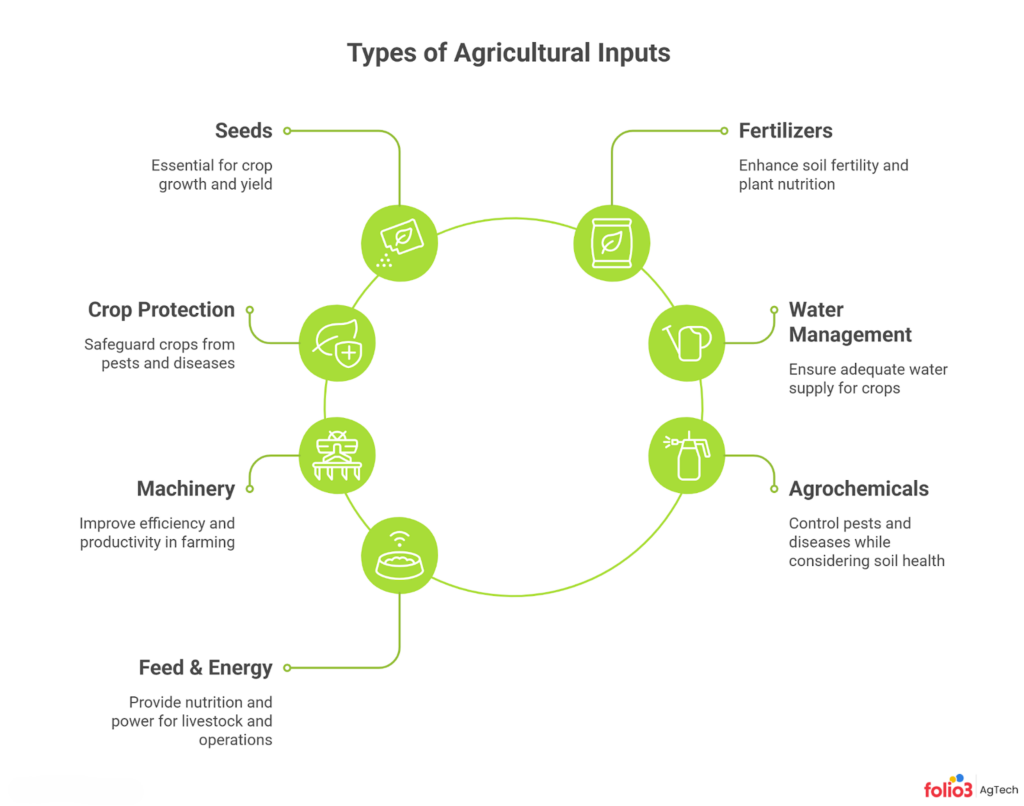
Types of Agricultural Inputs
From the seed in your planter to the tractor pulling it, every agricultural input plays a distinct role in your production cycle. Understanding each category helps you allocate budgets wisely and avoid costly mismatches.
Seeds: Foundation of Productivity
Seeds are where every harvest begins. Legally and agronomically, the category spans food crops, oilseeds, vegetables, cotton, and even vegetative propagules. But not all seeds are equal. Genetic diversity, drought tolerance, and pest resistance separate a mediocre yield from an exceptional one.
History tells a compelling story here: high-yielding varieties like IR8 rice and Bt cotton dramatically increased yields and farmer incomes across Asia during the Green Revolution. Yet seed quality remains a real challenge. Storage degradation, counterfeit products, and distribution bottlenecks continue to undermine farmer confidence in many regions. Tracking seed lots, certifications, and germination data becomes far easier with dedicated seed management software that centralizes quality control across your entire supply chain.
Fertilizers & Soil Amendments
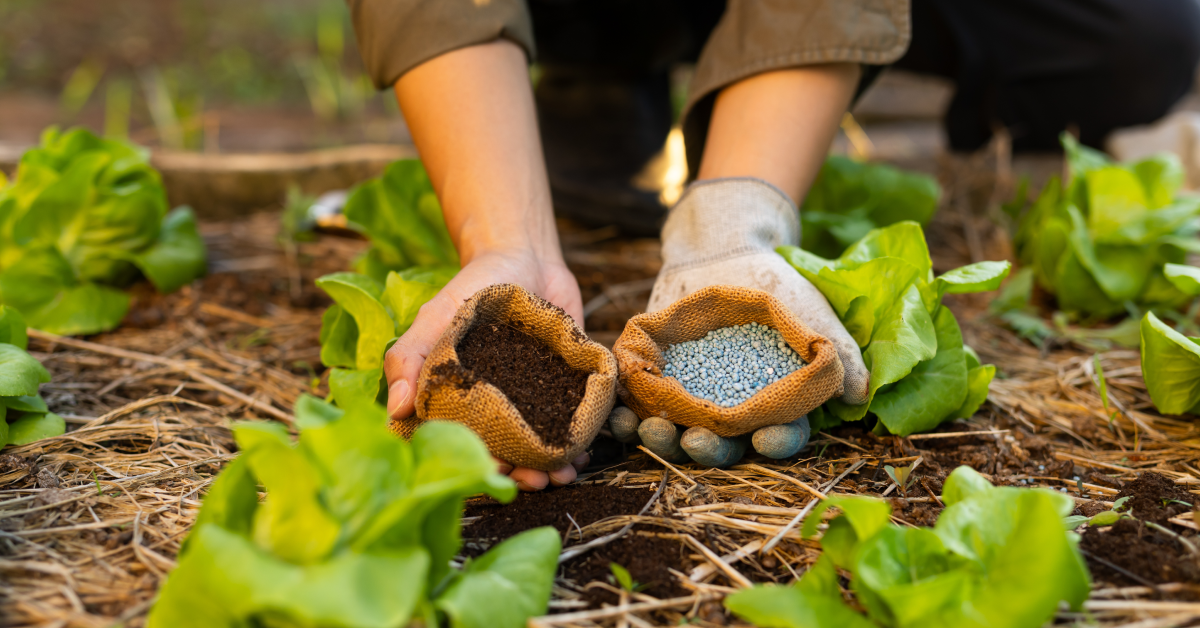
Fertilizers deliver the macro-nutrients (nitrogen, phosphorus, potassium) and micronutrients (zinc, iron, molybdenum) that crops need to grow, mature, and produce quality harvests. Balanced fertilization increases yield, improves crop quality, and can accelerate maturity, allowing tighter crop rotations.
However, the environmental trade-offs are real. Nutrient run-off causes eutrophication in waterways, and overuse degrades soils while raising costs. Sustainable practices like soil testing, precision application, integrated nutrient management, organic fertilizers, and biofertilizers can help you maintain productivity while protecting long-term soil health. Digital tools like farm management software can streamline soil-test data and nutrient recommendations into a single decision dashboard.
Crop Protection & Biopesticides
Pesticides like insecticides, herbicides, and fungicides remain a core pillar of crop protection. Globally, there is a noticeable shift: the market share of insecticides has been declining as herbicide and fungicide adoption grows, reflecting the evolving pest pressure that farmers face.
Integrated pest management (IPM) approaches combine organic pest control methods, biological controls, and targeted chemical applications to minimize environmental impact while maintaining crop protection. Biopesticides and neem-based products are gaining traction as regulatory standards tighten. For any buyer or investor, verifying that crop protection products carry proper registration and certified agricultural inputs credentials is non-negotiable.
Water & Irrigation Management
Water is both agriculture’s most critical input and its most constrained resource. Traditional systems still dominate globally, but modern alternatives, such as drip, sprinkler, centre-pivot, and micro-irrigation, are proving their value in water-scarce regions.
One of the most promising innovations is fertigation, applying dissolved fertilizers through the irrigation system. Research shows that drip fertigation can increase yields by 6–40% while improving water productivity by over 26% compared to traditional methods. For operations facing water scarcity, infrastructure gaps, or rising energy costs, precision irrigation is no longer optional; it is a competitive necessity.
Machinery & Capital Inputs
Tractors, harvesters, irrigation pumps, and other durable assets form the backbone of modern farming. Mechanization increases crop intensity, reduces labour costs, and improves worker safety. However, the diversity of farm sizes globally means one-size-fits-all machinery rarely works. Smaller, affordable tractor models are the fastest-growing segment in many emerging markets, reflecting the needs of smallholder operations.
Seasonal-use patterns can also lower economic viability, making custom hiring centres and shared equipment models increasingly attractive. Understanding these dynamics matters if you are evaluating agricultural farm input investments in the mechanisation space.
Agrochemicals & Soil Biology
Agrochemicals like fertilizers, pesticides, and growth regulators boost yields when used efficiently, but their impact depends heavily on soil biology. Healthy soil microbiomes reveal critical insights: disease risks, yield projections, and how specific inputs actually perform in your fields.
Customizing inputs using soil microbiome data improves ROI for both farmers and manufacturers. Platforms that offer soil microbiome analysis and customized trials help validate agricultural inputs’ effectiveness before full-scale adoption. It is a data-driven approach that reduces risk and maximizes return. Modern agriculture ERP systems can integrate this biological data alongside financial and operational metrics.
Feed, Energy & Veterinary Inputs
In mixed farming systems, animal feed, veterinary medicines, and fuel are equally important inputs. Balanced feed supports livestock productivity and manure availability for crop nutrition, closing the nutrient loop between animal and crop enterprises.
Certified & Sustainable Agricultural Inputs
Certification is your safeguard against counterfeit products, inconsistent quality, and regulatory penalties. Whether you source seeds, fertilizers, or biopesticides, verified credentials protect both your investment and your reputation.
Certification of Seeds & Planting Materials
Seed certification systems exist to guarantee purity, germination rates, and genetic integrity. The process typically moves through defined breeding stages: nucleus, breeder, foundation, and certified seed, with each stage verified through field inspections and laboratory testing. Despite these safeguards, challenges persist in quality control, particularly in regions where enforcement infrastructure is limited.
Fertilizer & Agrochemical Regulation
Quality testing, nutrient content guarantees, and government subsidies form the regulatory framework around fertilizers and agrochemicals. Government support programmes for seeds, fertilizers, and micro-irrigation help reduce costs for farmers and encourage the adoption of certified products. Understanding the regulatory landscape in your target market is critical for both compliance and for unlocking available financial incentives.
Organic & Regenerative Certifications
Standards such as USDA Organic and EU Organic set minimum thresholds for inputs, while emerging regenerative certification programmes go further. The measurement of soil health outcomes, biodiversity improvements, and carbon sequestration. For buyers and investors, verifying product labels and supplier credentials protects against greenwashing and ensures genuine value.
Effectiveness Validation
Before committing to any input at scale, request independent field trials, soil-test results, and third-party validation. Soil microbiome analysis platforms offer data on disease risk evolution, yield projections, and long-term input effects. It gives you an evidence base for purchasing decisions rather than relying on marketing claims alone.
Evaluating Criteria for Inputs in Agriculture based on Data-Driven Approaches
Choosing the right agricultural inputs is no longer about gut instinct or habit. Modern soil analytics, AI-driven forecasting, and precision tools give you a data-backed framework to reduce waste and maximise every dollar spent.
Assess Your Farm’s Needs
Before selecting any input, take stock of your specific situation. What crops are you growing? What does your soil profile look like? What is the local climate, and what pest or disease pressures do you face?
Conduct soil tests to identify nutrient deficiencies and pH imbalances. This single step often reveals why previous input investments underperformed. Match seed varieties to your local climate conditions and budget for inputs while allowing for contingencies, because input costs can fluctuate significantly season to season.
Precision Agriculture, Soil Microbiome & AI
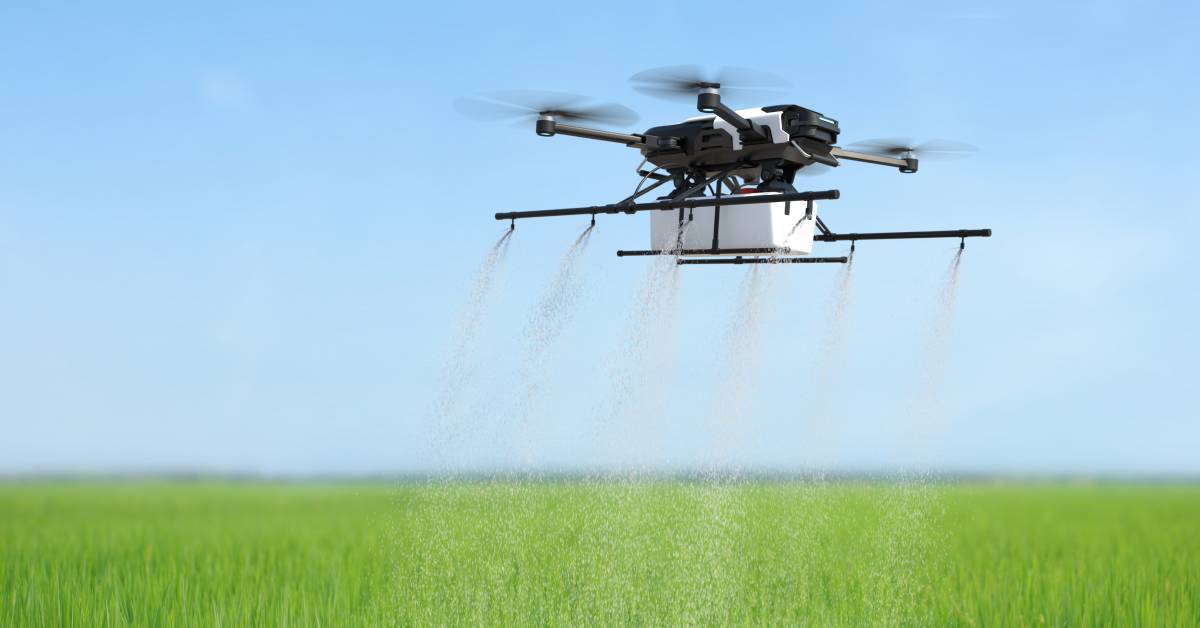
This is where modern agtech transforms how you approach agricultural inputs. Precision agriculture technologies such as GPS-guided machinery, drones, and field sensors optimize input application and reduce waste. AI-driven predictive analytics can forecast demand for specific inputs and improve inventory management.
Soil microbiome analysis takes this further by offering biological insights into how inputs interact with your specific soil ecosystem. When you combine soil testing, weather data, market prices, and ERP system implementation, you get an integrated decision system that drives higher yields and better ROI.
Regenerative & Organic Inputs
Regenerative and organic inputs aim to build soil health over time rather than simply feeding the current crop. If you are looking to future-proof your operation while tapping into premium markets, this category deserves your attention.
Principles of Regenerative Agriculture
Regenerative agriculture focuses on restoring soil health, biodiversity, and ecosystem services through methods like cover cropping, crop rotation, minimal tillage, and integrating livestock. These regenerative agriculture practices naturally improve soil organic matter and nutrient cycling. reducing long-term dependence on external inputs.
Regenerative & Organic Input Options
Regenerative inputs include compost, green manure, biochar, microbial inoculants, and leguminous cover crops as alternatives to synthetic fertilizers. For pest control, biopesticides and natural predators replace conventional chemicals. Certified organic inputs like manure-based fertilizers, neem and pyrethrum pesticides, and non-GM seeds carry market premiums that can offset higher production costs.
Benefits & Trade-Offs
Regenerative and organic systems improve soil structure, sequester carbon, and reduce external input dependence. However, yields may dip initially during transition, and certification costs can be high. The practical path for most operations is a gradual shift using integrated nutrient management and IPM.
Chemical Inputs vs. Sustainable Alternatives
The debate is not chemical versus organic; it is about finding the right balance for your operation. Smart integration of both approaches lets you protect yields today while preserving your soil for tomorrow.
Chemical inputs offer rapid nutrient supply and effective pest control, but at a cost. Environmental pollution, soil acidification, health risks for farm workers, and dependence on global supply chains are well-documented drawbacks.
Sustainable alternatives such as organic fertilizers, biofertilizers, biopesticides, neem-based products, and systematic crop rotation. The most effective strategy is not an either/or choice. Integrated nutrient and pest management solutions that blend chemical inputs in agriculture with organic approaches optimize efficiency while minimizing environmental impact.
Practical guidance for responsible chemical use includes following label directions precisely, timing applications to match crop growth stages, adopting precision application technology, and regularly monitoring soil and water quality.
Market Trends & Economic Insights
The agricultural inputs market is growing fast, reshaped by sustainability mandates, precision technology, and shifting supply chains. Staying current on these trends helps you anticipate costs, identify opportunities, and position your investments ahead of the curve.
Global Fertilizer & Pesticide Markets
The global fertilizer market was valued at approximately USD 207 billion in 2024 and is projected to reach around USD 268 billion by 2034, growing at a CAGR of roughly 2.6%.
Meanwhile, the biofertilizer segment is expanding much faster, expected to grow at a CAGR above 12% through 2032. It reflects the accelerating shift toward sustainable crop nutrition.
Precision Agriculture Is Surging
The global precision farming market was valued at approximately USD 11.7 billion in 2024 and is projected to reach USD 24 billion by 2030, growing at a CAGR of 13.1%. IoT sensors, AI-powered analytics, and GPS-guided machinery are driving this growth as farmers seek to optimize every input dollar.
The Shift in Developed Nations
In the United States, the input mix has fundamentally changed. From 1948 to 2019, labour use fell 74%, and land use declined 28%, while intermediate inputs grew 126% and capital inputs grew 79% (source). This structural shift from extensification to intensification through purchased inputs and technology is the template that emerging agricultural economies are now following.
Price Volatility & Supply Challenges
Input prices are volatile and often rise faster than commodity prices. Geopolitical conflicts, pandemics, and logistical disruptions can severely strain supply chains. For smallholder farmers, access to affordable, quality inputs remains one of the most persistent barriers to productivity growth.
Opportunities for Investors
Growing demand for sustainable inputs and precision technologies creates compelling investment opportunities in biofertilizers, AI-driven advisory platforms, and regenerative product lines. Companies building agriculture software solutions that integrate input management with financial analytics are particularly well-positioned for growth.
Financial Considerations & Investment Strategies
Smart input spending is not about cutting costs; it is about maximizing return on every dollar you deploy. A disciplined budgeting, subsidy, and risk-management framework turns agricultural inputs from an expense line into a growth lever.
Budgeting & ROI
Create detailed input budgets that balance quality with cost-effectiveness. Long-term investments, such as high-quality certified seeds, precision irrigation systems, and soil-health programmes, may carry higher upfront costs but consistently deliver greater returns over multiple seasons.
Subsidies & Government Incentives
Government subsidies and grants for seeds, fertilizers, machinery, and micro-irrigation exist in most agricultural economies. These programmes can significantly reduce your effective input costs, but navigating eligibility requirements takes effort. Make it a standing item in your annual planning cycle.
Risk Management
Diversify your input suppliers to reduce exposure to price volatility and supply disruptions. Where available, use hedging contracts for fertilizers and fuel. Evaluate suppliers’ certifications and performance data rigorously; low-cost inputs that underperform in the field are never actually cheap.
The Investor Perspective
For investors, companies offering certified, sustainable inputs and precision technologies align well with ESG mandates and can deliver robust growth. Key metrics to evaluate include yield improvement per dollar of input spend, technology adoption rates among target farmers, and regulatory compliance track records.
Future Outlook & Innovations in Agriculture Inputs
Nano-Fertilizers & Bio-Inputs
Next-generation inputs like nano-urea and phosphorus-solubilising microorganisms are improving nutrient-use efficiency at the molecular level. Biochar, vermicompost, and biofertilizers continue to reduce dependence on synthetic inputs while building long-term soil health.
Digital & AI Advances
Predictive analytics, remote sensing, and soil sensors are enabling farmers to apply inputs with unprecedented precision. AI in agriculture systems can manage inventory, forecast demand, and automate decision-making. Blockchain technology is emerging as a tool to trace certified inputs and enhance supply chain transparency.
Regenerative Finance & Carbon Markets
Carbon credits for regenerative practices are creating new revenue streams for forward-thinking farms. Investors are backing companies that measure soil carbon and biodiversity. It links input decisions to verifiable environmental outcomes and creates a new asset class in the agricultural inputs space.
Conclusion
Agricultural inputs, whether seeds, fertilizers, agrochemicals, water, machinery, or advisory services, are the foundation of farm productivity, rural livelihoods, and economic growth. The evidence is clear: responsible input use, informed by soil testing, precision technology, and robust certification, balances productivity with sustainability and unlocks opportunities for regenerative and organic systems.
For agtech investors, agribusiness owners, and CFOs, understanding input categories, market dynamics, and regulatory requirements is essential for making informed decisions. The next generation of agricultural inputs, precision-applied, biologically informed, and digitally integrated, represents one of the most compelling growth opportunities in the agricultural sector. The farms and companies that invest in these inputs today will lead the industry tomorrow.
FAQs
What Is the Difference Between Consumable and Capital Agricultural Inputs?
Consumable inputs like seeds, fertilizers, and pesticides are used up each production cycle. Capital inputs like tractors, irrigation systems, and storage infrastructure serve multiple seasons and require different financing and depreciation strategies.
How Can Smallholder Farmers Afford Modern Agricultural Inputs?
Many governments offer subsidies, input vouchers, and micro-credit programmes that lower upfront costs. Cooperative purchasing groups and custom hiring centres also help smallholders access quality inputs and machinery without bearing the full investment alone.
What Role Does Soil Testing Play Before Selecting Farm Inputs?
Soil testing reveals nutrient deficiencies, pH imbalances, and biological health, allowing you to match inputs precisely to your field’s needs. Skipping this step often leads to overspending on fertilizers that your soil may not require.
Are Organic Agricultural Inputs Less Effective Than Chemical Ones?
Not necessarily. Organic inputs like biofertilizers and biopesticides build long-term soil health and can match conventional yields once soil biology stabilises. The transition period may require integrated approaches that blend both organic and chemical inputs.
How Is AI Changing the Way Farmers Use Agricultural Inputs?
AI-powered platforms analyse weather patterns, soil conditions, and crop health data to recommend precise input types and application rates. It reduces waste, lowers costs, and helps farmers achieve consistent yields even under variable conditions.