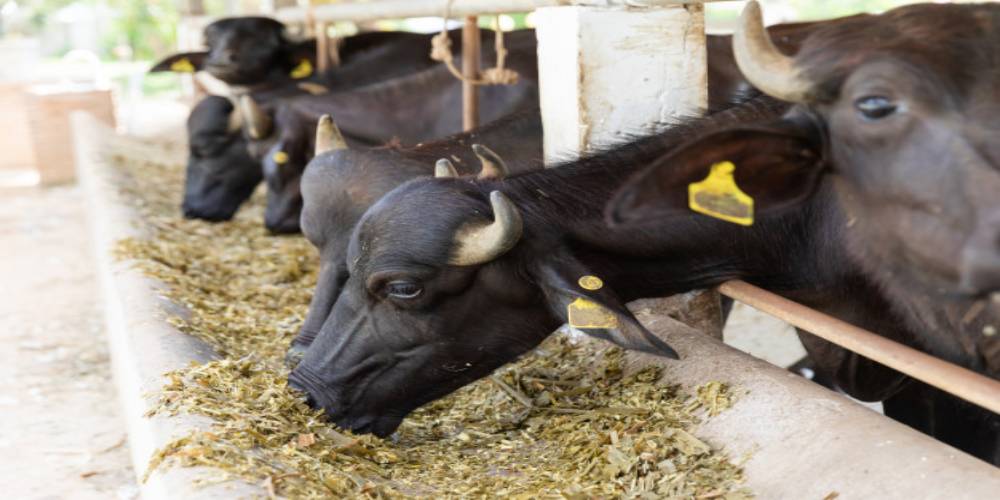

Every animal on your operation has a story: genetics, health events, weight gain, breeding records, and ownership history. Without proper livestock identification, none of that story is accessible when you actually need it. Whether you are sorting pairs at the chute, pulling treatment records for a buyer, or responding to a disease investigation, identification is the thread that ties your management data together.
This guide walks you through the complete lifecycle of a livestock identification program, from choosing a numbering scheme and selecting the right tags, all the way to building a traceability system and understanding where the market is headed. It is written for cow-calf ranchers, feedlot managers, purebred breeders, and anyone managing cattle who needs a clear, practical reference.
What Is Livestock Identification and Why It Matters
Livestock identification is the process of marking an individual animal so it can be distinguished from every other animal in the herd. At the animal level, identification ties a unique number to a specific calf, cow, or bull. At the group level, it connects a set of animals to a premise, an owner, or a management lot.
What Identification Lets You Do on a Ranch
Once every animal carries a readable ID, you unlock the ability to sort cattle accurately at the chute, record individual treatments and vaccinations without guesswork, track breeding and calving records by sire and dam, and measure performance data such as weaning weights and average daily gain. Without individual identification, your records are just herd-level averages, and averages hide the animals that are costing you money.
When It Becomes Not Optional
The importance of livestock identification goes beyond good management. It becomes a legal and market requirement the moment you sell cattle interstate, move animals through a livestock market, register stock with a breed association, or face a state or federal disease audit. Since November 5, 2024, USDA requires electronically readable eartags as the only official identification for certain cattle and bison moving interstate.
Identification vs. a Traceability System
A livestock identification system has two halves:
Numbering scheme (the unique code assigned to each animal)
Marking method (the physical device or mark that carries that code, whether it is an ear tag, a tattoo, or a brand)
Both halves must work together. A perfect ear tag is useless if the number on it leads to no record.
Traceability: What It Is in Practice
A livestock identification and traceability system goes a step further. Traceability means your IDs are connected to records that follow the animal through every event: birth, processing, movement, treatment, sale, and slaughter. Traceability answers the question, “Where has this animal been, and what has happened to it?” In a disease investigation, that answer needs to come in hours rather than weeks.
Think of identification as the name badge and traceability as the complete personnel file. You need both. The ID gets the animal recognized at the chute; the traceability records behind it prove health status, ownership, and movement history to buyers, auditors, and trading partners. If you are building a cattle traceability system from scratch, start with a solid identification program and layer the record-keeping on top.
Build Your Livestock Identification Program First
Your numbering scheme is the backbone of your livestock identification program. Pick a format that stays unique as the herd grows. Common patterns include:
- Year-sequence: The first two digits are the birth year and the next three are the calf sequence.
- Letter-year codes: Use a single letter to represent the year followed by a sequence number.
- Sequential herd numbers: A running lifetime number for every animal that ever enters the herd, paired with a prefix for your ranch.
Whichever pattern you choose, keep it consistent and avoid reusing numbers. A number that points to two animals is worse than no number at all.
Decide Your Backup Rule
Tag loss is not a question of if, but when. The standard backup rule is: every animal carries two identifiers, and at least one must be permanent. A visual ear tag paired with an RFID button tag is one option. A visual tag plus a tattoo or freeze brand is another. The point is redundancy, so that when a tag is ripped out on a fence, the animal does not become a mystery.
Rollout Plan
Roll out your program in a logical order. Start with newborn calves, as they are the easiest to tag at birth or branding. Next, work through existing cows and bulls during routine processing. Purchased animals should receive your herd tag upon arrival and be cross-referenced to whatever ID they came with. Finally, set a clear rule for replacement heifers: they get tagged before they enter the breeding pasture.
Livestock Identification Methods and Tags
Choosing among livestock identification methods means balancing visibility, permanence, labor, cost, and animal welfare. Below is a breakdown of the most common options, followed by a comparison matrix.
Visual Ear Tags
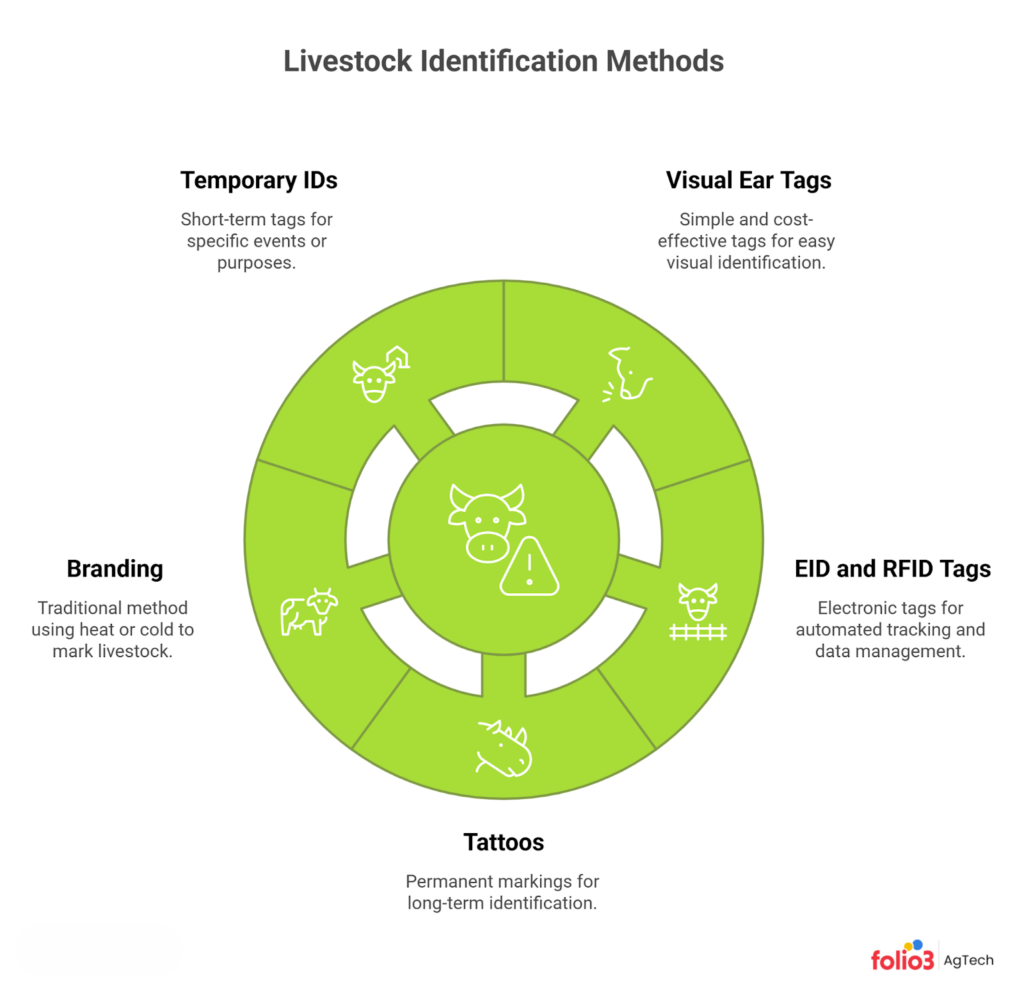
Visual ear tags are the workhorse of cattle identification. They are inexpensive, available in multiple sizes and colors, and let you read an ID from across the pen. Most operations print the animal’s herd number on one side and add details such as birth date, sire code, or dam number on the other.
The downside is loss. Tags snag on feeders, brush, and panels. Studies from university extension programs report annual loss rates between 2% and 5%, depending on tag type and environment. For that reason, livestock identification tags should always be paired with a secondary identifier. Keep a supply of blank tags and a marking pen in your chute kit so you can replace missing tags the moment you notice them.
Electronic ID (EID) and RFID Tags
An EID tag contains a microchip that stores a unique 15-digit number conforming to the 840 numbering standard for U.S. animals. When a panel reader or stick reader passes within range, it captures that number instantly. It sends it to your record system, eliminating handwriting errors and speeding up chute-side data entry.
With EID, you can automatically link weight recordings, treatments, and movement events to the correct animal. It is the foundation of a practical RFID-based cattle tracking system. EID tags also satisfy the USDA’s official identification requirement for interstate movement, making them the default choice for operations that ship cattle across state lines.
Tattoos
Tattoos win on permanence. Ink placed inside the ear lasts the life of the animal and cannot be lost or altered easily, which is why breed registries often require them. The limitation is readability: you need to restrain the animal and flip the ear to read a tattoo, making it impractical for quick sorting at a distance. Most operations pair a tattoo with a visible ear tag, using the tattoo as the permanent backup.
Branding (Hot and Freeze)
Freeze branding uses a copper or brass iron chilled in liquid nitrogen or dry ice and alcohol. Contact time on cattle typically ranges from 40 to 60 seconds, depending on hide color and thickness. It destroys pigment-producing cells, causing hair to regrow white, which makes it highly visible on dark-hided cattle. Freeze branding is common on large grazing operations where you need to read an ID from horseback at a distance.
Hot branding uses a heated iron to scar the hide. Contact time is brief, usually 3 to 5 seconds. Hot brands are traditional in range country and remain legal in most states, but they do damage the hide, which can reduce leather value. Placement guidance from industry groups recommends high on the hip or shoulder and as small as clearly readable to minimize waste.
Temporary IDs and Backtags
Backtags are adhesive numbered stickers applied to the back or hip, most commonly at stockyards and packing plants, to track animals through a single marketing or slaughter event. They are not durable enough for on-farm use and should never serve as the sole identifier for health testing or record keeping.
Other and Emerging Options
Noseprints work on a biometric principle: the pattern of ridges on a bovine muzzle is unique to each animal, much like a human fingerprint. Boluses and microchips provide tamper-proof identification. Still, they require a scanner to read and have seen limited adoption in food animals due to retrieval concerns at slaughter.
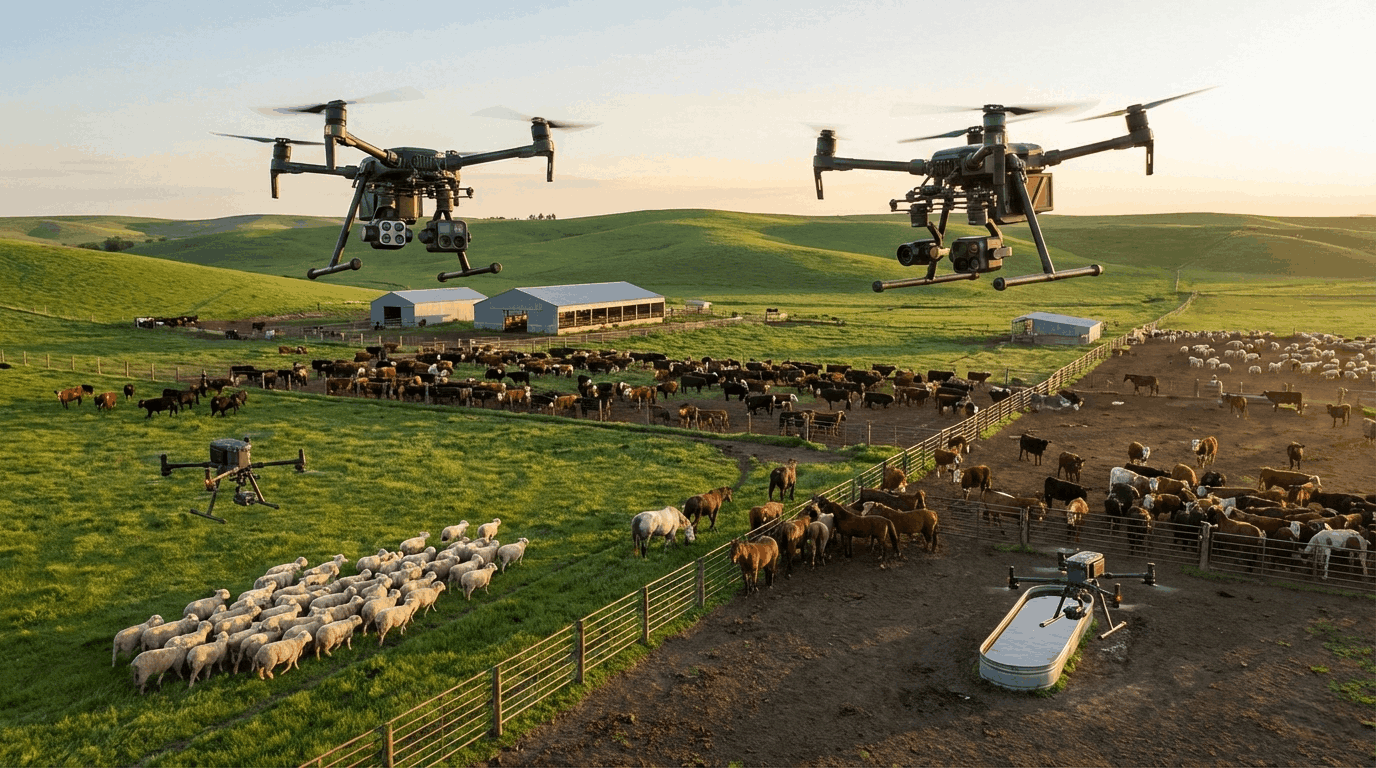
On the horizon, computer vision and muzzle-image identification research aim to make livestock identification methods entirely contactless, using cameras and AI to match an animal to its record. This technology is still maturing, but it signals a future where identification and livestock counting happen automatically.
Livestock Identification Methods Comparison Matrix
| Method | Visibility at Distance | Permanence | Typical Failure Mode | Welfare / Handling Risk | Best Fit Operations | Traceability Readiness |
| Visual Ear Tag | High | Low-Medium | Snagging, fading, loss | Low if placed correctly | All cattle operations | Moderate (manual read) |
| EID / RFID Tag | Low (visual) / Instant (scanner) | Medium | Tag loss, reader malfunction | Low | All required for interstate | High (auto-capture) |
| Tattoo | None (ear must be flipped) | High | Ink fading over the years | Low | Purebred / registry herds | Low (manual, slow) |
| Hot Brand | High | High | Blotching if applied poorly | Moderate (pain, hide damage) | Large range operations | Low (manual read) |
| Freeze Brand | High on dark cattle | High | Poor contrast on light hides | Low-Moderate | Large grazing operations | Low (manual read) |
| Backtag | Medium | Very Low | Falls off in hours/days | Negligible | Stockyards, slaughter flow | Minimal |
| Noseprint / Biometric | None (capture device needed) | Lifetime (inherent) | Dirty muzzle, poor image | Low | Research, high-value herds | High potential |
| Bolus / Microchip | None (scanner required) | High | Scanner failure, migration | Low (bolus) / Minimal (chip) | Companion animals; limited in food animals | High (auto-capture) |
Build a Livestock Identification and Traceability System
Your livestock identification and traceability system is only as strong as the data behind it. At minimum, capture these fields for every animal: unique ID number, dam ID, sire ID, birth date, sex, breed or cross, ownership, current location or pasture group, all treatments and vaccinations, movement events, and sale or disposal records. If you are managing this in a cattle record-keeping system, set up your fields once and enforce them at every data-entry point.
Tools and Workflow from Chute to Records
Your minimum chute-side kit should include:
- Rag applicator matched to your tag brand
- Spare tag
- Scanner if you are using EID
- Disinfectant for applicator and tag site
- Recording device (phone app, tablet, or clipboard)
The workflow is straightforward: assign the ID, apply the tag, confirm it reads (visually or via scanner), and record the event immediately. Delaying the recording step is where most traceability breakdowns happen.
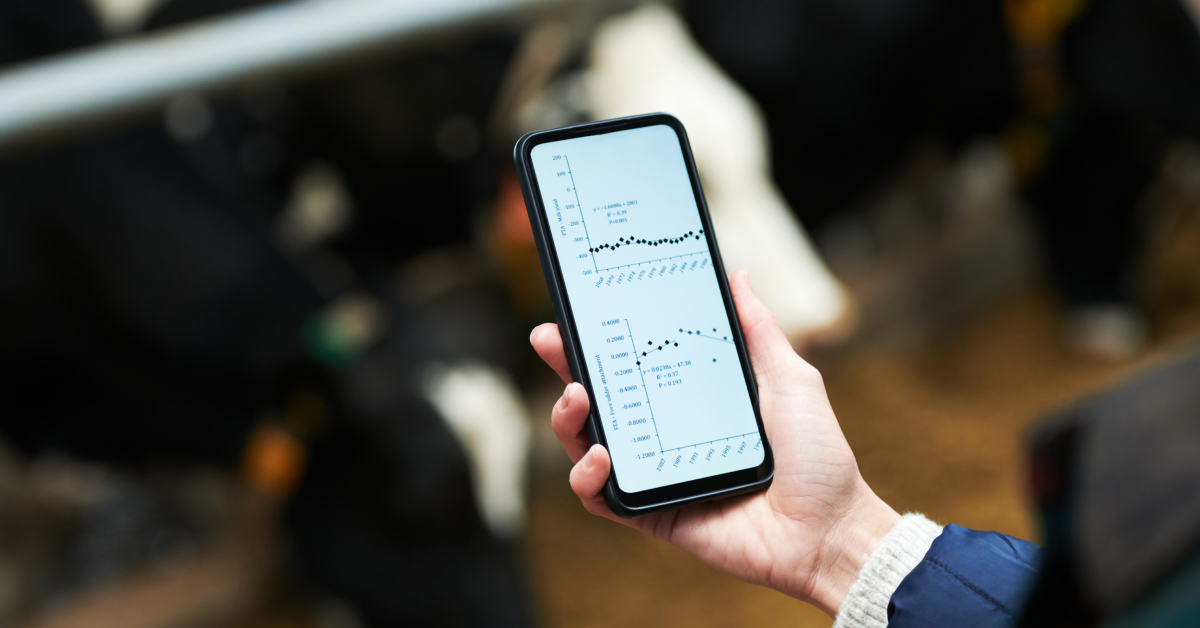
For operations ready to go digital, cattle management apps let you scan an RFID tag at the chute and populate the animal’s record in real time, eliminating the clipboard-to-spreadsheet bottleneck.
Minimal Audit Trail for Sales and Health Events
Adopt a simple mindset: if it is not recorded, it did not happen. Every sale, every treatment, every movement should have a dated entry with the animal ID, what occurred, and who was responsible. This is the backbone of traceability, and it is the first thing an auditor or buyer will ask to see.
Traceability Event Log Template
| Date | Animal ID | Event Type | Location / Premise | What Changed | Person Responsible | Notes |
| 2025-02-10 | 25-001 | Birth | Calving pasture, PIN 00A1 | Heifer calf born, dam 22-038 | J. Miller | Assisted pull, calf vigorous |
| 2025-04-15 | 25-001 | Processing | Working chute, home ranch | Blackleg 7-way, ear tag applied | Dr. K. Torres | Tag #25-001 left ear |
| 2025-09-20 | 25-001 | Movement | Home ranch to fall pasture | Moved with the weaning group | J. Miller | Weaned at 205 days |
| 2025-11-05 | 25-001 | Sale | Regional livestock auction | Sold as a feeder heifer | J. Miller | Lot 42, buyer ID recorded |
How to Choose the Right Method for Your Ranch
Score each livestock identification method on a 1-to-5 scale across these factors:
- Read distance (can you ID the animal from horseback or only in the chute?)
- Permanence (will it last the animal’s lifetime?)
- Labor to apply, cost per head, animal handling stress, pasture durability (will it survive brush, mud, and ice?)
- Compliance with your state and federal requirements.
Total the scores and the method with the highest combined score for your operation is your primary ID. The second-highest becomes your backup.
Best-Fit Scenarios
Pasture-based cow-calf: Visual ear tag plus freeze brand or tattoo as backup. Add EID if you ship interstate or want digital chute-side records.
Feedlot or pen settings: EID tag is the primary, paired with a visual management tag. Scanner-based workflows tie directly into feedlot management software for automated gain and health tracking.
Purebred and registry-focused herds: Tattoo (registry-required) plus visual ear tag for daily management, with EID added for performance recording and genomic data linkage.
Livestock Identification Market Analysis
Understand livestock identification market trends, adoption drivers, technologies, and opportunities to make smarter, future-ready decisions for your operation.
Market Size, Growth, and Share Snapshot
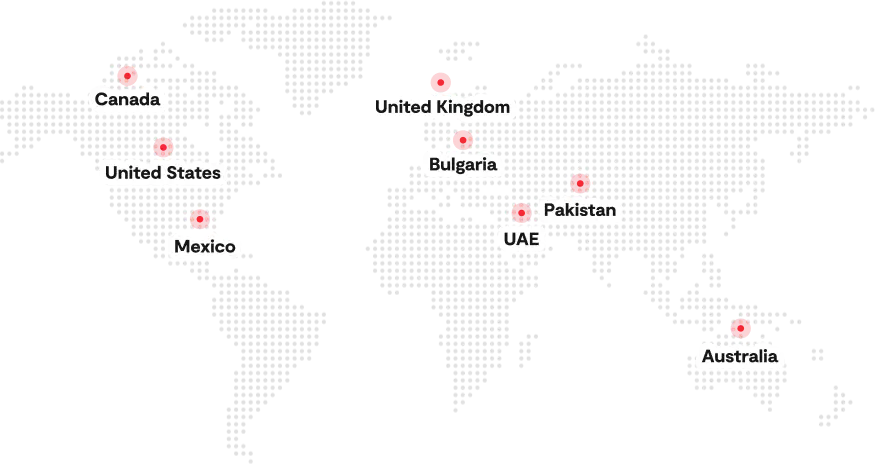
The global livestock identification market was valued at approximately USD 2.7 billion in 2024 and is projected to reach USD 4.63 billion by 2030, growing at a compound annual growth rate of 9.61%. North America accounted for 33.08% of the global market revenue in 2024, driven by the USDA’s traceability mandate and early adoption of RFID technology. The software segment within livestock identification is expected to grow at a CAGR of approximately 10.5%, reflecting the shift from hardware-only tagging toward integrated data platforms.
Market Trends Ranchers Will Actually Notice
Four drivers are reshaping the livestock identification market for producers on the ground.
- First, traceability mandates: the USDA’s EID rule (effective November 5, 2024) is the clearest signal that electronic identification is no longer optional for interstate commerce.
- Second, food safety and consumer demand for supply-chain transparency are pushing packers and retailers to require traceable cattle.
- Third, disease control preparedness, especially around foreign animal disease threats, is accelerating government investment in identification infrastructure.
- Fourth, the shift toward software and analytics means your tag data is increasingly expected to feed into livestock management platforms that turn raw ID scans into actionable performance and health insights.
Where Monitoring Overlaps with Identification
Livestock monitoring technologies (wearable sensors, GPS collars, rumen boluses) depend on accurate identification to attribute data to the right animal. The global livestock monitoring market was valued at USD 5.18 billion in 2024 and is projected to reach USD 14.82 billion by 2033 at a 12.6% CAGR. That growth will only multiply the value of a clean, accurate ID system on your ranch.
Market Segmentation Cheatsheet
| Segment | Key Breakdown |
| Livestock Type | Cattle (dominant share), swine, poultry, ovine/caprine |
| Tag Type | Electronic (RFID, EID) vs. visual (plastic, metal); electronic is growing faster |
| Software vs. Hardware | Hardware leads revenue; software is fastest-growing segment (~10.5% CAGR) |
| Application | Traceability, health monitoring, breeding management, and inventory tracking |
| Region | North America leads (33% share); Asia-Pacific fastest growth |
Risks, Welfare, and Common Mistakes
Learn how to avoid costly mistakes, reduce compliance risks, and improve animal welfare while implementing livestock identification systems effectively.
Prevent Infections and Lost IDs
Clean your tag applicator between animals. Place ear tags in the middle third of the ear between the cartilage ribs, avoiding blood vessels. Replace missing tags immediately; keeping pre-numbered blanks on hand means a lost tag gets fixed the same day it is noticed rather than weeks later. A consistent check-and-replace habit is the simplest way to prevent gaps in your livestock identification program.
Welfare and Market-Value Considerations
Ear tags carry a snagging risk, especially two-piece tags that catch on feeders or brush. Ear notching, still used in some swine and registry systems, raises welfare concerns due to the tissue removal involved. On the branding side, large side brands can reduce hide value significantly, so keep brands as small as legibly possible and place them where industry guidelines recommend. Balancing effective identification with animal welfare is not only ethical; it also protects the marketability and value of your cattle.
Take the Next Step
A strong livestock identification program deserves a record-keeping system that can keep up. Folio3 AgTech’s livestock management software connects your ear tags and RFID scans to a centralized platform that tracks every animal’s health, breeding, weight, and movement data in real time. Whether you run 50 cows or 5,000 head, explore how the right software turns your identification investment into measurable herd improvement.
FAQs
Do I Need RFID Tags If I Only Sell Cattle Within My State?
The USDA’s EID mandate specifically applies to the interstate movement of certain cattle and bison. However, some states have their own identification rules that may require RFID for intrastate sales or market entry. Check with your state veterinarian’s office, and remember that adding EID now prepares you for tightening regulations and gives you a head start on digital record keeping.
How Much Do RFID Ear Tags Cost Compared to Visual Tags?
Visual plastic ear tags typically cost less than a dollar per tag, while RFID-enabled ear tags range from roughly two to four dollars each. The USDA’s Consolidated Appropriations Act of 2024 allocated $15 million to help producers obtain EID tags, so check with your state animal health office for no-cost or subsidized tag programs before purchasing out of pocket.
Can I Use a Single Identification Method for My Entire Herd?
You can, but you should not rely on just one. Every identification method has a failure mode, whether it is tag loss, ink fading, or scanner malfunction. A two-identifier rule, with at least one permanent method, is the industry best practice and protects you from losing an animal’s complete identity to a single equipment failure.
How Do I Connect My Livestock IDs to a Digital Record System?
Start by scanning or entering each animal’s ID into a cattle management app or livestock software platform. If you use EID tags, a handheld or panel RFID reader captures the tag number automatically and syncs it to the animal’s digital profile. From there, every health event, weight, movement, and sale is logged against that ID in one place.
What Happens If My State Introduces Stricter Identification Rules?
Regulatory direction globally is toward more identification, not less. Building a robust livestock identification program today, complete with EID capability and digital records, means you will not scramble to comply when new mandates arrive. The earlier you adopt, the smoother the transition and the more historical data you accumulate.