
Riding across your pastures to count cattle, check fences, or spot a struggling heifer takes hours you simply don’t have. Whether you’re managing 300 acres or 30,000, that time on horseback or behind an ATV adds up fast, and every hour in the field is an hour away from everything else your operation demands.
Drones have become the modern rancher’s ultimate eye in the sky. In minutes, they can cover ground that would take you half a day to inspect on foot. This guide breaks down the 10 best drones for livestock management in 2026, what to look for before you buy, and how the right hardware, paired with smart software, can transform the way you run your operation.
How Drones Are Redefining Cattle Ranching and Livestock Management
The numbers tell the story. The global agriculture drones market was valued at $3.37 billion in 2025 and is projected to reach $21.59 billion by 2033, growing at a CAGR of 26.5%. North America leads adoption, and livestock operations are a fast-growing segment of that growth.
It’s not hard to understand why. The pain points are real: labor costs are rising, ranch labor is harder to find, and one missed sick calf during calving season can cost you thousands. Drones for livestock management directly address all three.
The Core Use Cases
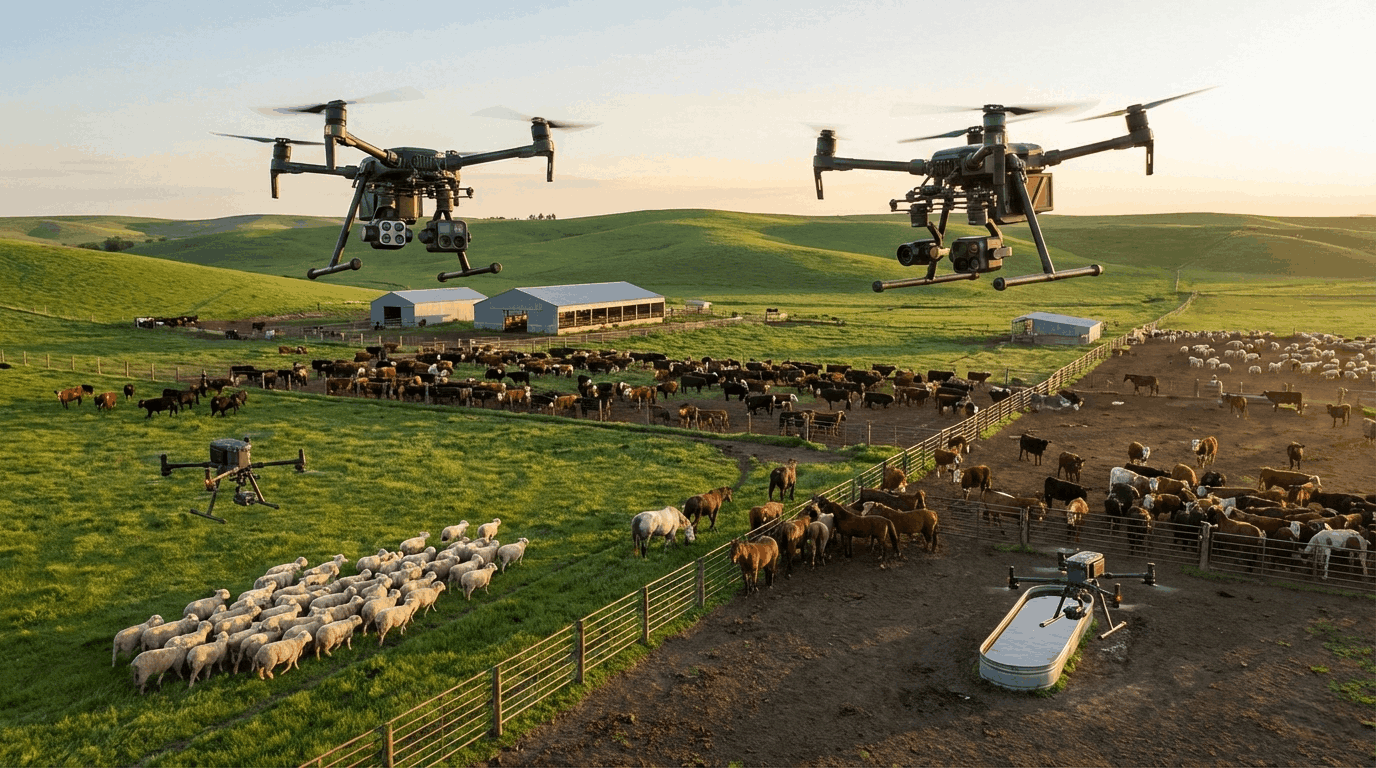
Livestock Counting & Locating: Drones can survey hundreds of acres in a single flight, locating strays in dense brush, timber, or sprawling pastures where you’d never spot them from a truck. For operations with poor connectivity, modern systems can even process counts offline in real time—right in the paddock.
Health & Calving Monitoring: Thermal cameras detect body heat signatures that flag animals in distress or running a fever. You can circle a heifer during calving without setting foot in the pasture and spooking her. Early detection of illness or injury is where drones for livestock monitoring pay for themselves fastest.
Pasture & Fence Inspections: A 15-minute drone flight can cover what takes two hours by ATV. Broken water lines, downed fence sections, and overgrazing in a specific paddock are shown in drone footage before the problem compounds. This is especially valuable during drought recovery periods, when pasture conditions can shift rapidly week to week.
4 Key Features to Look for in a Livestock Drone
Before you choose a drone, you need to know what separates a useful ranching tool from an expensive toy. Here’s what actually matters for the best drones for cattle farming.
Thermal Imaging: This is non-negotiable for serious livestock monitoring drones. Thermal cameras detect heat signatures, letting you locate cattle hidden in thick timber or check animals at dusk and dawn. They’re the single most important feature for health screening and nighttime searches. Not every drone comes with thermal built in, so confirm before you buy.
Optical Zoom: A strong optical zoom, ideally 10x or higher, that means you can read ear tags and inspect eyes, noses, and posture for signs of pinkeye, BRD, or foot rot from 100+ meters above, without flying low enough to disturb the herd. Spooking cattle with a low-hovering drone defeats the entire purpose.
Wind Resistance & Durability: Your ranch isn’t a calm photography studio. Windy plains, sudden storms, and cold mornings are the reality. Look for drones rated for 20–30+ mph wind resistance. An IP rating (like IP55) means rain and dust won’t end your flight early. Hexacopters and enterprise-grade drones handle rough conditions significantly better than consumer models.
Flight Time: A 20-minute battery won’t cut it on a large operation. Target a minimum of 30–45 minutes of actual flight time per charge. Factor in wind, payload weight, and your transit time to the far paddocks. For massive acreage, look at long-range fixed-wing hybrids that can fly for hours.
The 10 Best Drones for Livestock Management in 2026
Comparison Table: Top Picks at a Glance
| Drone Model | Best For | Flight Time | Thermal Camera | Est. Price Range |
| DJI Mavic 3 Thermal (M3T) | Cow-calf operations | ~43 min | Yes | $4,500–$5,500 |
| DJI Matrice 30T (M30T) | Large feedlots, harsh weather | ~41 min | Yes | $10,000–$14,000 |
| Autel EVO Max 4T | Autonomous navigation | ~42 min | Yes | $6,500–$8,000 |
| DJI Mini 4 Pro | Beginners / small farms | ~34 min | No | $700–$1,000 |
| Parrot Anafi USA | Data security, quiet flight | ~32 min | Yes | $7,000–$8,500 |
| DJI Air 3 | General pasture management | ~46 min | No | $1,100–$1,400 |
| Yuneec H520E | Windy plains, stability | ~28 min | Optional | $3,500–$5,000 |
| DJI Agras T40 | Pasture spraying & seeding | ~17 min | No | $22,000–$28,000 |
| Teledyne FLIR SIRAS | Dedicated thermal work | ~30 min | Yes | $8,000–$12,000 |
| DJI Mavic 3 Enterprise (M3E) | Mapping & topography | ~45 min | Optional | $2,800–$3,800 |
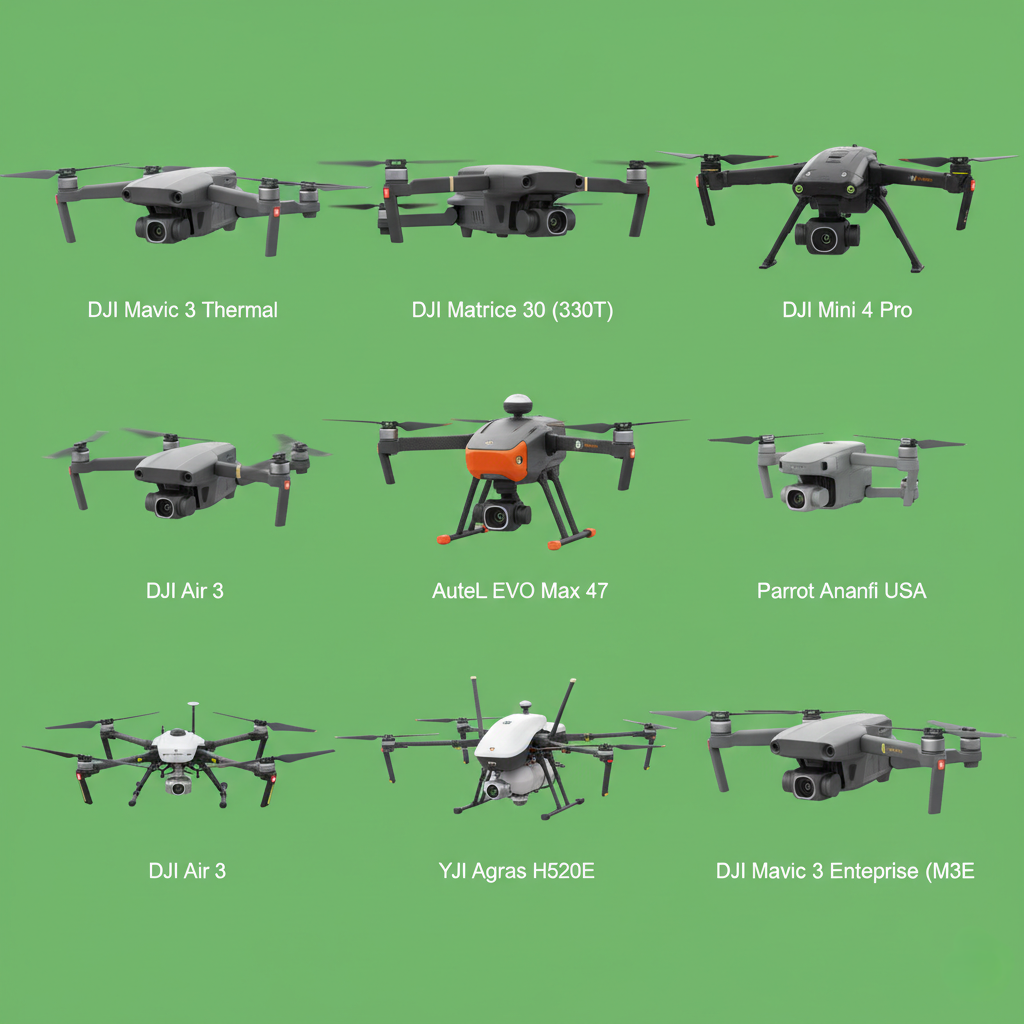
1. DJI Mavic 3 Thermal (M3T) – Best Overall for Cow-Calf Operations
If you run a cow-calf operation and you’re buying your first serious livestock drone, this is the one. The M3T packs a radiometric thermal camera alongside a 56x hybrid zoom on a compact, foldable body. That zoom means you can read an ear tag or check for nasal discharge from 100 meters up without your herd ever knowing you’re there.
Battery life hits ~43 minutes in calm conditions, and the obstacle avoidance system is solid enough for navigating through trees to check timber pastures. At $4,500–$5,500, it’s not cheap but it’s the best balance of price, thermal capability, and optical zoom available today for cattle work.
2. DJI Matrice 30T (M30T) – Best for Large-Scale Commercial Feedlots & Harsh Weather
If you’re running a commercial feedlot or operating in a climate that doesn’t cooperate, the M30T is built for you. Its IP55 weather rating means it can fly through rain, dust, and cold without flinching. Wind resistance up to ~15 m/s (33 mph) handles the Great Plains without breaking a sweat.
The M30T combines a thermal camera, a 200x zoom camera, and a laser rangefinder in a single compact payload. It’s enterprise-grade in every sense and priced that way, but the reliability and feature set justify the investment for high-volume operations.
3. Autel EVO Max 4T – Best for Autonomous Navigation
Autel’s EVO Max 4T shines in operations where complex terrain makes manual flying difficult. Its 360° obstacle avoidance and AI subject tracking make it genuinely autonomous in a way that most drones aren’t. You can set a flight path over rugged, hilly pastures and let it work without constant controller input.
Like the M3T, it includes a thermal camera alongside a strong optical zoom. It’s an excellent alternative for ranchers who prefer to avoid DJI for any reason, and Autel’s data security posture is more favorable for operations with federal land leases or government contracts.
4. DJI Mini 4 Pro – Best Budget Option for Beginners & Small Farms
Sub-250 grams means no FAA registration required in most recreational use cases, a real benefit for smaller operations just getting started. The Mini 4 Pro won’t give you thermal, but its 4K camera with a capable optical zoom handles basic fence checks, water trough inspections, and pasture overviews better than anything else at this price.
If you’re managing under 500 acres and your primary use case is visual inspection rather than health monitoring, the Mini 4 Pro is a smart, low-risk starting point before you commit to a $5,000+ platform.
5. Parrot Anafi USA – Best for Data Security & Quiet Flight
Two things set the Anafi USA apart. First, it’s manufactured with U.S.-controlled components, making it the preferred choice for government-funded agricultural programs and operations on federal grazing allotments with strict data sovereignty requirements. Second, it’s whisper quiet enough to circle a heifer during calving without triggering a flight response from the herd.
Thermal and 32x zoom are standard. Flight time is shorter than DJI equivalents (~32 minutes), but for operations where those two advantages matter, the trade-off is worth it.
6. DJI Air 3 – Best Mid-Range Drone for General Pasture Management
The Air 3 is the workhorse mid-range drone for ranchers who don’t need thermal but want exceptional video and photo quality for pasture condition assessments, fence line surveys, and general operations coverage. Its dual-camera system (wide + medium telephoto) and industry-leading ~46-minute flight time make it one of the most capable all-around platforms under $1,500. Pair it with pasture management software to turn aerial footage into actionable grazing data.
7. Yuneec H520E – Best Hexacopter for Stability in High Winds
Six rotors instead of four means dramatically improved stability when wind gusts are a constant problem. The H520E is built for commercial agricultural work on exposed plains where a quad would struggle to hold a steady hover. Its modular payload system means you can swap cameras based on the mission, visual inspection one day, thermal the next.
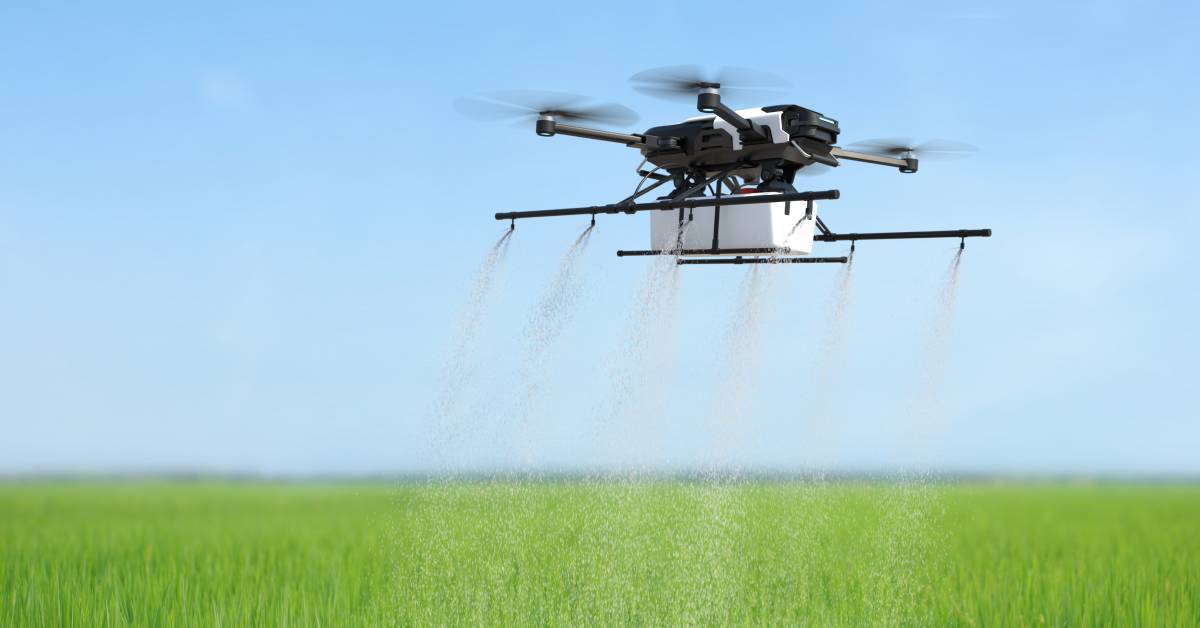
8. DJI Agras T40 – Best for Pasture Spraying & Seeding
The T40 isn’t a monitoring drone; it’s a working drone. With a 40L spray tank and a spreading system capable of broadcasting cover crop seed or targeted herbicide over weeds in your pastures, it handles the physical labor of pasture maintenance in a fraction of the time. For large-scale weed control or reseeding degraded pastures after drought, the ROI on this machine can be extraordinary.
9. Teledyne FLIR SIRAS – Best Dedicated Thermal Drone
If your primary mission is thermal inspection, like health screening, nighttime searches, or calving checks, the SIRAS is built from the ground up for that job. FLIR’s sensor quality is professional-grade, and the geofence-free design means you’re not locked out of your own property by arbitrary restricted zone software. Flight time is modest (~30 minutes), but for targeted thermal missions, it’s more than sufficient.
10. DJI Mavic 3 Enterprise (M3E) – Best for Mapping & Topography
Photogrammetry, the science of creating accurate 3D maps from aerial photos, is where the M3E earns its place on this list. Use it to map new fencing layouts before you break ground, analyze elevation and drainage for water tank placement, or generate NDVI vegetation maps that reveal which paddocks are underperforming. The M3E is the mission-planning drone for the rancher who thinks strategically about their land.
Beyond the Hardware: AI and Livestock Management Software
Buying a drone is Step 1. But here’s what nobody tells you: watching hours of raw footage to count cattle, flag sick animals, or assess pasture conditions manually is tedious, time-consuming, and prone to human error. You’ve just traded the ATV for a chair and a laptop.
Turning Video into Actionable Data
The real power of drones for livestock management isn’t the footage, it’s what you do with it. This is where AI changes everything. Modern computer vision for agriculture can process drone feeds automatically, extracting the data that actually drives decisions.
The Folio3 AgTech Advantage
Integrating your drone footage with Folio3 AgTech’s livestock management software and AI capabilities moves you from passive observation to active intelligence:
- Automated Livestock Counting: AI-powered livestock counting accurately tallies your herd from drone imagery, no manual tallying, no miscount.
- Heat Stress & Health Detection: Thermal data feeds into anomaly detection algorithms that automatically flag animals outside normal temperature ranges or exhibiting behavioral patterns associated with illness.
- Centralized Dashboards: Every drone insight, like herd counts, health flags, pasture condition scores, feeds directly into your farm management system, giving you a complete operational picture without switching between platforms.
The drone gets the data. The software makes it useful.
The ROI of Livestock Drones: Are They Worth the Investment?
Consider math. A quality ATV runs $8,000–$12,000, burns fuel, requires maintenance, and still takes 2+ hours to cover a large property. A $4,500 DJI M3T can cover the same ground in 15 minutes.
One calf saved during calving season, caught early because you spotted a struggling heifer via thermal before she went down, can represent $800–$1,500 in recovered value. Do that twice and your drone has paid for itself. Over a full calving season on a mid-sized cow-calf operation, the ROI case becomes compelling very quickly.
Conclusion
Drones for livestock management have moved well past novelty. Whether you’re starting with a $700 Mini 4 Pro for basic visual checks or deploying an enterprise M30T across a commercial feedlot, there’s a platform built for your operation and budget. The key is matching the hardware to your specific use case and then making sure you have the software intelligence to act on what it captures.
Ready to take your farm’s efficiency to the skies? Equip your drone with the smartest AI in the industry. Contact Folio3 AgTech today to learn about our AI livestock counting and farm management software.
FAQs
Do I Need FAA Registration to Fly a Drone on My Ranch?
In the U.S., drones under 250g used recreationally typically don’t require FAA registration. However, any drone used commercially, including for farm operations, must be registered, and the pilot must hold an FAA Part 107 certification regardless of drone weight.
What Is the Best Drone for Monitoring Cattle at Night?
Any drone equipped with a radiometric thermal camera can effectively monitor cattle at night. The DJI Mavic 3 Thermal (M3T) and Teledyne FLIR SIRAS are the top options, as their thermal sensors detect body heat in complete darkness, making nighttime health checks and stray searches fully viable.
Can Drones Replace Traditional Mustering on Large Properties?
Not entirely, but they significantly augment it. Drone-based mustering can scout cattle locations and drive them toward a gathering point, but ground support is still typically needed. On very large properties, drone pre-scouting can dramatically improve mustering success rates and reduce the hours of helicopter or horseback time required.
How Much Wind Can an Agricultural Drone Handle?
Consumer drones like the DJI Mini 4 Pro handle winds up to about 24 mph. Mid-range drones like the Mavic 3 series manage around 26–27 mph. Enterprise platforms like the DJI Matrice 30T and Yuneec H520E are rated for sustained winds of 33+ mph, better suited for exposed plains environments.
What Software Should I Use to Analyze Drone Footage from My Livestock Operation?
Dedicated AI platforms that integrate with livestock ERPs are the most effective solution. Folio3 AgTech’s animal health monitoring and livestock counting tools are built to ingest drone data and convert it into herd counts, health alerts, and management dashboards, removing the manual review bottleneck entirely.