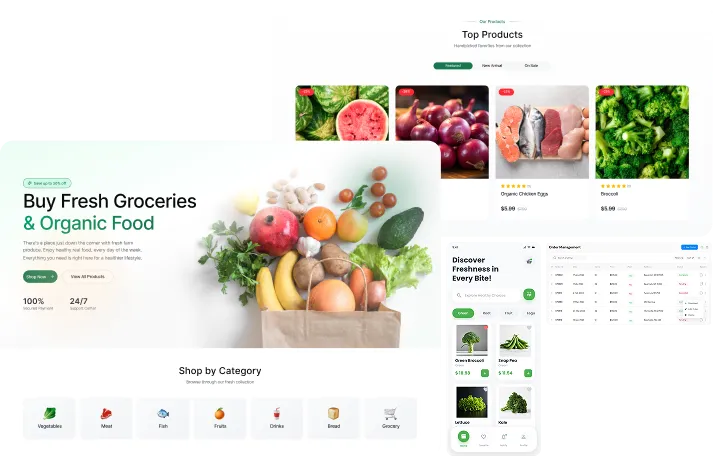










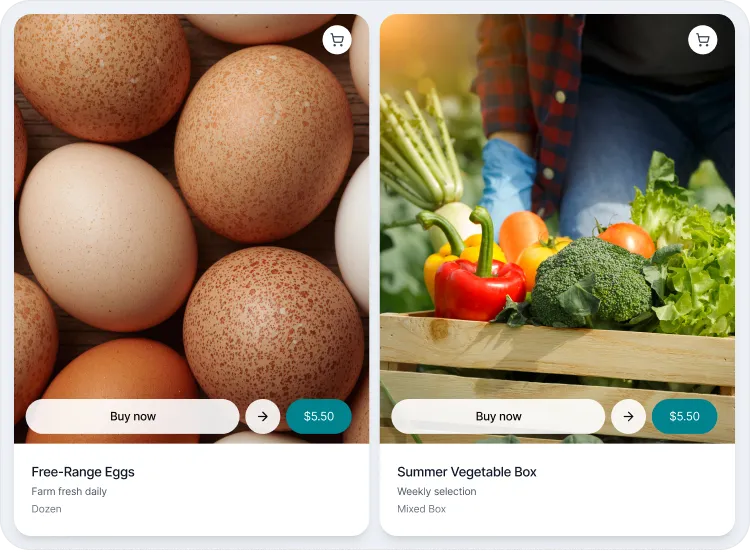
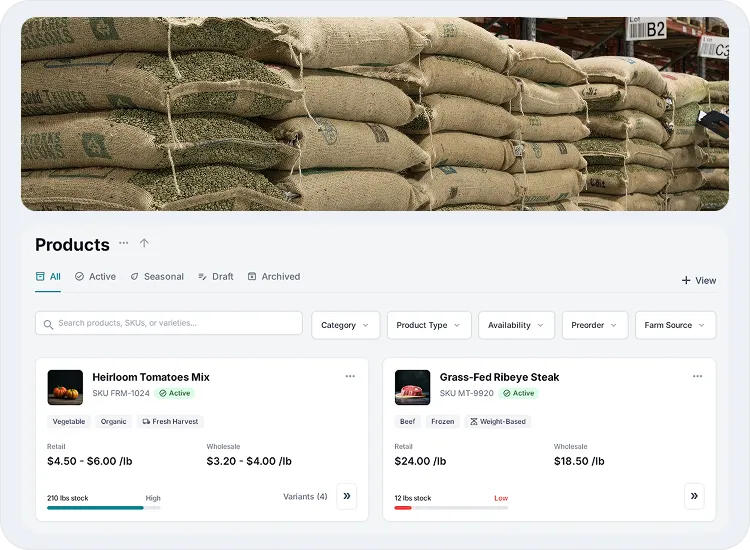











Scale your farm sales with an eCommerce for farmers that handles weight-based items, weekly restocks, customer orders, and delivery options from one simple, reliable online storefront.


Give your eCommerce for agriculture store the tools that make daily selling easier and help you grow online confidently.
Manage every part of your online farm store from one place with simple, organized control.
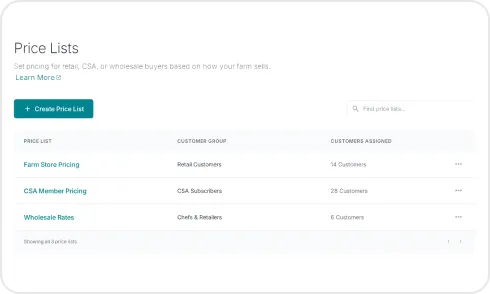
Configure products and pricing structures that match how your farm sells across different buyer types.
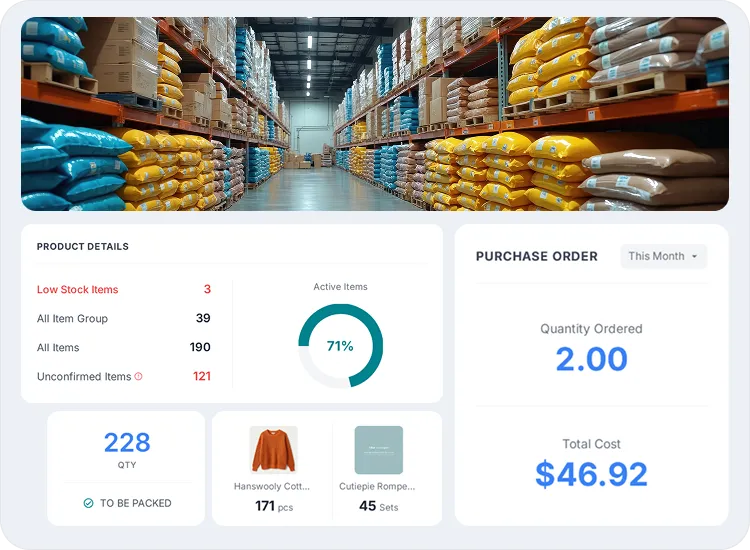
Track changing farm inventory with tools built to handle fresh, limited, and fast-moving stock.
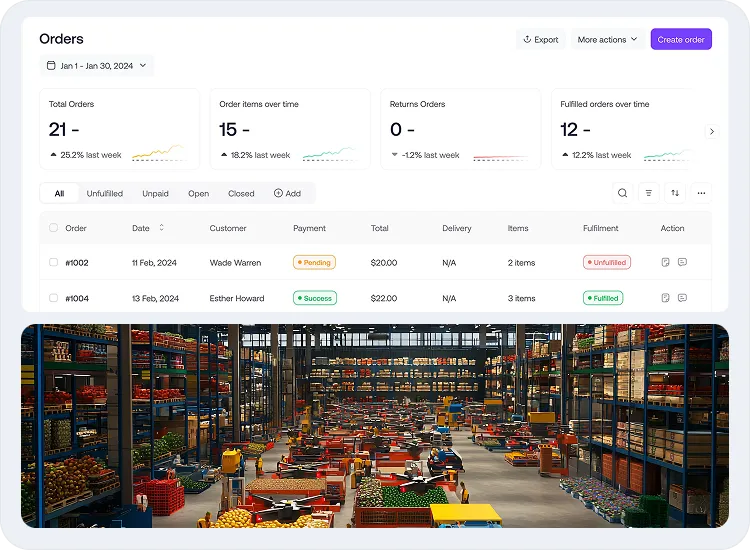
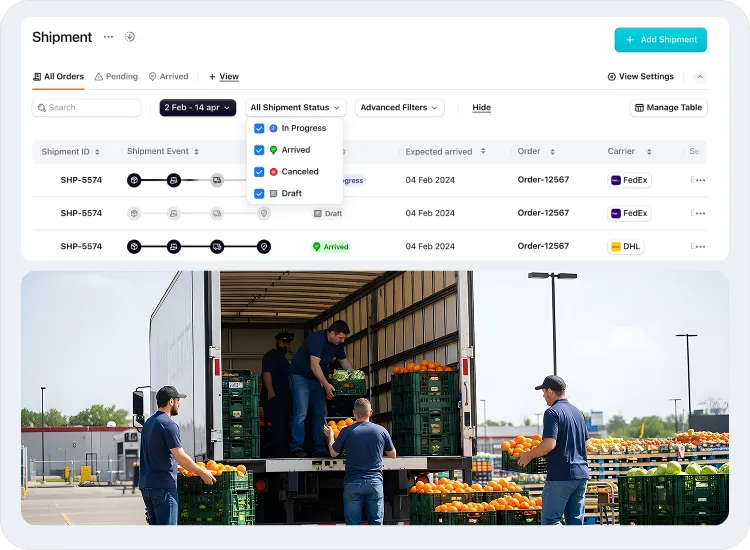
Coordinate incoming orders through structured workflows that keep packing and fulfillment running smoothly.
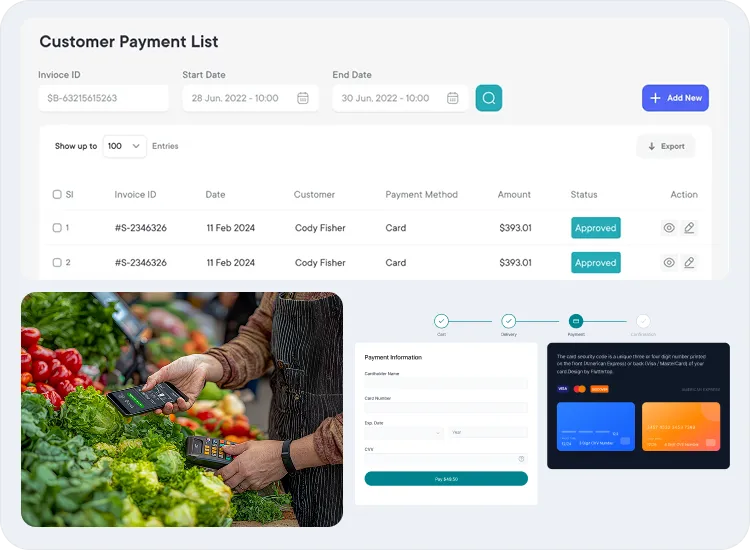
Handle online and in-person payments reliably with unified tools supporting multiple farm sales channels.
Manage customer information, subscriptions, and buying preferences in one organized, easy-to-use system.
Plan and execute deliveries with tools that structure zones, routes, and essential driver operations.
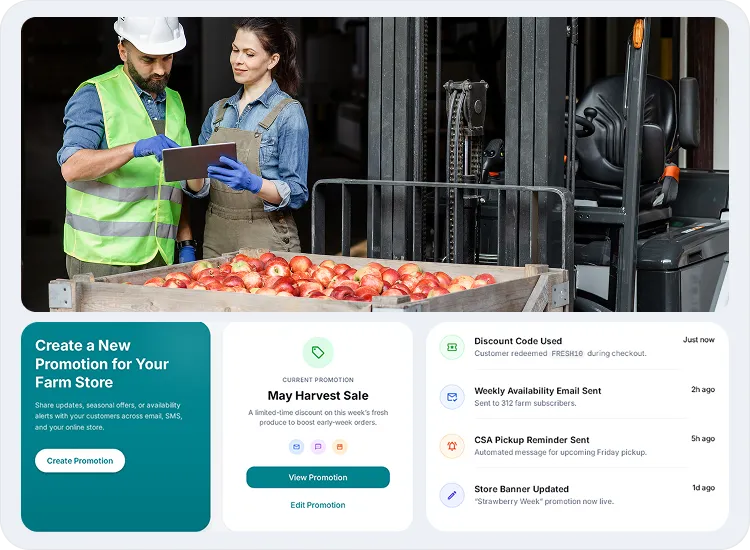
Run targeted promotions and customer communication that support ongoing sales and returning buyers.
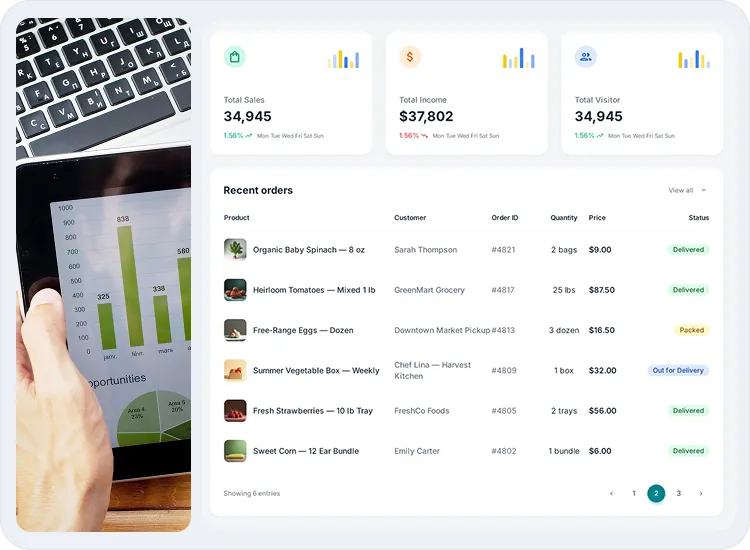
Monitor key sales and operational metrics through organized reports that help guide everyday decisions.
From updating fresh listings to coordinating pickups and managing weekly order cycles, these features help your farm sell online with far less effort.
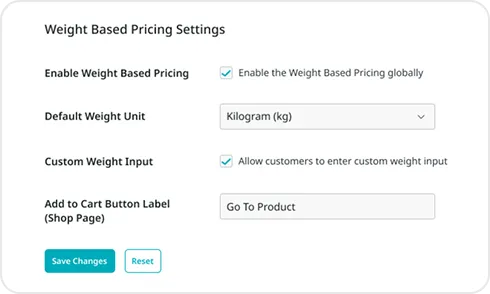
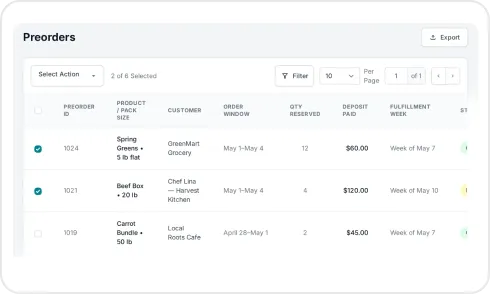
Capture variable product weights at packing, triggering automated price recalculation and final invoicing within the order system.
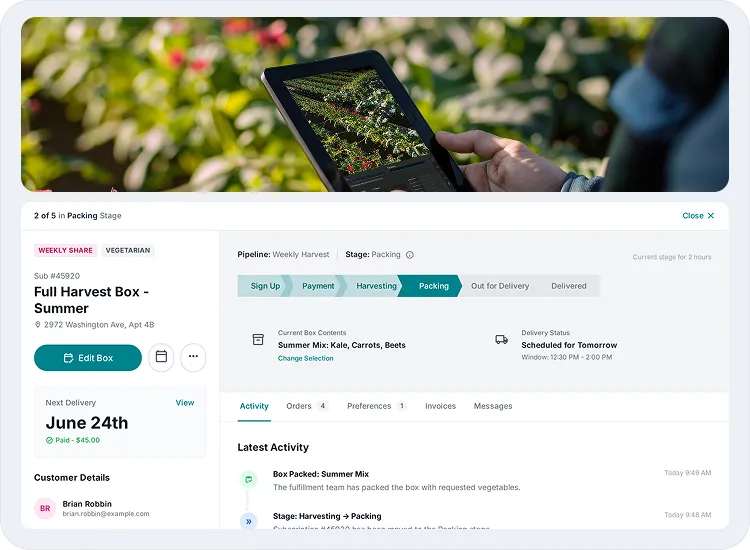
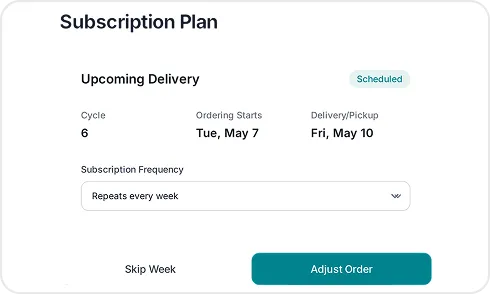
Set up recurring box schedules so customers can automatically receive weekly or monthly farm share orders.
Create multiple pricing tiers and assign them to specific customer groups for retail or wholesale ordering.
Define opening and closing order periods so customers can only place orders within your chosen schedule.
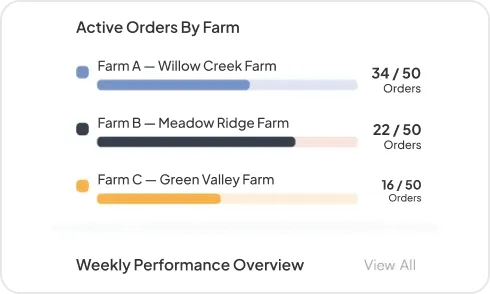
Add products, update inventory, and manage orders from several farms or locations in one unified system.
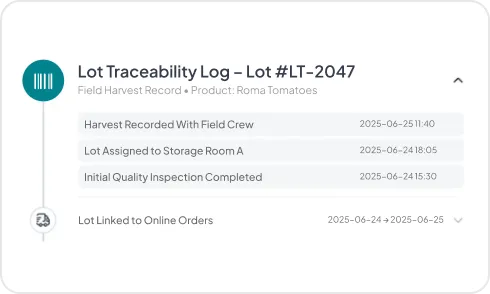
Record batch numbers for harvested or processed items so each product listing links directly to its originating lot.
We design eCommerce for farmers solutions that fit your model, whether selling directly to consumers or serving wholesale buyers.
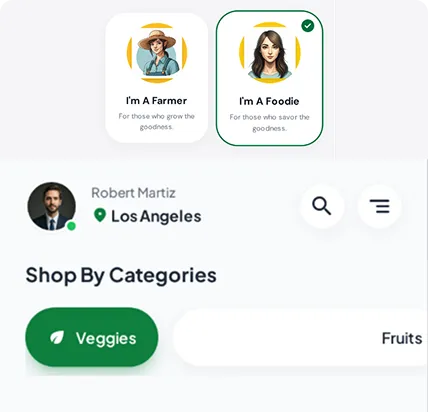
Sell directly to households with simple online ordering, accurate availability, and easy pickup or delivery options.
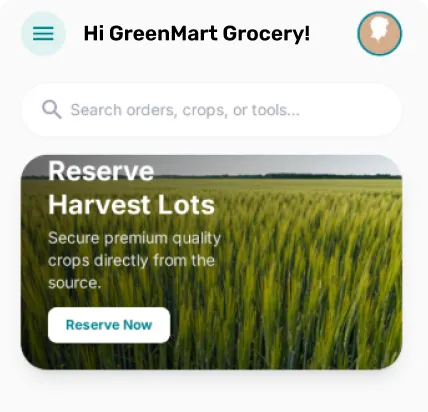
Manage bulk orders, recurring schedules, and buyer-specific pricing for retailers and food service accounts.
Let artificial intelligence improve your farm store through better demand visibility, steadier stock planning, and more responsive online customer experiences.
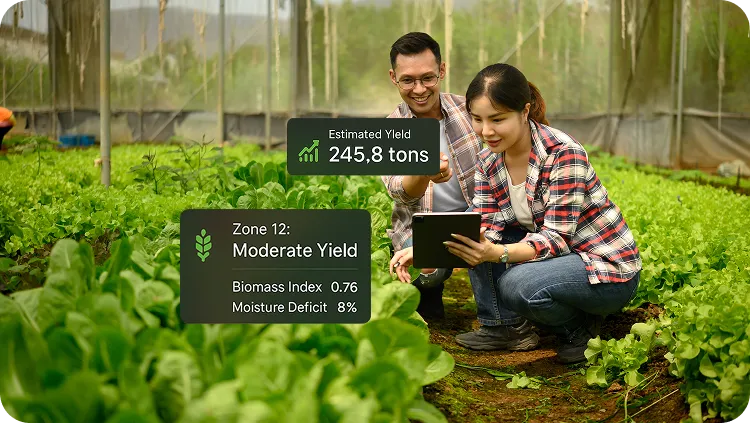
Use projected order patterns to plan harvest quantities, packing needs, and upcoming availability so your store stays prepared instead of reacting last-minute.
Get practical pricing suggestions based on how quickly items are selling, helping you adjust prices before products slow down or stock begins backing up.
Receive early signals when items may run short, giving you time to adjust listings, shift inventory, or communicate changes before customers are affected.
Show your customers complementary or seasonal farm products online, increasing average order value while highlighting the best produce, bundles, and boxes from your farm.
Use AI insights to place incoming orders into workable delivery windows so your routes stay manageable, travel time is reduced, and perishable items arrive on time.
Help customers find what they need faster by recognizing everyday terms, product uses, and common search phrases that traditional search systems often miss.
Use Shopify, WooCommerce, or another ecommerce system you prefer. Our agriculture ecommerce solutions adapt that platform to your farm’s products, workflows, and customer needs.


Connect with customers directly through an online store designed for ag businesses. Reach more buyers and keep your farm products accessible anytime.
Real-world examples of leading eCommerce businesses showcasing the impact of our custom eCommerce software for agriculture.
Read what our clients say about their experiences and the difference our solutions have made for them.
Vice President Information Technology
VP of Operations
IT Project Manager
Systems Administrator
Product Manager
Agriculture ecommerce allows farmers to sell through their own online store instead of wholesalers or brokers. Farmers list products, control pricing, and manage availability while buyers place orders directly. This shortens the sales cycle, improves margins, and gives farms direct access to customer demand data.
The software should support weight based items, seasonal product visibility, multiple pricing tiers, and limited inventory. Features like harvest windows, catch weight pricing, buyer specific rates, and automatic product activation or hiding are essential for farms selling fresh or seasonal goods.
Farms use ecommerce to automate CSA subscriptions, recurring box deliveries, and standing wholesale orders. Customers choose plans and schedules, while the system handles recurring billing, order generation, and inventory reservation. This reduces manual coordination and stabilizes demand.
Credit and debit cards are essential, along with ACH or bank transfer for wholesale buyers. Invoicing, deposits, and net terms are often required for bulk orders. Checkout should support pickup, delivery selection, mobile ordering, and local tax rules.
Agriculture ecommerce platforms allow farms to define pickup locations, delivery zones, order cutoffs, and routes. Inventory can be fulfilled from multiple farms, storage sites, or packing locations, ensuring customers only see options that match real availability.
Effective tools include lot tracking, live weight capture at packing, inventory reservations, and spoilage adjustments. Inventory updates automatically as orders are processed, preventing overselling and reducing last minute substitutions.
Ecommerce systems integrate with accounting to sync orders, invoices, payments, and fees. Logistics integrations pass delivery and route data, while farm management integrations align sales with production records. This removes duplicate data entry and improves financial accuracy.
Some providers, such as Folio3 AgTech Ecommerce Solution, focus on deeper operational integrations rather than surface level ecommerce syncs.
Key features include customer accounts, order history, subscriptions, reorder options, and automated emails. Customer specific pricing, seasonal announcements, and simple promotions help increase repeat purchases without complex marketing setups.
Platforms support compliance by storing product origin details, handling notes, lot references, and tax rules with each order. This simplifies audits, buyer requirements, and regulatory reporting for farms selling food products.
Growers need reports on sales by product, customer, and channel, along with margin visibility, inventory turnover, spoilage, and CSA retention. Demand trends help guide planting, harvesting, and pricing decisions.
Multi farm sellers use shared catalogs where each farm controls its own products and pricing. Orders can include items from multiple farms, with automatic payout splitting and settlement reports to keep operations transparent.
Growers need reports on sales by product, customer, and channel, along with margin visibility, inventory turnover, spoilage, and CSA retention. Demand trends help guide planting, harvesting, and pricing decisions.
Multi farm sellers use shared catalogs where each farm controls its own products and pricing. Orders can include items from multiple farms, with automatic payout splitting and settlement reports to keep operations transparent.
Onboarding includes product and pricing setup, inventory rules, payment configuration, and fulfillment workflows. Training focuses on daily order management and reporting. Platforms designed for agriculture, such as Folio3 AgTech, typically support phased launches aligned with farm operations.
Get a Free Consultation Within 24 Hours, with a No-Obligation Ballpark Estimate
Error: Contact form not found.