
Maintaining your farm equipment is crucial for productivity, safety, and ROI. Equipment failures can stall planting or harvest, adding hefty costs, as one study found unplanned breakdowns cost farmers about $3,348 per season. By contrast, routine checks pay off: farmers who follow strict preventive maintenance have about 25% lower repair bills.
In this guide, you’ll find tips and checklists to keep your tractors, combines, sprayers, and tools in top shape. It’s written for farm owners, managers, technicians, and ag-tech innovators like you. So, think of maintenance as an investment in uptime and safety; a few minutes of care now can prevent days of costly downtime and broken machinery.
Why Farm Equipment Maintenance Matters
Proper maintenance turns equipment downtime into uptime. Malfunctioning tractors or combines can halt crucial tasks and even damage crops if planting or harvest is delayed. By avoiding breakdowns, you can:
- Boost Uptime: Preventive checks mean you spend more time in the field and less in the repair shop. Annual repair and upkeep can be 10–15% of operating costs, about $0.75–$1.50/hr for a used tractor, so avoiding major fixes saves real money.
- Save Money: Catching minor issues early cuts big bills. Indeed, farmers have cut repair costs by roughly 25% after improving routine care. Fewer emergency labor and parts mean lower expenses overall.
- Improve Safety: Well-maintained machines run reliably, and their safety systems stay functional. Guards, shields, and ROPS work as intended, protecting you and your team from accidents.
- Maximize Productivity: Fresh filters, properly inflated tires, and sharp blades help equipment run efficiently. Healthy machines also produce higher yields because operations stay on schedule.
- Increase Resale Value: A farm vehicle that’s been cared for looks and runs nearly new. Buyers pay more for machines with documented service histories and no surprise failures.
Different Types of Farm Equipment & Tools
Farms use a wide range of machinery. Each category and the specific model has its own maintenance needs. Training and proper use are key, as many failures happen simply because someone misused a tool or skipped a safety step. That’s especially true for forklifts and loaders, where forklift operator eligibility depends on age and training. So, always read the operator’s manual and ensure any worker handling the equipment knows how to operate it.
The table below highlights common farm equipment categories and their uses:
| Equipment Category | Examples | Typical Use |
| Tractors | Utility tractors, loaders, ATVs | Pulling implements, hauling, powering hydraulics |
| Harvesters | Combines forage harvesters | Harvesting crops (grains, forage) |
| Tillage Tools | Plows, discs, harrows, cultivators | Soil preparation (plowing, disking) |
| Planters/Seeders | Row-crop planters, grain drills | Planting seeds at the correct depth and spacing |
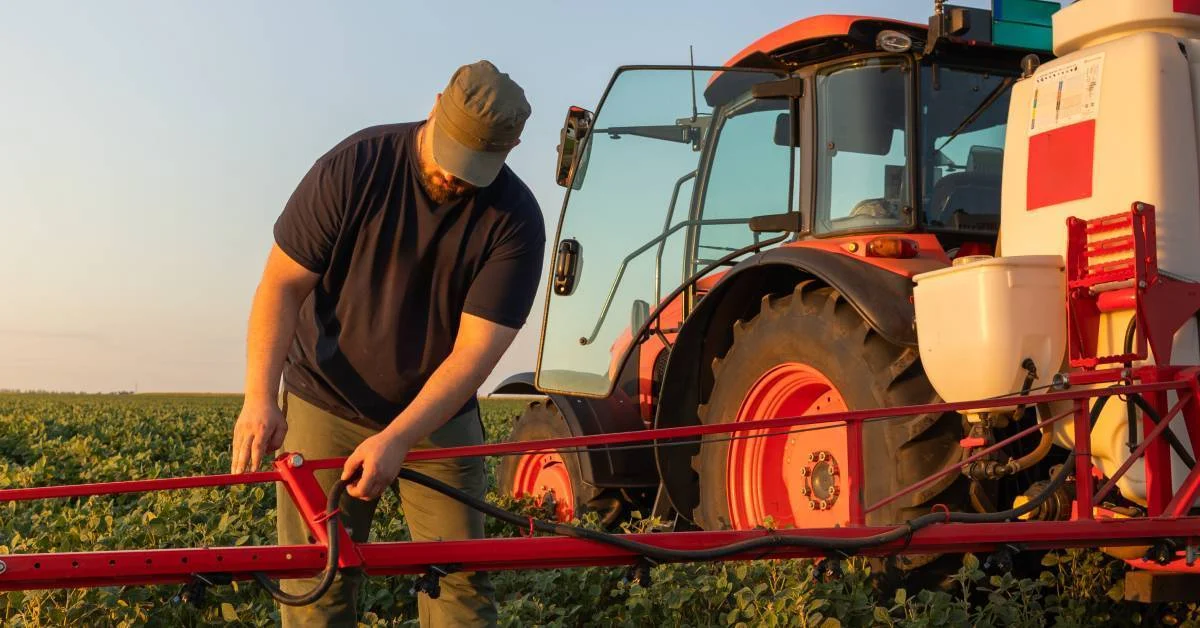
| Sprayers | Boom sprayers, drones/UAVs | Applying herbicides, pesticides, and fertilizers |
| Balers & Forage | Round/square balers, forage wagons | Cutting, raking, and baling hay or straw |
| Material Handling | Front-end loaders, forklifts | Lifting pallets, moving feed or hay bales |
| Irrigation Systems | Pivot systems, drip lines, sprinklers | Distributing water to crops |
| Livestock Equipment | Feed mixers, milking machines, and manure spreaders | Feeding animals, cleaning barns, and milking |
| Hand Tools | Shovels, chainsaws, wrenches | Smaller-scale tasks, repairs, and pruning |
Building a Preventive Maintenance Culture
A strong maintenance culture keeps equipment performing reliably year after year and is essential to improving farm efficiency across all operations. Here’s how to nurture it:
- Make it routine: Top farms schedule maintenance as part of the calendar, just like payroll or planting. By blocking out time each week or month for checks, you avoid last-minute breakdowns.
- Track your work: Keep a maintenance log for every machine. Record hours (or miles), dates of service, and job done. Do not rely on memory and base your program on accurate service records. Mount service charts or use digital forms to note when the following oil change or filter swap is due.
- Follow OEM recommendations: Use each implement’s maintenance chart. Follow the “Preventive Maintenance Guide” in the operator’s manual. For example, if the manual says “change hydraulic oil at 500 hours,” make sure that service happens. OEM schedules are optimized for equipment life.
- Train and empower staff: Everyone from the owner to the youngest tractor driver should know the basics of inspection. Show operators how to perform daily walk-around checks, and encourage them to report small issues immediately.
- Plan for spares and repairs: Stock everyday wear parts (filters, belts, hoses) as part of your farm budget planning, so minor fixes don’t turn into considerable delays. The off-season is perfect for replacing worn items.
Essential Farm Equipment Maintenance Checklist
Stay ahead of breakdowns with this practical checklist covering daily, seasonal, and digital maintenance tasks. It is designed to keep your farm equipment running reliably year-round.
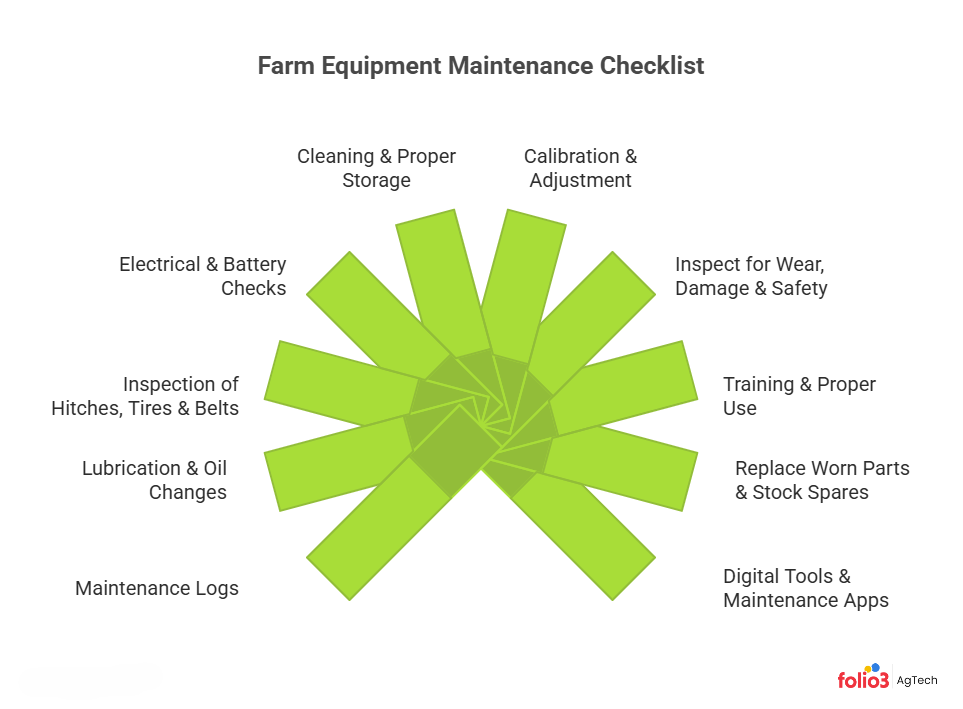
Maintenance Logs & Documentation
Maintain a logbook or digital record for each tractor, implement, and vehicle using farm record keeping software for centralized tracking. Include dates, hours/meters, and tasks done (oil changes, greases, part swaps). A formal maintenance log lets you see when the next service is due and verify that nothing was skipped. This practice ensures you follow through on needed tasks rather than hoping an operator “just remembers.”
Lubrication & Oil Changes
Keeping parts clean and well-oiled is fundamental. Change engine oil, hydraulic fluids, and gear oils per the manufacturer’s interval. Always use the correct lubricant, and check the viscosity grades in the manual. Replace oil/fuel filters at the same time. Grease all fittings, bearings, and linkages frequently, typically weekly or monthly, depending on use. Poor lubrication leads to accelerated wear, rust, and failures. Greasing the fitting prevents corrosion and ensures smoother operation and longer equipment life.
Inspection of Hitches, Tires & Belts
Hitches/PTO: Ensure all hitch pins, clips, and safety chains are in place and undamaged. Inspect PTO shafts, master shields, and never operate with guards missing.
Tires: Check tire pressure often. Underinflated tires waste fuel, roughly 1% per 10 psi drop, and wear unevenly. Look for cuts or bulges and replace old tires to prevent blowouts. Wheel bolts should be tight.
Belts/Chains: Examine fan belts, alternator belts, and any chain drives. Look for cracks or fraying, and proper tension and alignment. Replace belts that show glazing or slippage. A broken belt in the field can abruptly halt operations, so find the slack now.
Electrical & Battery Checks
Inspect battery terminals and cables: clean off any corrosion and tighten clamps. Keep batteries fully charged, especially before long idle periods. A healthy battery typically lasts 5–8 years, but its capacity drops in cold weather. Test starting motors and lights regularly. Examine wiring for exposed areas or loose connectors. Ensure all headlights, taillights, and safety lamps work. Electrical faults can be fire hazards or leave you stranded; catch them early.
Cleaning & Proper Storage
Clean equipment thoroughly after each busy period. Dirt, crop residue, and fertilizer residues trap moisture and cause corrosion. Always wash off debris and dry metal parts to prevent rust. Before long-term storage, clean engine bays and undercarriages, and apply a light coat of protective oil to exposed metal.
Change fluids: Old oil and coolant harbor acids; change them before storage, as fresh oil/coolant protects components. Fill fuel tanks with stabilizer for diesel to avoid condensation.
Storage: Store tractors and implements indoors if possible. If left outside, use quality covers and park on dry ground. Keep tires at recommended pressure or lift machines off their tires to prevent flat spots.
Rodent prevention: Seal holes around barn doors and use deterrents, such as mice love the warmth and can chew wires or nest in machines. A clean, dry storage space is your first line of defense.
Calibration & Adjustment
Many implements need precise settings. Calibrate seeders, sprayers, and fertilizer spreaders before the season. Verify meter rates so you plant or spray at the correct rates; this saves seed, chemicals, and maximizes yield. Adjust planter depth and spacing as needed for your seed type. For tillage tools, set proper depth and shank alignment. Even slight mis-calibration leads to wasted inputs or poor performance. Do this well in advance of field work and re-check mid-season if conditions change.
Inspect for Wear, Damage & Safety
Perform a visual check of all structural parts. Look for cracks, loose bolts, or bent frames on plows, cultivators, hitches, etc. Check hydraulic hoses for leaks or abrasions. Ensure safety guards and shields (PTO cover, flywheel guards, belt covers) are in place and intact. Test brakes on tractors and trucks, and confirm ROPS and seatbelts are secured. Replace any worn or missing guards immediately. A small crack or loose weld can quickly worsen under heavy use, so correct it now.
Training & Proper Use
Proper operation prolongs equipment life. Make sure all operators know how to correctly start, run, and stop each machine. For example, always stop the engine before opening the engine bay or adjusting a planter; never clear debris by hand with the engine running. Provide training on reading gauges and warning lights, so an informed operator spots problems early. Review the manual together before new tasks, and encourage questions. Safety training is also part of maintenance: instruct workers to wear PPE and avoid shortcuts that risk equipment damage.
Replace Worn Parts & Stock Spares
Don’t wait for failure; replace worn parts on your schedule. If a belt or pulley looks on its last legs, swap it out during a calm moment (off-season is the best time to replace belts or rebuild components). Keep a stocked inventory of critical spares tracked through agricultural inventory management systems so that you can fix things immediately. Genuine OEM parts are usually worth the cost for reliability, but good-quality aftermarket spares are fine for non-critical items. By proactively changing wear parts, you avoid stranding your crew mid-season.
Digital Tools & Maintenance Apps
- Digitize your maintenance: Many farmers use software or apps to manage maintenance logs and schedules. These systems let you enter service records, set automated reminders, track inventory, and attach manuals/photos to each asset. Mobile apps enable real-time logging, as you can tick off an inspection on your tablet in the field.
- Real-time data & telematics: GPS and telematic systems on tractors automatically record operating hours, locations, fuel use, and fault codes. If an engine sensor sees trouble, it can alert you or your dealer before something breaks. These alerts help schedule maintenance precisely and sometimes allow remote diagnostics.
- Integrations: Many tools link to farm accounting and inventory. If your app logs an oil change, it can auto-adjust parts inventory and flag costs for accounting. It ties maintenance data into budgeting and compliance.
- Compliance & collaboration: Digital checklists can include safety inspections and regulatory forms, so you always have proof of service for auditors. Maintenance records in the cloud allow multiple team members to access the same data, ensuring everyone stays informed.
Seasonal & Mid-Season Maintenance Routines
Follow these seasonal checklists to get equipment ready for each phase:
Pre-Planting Season Preparation
- Inspect & clean: Start by thoroughly cleaning all machines. Remove debris and inspect for wear, like belts, tires, and joints. Look for damage caused by winter storage.
- Lubricate: Grease every fitting, joint, and bearing per the manual. Check fluid levels and top them off, including engine oil, coolant, and hydraulic fluid.
- Replace worn parts: Swap out any burnt-out bulbs, cracked hoses, dull blades, or filters that have passed their life. Replace belts or pins showing heavy wear. Keep spares ready.
- Test systems: Run equipment in the shop. Test the planter’s seed meters, test steerage and PTO drives, and check electrical systems. Verify tractors shift through gears smoothly. Fix any glitches now.
Pre-Harvest Season Prep
- Sharpen or replace blades: Combines, mowers, and choppers need sharp cutting blades to maximize yield. Dull knives tear crops and lose product. Sharpen sickle bars and cutter blades, or install new ones. Keep backups on hand.
- Check drive components: Inspect all belts and chains (on combines, wagons, tractors). Adjust tension and alignment per specs. A snapped belt during harvest can halt your entire process.
- Calibrate harvest settings: Adjust concaves, sieves, and fan speeds on combines to your crop type. Recalibrate grain loss sensors or moisture meters.
- Safety checks: Ensure all guards, emergency stops, and lighting are operational. Mount SMV triangles on any slow-moving equipment traveling on roads. Brief your crew on harvest safety, so they never work under a raised header without locking it.
Off-Season Care & Storage
- Deep clean: After harvest, give every piece of equipment a detailed washing. Remove dirt from radiators, undercarriages, and crevices. Dry thoroughly to prevent rust.
- Change fluids: Before long idle months, replace engine oil, hydraulic fluids, coolant, and fuel filters. Add fuel stabilizer and fill tanks to reduce condensation.
- Electrical & battery care: Remove batteries or use trickle chargers to keep them healthy in cold storage. Inspect anti-freeze.
- Store properly: Park tractors and trucks in a dry shed if possible. For outdoor storage, raise implement tires off the ground and cover critical openings. Use a rust inhibitor spray on exposed metal. Keep fuel, lubricants, and batteries in climate-controlled storage to extend life.
- Record keeping: Log all off-season repairs and services. This “book” will guide your next year’s maintenance. If something broke late in the season, fix it now before it disappears under the snow.
Mid-Season Maintenance Checklist
During peak work, quick mid-season checks prevent surprises:
- Oil & Filters: Check engine oil level/quality weekly; change oil every 100–200 hours or mid-season, whichever comes first. Replace oil and air filters if they are dirty. Clean cab air filters for operator comfort.
- Fluid Levels: Top off coolant, hydraulic, transmission, and brake fluids. Inspect cooling radiators and clean any debris to prevent overheating.
- Grease Points: Lubricate loaders, PTO shafts, linkages, and any exposed pins. Make sure grease nipples are not clogged.
- Hoses & Belts: Examine hydraulic and fuel hoses for leaks or soft spots; replace if needed. Check belts for cracks or slippage under strain, and adjust tension as necessary.
- Lights & Reflectors: Clean and test all lights. Dusty summer fields can obscure lighting. Replace bulbs so road travel or night work remains safe.
- Equipment cleaning: Every couple of weeks, knock debris out of engines and radiators. A clean machine runs cooler and is easier to inspect.
Organizing & Managing Your Maintenance Schedule & Checklists
A systematic approach turns scattered tasks into a manageable routine:
Step 1 – Select assets
Start by listing every machine and tool to track, including tractors, combines, sprayers, trailers, etc. Note make/model, serial numbers, location, and critical specs. Use a spreadsheet or farm software to catalog them. This asset inventory is the basis for all scheduling.
Step 2 – Collect data
For each item, gather data: current hours/meters, last service date, and past repairs. Record existing wear levels or issues. Log this information in a maintenance log or software. The program must be based on fact, as determined by an accurate service record for each piece of equipment. In other words, build your schedule on real data, not guesswork.
Step 3 – Create schedules
Using manufacturer guidelines and your own experience, set maintenance intervals (hourly, daily, seasonal). For example, if your planter needs a PTO check every 100 hours, mark that on a calendar. Software can automate reminders. Make sure intervals are realistic, like you align grease changes with every 50 hours, oil changes at 200 hours, or annually.
Step 4 – Build checklists
Turn each scheduled task into a checklist or form. A maintenance checklist might include steps like: “Inspect tire pressure” or “Drain sediment from fuel filter.” You can use paper checklists or a digital app. The goal is that every service is done thoroughly and consistently. Have an easy reference in the shop and on mobile devices so mechanics or operators don’t miss anything.
Step 5 – Train, track & iterate
Train your crew on the plan by using reminder tools, including calendar alerts, whiteboards, or digital logs. After each service, update the log with findings and the next due date. Review the program yearly: did anything break more often than expected? If so, shorten that interval or add inspections. Carry a notepad in each cab to note problems immediately. By tracking outcomes, you continuously refine the schedule to be both effective and efficient.
Technology & Tools for Farm Equipment Maintenance
Leveraging modern tech makes upkeep easier and more precise. Key tools include:
Digital Maintenance Logs & Apps
Today’s farm management software and CMMS (Computerized Maintenance Management Systems) let you digitally record inspections, services, and repairs. With a mobile app, you can log a service on your phone or tablet right in the field, upload photos of issues, and set automated reminders for future tasks. It cuts down on lost paper logs and ensures everything is documented.
Mobile & Real-Time Data
GPS trackers and telematics on tractors log engine hours, fuel use, and travel routes. Coupled with sensors, they deliver real-time alerts. For instance, if an engine sensor detects high temperature or low oil pressure, it can send an immediate alert to you or your mechanic. In practice, it means you can fix small issues remotely or schedule service just before a failure would have occurred.
Inventory & Scheduling Integration
Many digital tools tie maintenance to parts inventory an farm bookkeeping and accounting. If you change an air filter, the system can automatically deduct one filter from inventory and log the expense. Work orders and purchase orders can be linked so you always know what replacement parts are on hand and what needs ordering. This integration avoids surprises and helps you budget maintenance costs accurately.
IoT and Sensor Monitoring
Some high-end equipment now has built-in sensors for engine wear, soil moisture, or hydraulic pressure that feed into analytics. By analyzing patterns, these systems can predict component failures before they happen. This predictive maintenance is the next frontier as it shifts farm maintenance from reactive to fully proactive, often without extra work on your part.
Regulatory Compliance
For covered operations, digital systems can include checklists for inspections. Having these records in an app means you always have proof of inspection dates and actions if auditors ask. It also facilitates collaboration: an outside mechanic can upload their service report into your cloud system for easy review.
Lubrication Strategy & Grease Selection for Farm Equipment
A good grease strategy underpins all machinery care. Key points:
- Clean, Dry & Lubricate: Always start with a clean, dry surface. Before greasing, wipe fittings and shaft points so you aren’t trapping grit inside. Fresh grease helps seal out moisture and contaminants. Remember: dry, well-greased components last much longer.
- Proper Grease for the Job: Use the grease grade specified by the OEM. Tractors often use NLGI Grade #2 multipurpose grease, but some parts may need a heavier or specialized grease. Check the operator’s manual or the parts department’s chart. The NLGI number indicates consistency, as a higher number means thicker grease. Your dealer or a lubrication specialist can advise on the correct type and how often to apply it.
- Regular Interval: Greasing is often done weekly or monthly, depending on use. For example, loader pivot points and hitch joints might need lubrication every 8–10 hours of operation. The simple rule is: if it has a grease fitting, it needs regular attention. Consider installing automated grease lines for hard-to-reach or fast-wear parts if practical.
- Watch for Signs of Poor Lube: Never let parts run dry. Lack of grease leads to abrasive wear, metal-to-metal contact, and eventual failure. You’ll see this as scoring on bushings or shaft ends, corrosion, or heat buildup. Fill each fitting until you see old grease expelled from seals, and replace any dried-out or contaminated grease.
Safety & Compliance Considerations for Transport, Fuel & Insurance
Beyond daily maintenance, obeying regulations and preparing for risks is part of smart farm management. Keep these in mind:
- Road-Transport Best Practices: When hauling equipment on public roads, always secure it properly. Use heavy-duty tie-downs and chains rated for the load. Inspect tie-down points on the tractor and trailer; missing a strap can be deadly. Wash mud and debris off equipment before highway travel, as loose dirt cannot fall onto other vehicles or roadways.
- Digital Inspections: Wherever possible, replace paper forms with digital inspection checklists. Taking photos of damage or signatures electronically speeds up record-keeping and ensures you have a timestamped audit trail. Mobile form software can guide a compliance check and automatically file the results.
- Fuel Use Compliance: Use only tax-exempt dyed diesel in eligible farm vehicles and implements. It’s illegal to use dyed (off-road) fuel in a highway vehicle. The penalties are severe: violators must pay the unpaid federal fuel tax plus a hefty fine.
- Insurance Review: Periodically review your farm’s insurance policies. Ensure you have coverage for all major equipment. Check that the policy limits meet replacement costs, and note your deductibles. Also, review liability coverage, as a serious accident involving farm machinery can bankrupt a small farm if you’re underinsured.
Conclusion
Keeping your farm equipment in top shape isn’t just a chore; it’s a strategy for productivity, safety, and long-term savings. By following preventive maintenance practices and using checklists, you can reduce breakdowns and extend machinery life. But managing it all manually can be overwhelming. That’s where our Farm Equipment Management solution comes in. It helps you schedule maintenance, log inspections, track parts, and stay compliant, all in one place. Whether you manage 5 tractors or 50 implements, it gives you the visibility and control to keep everything running efficiently. Ready to simplify your equipment maintenance? Consult with our AgTech experts and learn how you can take control of inspections, service logs, and breakdown prevention, all from one intuitive platform.
FAQs
What Kind of Mechanic Works on Farm Equipment?
Farm equipment is serviced by Agricultural Mechanics or Farm Equipment Technicians. These professionals are trained to repair tractors, combines, and implements, and often combine hands-on mechanical skills with expertise in modern systems like GPS and onboard electronics.
How Often Should I Perform Maintenance on Farm Equipment?
Maintenance should happen regularly, daily for basic checks like fluids and tire pressure, every 50–100 hours for oil and filter changes, and more thoroughly every 250–500 hours or at least once a year.
What Is the Best Way to Track Farm Equipment Maintenance Logs?
Using digital tools or CMMS software is the most efficient way to track maintenance. They simplify scheduling, record-keeping, and inventory tracking, helping you stay organized and reduce missed service tasks.
Can I Use Software to Track My Farm Equipment Maintenance?
Absolutely. Maintenance software makes it easy to log work, set service reminders, and monitor equipment health. It also creates detailed service histories, all of which help reduce downtime and extend machinery life.
Can Preventive Maintenance Really Reduce Farm Repair Costs?
Yes. Preventive maintenance catches issues early, preventing costly breakdowns and delays. While there’s a small upfront time or cost, it saves you significantly by protecting your equipment and boosting efficiency over time.