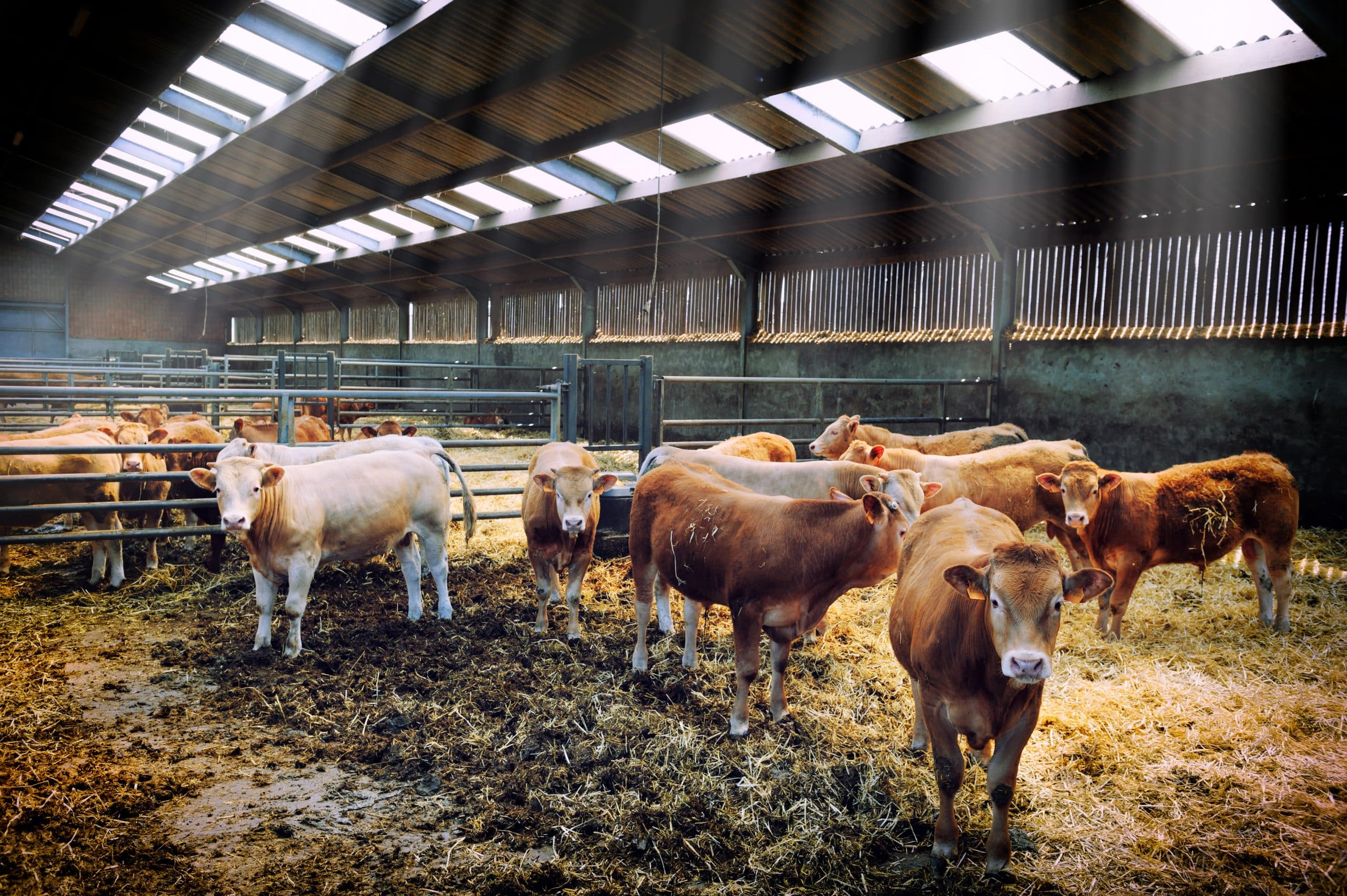

If you’re serious about running a profitable cattle operation, breed selection is one of the highest-leverage decisions you’ll ever make. The wrong breed in the wrong environment doesn’t just underperform; it costs you in feed efficiency, reproductive rates, calf survival, and marketability. Choosing the right breed means aligning genetics with your climate, forage base, labor capacity, and end market, whether you’re targeting a premium branded beef program or a commercial commodity grid.
According to the USDA Economic Research Service, cattle production accounted for roughly 22% of $515 billion in total U.S. agricultural cash receipts in 2024, making it the single most important livestock sector in the country. The stakes are high. This guide covers the 15 best beef cattle breeds, their defining characteristics, and how to match them to your operation.
How Many Breeds of Cows Are There Globally?
There are over 1,000 recognized cattle breeds worldwide, but only a fraction of those dominate the commercial beef industry. The FAO’s Domestic Animal Diversity Information System catalogs more than 1,000 bovine breeds across the globe, spanning everything from primitive landrace types to highly specialized modern breeds.
When it comes to commercial beef production, the breeds that matter most fall into three broad categories:
- British breeds (Angus, Hereford, Shorthorn),
- Continental/European breeds (Charolais, Simmental, Limousin, Gelbvieh, Chianina, Maine-Anjou), and
- American/Zebu-influenced breeds (Brahman, Brangus, Beefmaster, Texas Longhorn).
Understanding this classification helps you immediately narrow your selection based on climate and market targets.
As you build or refine your genetics program, it also helps to understand the fundamentals behind livestock breeding selection and trait prioritization before committing to a breed direction.
The 15 Most Common Beef Cattle Breeds
Below are the 15 most popular beef cattle breeds ranked and reviewed across their commercial strengths. Whether you’re building a cow-calf herd, a stocker program, or a seedstock operation, this list of beef cattle breeds gives you the foundational knowledge to make a data-driven decision.
1. Angus (Aberdeen Angus)
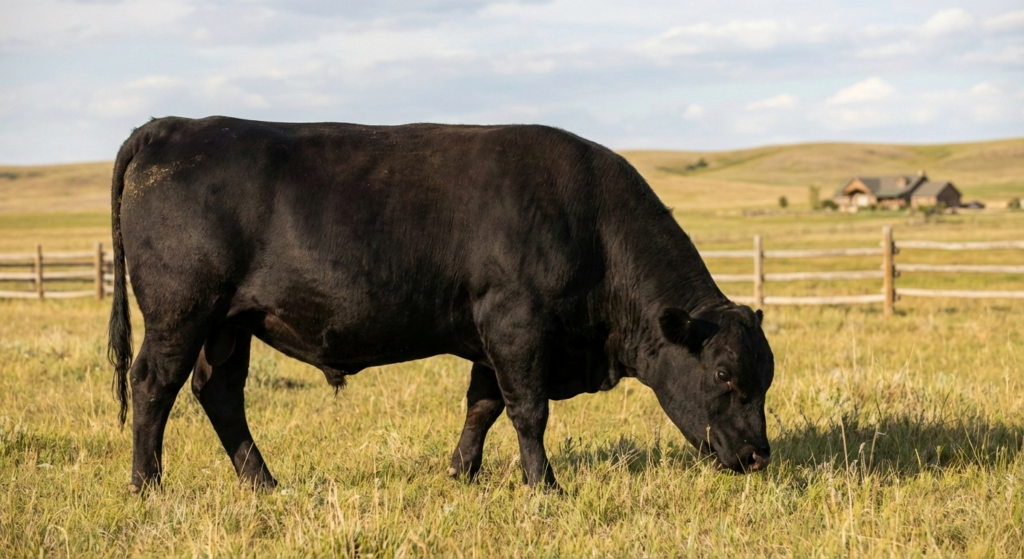
Originating in the Scottish Highlands, the Angus breed is the undisputed king of the commercial beef industry. Primarily a beef-focused breed, it is highly valued as both a maternal and terminal option. Producers choose Angus for its unmatched marketability, premium branded beef programs, and robust adaptability. It performs exceptionally well in temperate climates and feedlot environments. If you’re targeting Certified Angus Beef® or similar grid premiums, this is your breed.
Characteristics
- Solid black coat (or red in Red Angus variants) and naturally polled.
- Mature cows weigh 1,000–1,200 lbs; bulls weigh 1,800–2,000 lbs.
- Exceptional marbling capabilities and high carcass yield.
- Excellent maternal instincts and renowned for calving ease.
2. Hereford
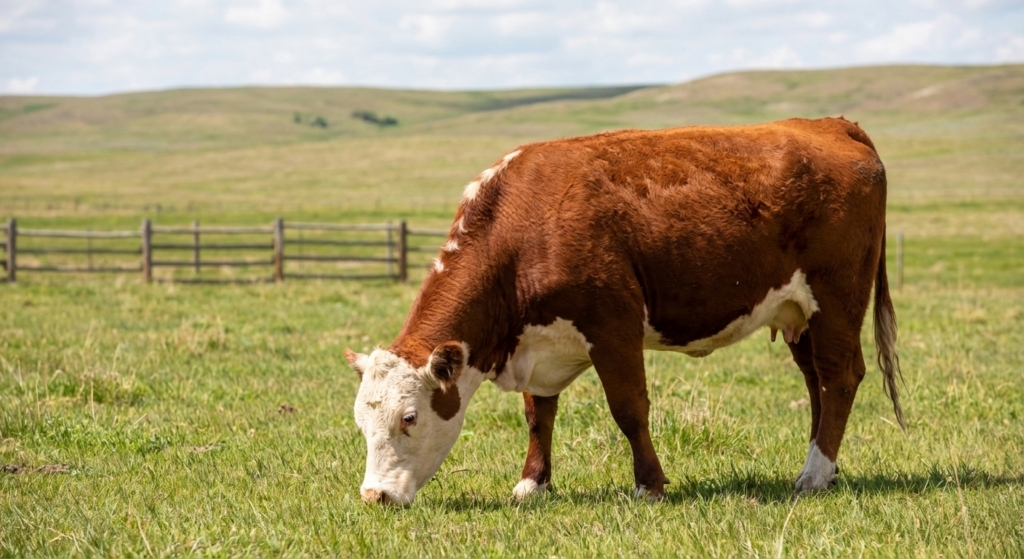
Developed in Herefordshire, England, the Hereford is a rugged, highly efficient beef breed known largely as a maternal and foraging breed. They are a staple in commercial cow-calf operations across North America. Ranchers favor them for their docile temperament, foraging efficiency, and crossbreeding value, particularly when creating the highly productive “Black Baldy” cross with Angus. They thrive in vast, open-range environments and harsh climates where input costs need to stay lean.
Characteristics
- Red body with a distinct white face, crest, underline, and switch; available in horned and polled.
- Mature cows weigh 1,200–1,500 lbs; bulls weigh up to 2,400 lbs.
- Superior feed efficiency and foraging ability on marginal pastures.
- Strong maternal traits with excellent fertility and longevity.
3. Charolais
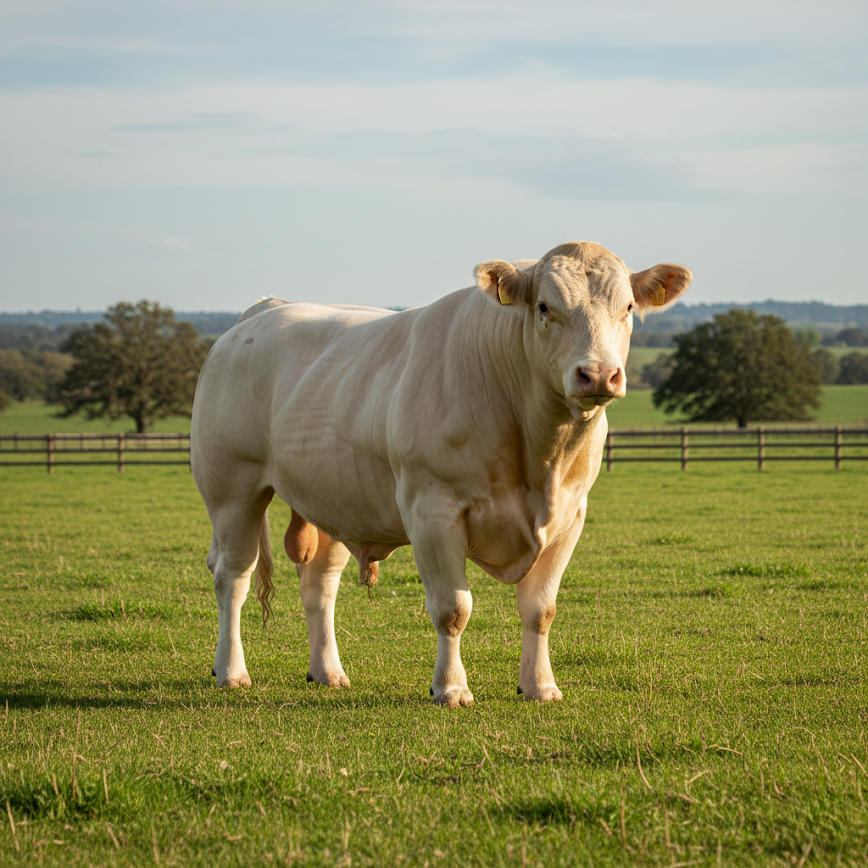
Hailing from the Charolles region of France, the Charolais is a heavy-muscled, fast-growing continental breed used strictly as a terminal sire in commercial crossbreeding systems. Producers choose Charolais to inject growth, frame size, and lean meat yield into their calf crops. If your primary goal is maximizing weaning weights and feedlot performance on your commercial steers, a Charolais bull adds significant pounds to the paycheck.
Characteristics
- White or creamy white coat color, naturally horned but polled genetics exist.
- Mature cows weigh 1,500–2,000 lbs; bulls weigh 2,000–2,500+ lbs.
- Aggressive growth rates and heavy weaning weights.
- High cutability and exceptionally lean carcass traits.
4. Simmental
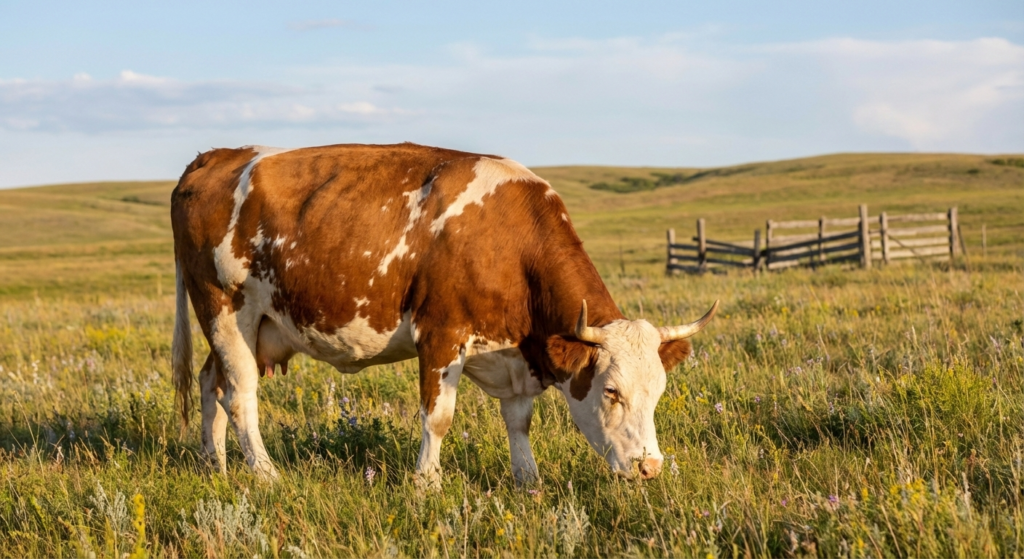
Originally developed in the Simme Valley of Switzerland, the Simmental began as a dual-purpose animal but is now a cornerstone beef breed. It serves as an incredibly balanced maternal and terminal option. Operators utilize Simmentals to add milk production to cow herds while simultaneously boosting calf growth rates. They are highly adaptable and perform well across diverse geographical regions, making them one of the most versatile entries on any cow breeds list.
Characteristics
- Traditionally red and white spotted, though solid black or solid red are now common; both horned and polled.
- Mature cows weigh 1,300–1,700 lbs; bulls weigh 2,200–2,800 lbs.
- Rapid early growth and excellent feed conversion.
- Heavy milk production and strong maternal capabilities.
5. Limousin
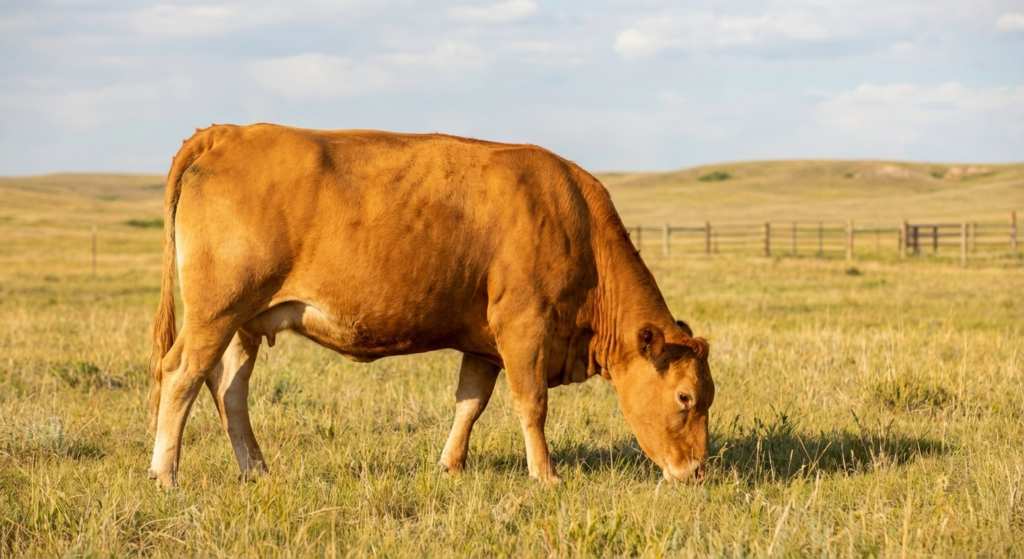
Native to the rugged regions of central France, the Limousin is heavily muscled and widely recognized as the “carcass breed” of the beef industry. It operates primarily as a terminal breed designed to maximize red meat yield. Feedlot operators value Limousin for their incredible feed efficiency and ability to produce highly desirable, lean retail cuts. If your operation sells on a quality-based grid that rewards ribeye area and lean yield, Limousin genetics deserve serious attention.
Characteristics
- Golden-red or solid black coat color; naturally horned with polled strains available.
- Mature cows weigh 1,300–1,500 lbs; bulls weigh 2,000–2,400 lbs.
- Industry-leading dressing percentages and massive ribeye areas.
- Exceptional feed-to-gain conversion rates.
6. Texas Longhorn
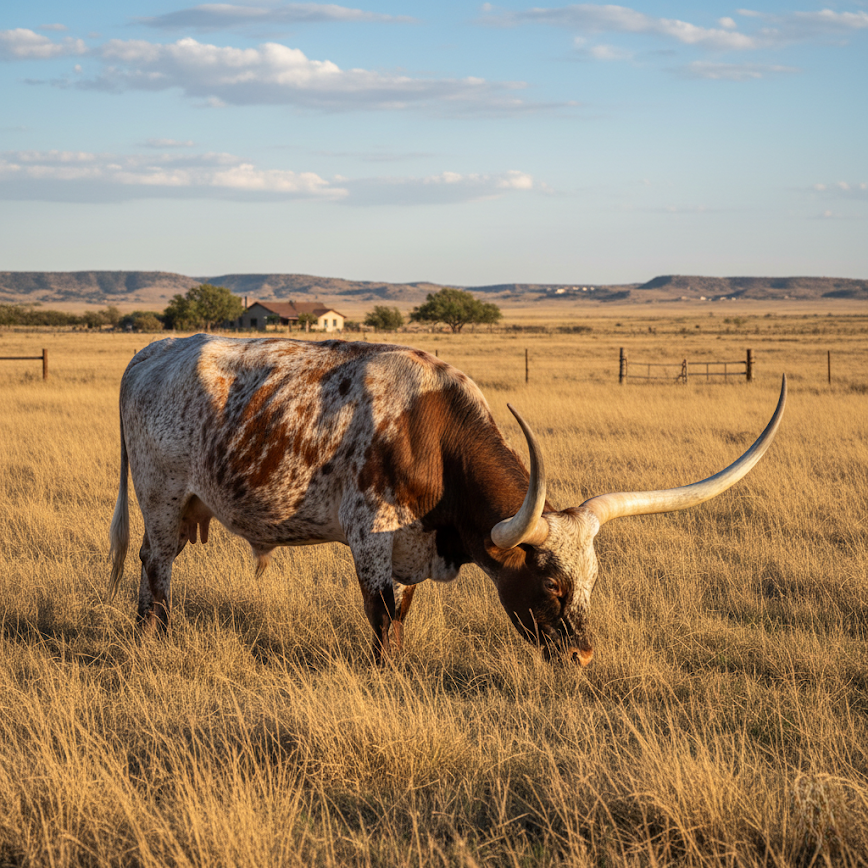
Deeply rooted in the history of the American West, the Texas Longhorn is an iconic, hardy beef breed. While not a conventional terminal breed, it is prized as a maternal asset for first-calf heifers. Producers leverage Longhorns for their extreme calving ease, disease resistance, and ability to survive on harsh, sparse brushland. They perform flawlessly in arid, hot climates where other breeds struggle to maintain body condition.
Characteristics
- Highly variable, speckled, and multi-colored coats with unmistakable, massive sweeping horns.
- Mature cows weigh 800–1,200 lbs; bulls weigh 1,500–2,000 lbs.
- Unmatched calving ease due to light calf birth weights.
- Lean meat profile with lower overall cholesterol compared to standard commercial beef.
7. Brahman
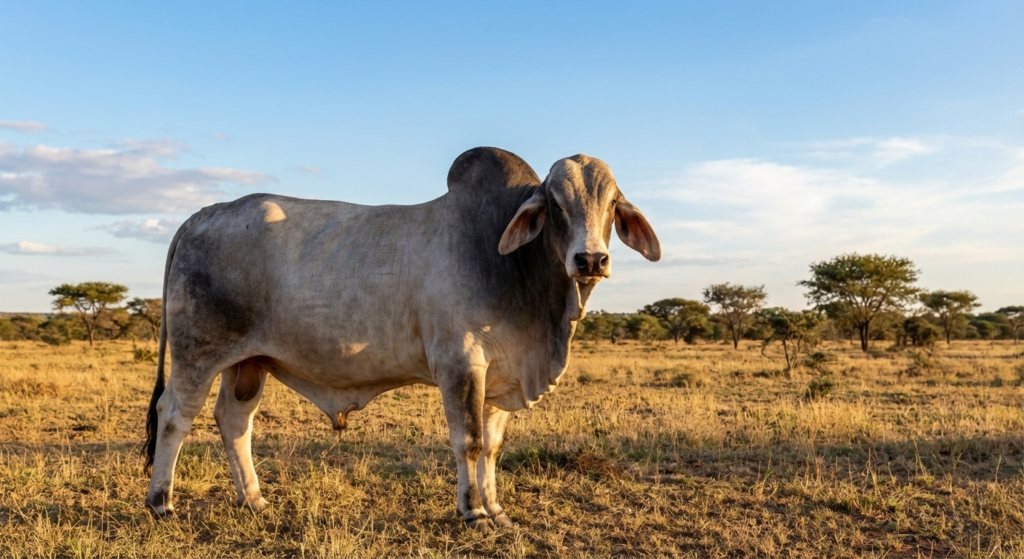
Developed in the United States from Indian Bos indicus genetics, the Brahman is the cornerstone of southern beef production. It is fundamentally a maternal and foundational crossbreeding breed. Producers utilize Brahman genetics to inject heat tolerance, parasite resistance, and hybrid vigor (heterosis) into their commercial herds. They are uniquely designed to thrive in hot, humid, subtropical environments where British breeds simply can’t sustain productivity. Understanding how to integrate Brahman influence effectively is a key component of sound cattle breeding management.
Characteristics
- Light gray to deep red coat color, characterized by a prominent hump over the shoulders and loose skin.
- Mature cows weigh 1,000–1,400 lbs; bulls weigh 1,600–2,200 lbs.
- Unparalleled heat tolerance and resistance to ticks and insects.
- Exceptional maternal longevity, often staying productive far longer than British breeds.
8. Wagyu
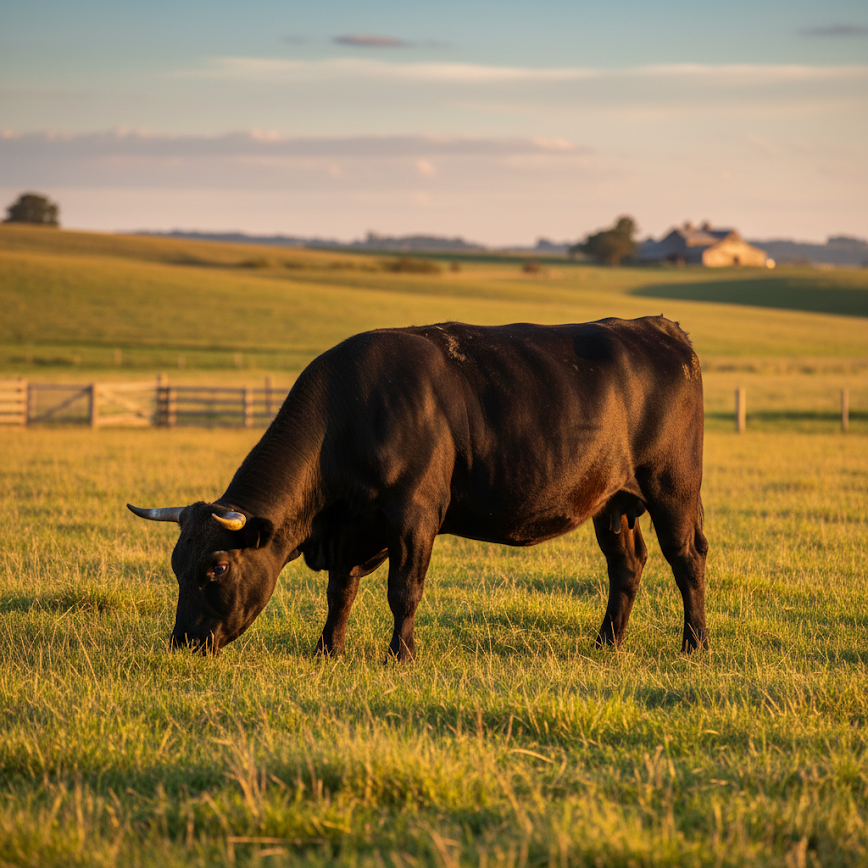
Originating in Japan as draft animals, Wagyu cattle have transformed into the world’s foremost luxury beef breed. They are utilized strictly as a specialized, premium terminal breed. Ranchers raise Wagyu to target niche, high-end culinary markets where meat quality supersedes sheer volume. They perform best in highly controlled, low-stress feeding environments engineered to maximize their extraordinary genetic marbling potential. If your target market is premium restaurants, direct-to-consumer, or export, Wagyu offers unmatched returns per pound.
Characteristics
- Primarily solid black or red coat color and naturally horned.
- Mature cows weigh 900–1,200 lbs; bulls weigh 1,500–1,900 lbs.
- Unrivaled intramuscular fat (marbling) and low melting point of fat.
- Slower growth rates requiring extended days on feed compared to continental breeds.
9. Chianina
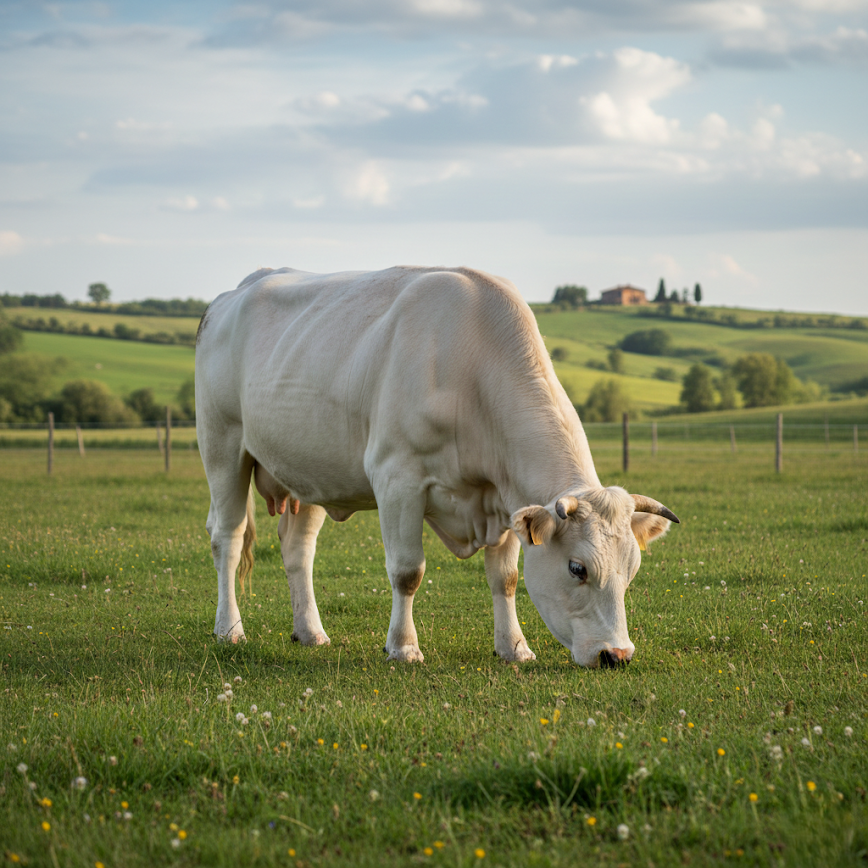
Tracing its origins back to ancient Rome in Italy, the Chianina is one of the oldest and largest cattle breeds in the world. Today it is utilized primarily as a terminal sire breed to add extraordinary frame and lean muscle to a calf crop. Producers integrate Chianina genetics to dramatically increase weaning weights and growth curves. They are adaptable but excel in environments that can support their massive frame size and correspondingly higher nutritional requirements.
Characteristics
- Distinctive porcelain white hair coat with black pigmentation on the skin, nose, and hooves.
- Mature cows weigh 1,800–2,400 lbs; bulls can easily exceed 3,000 lbs.
- Extremely tall frame size with long legs and heavy muscling.
- Produces lean, well-marbled meat with high overall carcass yields.
10. Dexter
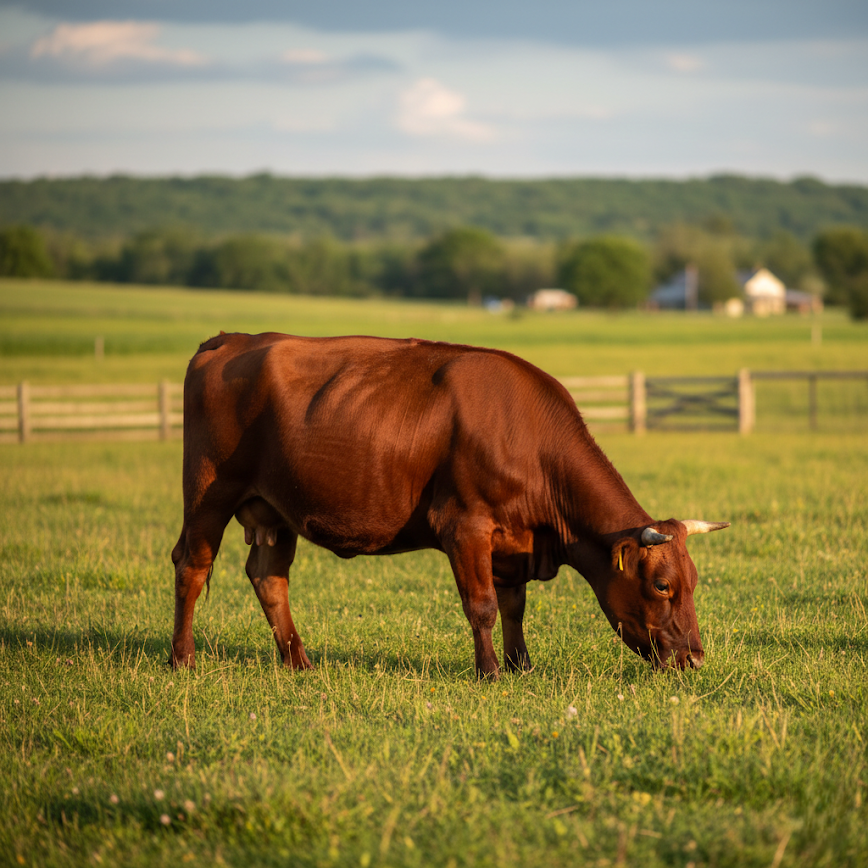
Originating in the mountains of southern Ireland, the Dexter is a highly efficient, dual-purpose heritage breed ideal for niche, small-scale operations. Homesteaders and small farm managers choose Dexters for their minimal land requirements and excellent foraging capabilities on limited acreage. If you’re running a rotational grazing system on smaller parcels and need a breed that converts grass efficiently into quality beef, the Dexter is hard to beat on a cost-per-pound basis.
Characteristics
- Solid black, red, or dun coat colors; available in horned and polled strains.
- Mature cows weigh 600–700 lbs; bulls weigh approximately 1,000 lbs.
- Highly efficient feed conversion on grass-based diets.
- Excellent maternal instincts and reliable calving ease.
11. Shorthorn
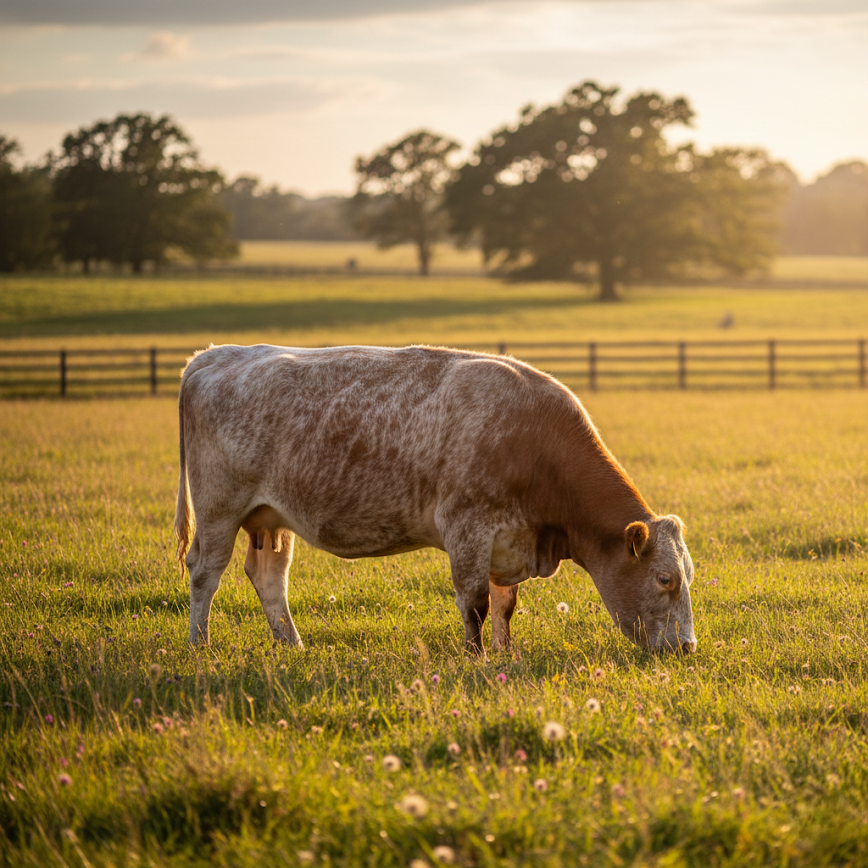
Developed in the Tees River Valley of Northeast England, the Shorthorn boasts a foundational legacy in the global beef industry and is a highly versatile dual-purpose breed that leans toward maternal strengths in today’s commercial sector. Ranchers value Shorthorns for their docile temperament, excellent milk production using dairy milk management software, and ability to improve carcass quality in crossbreds. They are highly adaptable, thriving across diverse climates and forage conditions, a reliable workhorse breed for cow-calf operators.
Characteristics
- Red, white, or roan (a distinctive mix of red and white hairs) coat color.
- Mature cows weigh 1,300–1,500 lbs; bulls weigh 2,000–2,400 lbs.
- High milk yield contributes to heavy calf weaning weights.
- Strong marbling traits and overall carcass tenderness.
12. Gelbvieh
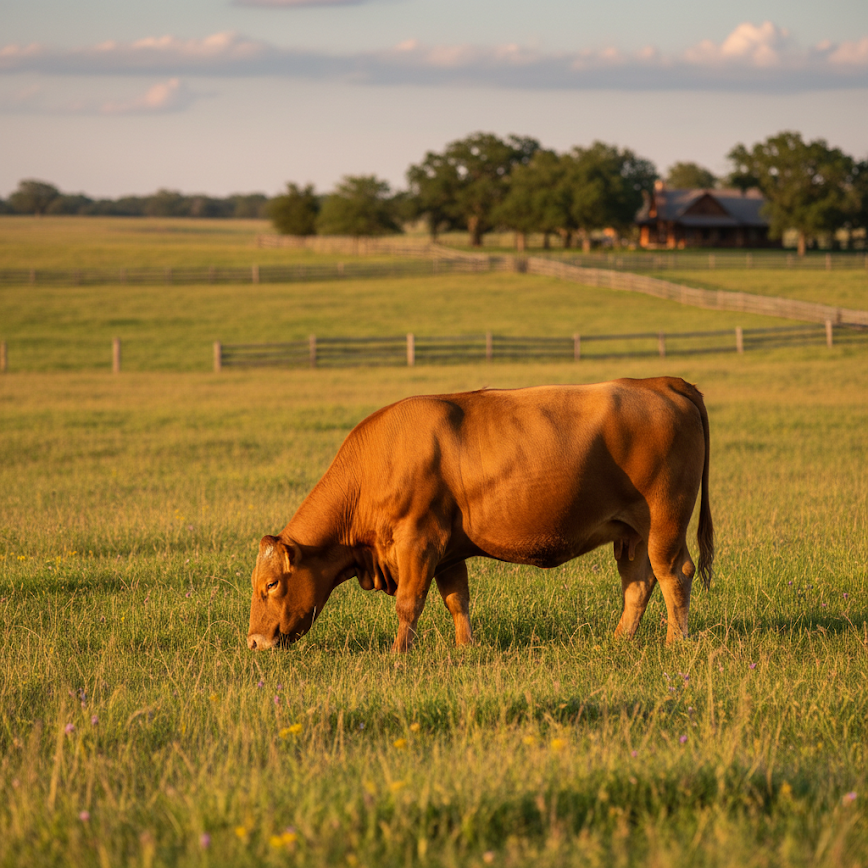
Hailing from the Bavarian region of Germany, the Gelbvieh was originally a multi-purpose breed that has evolved into a powerhouse beef contender. It effectively balances both maternal and terminal traits in commercial programs. Producers rely on Gelbvieh for their exceptional fertility, rapid early growth, and notably quiet dispositions, a practical advantage when managing large cow herds. They thrive in intensive grazing operations and feedlot environments alike.
Characteristics
- Traditionally golden-rust colored, though black genetics are now heavily prevalent, horned or polled.
- Mature cows weigh 1,200–1,400 lbs; bulls weigh 2,000–2,400 lbs.
- Early onset of puberty and high female fertility rates.
- Excellent combination of high weaning weights and lean carcass yield.
13. Brangus
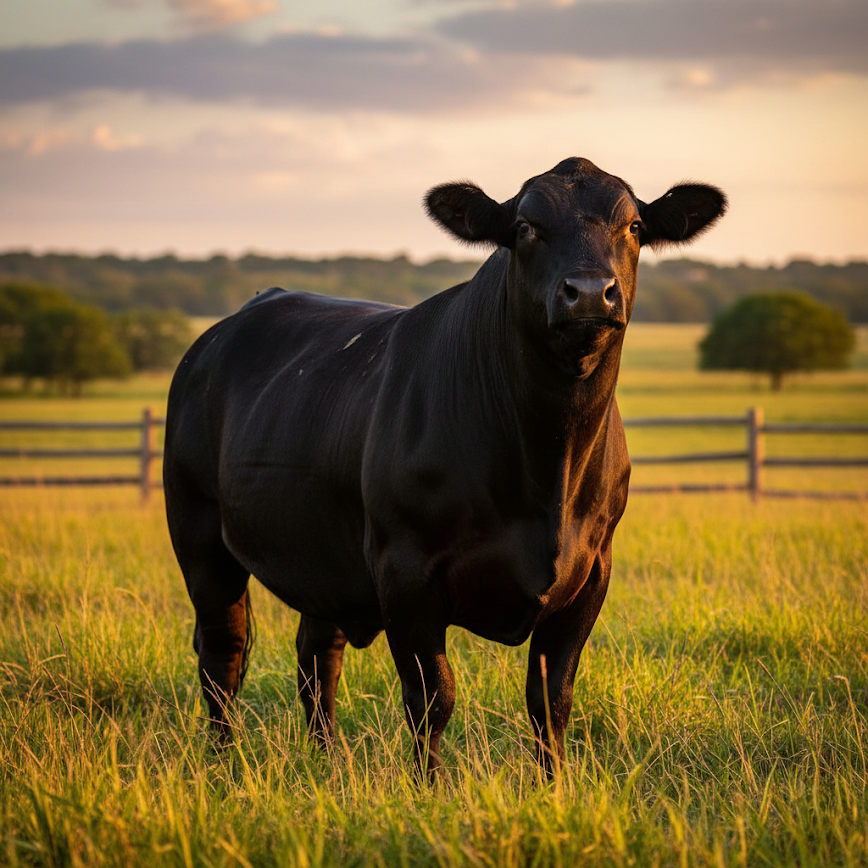
Developed in the United States, the Brangus is a stabilized composite breed consisting of 3/8 Brahman and 5/8 Angus genetics, engineered to capture the best of both worlds. It is a highly sought-after maternal breed for southern operations. Ranchers choose Brangus to retain the carcass quality of the Angus while adding the rugged heat tolerance of the Brahman. They perform flawlessly in hot, humid, subtropical environments. For more details on black breeds like this one, explore this overview of top black cattle breeds.
Characteristics
- Solid black coat and naturally polled.
- Mature cows weigh 1,100–1,200 lbs; bulls weigh 1,800–2,000 lbs.
- Exceptional heat tolerance and natural resistance to ticks and bloat.
- Strong maternal instincts, good udder quality, and reliable marbling.
14. Maine-Anjou
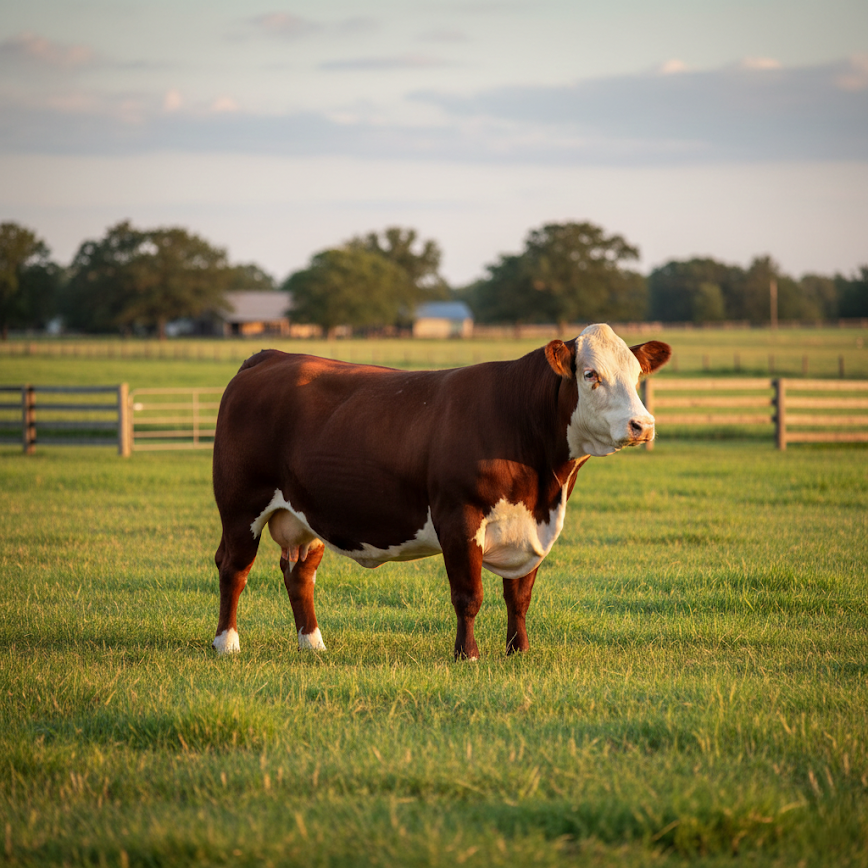
Originating in the rich pastures of northwestern France, the Maine-Anjou is a large-framed breed known for extreme muscle mass. In commercial operations, it functions almost exclusively as a terminal sire breed. Producers utilize Maine-Anjou genetics to rapidly increase calf weaning weights and produce high-yielding show cattle or feedlot steers. They perform best in systems where high-quality forage and supplemental nutrition are consistently available to support their large frames.
Characteristics
- Traditionally dark red with white markings, though solid black is now very common; horned or polled.
- Mature cows weigh 1,500–1,900 lbs; bulls weigh 2,200–2,600+ lbs.
- Massive frame size and aggressive growth curves.
- High cutability and extremely heavy carcass weights.
15. Beefmaster
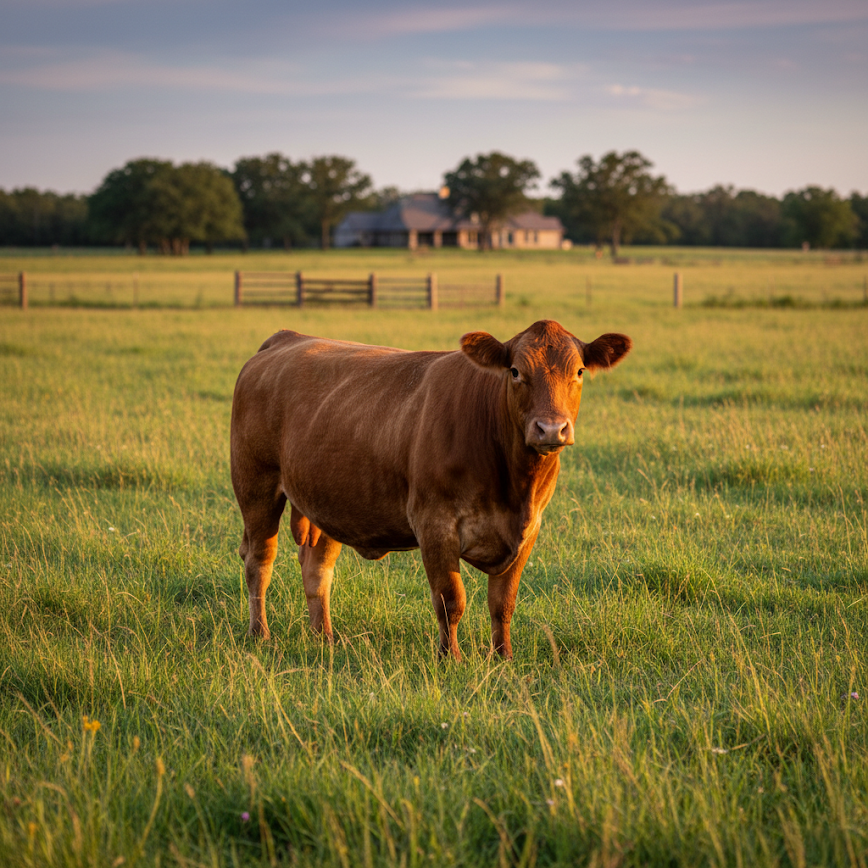
Created in South Texas during the 1930s, the Beefmaster is a complex composite of Hereford, Shorthorn, and Brahman genetics. It is celebrated as an exceptional maternal and range-hardy breed specifically developed around six operational essentials: weight, conformation, milking ability, fertility, hardiness, and disposition. They are perfectly adapted to thrive in harsh, semi-arid, and subtropical brush country where management inputs are lean and cattle must fend for themselves. If you’re building a cattle operation in a challenging climate, the Beefmaster deserves serious consideration.
Characteristics
- Varying coat colors (predominantly red or dun), generally horned but polled lines exist.
- Mature cows weigh 1,200–1,400 lbs; bulls weigh 1,800–2,200 lbs.
- Extreme hardiness, drought tolerance, and foraging efficiency.
- Excellent maternal traits and high calf survival rates.
The Beef Cattle Breeds Chart
With 15 breeds to evaluate, it helps to have a single-page reference for comparing them side by side. Use the beef cattle breeds chart below to narrow your shortlist quickly.
| Breed Name | Country of Origin | Primary Purpose | Main Color | Ideal Climate |
| Angus | Scotland (UK) | Maternal / Terminal | Black (or Red) | Temperate, Feedlot |
| Hereford | England (UK) | Maternal | Red & White Face | Open Range, Harsh |
| Charolais | France | Terminal | White / Cream | Temperate, Intensive |
| Simmental | Switzerland | Maternal / Terminal (Dual) | Red & White / Black | Diverse / Adaptable |
| Limousin | France | Terminal | Golden-Red / Black | Temperate, Feedlot |
| Texas Longhorn | United States | Maternal | Multi-colored | Arid, Hot, Brushland |
| Brahman | United States (Indian origin) | Maternal / Crossbreeding | Gray / Red | Hot, Humid, Subtropical |
| Wagyu | Japan | Terminal (Premium) | Black / Red | Controlled, Low-Stress |
| Chianina | Italy | Terminal | Porcelain White | Temperate, High-Input |
| Dexter | Ireland | Maternal / Dual | Black / Red / Dun | Small Acreage, Pasture |
| Shorthorn | England (UK) | Maternal / Dual | Red / White / Roan | Diverse / Adaptable |
| Gelbvieh | Germany | Maternal / Terminal | Golden-Rust / Black | Intensive, Feedlot |
| Brangus | United States | Maternal | Solid Black | Hot, Humid, Subtropical |
| Maine-Anjou | France | Terminal | Dark Red / Black | Temperate, High-Input |
| Beefmaster | United States | Maternal | Red / Dun | Semi-Arid, Subtropical |
FAQs
What Is The Most Popular Beef Breed?
The Angus, specifically the Black Angus is the most popular beef breed in the United States and one of the most widely registered breeds globally. Its combination of superior marbling, calving ease, adaptability, and access to premium branded beef programs like Certified Angus Beef® makes it the default choice for commercial producers across virtually every production system. No other breed comes close in terms of registered numbers or market penetration.
What Are Five Common Breeds Of Beef Cattle?
The five most common beef cattle breeds found on commercial operations worldwide are Angus, Hereford, Charolais, Simmental, and Brahman. Each one anchors a distinct production niche: Angus for marbling and marketability, Hereford for range hardiness and maternal efficiency, Charolais for terminal growth, Simmental for dual-purpose balance, and Brahman for heat and parasite tolerance in subtropical environments.
Which Breed Of Cattle Is Most Popular In Europe?
In Europe, the Simmental (also known as Fleckvieh) holds the title as the most numerically dominant cattle breed, particularly across Germany, Austria, and Central Europe where it excels as a dual-purpose animal. The Limousin ranks among the most prized beef-specific breeds, especially in France and the UK, where its lean carcass yield and feed efficiency make it highly valued in commercial beef programs and export markets.
Which Beef Cattle Breeds Are Indigenous To The United States?
Four beef cattle breeds are considered truly indigenous to the United States: the Texas Longhorn, which evolved from Spanish cattle brought by early explorers; the Brahman, developed from Indian Bos indicus genetics imported in the 19th century; the Brangus, a stabilized 3/8 Brahman × 5/8 Angus composite created in the 1930s; and the Beefmaster, developed in South Texas from Hereford, Shorthorn, and Brahman crosses during the same era. Each was purpose-built for American production conditions.
Match the Right Breed to Your Cattle Operation
There is no universally “best” beef cattle breed, only the best breed for your land, climate, labor system, and target market. A Wagyu operation in the Texas Hill Country requires an entirely different infrastructure and market strategy than a Brahman-cross cow-calf outfit in South Florida or an Angus feedlot in the Corn Belt. The breeds in this guide represent the most proven, commercially relevant options available to you today.
Start by narrowing your shortlist using the breed chart above, then drill into EPDs, local adaptation data, and input cost realities for your region. If you want to manage your herd data, breeding records, and performance metrics in one place, explore how modern livestock breeding best practices and purpose-built cattle management software can bring real visibility to your genetic program.
Need help optimizing your herd’s genetics and profitability? Contact us for a specialized livestock consulting session.