

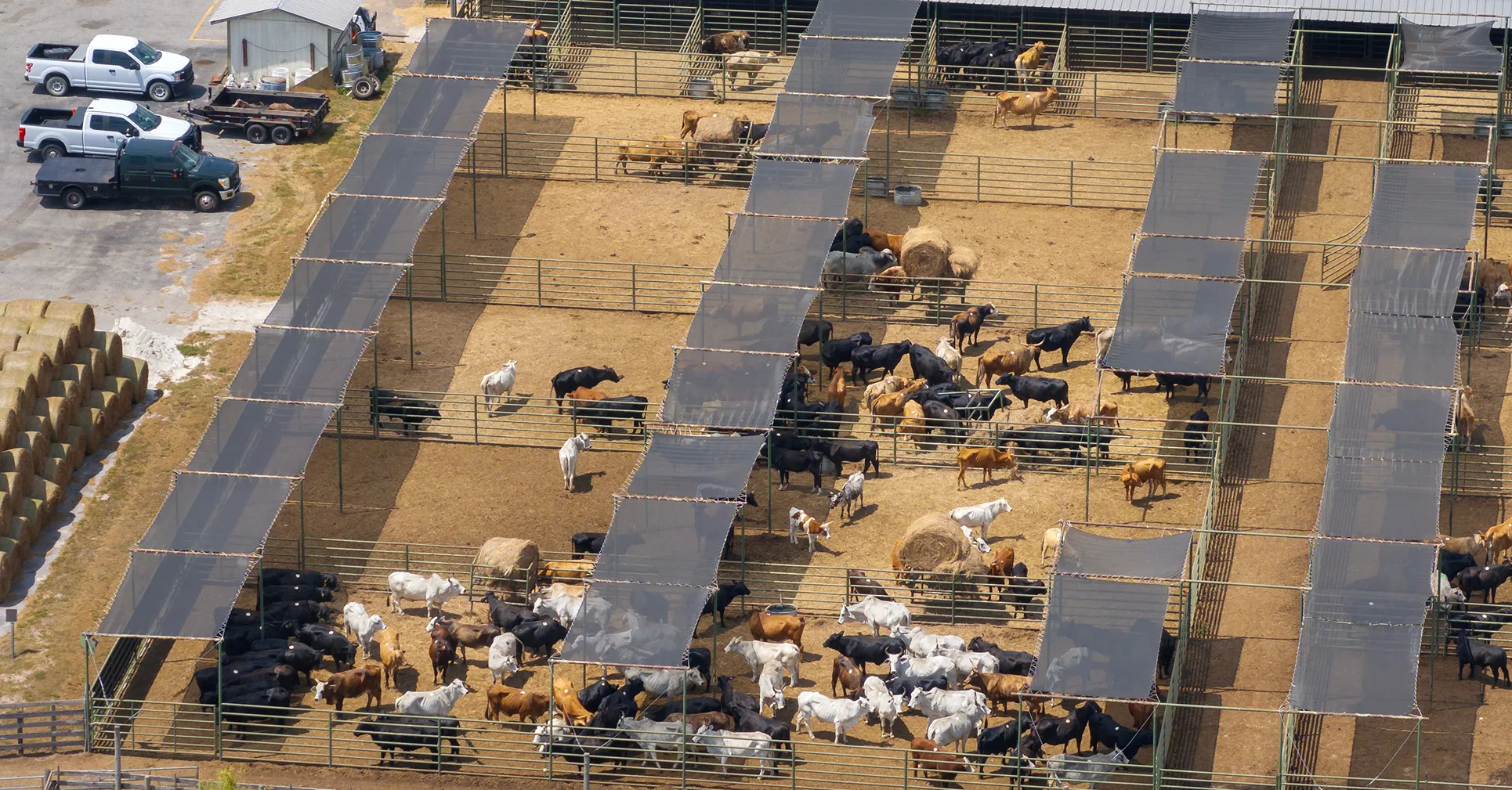
Executive Summary: This implementation log documents the digital transformation of a 50,000-head, multi-site cattle enterprise that outgrew fragmented accounting tools. By retiring isolated QuickBooks files and siloed yard applications, the organization deployed an integrated Feedlot ERP architecture powered by Folio3 AgTech. This transition to a Single Source of Truth (SSoT) synchronized biological asset tracking with real-time general ledgers, enabling automated multi-entity consolidation and lot-level cost allocation. The result was a reduction in the monthly close cycle from 25 days to 48 hours, including a 15% reduction in feed waste and the elimination of unrecorded "dead loss" financial spikes.
It was the 25th of the month, and the Corporate Controller of a major midwestern feedyard holding company was staring at a green-tinted QuickBooks Profit & Loss statement. According to the screen, the enterprise had just closed a highly profitable quarter.
The illusion shattered when the Feedyard General Manager (GM) walked into the boardroom, boots still covered in dust, and slid a crumpled paper yard-sheet across the polished desk.
"I don't care what your ledger codes say," the GM said, pointing to a scribbled number on the page. "We just lost $40 a head on Lot #802. Corn spiked last week, and that pen didn't hit its target gain. Your software thinks we made money because it's looking at the grain we bought a month ago, not what they ate yesterday."
The Controller realized the fundamental flaw in their feedlot finance management strategy. They were using legacy accounting software designed to track static inventory like auto parts on a shelf to manage a living, breathing operation. A calf is a dynamic entity; it is a biological asset that consumes fluctuating-priced commodities and gains weight daily. Generic software simply cannot account for biological asset depreciation or daily feed margin shifts without massive, delayed manual intervention.
Generic accounting software fails in the livestock management sector because it separates the physical reality of the yard from the financial reality of the General Ledger (GL). To solve this, commercial yards must transition from post-mortem bookkeeping to an active, finance-first ERP system.
By deploying an architecture where physical consumption directly triggers financial accruals, feedlots ensure that every pound of feed delivered is instantly reflected in the GL, aligning cash flow with actual biological performance.
Determined to find the root cause of the data lag, the Controller left the office and drove out to the yard. At the Hospital Pen, the disconnect became glaringly obvious.
A Pen Rider had just pulled a sick calf from a newly arrived lot. The yard veterinarian administered a $15 antibiotic treatment and scribbled the calf's visual tag number onto a dusty notepad sitting on the medicine cooler.
"Where does that notepad go?" the Controller asked.
The GM crossed his arms. "That notepad sits in the vet's truck until Friday. Then it goes to the office clerk, who takes another three days to type the treatments into a spreadsheet, which eventually gets handed to your team to key into QuickBooks. By the time you see that $15 vet bill, the calf has already recovered, finished, and shipped to the packer."

This was the "Chute-Side Chasm." The feedlot management system consisted of disconnected silos. Because chute-side data capture wasn't synchronized with the financial office, the team was forced to operate reactively. They weren't managing margins; they were performing financial autopsies.
The solution to the chute-side chasm is integrating hardware with cloud-based ERP logic. By equipping the Hospital Pen with RFID/EID readers connected to mobile tablets, every action becomes a synchronized data event.
When the vet scans a tag and logs a medicine dose, the software immediately registers the withdrawal period for compliance, calculates the exact Dry Matter Intake (DMI) impact, and instantly pushes that $15 expense to the specific Lot ID in the financial ledger. This automated lot-level cost allocation completely eliminates the delay between physical treatment and financial recognition.
Back at the corporate office, the operational friction compounded into a structural nightmare. The enterprise didn't just operate one feedyard; they managed three separate feedlots, a row-crop farming division, and a livestock transport LLC.
The Controller sat at a desk with five different QuickBooks company files open simultaneously. The GM leaned in and asked, "Do we have the invoices ready for the retained ownership cattle in Pen 40? The investors are asking."
The Controller rubbed their temples. "I have to manually calculate the daily yardage fee for the past 30 days, figure out the 60/40 feed cost splits based on their custom feeding contract, and then bill it across three different LLCs. If I make one copy-paste error on this master spreadsheet, it ruins the entire month's audit."
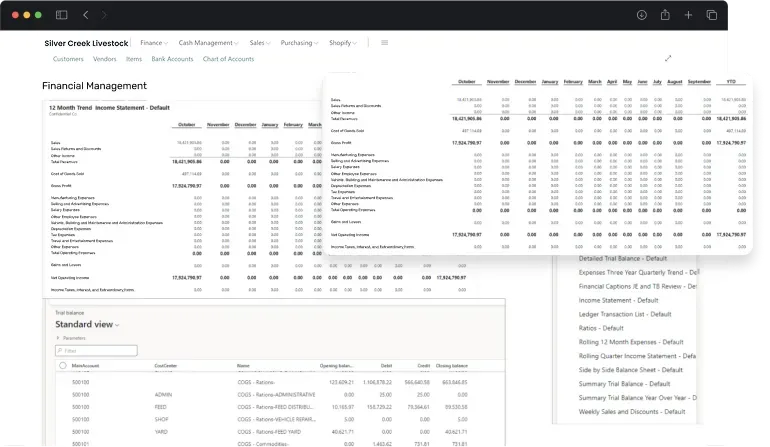
This is the ultimate ceiling of legacy software. When a business scales, managing multi-site cattle operations and consolidated feedlot reporting becomes mathematically impossible without dedicated feedlot management software for large operations.
Enterprise feedlot software handles multi-entity accounting through automated inter-company eliminations and centralized database architecture. Instead of logging into different files, the system allows the Controller to view a unified ledger.
For custom feeding, the ERP's contract module dynamically applies variable interest rates and yardage markups based on the specific investor agreement. When feed is dropped in a shared pen, the software automatically splits the cost, generating precise, segmented invoices for retained ownership partners without manual spreadsheet math.
The fragility of the old system reached its breaking point on a Tuesday afternoon. The phone rang; it was the lead partner of an investment group that owned 5,000 head of cattle currently on feed across two of the company's locations.
The investor was blunt: "Corn futures are moving. I need to know the exact break-even price for my cattle right now to decide if we need to hedge our position on the board."
Panic set in. To calculate an accurate Cost-of-Production (COP) today, the Controller needed yesterday’s data. But the Scale House Operator's inbound cattle weights were logged in a standalone program, and the Feed Mill Manager's daily ration costs were tracked in a separate inventory app.
"I can't give you that number today," the Controller had to admit. "It will take my team four days to reconcile the weights and the feed bills to build that report."
The silence on the other end of the phone was deafening. The inability to provide audit-ready financials wasn't just an administrative annoyance anymore; it was a massive liability that threatened to cost them a multi-million dollar investor.
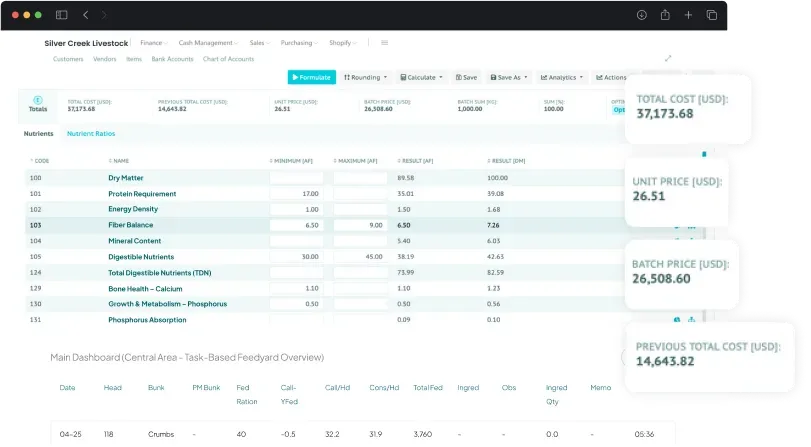
The Strategy: Generating real-time Cost-of-Production (COP) requires linking live operational data to market realities. By tying live commodity APIs (like the ZCZ5 corn futures) directly into the yard’s daily feed consumption algorithms, an integrated ERP can project margins dynamically.
Because all scale house weights, mill costs, and medical bills are centralized, the Controller can generate an audit-ready P&L statement for retained ownership investors with a single click, providing absolute transparency and defending the enterprise's credibility.
The investor call was the catalyst for total transformation. The enterprise engaged Folio3 AgTech to tear down the silos and deploy a feedlot management software for large operations capable of handling true enterprise scale.
The implementation fundamentally rewired how the company operated. They didn't just upgrade their software; they architected a Single Source of Truth (SSoT). The disparate systems were retired. Now, the Feed Mill Manager, the Chute Vet, the Scale House Operator, and the Corporate Controller were all logging into the exact same database.
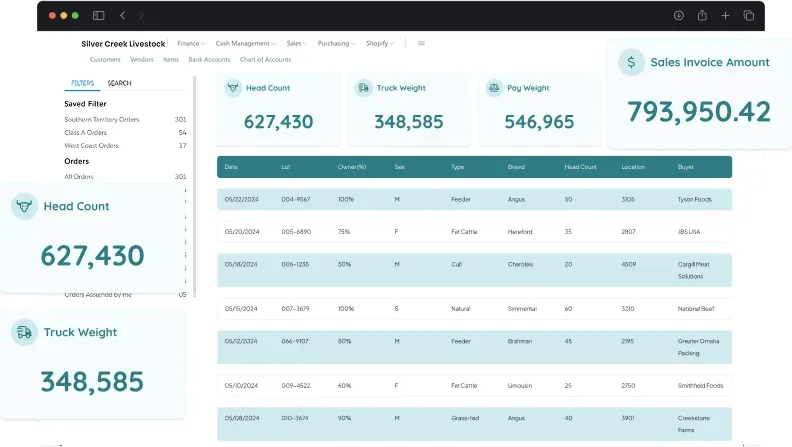
The magic of this General Ledger (GL) synchronization was instantaneous. When a feed truck operator confirmed a ration drop into a bunk via their cab tablet, the exact cost of that specific corn blend instantly debited the feed inventory and credited the specific lot's expense account. Every physical action in the dirt translated into an immediate financial transaction in the cloud. The days of translating notes from truck cabs to corporate spreadsheets were permanently over.
Six months after the Folio3 AgTech deployment, the agonizing 25-day month-end close was a relic of the past. The Controller looked up from the finalized P&L. "I just ran the numbers against the old QuickBooks workflow. Last year, this report would have taken twenty days of chasing shadows and reconciling errors. Today, it’s done in forty-eight hours with zero discrepancies."
They utilized the system's predictive margins to negotiate better packer contracts and hedge feed costs with 99% accuracy. Beyond the time savings, the transition delivered a measurable 15% increase in overall net margin by capturing every cent of feed, labor, and medicine in real-time.

More importantly, the culture of the business shifted. The Feedyard GM and the Controller were finally looking at the exact same screen. By bridging the gap between the yard and the office, the feedlot management system empowered the team to track their Average Daily Gain (ADG) against real-time feed margin analysis.
Is your feedlot running on a ledger from a bygone era? It’s time to close the gap between your chute and your spreadsheet. If you are managing thousands of heads across multiple sites, you cannot afford the invisible costs of siloed tools. Upgrade your operations with an ERP built specifically for the demands of the modern livestock value chain.
Get a Free Consultation Within 24 Hours, with a No-Obligation Ballpark Estimate
Error: Contact form not found.