
Every season, you face a familiar gamble: unpredictable weather, razor-thin margins, and the ever-present threat of pests that can wipe out a stand before it even emerges. With input costs climbing and weather patterns becoming less predictable, the decisions you make before a single seed hits the soil often determine whether you harvest a profit or absorb a loss.
That is exactly why seed treatment has become one of the most cost-effective risk management tools in modern agriculture. Unlike broadcast spraying or foliar applications that target mature plants, seed treatment works during the earliest and most vulnerable stage of a plant’s life. It gives your crop a head start by protecting it from soil-borne threats even before germination begins.
The global seed treatment market reflects how seriously the industry takes this practice. Valued at approximately USD 7.84 billion in 2025, it is projected to reach USD 11.39 billion by 2030, growing at a CAGR of 7.7%.
This guide provides a detailed, up-to-date overview of seed treatment strategies, methods, and technologies for farmers, agribusiness managers, and ag-tech professionals.
What Is Seed Treatment in Agriculture?
Seed treatment in agriculture is the controlled application of biological, chemical, or physical agents directly onto or into the seed before planting. The practice has evolved dramatically from the ancient remedies of Egyptian and Roman farmers, who used onion sap and saltwater. Today’s precision formulations combine fungicides, insecticides, biologicals, and micronutrients in a single application.
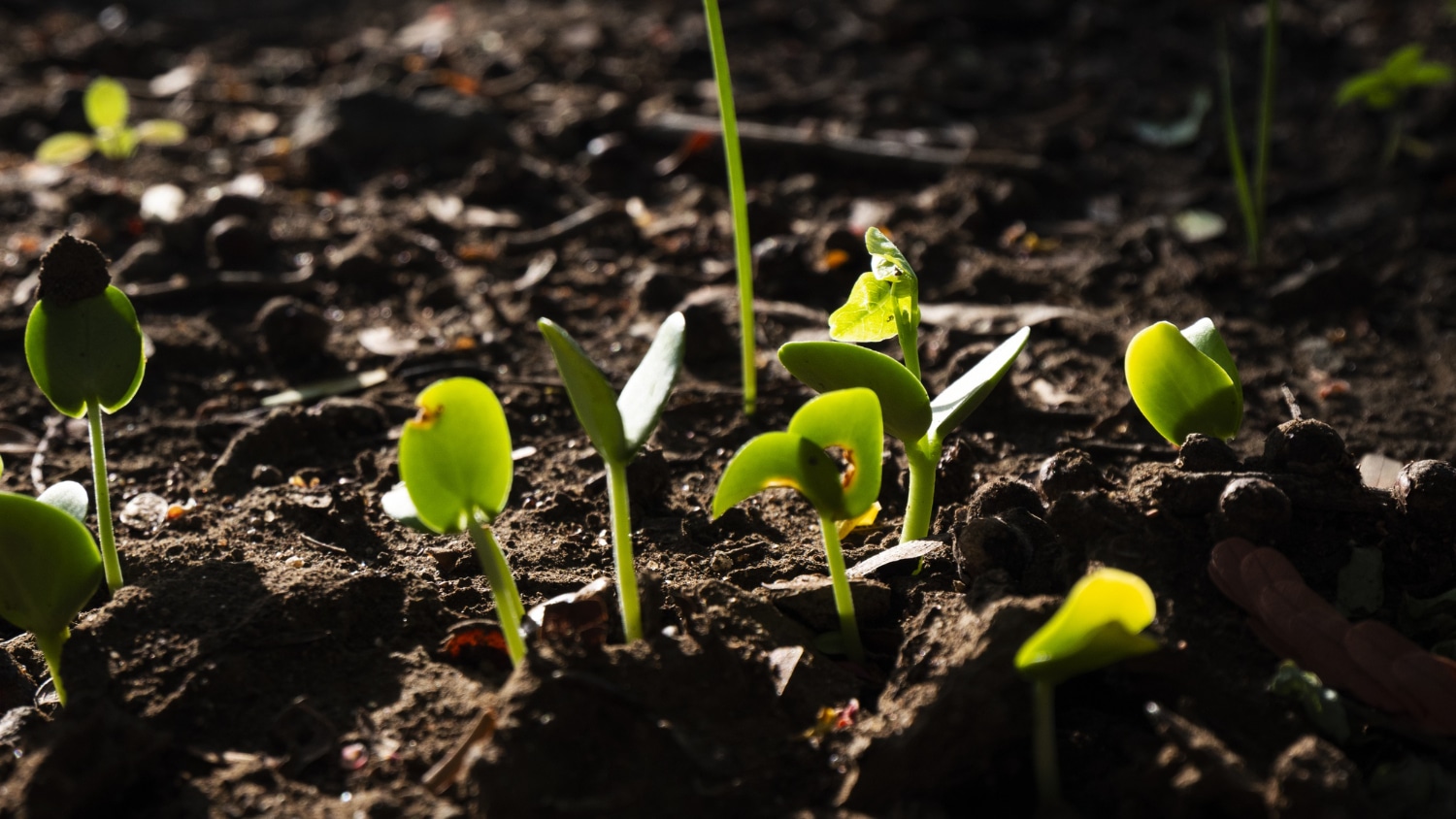
The key concept behind modern seed treatment is protecting the “spermosphere,” the immediate microenvironment surrounding a planted seed where early biological activity occurs. By treating the seed rather than broadcasting chemicals across an entire field, you concentrate protection exactly where it is needed.
This targeted approach is more effective and far more environmentally friendly than blanket spraying. Because it uses a fraction of the active ingredient while delivering maximum impact at the most critical growth stage.
Modern seed treatments include seed coating, seed dressing, seed pelleting, seed priming, and seed disinfection, each tailored to specific crop needs and field conditions. When properly matched to your soil, climate, and pest history, they give every seed the best possible start. To understand how these advancements fit within the bigger picture of modern seed farming practices and technologies, it helps to see where treatment sits in the broader production pipeline.
Why Seed Treatment Matters
Your investment in seed treatment pays dividends across the entire crop cycle. Here are the core benefits that drive adoption worldwide.
Enhanced Germination and Seedling Vigor
Treated seeds consistently show higher germination rates and improved resilience during the vulnerable early-growth window. By equipping seeds with protective compounds and growth-promoting agents, you reduce the risk of poor stands and uneven emergence, setting the stage for stronger, more uniform crops.
Disease and Pest Protection
Seed-applied fungicides create a protective shield against soil-borne pathogens like Pythium, Rhizoctonia, and Fusarium that thrive in cold, wet soils. On the insect side, systemic insecticides protect seedlings from early-season pests such as wireworms, cutworms, and seed corn maggots through both contact and stomach activity. Biopesticides provide an additional eco-friendly layer of defense.
Stress Tolerance
Seed priming techniques condition seeds for environmental challenges. Primed seeds demonstrate increased tolerance to drought, salinity, and temperature fluctuations. It is especially valuable if you plant early, when cold, wet soils put untreated seeds at a significant disadvantage.
Nutrient Uptake and Early Growth
Micronutrient seed treatments and enzyme-based formulations improve nutrient mobilization right from emergence, supporting vigorous root development and early plant growth. However, it is important to evaluate these products carefully. Micronutrient seed treatments often deliver only small amounts of nutrients and may not always translate into significant yield gains on their own.
Return on Investment
Seed treatments provide the strongest ROI when applied for early planting in challenging soil conditions or in fields with known disease and pest pressure. Reports suggest that untreated corn fields experienced an average yield reduction of 15–20 bushels per acre due to early pest infestations. Always evaluate your specific goals, local disease pressure, and potential yield gains before committing to a treatment package.
Types of Seed Treatments
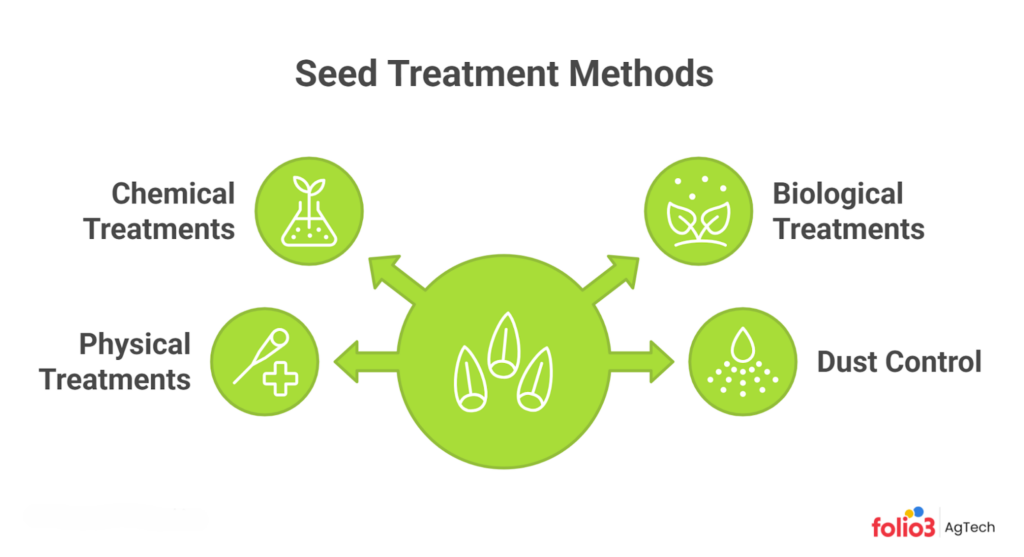
Seed treatments fall into four broad categories: chemical, biological, physical, and dust control. In practice, multiple treatments are often combined into a single application to address diverse threats, and the optimal mix depends on your specific crop, region, and field conditions.
Chemical Seed Treatments
Chemical seed treatments involve applying fungicides, insecticides, nematicides, micronutrients, and plant growth regulators directly to the seed. These are the most widely used treatments and form the backbone of most seed treatment programs.
Fungicides: Fungicidal seed treatments are especially beneficial when planting in cold, wet soils, in reduced-till or no-till fields, or when working with seed that has low germination rates. Active ingredients like metalaxyl and mefenoxam target water-mold pathogens such as Pythium and Phytophthora
Meanwhile, fludioxonil and captan provide broader control against Rhizoctonia, Fusarium, and seed-borne diseases. Treating soybeans with fungicides is particularly important in early planting scenarios where cool soil temperatures give soil-borne fungi a greater opportunity to attack seedlings.
Insecticides: Insecticide seed treatments shield seeds from early-season pests like wireworms, cutworms, seed corn maggots, and flea beetles. Common active ingredients include imidacloprid, clothianidin, and thiamethoxam. They are systemic neonicotinoids that move throughout the plant and protect through both contact and stomach activity. These treatments are especially useful for early planting and in fields with known pest pressure.
Nematicides: Nematicide treatments protect roots from plant-parasitic nematodes that can devastate yield. Biological nematicides using Bacillus-based organisms are increasingly popular. They provide targeted nematode control while being compatible with integrated pest management programs.
Micronutrients and Plant Growth Regulators: Micronutrient seed treatments can supply zinc, manganese, and other trace elements. Many products deliver only small amounts and often do not show significant yield responses. They should not be considered a substitute for balanced soil fertilization. Plant growth regulators such as cytokinin, gibberellic acids, and indole-3-butyric acid can enhance root development and stress tolerance when properly applied.
Compatibility and Application: When stacking multiple products, always verify chemical compatibility and use proper application methods. Apply using slurry, mist, or direct treat equipment to ensure uniform seed coverage and avoid overuse.
Common Chemical Seed Treatment Active Ingredients:
| Active Ingredient | Example Trade Names | Target Pests / Diseases | Notes |
| Metalaxyl / Mefenoxam | Apron, Allegiance | Pythium, Phytophthora (water molds) | Often combined with other actives for broad control |
| Fludioxonil | Maxim 4FS | Rhizoctonia, Fusarium, seed-borne diseases | Broad-spectrum fungicide |
| Captan + PCNB + Thiabendazole | Rival | Phomopsis, Rhizoctonia, Fusarium | Multi-component mix |
| Azoxystrobin + Metalaxyl | SoyGard | Rhizoctonia, Fusarium (poor on Phytophthora) | Combined strobilurin and oomycete control |
| Imidacloprid | Gaucho | Wireworms, seed maggots, soil-borne insects | Systemic neonicotinoid |
| Clothianidin | Poncho | Multiple corn insects | Often combined with fungicides |
| Thiamethoxam | Cruiser | Chinch bugs, flea beetles, cutworms | Widely used on corn and soybeans |
Biological Seed Treatments
Biological seed treatments use beneficial microbes or natural compounds to promote plant growth, improve nutrient uptake, and suppress diseases. These include bacterial and fungal inoculants, plant growth-promoting bacteria, and biofungicides.
A peer-reviewed meta-analysis of 396 global studies found that biological seed treatments significantly improved crop yield by an average of 21%. Moreover, it boosted disease control by 55% and enhanced seedling emergence by 91% compared to untreated seeds. These treatments protect against pathogens like Rhizoctonia, Pythium, and Fusarium while maintaining biodiversity and avoiding harm to non-target organisms.
Specific examples include rhizobial inoculants for nitrogen fixation in legumes, Bacillus-based biofungicides, and carbon-based biostimulants that feed beneficial microbes in the spermosphere. Several biological products carry OMRI (Organic Materials Review Institute) listings, making them attractive for organic or sustainable production systems.
However, not all biologicals deliver consistent yield benefits. Evaluate products carefully by reading labels, seeking local trial data, and considering the company’s track record in developing effective formulations. For more on how modern seed production practices drive quality outcomes, see best practices for quality assurance in seed production.
Physical Seed Treatments
Physical seed treatments are non-chemical processes applied to seeds to enhance germination and control disease. These methods include seed priming, scarification, stratification, hot-water or steam treatments to kill seed-borne pathogens, and mechanical cleaning. They are particularly valuable for growers who want to minimize chemical inputs or complement their existing chemical programs with additional protection.
Thermal treatments, such as hot water at carefully controlled temperatures, can eliminate seed-borne smut, bunt, and other fungal pathogens without leaving chemical residues. This approach is especially useful in organic production systems where synthetic fungicides are not permitted. Mechanical cleaning and gravity separation remove lightweight, infected, or damaged kernels from seed lots, ensuring that only the healthiest seeds make it to the planter.
Seed priming deserves special attention because it directly improves germination speed and stress tolerance. By exposing seeds to controlled hydration before planting, you accelerate the metabolic processes that drive emergence, resulting in faster and more uniform stands. In cotton production, delinting, or removing the lint fibers from seeds, improves planting efficiency and seed-to-soil contact.
Dust Control Seed Treatment
When treated seeds pass through the planter equipment, friction can release fine dust particles containing active ingredients into the air. This “dust-off” poses risks to both worker safety and pollinators, especially bees and other beneficial insects.
Polymer coatings, peat-based adhesives, and flow additives bind active ingredients more securely to the seed surface, reducing dust release during handling and planting. Using certified dust-control seed treatments and properly calibrated planting equipment is essential for regulatory compliance and environmental stewardship. If you are stacking multiple treatments, verify that your dust-control coating is compatible with all products in the mix.
Crop-Specific Seed Treatment Strategies
Different crops face different threats, so your treatment program should be tailored accordingly. Here is a crop-by-crop breakdown.
Corn Seed Treatment
Corn faces early-season pressure from corn rootworm, wireworms, seed corn maggots, and southern corn leaf beetle. It also includes diseases like Pythium and Fusarium that attack seedlings in cool, wet soils. For most operations, a combined fungicide-insecticide package is the standard approach. Metalaxyl controls Pythium, while azoxystrobin or fludioxonil target Rhizoctonia and Fusarium.
On the insect side, clothianidin or thiamethoxam provides systemic protection against soil-dwelling pests. Biological nematicides using Bacillus-based organisms offer additional protection against nematodes while supporting early root development.
The corn segment alone dominates the global seed treatment market, accounting for over 31% of total revenue, reflecting how heavily corn growers invest in seed-applied protection. Always choose treatments based on your planting date, soil moisture, and pest history, and consider testing new products in small plots before full-scale adoption.
Soybean Seed Treatment
Soybeans are vulnerable to damping-off diseases caused by Pythium, Phytophthora, Rhizoctonia, and Fusarium, plus pests like bean leaf beetle, cutworm, and soybean aphid.
Effective soybean seed treatment programs combine fungicides targeting these pathogens. They include metalaxyl or mefenoxam paired with fludioxonil, alongside insecticides like imidacloprid or thiamethoxam. Rhizobial inoculants are especially beneficial in fields where soybeans have not been grown recently, as they support nitrogen fixation and reduce fertilizer dependency.
Be cautious with micronutrient treatments on soybeans, because micronutrient seed treatments rarely produce meaningful yield gains. Focus your investment on disease protection and early-planting insurance, particularly in fields with a history of sudden death syndrome or where you are planting into cold soil.
Wheat Seed Treatment
Wheat faces pests like wheat stem sawfly, hessian fly, armyworms, and aphids. Diseases, including loose smut, root rot, stinking smut, and various viral infections, also impact it.
Fungicidal treatments with actives like fludioxonil, tebuconazole, or metalaxyl control Fusarium, Rhizoctonia, and Pythium effectively. Where insect pressure is high, add insecticide seed treatments targeting wireworms and aphids. Physical treatments such as hot water or steam can control seed-borne smut without chemicals, and mechanical cleaning removes infected kernels before planting.
Wheat seeds can also benefit from micronutrient applications like copper and zinc, and plant growth regulators for stress tolerance. However, always evaluate ROI before adding these to your program.
Organic and Sustainable Seed Treatment
Organic seed treatment options include bio-based fungicides such as Bacillus subtilis and Trichoderma spp., bacterial and fungal inoculants, and natural plant extracts. Carbon-based seed treatments that feed beneficial microbes in the spermosphere are also gaining traction.
When selecting products for organic systems, look for OMRI-listed formulations. Pulse, adhere to your certification body’s standards, and integrate treatments with broader IPM practices to reduce reliance on synthetic chemicals. To learn how seed certification interacts with treatment, see the importance of seed certification in modern agriculture.
Factors to Consider When Selecting Seed Treatments
Choosing the right treatment involves more than picking a product off the shelf. Consider these key variables before making a decision.
- Soil type and moisture: Heavier, poorly drained soils increase disease risk and favor water-mold pathogens like Pythium.
- Planting date: Early planting into cold soils heightens the need for fungicide protection.
- Tillage system: No-till and reduced-till fields retain more crop residue, creating a habitat for disease organisms and insects.
- Pest and disease history: Fields with known nematode, rootworm, or disease pressure require targeted treatments.
- Seeding rate and plant density: Higher seeding rates mean more seeds per acre competing for resources, increasing disease transmission risk.
- Crop variety genetics: Some varieties have built-in disease resistance that may reduce the need for certain treatments. Review this seed selection before finalizing your treatment plan.
- Cover crop history: Previous cover crops influence soil biology and can either suppress or harbor pathogens.
- Seed quality and vigor: High-quality seed is the foundation of any treatment program. Low-vigor seed responds more to treatment but may still underperform.
Environmental and Safety Considerations for Seed Treatment
Responsible seed treatment protects more than your crop; it safeguards the environment. Here is what you need to keep in mind.
Chemical seed treatments, while effective, can impact soil health, water quality, and non-target organisms if not managed properly. Neonicotinoid insecticides, in particular, have faced regulatory scrutiny in recent years. It is because of the concerns about pollinator health that many companies are reformulating coatings and exploring alternatives like RNAi-based and microbial treatments.
Proper storage, disposal, and application practices are critical to mitigating these risks. Integrated pest management (IPM) strategies that limit broad-spectrum pesticide use by targeting specific threats reduce the overall environmental footprint of your operation. Moreover, biological seed treatments offer an environmentally friendlier alternative, supporting soil biodiversity and protecting beneficial organisms.
For personal safety, always wear appropriate personal protective equipment (PPE) when handling treated seed. Follow manufacturer guidelines for application rates, and ensure that treated seeds are stored separately and disposed of according to local regulations. Never use treated seed for food, feed, or oil processing.
The Role of AgTech in Managing Seed Treatments
Technology is transforming how seed treatments are planned, applied, and tracked. Digital tools bring precision and accountability to every step.
Precision Agriculture and Application Monitoring
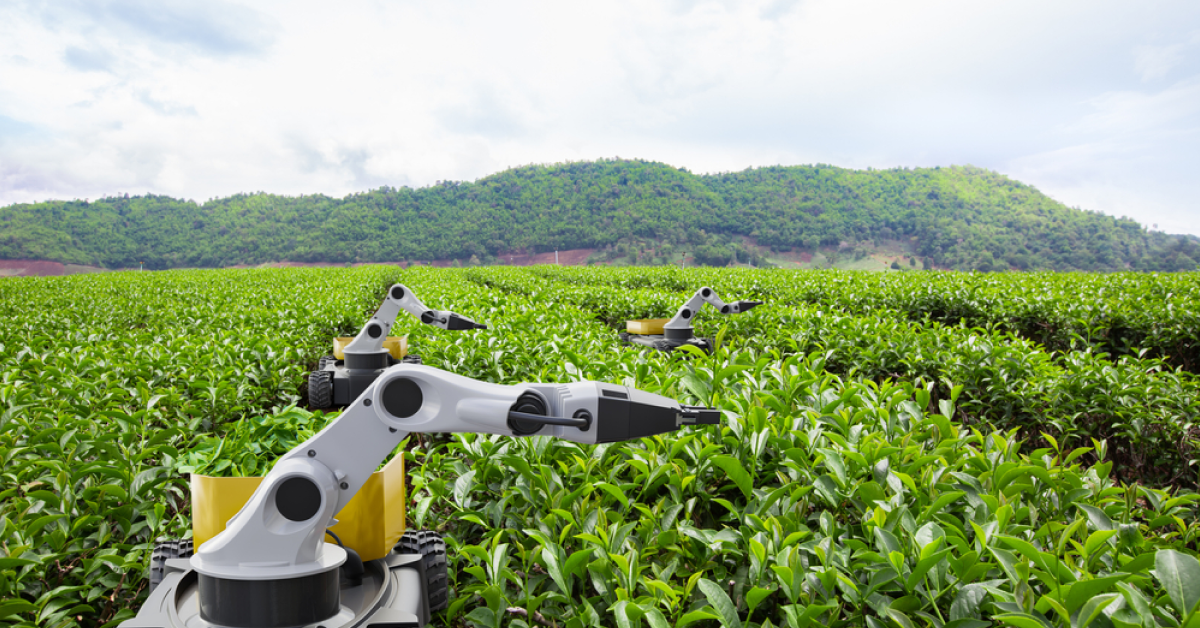
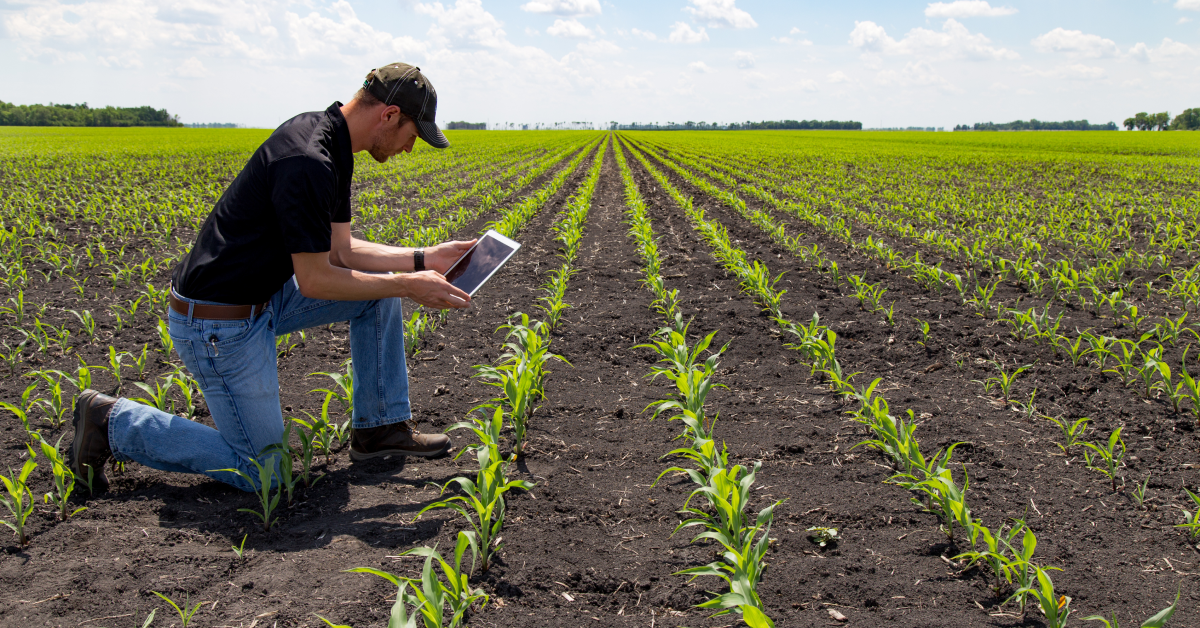
Integrating seed treatment data with variable-rate planters allows you to match treatment intensity to field-specific conditions. Application monitoring systems ensure accurate treatment rates, record data for quality control, and generate audit trails that simplify regulatory reporting. This precision reduces waste, avoids over-application, and ensures every seed receives the correct dose.
ERP and Seed Management Software
Enterprise resource planning (ERP) platforms built for seed businesses bring together recipe management, regulatory compliance tracking, real-time inventory analytics, and treatment traceability into a single system. Folio3’s seed management software provides full lot traceability from production and treatment through storage. It tracks and reports sales and distribution, ensuring you stay audit-ready and can deliver verifiable quality proof at every transaction.
Conclusion
Seed treatment is no longer optional; it is a foundational practice for modern, profitable farming. From chemical and biological treatments to precision application and digital management, the tools available today allow you to protect every seed with unprecedented accuracy.
As treatment programs grow more sophisticated, so does the need for software that can keep pace. Whether you are tracking treatment recipes, managing EPA compliance, or analyzing which products deliver real ROI, the right seed management platform makes the difference between guesswork and data-driven decisions. Ready to bring your seed treatment operations into the digital age? Book a free demo with Folio3 AgTech and see how our seed management ERP can streamline your workflow, ensure compliance, and maximize your return on every treated seed.
FAQs
What Is the Difference Between Seed Coating and Seed Dressing?
Seed coating wraps seeds in a thin polymer layer that can carry nutrients, colorants, or growth promoters to improve visibility and performance. Seed dressing applies fungicides or insecticides directly to the seed surface for protection against early-stage diseases and pests.
Can You Combine Biological and Chemical Seed Treatments?
Yes, many modern seed treatment programs stack biological and chemical products in a single application. However, you should always verify compatibility between products, as some chemical fungicides can reduce the viability of live biological organisms if mixed incorrectly.
How Long Does Seed Treatment Protection Last?
Most seed treatments protect during the critical germination and early seedling stages, typically covering the first two to four weeks after planting. Systemic insecticides may extend protection slightly longer as they move through the developing plant.
Are Seed Treatments Safe for Pollinators?
When applied correctly with proper dust-control coatings and calibrated planting equipment, seed treatments pose minimal risk to pollinators. The primary concern is dust-off during planting, which certified dust-control polymers and best-practice handling protocols significantly reduce.
How Do I Track Seed Treatment Compliance for Audits?
Digital seed management platforms like Folio3’s seed management software automatically log treatment data, generate audit-ready reports, and maintain full traceability from treatment application through distribution, keeping you compliant with EPA and USDA requirements year-round.