


The quality of beef you buy or serve is not just about the cut. It comes down to how it is graded. In fact,around 50% to 60% of graded beef falls under USDA Choice, making it the most widely available high-quality option in the market. This alone shows how important understanding grades of meat is, whether you are a consumer, butcher, or running a food business.
So, what are the grades of meat, and why do they matter so much? Meat grading is a standardized system used to evaluate beef based on factors like marbling and the age of the animal. These elements directly impact tenderness, juiciness, and overall eating experience. Without a clear understanding of grades of meat, it becomes difficult to judge quality, compare pricing, or choose the right product for a specific use.
The United States Department of Agriculture, commonly known as USDA, has developed one of the most widely recognized grading systems in the world. From premium cuts served in high-end steakhouses to more economical options found in retail stores, these grades play a key role in how beef is marketed and consumed.
In this guide, we will break down the USDA grading system, explain each category, and help you understand how to choose the right beef for your needs.
What Are The Grades of Meat?
The grades of meat refer to a standardized system used to evaluate the quality of beef based on specific criteria. This system helps classify beef according to characteristics that directly affect how it looks, cooks, and tastes. For buyers, sellers, and processors, understanding grades of meat provides a consistent way to assess value and performance.
At the core of this system are two key factors: marbling and maturity. Marbling is the amount of intramuscular fat within the meat, visible as thin white streaks. Higher marbling usually means better tenderness, juiciness, and flavor. Maturity, on the other hand, refers to the age of the animal at the time of processing. Beef from younger cattle tends to be more tender, which positively influences its grading. These factors form the foundation of how grades of meat are determined.
To organize these evaluations, the industry uses a structured beef grading scale. This scale ranks beef into different categories, allowing everyone in the supply chain to communicate quality clearly. Instead of relying on guesswork, the grading scale ensures that a specific grade represents a predictable eating experience.
This system exists to bring consistency to the market. Whether you are selecting beef for a restaurant menu or buying from a retail store, the grading system makes it easier to choose the right product based on quality, price, and intended use.
Why The USDA Grading System Matters
The USDA grading system plays a key role in creating trust and consistency in the beef industry. While all beef in the United States must go through mandatory inspection for safety, the grading of beef by USDA is a voluntary process that evaluates quality. This means producers choose to have their beef graded to signal a certain standard to buyers and consumers. As a result, grades of meat become a reliable benchmark for understanding quality beyond basic safety requirements.
This system matters because it directly influences several important factors:
- Pricing: Higher grades command higher prices due to better marbling and tenderness
- Consistency: Buyers get predictable quality across different batches and suppliers
- Decision-making: Restaurants and consumers can choose beef based on clear quality expectations
- Market transparency: Reduces guesswork in selecting the right cut for the right use
Another important aspect is transparency across the supply chain. When beef is clearly graded, it becomes easier to standardize quality across markets and regions. This reduces inconsistency and helps businesses maintain reliability in their offerings.
However, it is important to note that while grading improves clarity, issues such as meat contamination can still occur at different stages of production and handling. This is why both inspection and proper grading are essential parts of the system, working together to ensure safety and quality standards are met.
How Beef Grading Works: Key Factors Explained
The system behind grades of meat is built on a detailed evaluation process that focuses on two primary factors: marbling and maturity. These elements are the foundation of beef quality grades, and they determine how beef is classified within the USDA grading system.
Marbling
Marbling refers to the fine streaks of intramuscular fat found within the muscle tissue. It is one of the most important indicators in determining grades of meat because it directly influences eating quality. Higher marbling levels generally result in more tenderness, juiciness, and a richer flavor profile when the meat is cooked. Beef with abundant marbling is typically assigned higher beef quality grades, while leaner cuts with minimal marbling fall into lower categories. This is why premium steaks often come from highly marbled sections of beef and also why marbling plays an important role in meat preservation, as the fat content can help retain moisture and slow quality degradation during storage.
Maturity
Maturity refers to the age of the animal at the time of slaughter. Younger cattle tend to produce more tender meat, which positively impacts grades of meat. As cattle age, the muscle fibers become tougher and less desirable for high-quality consumption. This is why maturity is carefully assessed during the grading process, as it helps determine the structural quality of the beef and its overall cooking performance.
Together, marbling and maturity form the core evaluation criteria used in USDA grading. When combined, they determine where beef falls within the grading system and ultimately define its tenderness, juiciness, and flavor profile. Understanding these two factors is essential for interpreting grades of meat and making informed decisions about quality, whether for retail purchase, foodservice use, or during meat processing operations where consistency and quality assessment are critical.
Understanding The 8 USDA Grades of Meat
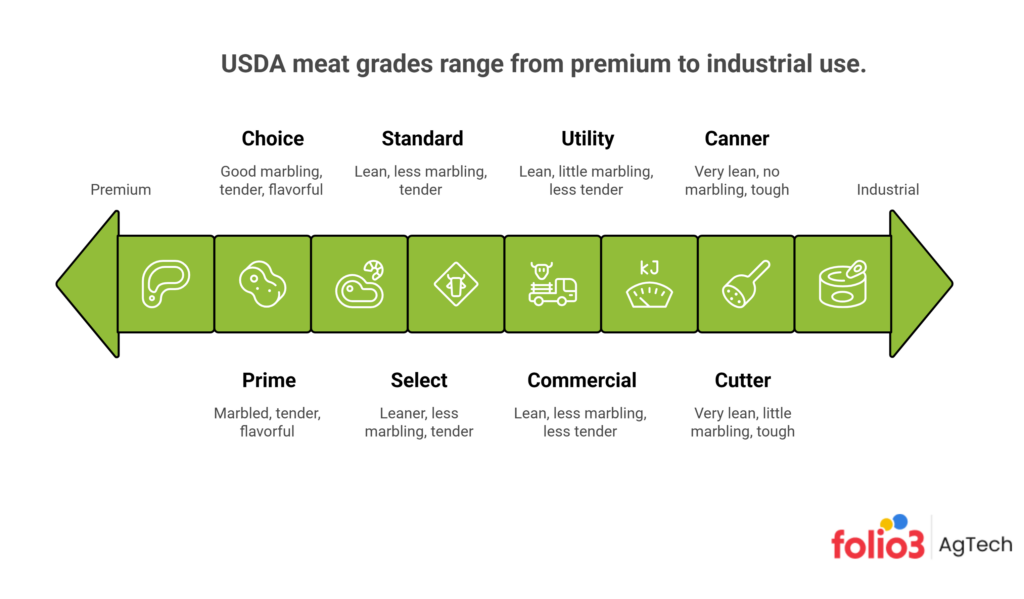
The USDA classifies grades of meat into eight distinct categories that reflect differences in quality, marbling, and overall eating experience. These grades of meat include Prime, Choice, Select, Standard, Commercial, Utility, Cutter, and Canner. Each level represents a different point on the quality spectrum, helping buyers understand what to expect in terms of tenderness, juiciness, and flavor.
If you are wondering what the different grades of beef are, it is important to know that while all eight exist in the grading system, only the top three grades, Prime, Choice, and Select, are commonly found in retail stores and restaurants. The remaining grades are typically used in processed foods or industrial applications.
This section will give you a clear overview of how these categories fit into the broader USDA system and why they matter when evaluating grades of meat. Understanding this structure also helps you make better purchasing decisions, especially when comparing quality across different cuts and price points.
Before we break down each grade in detail, it is also helpful to understand broader factors that influence beef characteristics, including the difference between grass fed and grain fed beef, which further impacts quality perception within grades of meat.
Prime Grade: The Highest Quality Beef
Prime is widely recognized as the highest grade of beef within the USDA system and sits at the very top of grades of meat. It represents beef that delivers exceptional eating quality due to its superior marbling and texture. This grade is produced from young, well-fed cattle and is carefully evaluated to ensure consistency in tenderness, juiciness, and flavor.
Marbling Level
Prime beef contains abundant marbling, which is the intramuscular fat distributed throughout the meat. This high fat content enhances flavor and ensures a naturally juicy and tender texture when cooked. Within grades of meat, Prime stands out as the most marbled category, which directly contributes to its premium status.
Use Cases
- Fine dining restaurants
- High-end steakhouses
- Luxury hotels and banquet menus
- Premium retail cuts for specialty buyers
Cooking Methods
Prime beef performs best with methods that highlight its natural fat content:
- Grilling
- Roasting
- Broiling
- Sous vide cooking
These techniques allow the fat to render slowly, enhancing flavor and preserving tenderness. Because of this, Prime remains the benchmark for quality across all grades of meat.
Choice Grade: Balance Between Quality And Price
Choice is the most widely available and commonly purchased grade within the grades of meat system. It sits just below Prime in the USDA hierarchy but still delivers a strong balance of tenderness, flavor, and affordability. Because of this positioning, Choice dominates retail markets and restaurant supply chains, making it the default option for a large share of consumers. It is also commonly used in vacuum sealed meat packaging, which helps preserve freshness, extend shelf life, and maintain quality during storage and transportation.
Within the grades of meat structure, Choice beef is often compared directly to Prime. While Prime offers more abundant marbling and a richer, more buttery texture, Choice provides moderate marbling that still delivers solid juiciness and flavor without the premium price tag. This balance is the key reason it holds such a large market share.
Marbling Level
Choice beef has moderate marbling, meaning it contains enough intramuscular fat to maintain tenderness and flavor, but not at the intensity level found in Prime. This makes it versatile and more forgiving in everyday cooking.
Use Cases
- Casual dining restaurants
- Mid-range steakhouse menus
- Supermarkets and grocery retail
- Everyday home cooking
Cooking Methods
Choice beef performs well with both dry and moist heat techniques, including grilling, roasting, braising, and pan-searing. While it is still high quality within grades of meat, slight overcooking can affect tenderness compared to Prime.
Select Grade: Lean And Affordable Option
Select is positioned below Choice in the grades of meat hierarchy and is known for being a leaner, more budget-friendly option. While it still falls under USDA quality standards, it contains significantly less marbling, which directly impacts its tenderness and juiciness. Within the grades of the meat spectrum, Select is often chosen by consumers who prioritize affordability over rich flavor and fat content.
Compared to higher grades like Prime and Choice, Select beef has noticeably lower intramuscular fat. This reduced marbling means the meat is naturally leaner, but it also makes it more prone to drying out during cooking if not handled properly. As a result, preparation techniques play a critical role in achieving a good eating experience.
Marbling Level
Select beef has small to slight marbling, which results in a firmer texture and reduced natural juiciness. It is the leanest option among the commonly available retail grades of meat, making it a popular choice for health-conscious buyers.
Use Cases
- Budget-friendly retail cuts
- Health-focused meal planning
- Institutional food service
- Every day home cooking where cost control is important
Cooking Methods
Select beef performs best with moisture-retaining cooking methods such as braising, stewing, slow cooking, and marinating before grilling. These approaches help compensate for the lower fat content and improve tenderness, making Select a practical option within the broader grades of the meat system.
Standard And Commercial Grades
Standard and Commercial grades sit in the mid-to-lower segment of the grades of meat system. These categories are below Select and are generally associated with beef that has minimal marbling and comes from more mature cattle. Because of these characteristics, they offer lower tenderness and flavor compared to higher tiers within grades of meat.
These grades are not commonly highlighted in retail stores or restaurant menus. Instead, they are often sold without prominent labeling or used in blended products where texture and flavor can be balanced with other ingredients. Their main advantage is affordability, which makes them useful in large-scale food production.
Marbling Level
Both Standard and Commercial beef contain very slight marbling, resulting in a leaner and firmer texture. This places them lower in the grades of meat hierarchy in terms of eating quality.
Use Cases
- Store-brand or unbranded retail beef
- Ground beef production
- Processed and mixed meat products
- Budget-focused food service operations
Cooking Methods
These grades are best suited for slow cooking, braising, or recipes where moisture and seasoning can enhance texture. Because of their position in the grades of meat spectrum, they are rarely used for premium steak applications.
Utility, Cutter, And Canner Grades
Utility, Cutter, and Canner represent the lowest tier within the grades of meat system. These grades are typically derived from older cattle and contain very little to no marbling, which significantly reduces tenderness, juiciness, and overall flavor. As a result, they are rarely sold as whole cuts in retail markets and are generally not associated with premium eating quality within grades of meat.
Instead of being used for steak cuts, these grades are primarily directed toward processing and industrial food production. Their structure and texture make them more suitable for transformation into processed or blended meat products rather than direct consumption as whole muscle cuts.
Marbling Level
These grades contain little to no intramuscular fat, placing them at the lowest end of the spectrum of meat quality. This results in a tougher texture and limited culinary versatility.
Use Cases
- Canned meat products
- Frozen ready meals
- Processed meat blends
- Pet food production
Cooking Methods
These grades are not typically used for traditional cooking methods. Instead, they are processed extensively, where seasoning, grinding, or canning helps make them usable. Within the broader grades of meat system, they serve an industrial rather than consumer-facing role.
Grades of Beef in Order: From Highest to Lowest
The grades of meat system follows a clear hierarchy that ranks beef based on quality, marbling, and overall eating experience. Understanding this structure helps simplify how the market classifies beef from premium cuts to industrial use products.
Here are the grades of beef in order, from highest to lowest:
- Prime: Highest marbling and premium eating quality
- Choice: High quality with moderate marbling, widely available
- Select: Leaner beef with lower marbling
- Standard: Minimal marbling, lower tenderness
- Commercial: Similar to Standard, often used in processed blends
- Utility: Primarily used for processed food products
- Cutter: Low quality, mainly used for grinding and processing
- Canner: Lowest grade, typically used for canned or pet food
This hierarchy of grades of meat clearly shows how beef moves from premium dining quality at the top to industrial processing at the bottom.
Beef Quality Grades Chart
A beef quality grades chart visually represents how the grades of meat compare across key attributes such as marbling, tenderness, flavor, and price. Instead of reading long descriptions, the chart allows readers to quickly understand where each grade sits in the overall USDA hierarchy.
Typically, the chart is arranged from top to bottom, starting with Prime at the highest level and moving down to Canner at the lowest. Each level is mapped against three main indicators:
- Marbling: Shows how fat content decreases as you move down the grades of meat scale
- Tenderness: Illustrates the decline in softness and juiciness across lower grades
- Price: Demonstrates how cost reduces as quality decreases
The beef quality grades chart makes it easier to compare options side by side, especially for consumers who want a quick visual reference instead of detailed explanations. It is also commonly used in butcher shops, restaurants, and educational material to simplify purchasing decisions.
By presenting grades of meat in a structured visual format, the chart helps bridge the gap between technical USDA standards and practical consumer understanding.
Quality Grades vs Yield Grades: What’s The Difference?
Within the USDA system, grades of meat are divided into two distinct classification types: quality grades and yield grades. While they are often discussed together, they measure very different aspects of beef and serve different purposes in the supply chain.
Quality grades of beef focus on the eating experience. They evaluate factors such as marbling and maturity to determine tenderness, juiciness, and flavor. These are the grades most consumers are familiar with, including Prime, Choice, and Select. In simple terms, quality grades help answer the question: how good will the beef taste?
Yield grades, on the other hand, are industry-focused. They measure how much usable lean meat can be obtained from a carcass after trimming fat and bone. This system is primarily used by producers, processors, and distributors to estimate efficiency and profitability rather than eating quality. Yield grades are typically ranked from 1 to 5, with lower numbers indicating higher usable meat yield.
Together, both systems form a complete view of grades of meat. Quality grades help determine consumer value, while yield grades guide production decisions. Understanding both gives a clearer picture of how beef is evaluated from farm to table, ensuring consistency in both quality and supply management.
How To Choose The Right Grade of Meat
Choosing the right option within the grades of meat system depends on your budget, cooking method, and whether you are preparing food at home or in a professional setting. Each grade serves a different purpose, so making the right choice ensures better taste, texture, and value.
One of the most important considerations is balancing the budget with quality. Higher meat ratings, such as Prime, deliver superior tenderness and flavor but come at a premium price. Lower grades are more affordable but require more careful preparation to achieve good results.
Key decision factors include:
- Budget vs Quality:
Prime offers premium quality at a higher cost, while Choice and Select provide more affordable alternatives within the grades of meat system. - Cooking Method:
- Prime and Choice: best for grilling, roasting, and pan-searing
- Select and lower grades: better for slow cooking, braising, or stewing
- Restaurant vs Home Use:
Restaurants often prioritize consistency and customer experience, leading them to prefer higher grades of meat, while home cooks may choose based on cost and recipe flexibility
By aligning these factors with your needs, you can select the most suitable grade and get the best possible outcome from your beef.
Common Misconceptions About Grades of Meat
There are several common misunderstandings about the grades of meat that can lead to poor buying decisions or unrealistic expectations. While the grading system is useful, it is important to understand what it does and does not measure.
One common myth is that a higher grade automatically means healthier meat. In reality, higher grades of meat, like Prime, contain more marbling, which increases fat content. While this improves flavor and tenderness, it does not necessarily make the meat healthier from a nutritional standpoint.
Another misconception is that marbling equals overall nutrition. Marbling enhances taste and texture, but it does not reflect protein quality, vitamin content, or how the animal was raised. Factors like diet, breed, and farming practices are not included in the grading system.
Many people also assume that all beef is graded. This is not true. While all beef must be inspected for safety, grading is a voluntary process. Some beef sold in the market may not carry official grades, especially in lower tiers or local supply chains.
Understanding these limitations helps put grades of meat into the right perspective. They are a reliable indicator of eating quality, but not a complete measure of health, nutrition, or production practices.
Conclusion
Understanding grades of meat gives you a clear advantage when it comes to selecting, cooking, and serving beef. From premium Prime cuts to lower grades used in processing, each category exists for a specific purpose within the market. Knowing how grading works allows you to match the right type of beef with your budget, cooking method, and desired eating experience.
The USDA grading system simplifies decision-making by providing a consistent way to evaluate quality based on marbling and maturity. However, it is equally important to recognize its limitations and not rely on it as the only indicator of overall value.
Whether you are buying for a restaurant, a retail business, or your home kitchen, understanding grades of meat helps you make informed choices. It ensures better results on the plate and more efficient spending, making it an essential concept for anyone working with or consuming beef.
FAQs
What Are The Grades Of Meat In The USDA System?
The USDA classifies grades of meat into eight categories: Prime, Choice, Select, Standard, Commercial, Utility, Cutter, and Canner. These grades are determined based on marbling and the age of the animal, which directly affect tenderness, juiciness, and flavor.
Which Grade Of Meat Is Best For Steak?
Prime is considered the best option for steak because it has the highest level of marbling, resulting in superior tenderness and flavor. Choice is a close second and more widely available. These top grades of meat are ideal for grilling and high-heat cooking methods.
Is Higher Grade Meat Always Better?
Higher grades of meat usually offer better taste and texture due to increased marbling, but they are not always the best choice for every situation. They are more expensive and contain more fat, so the right option depends on your cooking method, dietary preference, and budget.
What Is The Difference Between Prime, Choice, And Select Beef?
The difference comes down to marbling and tenderness. Prime has the most marbling, making it the most tender and flavorful. Choice has moderate marbling, while Select is leaner with less juiciness. These are the most commonly available grades of meat in the market.
Are All Types Of Beef Graded By The USDA?
No, not all beef is graded. While all beef must pass safety inspection, grading is optional. This means some products in the market may not carry official grades of meat, especially in lower-tier or locally sourced options.
How Do Grades Of Meat Affect Cooking Methods?
Different grades of meat require different cooking approaches. Higher grades like Prime and Choice are best for grilling or roasting, while lower grades benefit from slow cooking methods such as braising to improve tenderness and moisture.
Why Is Some Beef More Expensive Than Others?
The price of beef is largely influenced by grades of meat. Higher grades have more marbling, better texture, and higher demand, which increases their cost compared to leaner and lower-quality options.
What Grade Of Meat Should I Buy For Everyday Cooking?
Choice is generally the best option for everyday cooking because it offers a balance between quality and price. It provides good flavor and tenderness without the premium cost associated with higher grades of meat.