

You raise quality cattle. But if your marketing strategy doesn’t match the quality of your herd, you’re leaving serious money on the table. Cattle marketing is the bridge between your operation and your profit.
As of today, how you sell is just as important as how you raise. With the U.S. beef market valued at $108.14 billion in 2024 and projected to reach $157.36 billion by 2032, the opportunity is real but only for producers who approach marketing cattle with a clear, deliberate strategy.
Develop a Cattle Marketing Plan
Before you sell a single animal, you need a plan. Cattle marketing strategies that work aren’t reactive; they’re built in advance, anchored in your operation’s goals, and flexible enough to adapt to market shifts.
Set Clear Objectives
Ask yourself what you actually want from your marketing efforts. Are you targeting maximum price per pound, consistent cash flow, building a loyal buyer base, or transitioning into direct-to-consumer sales? Your objectives will shape every decision that follows from the outlets you choose to the timing of your sales.
Choose Outlets
Your marketing outlet should align with the type of cattle you raise and the scale of your operation. Auction markets, direct sales, retained ownership, online platforms, and local consumers all offer different returns, risk levels, and logistical demands.
Timing and Pricing
Market timing can make or break your margins. Monitor USDA cattle price reports regularly, track seasonal demand cycles, and factor in your cost of production before setting a target price.
Action Plan
Document your plan. Include your target sale dates, weight goals, outlet preferences, minimum acceptable prices, and contingency options if market conditions shift. A written plan keeps you accountable and reduces emotion-driven decisions when the market gets uncertain.
Traditional Cattle Marketing Strategies
Tried and tested over decades, these beef cattle marketing strategies remain the backbone of most U.S. cow-calf and stocker operations.
Auction Markets
Livestock auction barns are the most widely used outlet for marketing cattle in the U.S. You bring your animals to a central location, buyers bid competitively, and the highest bid wins. Auctions offer speed, liquidity, and access to a wide buyer pool. It makes them especially useful when you need to move cattle quickly or when your herd lacks uniformity.
The downside? Auction prices reflect the market on a single day, commissions reduce your net return, and transportation and shrinkage costs add up. To improve your outcome at auction, sort cattle by age, sex, frame, and weight before the sale. Uniform, well-presented pen groups consistently bring stronger bids.
Private Treaty (Direct Farm Sales)
Private treaty means negotiating directly with a buyer, whether a feedlot, stocker operator, or neighboring producer, without the auction ring. This approach often yields better prices because you eliminate commission fees and can negotiate terms, timing, and volume.
Building relationships with repeat buyers is key here. Buyers who trust your cattle’s health history, genetics, and consistency will pay a premium to skip the uncertainty of the auction.
Group/Cooperative Sales
Banding together with neighboring producers to pool and market cattle collectively is a powerful cattle marketing strategy for smaller operations. Group sales allow you to present larger, more uniform loads that attract commercial feedlot buyers who prefer volume. You gain negotiating leverage you’d never have selling 20–30 head on your own. Many state cattle associations facilitate these coordinated sales. Look into what’s available in your region.
Value-Added Programs
Value-added marketing programs reward you for documented practices like preconditioning, age and source verification, natural or antibiotic-free protocols, and breed certification. Enrolling in programs such as USDA Process Verified Programs (PVP) or Certified Angus Beef (CAB) qualification programs can add significant premiums per hundredweight over standard market cattle.
Retained Ownership/Finish
Rather than selling calves at weaning, some producers retain ownership through the stocker or feedlot phase to capture additional value. This strategy carries more risk as you’re exposed to feed cost fluctuations and price volatility during finishing. With proper management, retained ownership can significantly improve your return per animal. Knowing your breakeven and monitoring performance metrics closely is essential for this to work.
Direct-to-Consumer and Niche Marketing
Consumer demand is reshaping the beef industry. More buyers want to know where their food comes from, how animals were raised, and what they’re actually eating. These beef cattle farm marketing strategies tap directly into that demand.
Direct Meat Sales
Selling beef directly to consumers as halves, quarters, or custom-cut packages removes the middleman entirely and can net you far above commodity market prices. You’ll need access to a USDA-inspected or state-inspected processing facility, and you’ll need to handle logistics like scheduling, communication, and pickup or delivery.
The upfront investment in relationships and logistics is real, but repeat customers who buy 200–400 lbs of beef annually are extraordinarily valuable to a small operation.
Farmers Markets & Freezer Beef
Selling “freezer beef”, a quarter or half beef custom-cut to the buyer’s specifications, is one of the most profitable marketing cattle strategies for small-scale producers. Farmers’ markets, local Facebook groups, word-of-mouth networks, and community-supported agriculture (CSA) models are all effective channels for building your freezer beef customer base. Customers often pay $4–$6+ per pound hanging weight, far above what you’d receive at auction.
Niche and Branded Markets
Grass-fed, regenerative, heritage-breed, non-GMO, and all-natural, these labels mean real money in today’s market. If your management practices qualify your cattle for niche segments, build a brand around it. Restaurants, specialty grocers, online beef subscription boxes, and health-conscious consumers will pay premiums for beef that tells a story. Start small, document your practices, and grow your niche customer base intentionally.
Timing, Breeding & Management Strategies
Some of the most impactful marketing and breeding cattle strategies happen long before your cattle ever go to market. What you do on-farm determines what you can sell and for how much.
Seasonal Timing
Cattle prices follow predictable seasonal patterns. Feeder calf prices tend to peak in late summer and early fall when feedlots are aggressively buying. Slaughter cattle prices often strengthen in the spring. Understanding these cycles and aligning your sale dates with historically stronger price windows adds money without changing a thing about your cattle.
Calving/Weaning Calendar
Your calving season determines your marketing season. Spring-calving herds that wean in October can target the fall run-up in feeder calf demand. Fall calvers weaning in spring can benefit from stocker operators stocking summer grass. Align your calving calendar intentionally with your target marketing window, not just with operational convenience.
Preconditioning and Health
Preconditioned calves, those weaned 45+ days before sale, vaccinated, bunk-broke, and halter-trained consistently command premiums of $5–$15 per hundredweight over untreated calves at auction. Buyers pay for certainty. A documented health and vaccination protocol communicated to potential buyers at the point of sale is one of the most cost-effective investments you can make.
Sorting and Uniformity
Uniform pen groups sell better than mixed loads. Sort cattle by sex, frame score, weight, and hide color before marketing. A pen of 50 steers within a 50-lb weight range will attract more competitive bids than a mixed pen of 80 cattle varying by 200 lbs. Good livestock management software helps you track individual performance data so you can build marketable groups well before sale day.
Cull Cows and Bulls
Cull cows and bulls are often an afterthought, but they represent real revenue. Cull cow prices hit record levels in 2024–2025, with USDA forecasting $125/cwt for 2025. Time your cull cow marketing when body condition is adequate and seasonal demand is strongest, typically in the fall, or when grass conditions have been good. Thin cows marketed in poor condition leave money behind.
Strategic Retention
When prices are strong for feeder cattle, but your replacement heifer pool is thin, consider retaining your top genetic females rather than selling everything. Rebuilding your cow base during high-price environments positions your operation for stronger future production capacity. It is a long-term marketing strategy in itself.
Digital & Innovative Marketing Techniques for Cattle
The cattle market has gone digital, and producers who ignore innovative marketing for cattle are at a growing disadvantage. Here’s how to use modern tools to reach more buyers and command better prices:
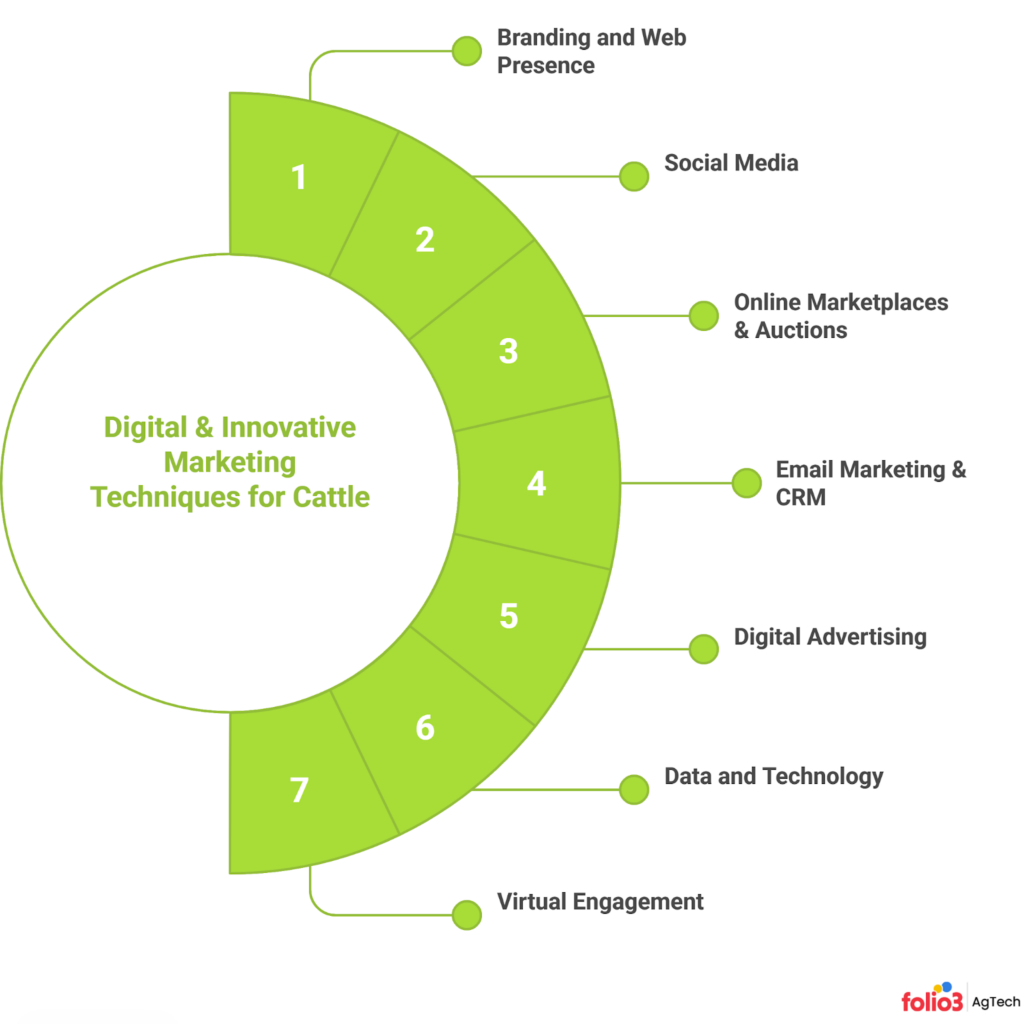
Branding and Web Presence
Your farm’s reputation is your brand. A simple, professional website with photos of your cattle, a description of your management practices, and contact information establishes credibility with buyers who are researching before they call. You can also enhance your site with professional visuals created using high-quality stock images to make your website look more polished and trustworthy. It costs far less than you think and works for you 24/7.
Social Media
Instagram, Facebook, and YouTube are real marketing platforms for cattle producers, especially those selling directly to consumers or seedstock. Document your calving season, share your genetics, and show your pasture management. Consumers and buyers alike are drawn to authentic stories from working ranches. Consistent posting builds an audience that converts into customers.
Online Marketplaces & Auctions
Digital cattle marketing platforms like CattleUSA, Livestock.com, and video-sale platforms allow you to reach buyers across the country without the cost of hauling cattle to a physical sale. Video and internet auctions have grown rapidly, giving you access to competitive national demand from your own farm. This channel works best when your cattle are well-documented, uniform, and professionally filmed, with some producers now polishing pen walkthroughs and sale footage through an AI Video Generator.
Email Marketing & CRM
If you’ve built a list of repeat buyers, processors, or direct-to-consumer customers, leveraging professional email marketing services is your most cost-effective retention tool. A simple newsletter updating buyers on upcoming sale dates, herd health, genetics, or availability keeps your operation top-of-mind. A basic CRM tool helps you track buyer preferences and past purchases, enabling more targeted outreach. These same principles behind digital marketing carry through your entire cattle operation. Utilizing user-friendly platforms like Mailchimp or HubSpot makes it easy to automate these newsletters and keep your customer directory organized in one place. If you’re evaluating Mailchimp against other options, this comparison can help you find the right fit for your operation’s size and budget.
Digital Advertising
Targeted Facebook and Google ads can reach local consumers searching for grass-fed beef or commercial buyers within your region. You don’t need a massive budget; a well-targeted $200/month campaign can generate meaningful direct sales inquiries for a small operation.
Data and Technology
The future of cattle marketing is data-driven. Producers use cattle management software to track individual animal performance. It tracks weights, health events, genetics, and feed efficiency that can present verifiable documentation to buyers that commands premiums. Real-time data on your herd’s performance also tells you which animals to market now and which to hold for additional gain.
Virtual Engagement
Livestreamed farm tours, virtual bull sales, and recorded herd walkthroughs are increasingly common, particularly in the seedstock sector. These formats allow serious buyers who can’t travel to evaluate your cattle meaningfully, expanding your geographic reach without expanding your marketing budget.
Value-Added Branding & Niche Strategies
The commodity market pays for cattle. Premium markets pay for cattle plus the story, the documentation, and the management behind them. These beef cattle marketing strategies help you build that premium position.
Quality Certifications
USDA Process Verified Programs, Non-Hormone Treated Cattle (NHTC), Age and Source Verified, and breed-specific programs like Certified Angus Beef all create documented, buyer-recognized quality claims. Certification isn’t free; it requires paperwork, audits, and consistency, but the per-head premium often exceeds the cost substantially.
Breed/Genetics Focus
If you’re raising registered or high-quality seedstock, your genetics are your marketing message. EPD (Expected Progeny Difference) data, genomic testing results, and sire stacks all communicate genetic value to commercial producers looking to improve their herds. Invest in genomic testing and clearly communicate your genetic program to prospects. Explore how raising beef cattle with genetic intentionality sets you up for stronger marketing outcomes.
Management Practices
Documented management based on rotational grazing, antibiotic-free protocols, low-stress handling, and verified feeding programs is increasingly marketable to both commercial buyers and end consumers. Keep records, as buyers and certifiers will ask for them.
Promotional Activities
Participate in field days, producer associations, county fairs, and breed association sales. These venues build visibility and credibility within your regional buyer network. A good reputation built over years is worth more than any single advertising campaign.
Customer Service Programs
Repeat buyers are your most valuable marketing asset. Follow up after sales, share performance data on cattle you’ve sold, and honor your commitments on health history and genetics. Producers who build a reputation for transparency keep buyers coming back and are willing to pay a premium for certainty.
Nutritional Marketing
For direct-to-consumer beef producers, nutritional messaging matters. Grass-fed beef’s omega-3 fatty acid profile, conjugated linoleic acid (CLA) content, and leaner composition resonate strongly with health-conscious buyers. Communicate these attributes in your marketing materials, factually and compellingly.
Financial & Pricing Considerations
Strong cattle marketing strategies require financial discipline. Knowing your numbers is the foundation of every pricing decision you make.
Calculate Costs
You must know your cost of production before you can price strategically. Calculate your variable costs (feed, veterinary, labor, trucking) and fixed costs (land, equipment depreciation, interest) on a per-head and per-pound basis. Producers who don’t know their breakeven are flying blind at the sale barn.
Pricing Strategy
Decide in advance what price you need and what price you’ll accept before your cattle go to market. Having a pre-set minimum price prevents emotional decisions under market pressure.
Include All Fees
Auction commissions, yardage fees, health certificates, trucking, shrinkage, and financing costs all erode your net return. Calculate your true net-back by subtracting all these costs from your gross price before comparing outlets. A private treaty sale at $5/cwt less than auction gross may actually net you more once fees are stripped out.
Market Signals
Track USDA’s Cattle & Beef Market Outlook reports regularly. Futures prices, basis levels, packer demand indicators, and feed cost trends all signal where prices are heading. The more informed you are, the more confidently you can make forward marketing decisions.
Set Pricing Goals
Set quarterly and annual revenue targets for your operation. Work backward from those targets to determine how many heads you need to sell, at what weight, and at what price. This goal-setting discipline turns marketing cattle from a reactive event into a planned business activity.
Monitoring
Track every sale: price, outlet, cattle performance, net return, and compare results over time. Which outlet delivered the best net return? Which sale date outperformed? Which management practice correlated with the strongest buyer feedback? This data becomes your blueprint for continuous improvement. Pairing this with a dedicated feedlot management software or cattle records platform makes the analysis far easier.
Conclusion
Profitable cattle marketing isn’t about luck; it’s about preparation, documentation, and strategy. The producers who consistently maximize returns are those who treat their marketing as seriously as their breeding and nutrition programs. Whether you’re refining your traditional auction approach, exploring direct-to-consumer channels, or leveraging digital tools and data, every incremental improvement in your cattle marketing strategies compounds into stronger returns. Start with your plan, know your numbers, and build buyer relationships that outlast any single market cycle.
FAQs
What Is the Most Profitable Way to Sell Cattle?
The most profitable approach depends on your operation’s scale, breed, and management practices. Direct-to-consumer and niche markets often yield the highest per-pound returns, while traditional auction or private treaty sales offer speed and liquidity. Combining both channels typically produces the best overall financial outcome.
How Do I Improve Cattle Prices at Auction?
Sort cattle into uniform groups by sex, weight, and frame. Precondition calves at least 45 days before sale, provide documented health and vaccination records, and arrive at the sale in good body condition. Presentation and documentation consistently translate into stronger competitive bids from buyers.
What Are Value-Added Programs in Cattle Marketing?
Value-added programs are documented management or production certifications. They include age and source verification, non-hormone-treated cattle (NHTC), or breed certifications that qualify your cattle for premiums above base commodity prices. These programs require consistent record-keeping and periodic audits, but often return significant per-head premiums.
How Does Timing Affect Cattle Marketing Strategies?
Seasonal price patterns, feeder cattle supply cycles, and your own production calendar all influence your optimal marketing window. Aligning your weaning dates with historically stronger feeder calf demand periods and monitoring USDA price forecasts throughout the year helps you capture better prices without changing what you raise.
Can Digital Tools Really Help Market Cattle More Effectively?
Absolutely. Cattle management software that tracks individual animal performance, health history, and genetics helps you build documented pen groups that command buyer premiums. Online auction platforms expand your buyer pool nationally, while social media and email marketing help you build direct-to-consumer relationships that reduce your dependence on commodity price swings. Learn more about how cattle management apps can support your marketing workflow.