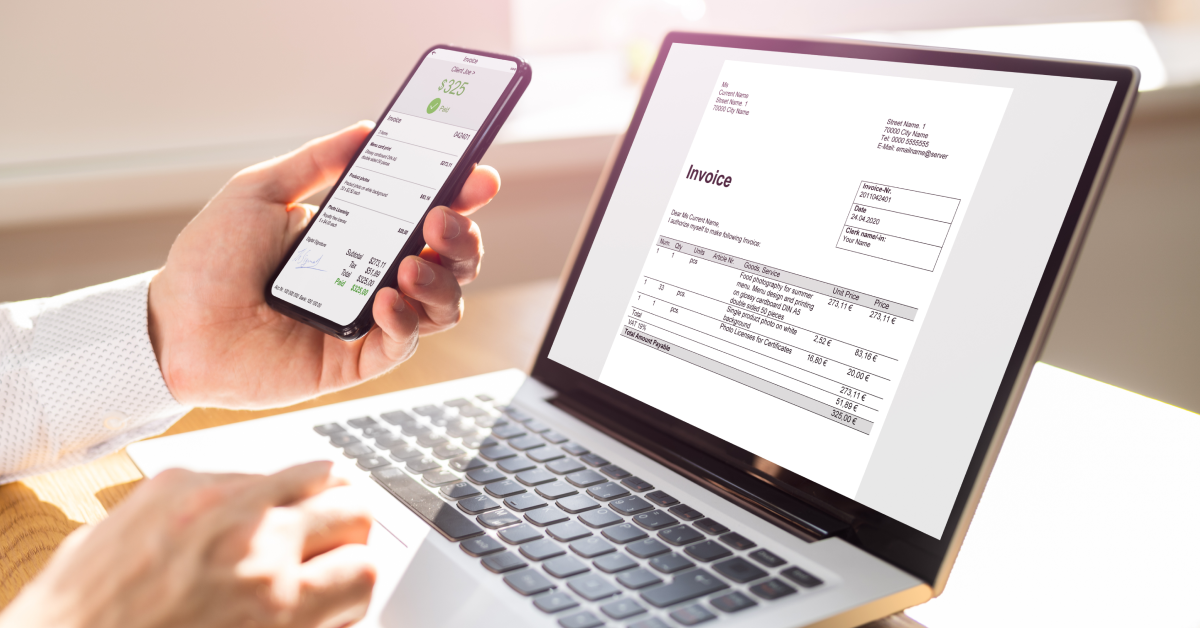

Modern farm finances are more complex than ever. Between inflation pushing input costs up by 8–12% year-over-year, shifting tax regulations, and the growing demand for multi-entity reporting, the spreadsheet you relied on five years ago simply cannot keep pace.
According to the USDA Economic Research Service, U.S. farm sector production expenses are projected to reach $455 billion in 2026, a figure that demands precision tracking rather than manual guesswork.
This guide is built for you: the farm manager juggling payroll and procurement, the accountant wrangling Schedule F deadlines, or the CFO overseeing multi-site agribusinesses. We have evaluated the best farm accounting software options available in 2026 using real user reviews, verified pricing, and feature-by-feature analysis.
By the end, you will know which farm accounting software 2026 solution fits your operation’s size, complexity, and budget, so you can stop wrestling with numbers and start making them work for your bottom line.
Why an Easy Farm Accounting Software is a Better Choice Than Spreadsheets
If you are still tracking grain sales and input costs inside a maze of Excel tabs, you are not alone, but you are leaving money and peace of mind on the table. If you are just getting started with structured financials, our guide to farm bookkeeping and accounting covers the fundamentals.
In the meantime, here is why purpose-built farm business accounting software outperforms spreadsheets for every serious operation:
- Manual Data Entry Drains Your Time: Re-keying bank transactions, receipts, and invoices into columns is tedious and error-prone. Accounting software for farm businesses automates imports from over 12,000 financial institutions, reclaiming hours every week.
- Audit Failures Become Expensive Surprises: Spreadsheets lack built-in audit trails. One misplaced formula can cascade into inaccurate tax filings and costly IRS scrutiny, a risk that farm-specific tools eliminate with automated reconciliation and locked ledger entries.
- No Real-Time Profitability Per Field or Herd: You cannot calculate breakeven cost per bushel, per acre, or per head of livestock inside a static spreadsheet. Dedicated platforms tie input costs to specific enterprises instantly, giving you mid-season clarity.
- Tax Compliance Gets Complicated Fast: Schedule F categories, 1099 filings, H-2A labor rules, and depreciation schedules change regularly. Spreadsheets do not update themselves. Farm-specific software stays current with the latest tax tables and generates compliant reports in one click.
- Collaboration Hits a Dead End: When your accountant, lender, and farm manager all need the same numbers, emailing spreadsheet versions back and forth creates confusion. Cloud-based accounting software for farm businesses provides a single source of truth accessible from any device.
Key Features to Look for in Farm Business Accounting Software
Before comparing product demos, you need a buyer’s checklist grounded in what actually moves the needle for agricultural operations. The best software for farm accounting goes well beyond generic bookkeeping. Here are the five capabilities that separate purpose-built ag platforms from off-the-shelf tools.
For a broader look at the strategic case, see why dedicated farm accounting systems outperform generic software.
Farm-Specific Chart of Accounts
Standard QuickBooks ships with a generic chart of accounts built for retail and service businesses. That means you will spend hours manually creating categories for seed purchases, crop insurance payouts, CRP income, and livestock feed, only to discover they still do not map cleanly to Schedule F line items. True accounting software for farm business comes pre-loaded with ag-specific account codes, including ATIG separation of farm expenses from family living costs, so you are audit-ready from day one.
Inventory & Livestock Tracking
Biological assets are not widgets on a shelf. Grain sitting in a bin changes market value daily, and a beef herd’s balance-sheet weight shifts with births, deaths, and transfers. Pairing your accounting platform with a dedicated livestock management system ensures that herd-level data flows directly into your financial ledgers, giving you a real-time, market-value balance sheet your lender can trust.
Tax Compliance & Schedule F Reporting
For U.S. and Canadian producers, tax season is the ultimate stress test for any accounting system. The best tools auto-categorize transactions into the correct Schedule F line items, generate 1099s, and stay current with annual tax-table updates. If your software cannot produce a lender-ready Schedule F with a single click, it is costing you time and risk.
Payroll & Seasonal Labor Management
Agriculture’s labor profile is unique: H-2A visa workers, piece-rate pay structures, and seasonal surges that spike and drop within weeks. Many farms also rely on organized payroll documentation such as a pay stub template to keep employee payment records clear and compliant. Your software should handle variable pay calculations, multi-state tax withholdings, and W-2/1099 generation without requiring a separate payroll service, or it should integrate seamlessly with one.
Custom Reporting & Financial Dashboards
Lenders, partners, and your own management decisions all require different views of the same data. Prioritize platforms that offer customizable dashboards, enterprise-level P&Ls, cash-flow projections, and scenario modeling, so you can answer “what-if” questions before market conditions force your hand.
Quick Comparison Matrix: Top Farm Accounting Software Reviews
Before diving into the deep reviews, use the table below for fast, side-by-side answers. This comparison matrix covers the standout differentiator, integration strength, and pricing model for each of the ten platforms in our farm accounting software reviews. Bookmark it as your shortlist reference when you are ready to schedule demos.
Each software was evaluated against real user reviews from Capterra, G2, and Software Advice, plus verified pricing from vendor websites as of early 2026.
| Software Name | Best For | Integration | Standout Feature | Pricing Model |
| Farm Biz | Simple bookkeeping | Minimal (offline) | Pre-designed chart of accounts | One-time $249–$575 |
| Agtech Folio3 | Enterprise Ag ERP | AI, IoT, multi-system | End-to-end field-to-ledger ERP | Custom quote, flexible to requirements |
| FarmBooks | Desktop reporting | Limited (desktop) | Industry benchmarking reports | One-time $595 + $100/yr |
| Traction Ag | Field profitability | John Deere, Climate | Per-bushel/acre true profitability | Annual $950–$3,950 |
| PcMars | Budget compliance | Bank import only | Schedule F tax compliance | Annual $80+ |
| EasyFarm | Customizable desktop | FINPACK export | All-in-one single-entry system | One-time $800–$1,600 |
| FarmRaise | Grant discovery | 12,000+ bank feeds | USDA funding library & alerts | Monthly $40–$99.50 |
| Ambrook | Modern ag-first UX | Bank feeds, Gusto | AI receipt scanning & tagging | Monthly $22.99–$44.99 |
| Figured | Financial planning | Xero, QuickBooks | Rolling forecasts & scenarios | Monthly $14–$90 |
| Farmbrite | Multi-operation mgmt | E-commerce, mapping | Crop + livestock in one system | Annual $119–$1,090 |
The 10 Best Farm Accounting Software for 2026 (In-Depth View)
Now, let’s unpack what each platform actually delivers on the ground. The following in-depth profiles are structured consistently so you can compare descriptions, core features, pros and cons, ideal use cases, and user ratings for the best farm accounting software solutions on the market in 2026.
1. Farm Biz
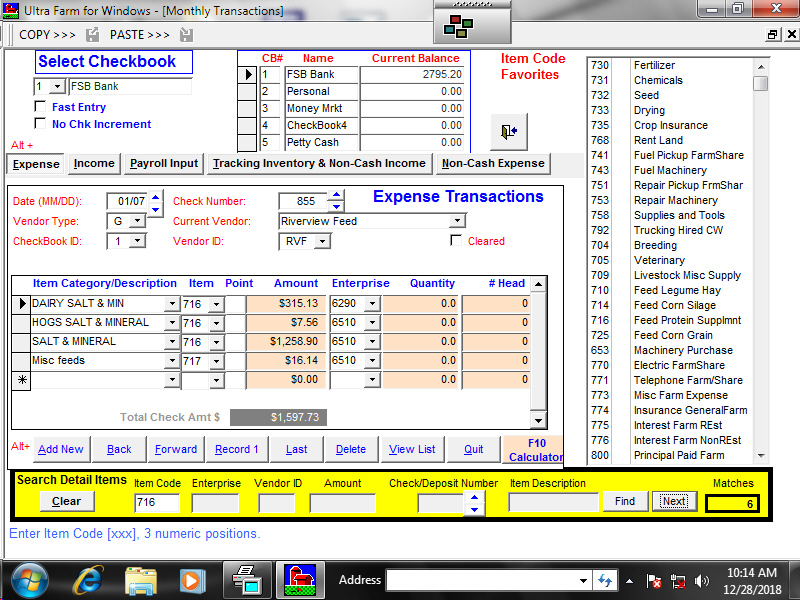
Farm Biz is an entry-level, desktop-based accounting tool built specifically for farmers and ranchers who want a simple, ready-made profitability tracker without recurring fees. With over 35 years of service, it is recommended by management instructors for its cost-effectiveness and ease of adoption. Farm Biz focuses on straightforward tax reporting and bookkeeping so you can devote more time to running your operation rather than wrestling with software.
Core Features:
- Pre-Designed Chart of Accounts: Start entering data and printing reports in minutes with zero setup required.
- Management Reporting: Generates farming P&L, cash flow, budget forecasts, and vendor activity reports.
- Touch-Screen Interface: Dynamic screen resolution with large menus for convenient use on touchscreen devices.
- Secure On-Premise Data: All financial data remains locally on your computer, fully protected from cloud-based privacy risks.
| Pros | Cons |
| Zero learning curve; no accounting background needed | Offline only; no mobile or cloud access |
| Pay once for a lifetime license with free support | Some report engines may be outdated on Windows 11 |
| Touch-screen friendly for barn or field use | Limited enterprise depth compared to ERP platforms |
Best For:
- Small farms and ranchers want simple, permanent record keeping
- Budget-conscious operators who prefer a one-time purchase over subscriptions
- Producers in low-connectivity areas need offline reliability
Rating: 4.0/5 on Capterra, Farm Biz earns praise for ease of data entry and affordability, making it a solid pick for straightforward small-farm bookkeeping.
2. Folio3 AgTech
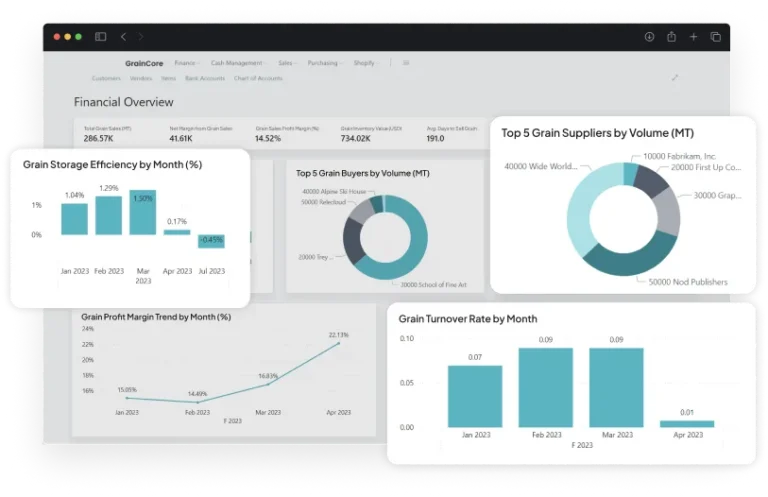
Unlike modular tools that focus on isolated tasks, Folio3 AgTech provides a unified digital ecosystem connecting planning, field operations, and financial reporting into a single workflow. It represents the gold standard for integrated Enterprise Resource Planning in the agricultural sector. Engineered for high-revenue agribusinesses, from $500K operations to global enterprises exceeding $4 billion in turnover, it is the platform CFOs turn to for end-to-end visibility.
Core Features:
- Enterprise Budgeting: Season-level budgets by crop, herd, and equipment with cost-threshold flagging, based on inventory management system data.
- Financial Management: Real-time expense tracking, automated bank feeds, and multi-entity consolidation.
- Supply Chain Tracking: Batch/lot traceability for seeds, chemicals, and feed with food-safety compliance, powered by integrated agricultural supply chain management.
- Risk Modeling: Stress-test margins against weather, price shifts, and yield volatility scenarios.
- Asset Maintenance: Automated scheduling for farm equipment repairs with depreciation tracking and predictive alerts.
| Pros | Cons |
| End-to-end visibility from field to consumer | Longer implementation and staff training curve |
| Scales from $500K revenue to $4B+ enterprises | Custom pricing lacks upfront SaaS transparency |
| Robust global compliance and certification tools | Requires full digital-transformation commitment for ROI |
Best For:
- Mid-to-large agribusinesses requiring a unified ERP across all operations
- Multi-site farms, processors, and distributors with audit requirements
- Organizations in USDA-regulated or Progressive Beef supply chains
Rating: 4.8, across enterprise review platforms, Folio3 Agtech is the top-tier choice for operations that need comprehensive, scalable farm financial management.
3. FarmBooks
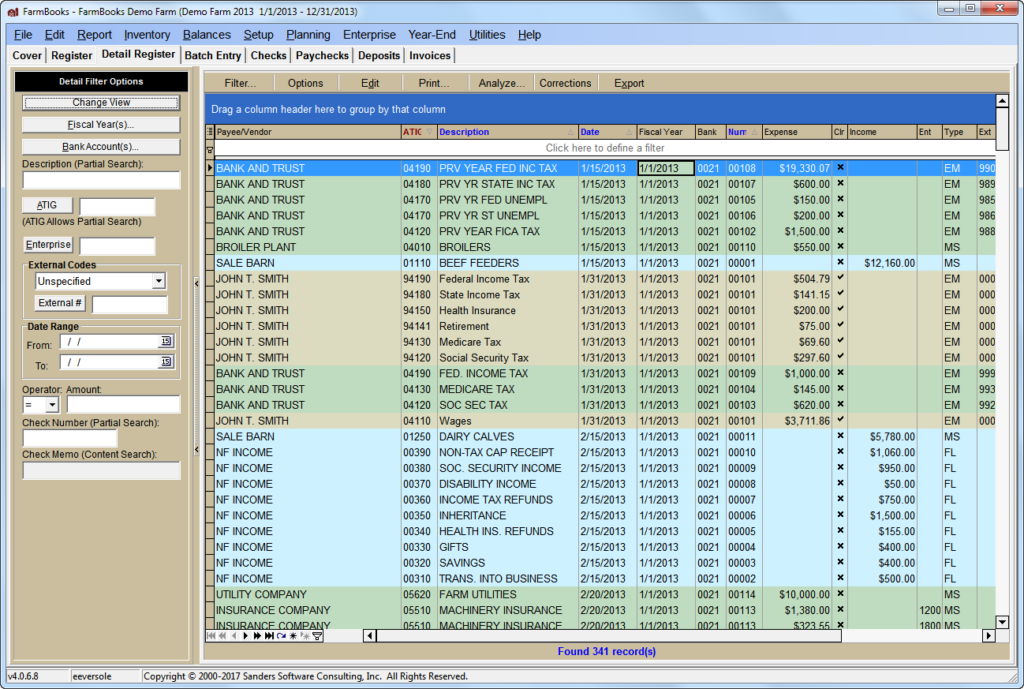
FarmBooks is a long-standing desktop financial package developed by Sanders Software Consulting for ranchers and farmers who prioritize on-premise security and detailed reporting. Particularly valued by pork producers for its monthly statements and industry cost benchmarks, it is a reliable workhorse for operations where internet access is inconsistent and data privacy is non-negotiable.
Core Features:
- Check Writing & Payroll: Record and print checks; includes intelligent payroll and current 2025 tax rate tables.
- Inventory Management: Assess inventory value anytime; tracks two quantity units per commodity and livestock events.
- Asset & Liability Tracker: Monitors cost and market value of all assets with amortization schedules for loan planning.
- ATIG Account Codes: Separates farm expenses from family living costs, critical for small family-run operations.
| Pros | Cons |
| Works offline; ideal for poor-connectivity areas | No cloud features or real-time mobile syncing |
| Detailed benchmarking for specific industries like pork | Limited automation compared to cloud-native platforms |
| Checkbook-style ledger easy for non-accountants | $595 upfront cost higher than many monthly plans |
Best For:
- Farmers in rural areas with unreliable internet access
- Pork producers need industry-specific financial benchmarks
- Operators who value desktop data privacy over cloud convenience
Rating: 4.5, recognized by NerdWallet as a top choice for farm accounting reports, FarmBooks delivers strong offline reporting at version 4.0.7.3 with full Windows 11 compatibility.
4. Traction Ag
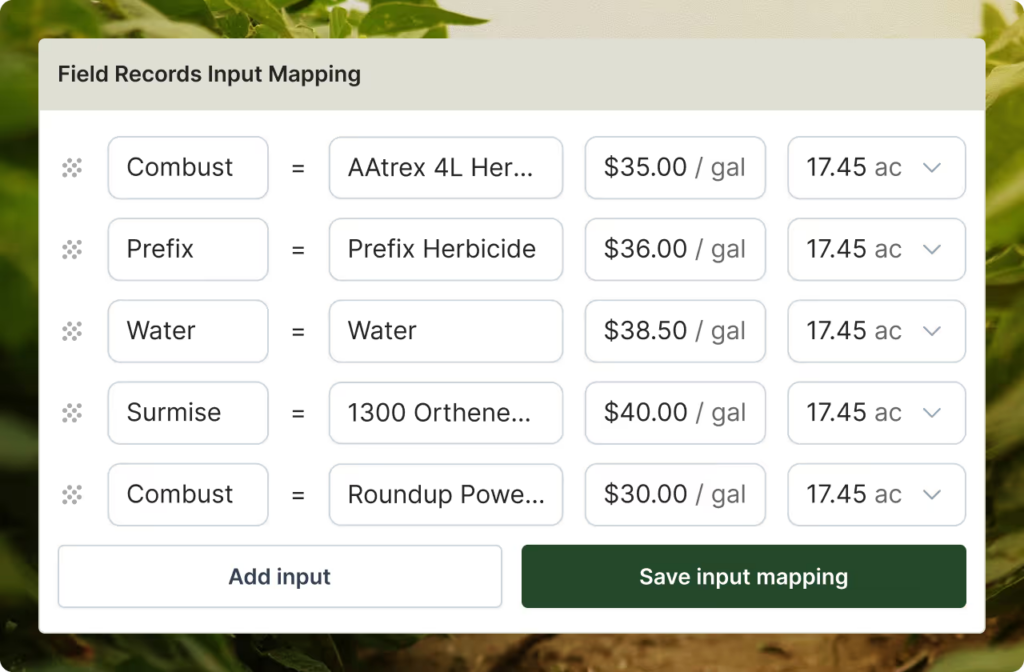
Traction Ag is a cloud-based financial platform built for modern farmers who need a direct link between agronomic data and financial performance. Following its 2023 acquisition of Conservis, Traction has merged advanced farm management with robust accounting to create one of the industry’s most complete farm financial ecosystems, purpose-built for crop-year accounting rather than generic calendar-month reporting.
Core Features:
- Platform Integrations: Syncs with John Deere Operations Center, Climate FieldView, Plaid, and Paylocity.
- True Profitability: Calculates real-time breakeven and profit per bushel, acre, and field automatically.
- Compliance & Reporting: Generates Schedule F reports and 1099s with one click; supports multi-entity subscriptions.
- Inventory Management: Tracks input, crop, and grain bin levels for market-value balance sheet discussions.
| Pros | Cons |
| Industry-leading John Deere & FieldView integration | Higher annual cost than entry-level subscriptions |
| Handles crop-year vs. calendar-year accounting | Advanced accrual features locked behind Pro tier |
| Ease of use and support | Occasional automated bank-sync issues reported |
Best For:
- Large, complex row-crop operations needing field-level ROI analysis
- Farmers using John Deere or Climate FieldView are seeking data integration
- Operations requiring multi-entity crop-year financial tracking
Rating: 4.9/5 on Capterra and Software Advice (58 reviews), Traction Ag is the field-profitability leader for data-driven row-crop operations.
5. PcMars
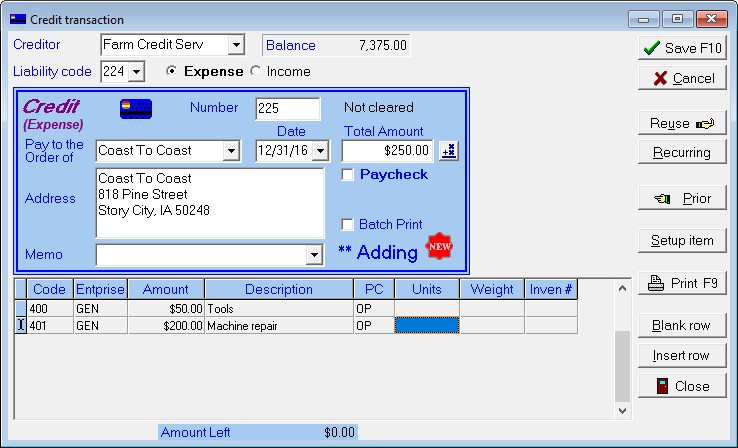
PcMars is a budget-friendly, desktop-based accounting system with roots stretching back to 1985. Frequently used by farm business associations and extension programs such as MSU TelFarm, it is designed to be straightforward and education-friendly while still delivering the detailed financial reporting that agriculture demands. For producers who want compliance without complexity, PcMars hits the mark.
Core Features:
- Cash & Accrual Support: Offers both single-entry cash-basis and double-entry accrual accounting systems.
- Enterprise Accounting: Breaks out income and expenses by individual field or profit center for ROI analysis.
- Bank Statement Import: Imports bank transactions to speed up data entry despite being an offline platform.
- PcMars PLUS Module: Adds complete inventory tracking and more detailed enterprise allocation capabilities.
- Loan Tracking: Manages individual loan accounts and revolving credit transactions with detailed schedules.
| Pros | Cons |
| Extremely affordable; annual updates included free | Desktop-only; no cloud access or multi-user sync |
| Detailed Schedule F tax reporting for agriculture | No AI receipt capture or real-time bank feeds |
| Simple, user-friendly interface for non-accountants | Lacks native depreciation tracking for assets |
Best For:
- Small-to-medium farms seeking budget-friendly desktop accounting
- Extension program users and beginning farmers learning financial management
- Operations prioritizing Schedule F compliance on a tight budget
Rating: 4.2, highly regarded for education and compliance, PcMars offers unmatched value at $80/year for farms that need solid enterprise analysis without cloud overhead.
6. EasyFarm
EasyFarm is a powerful desktop farm management and accounting tool developed by Vertical Solutions, serving ag producers since 1993. It uses a single-entry input approach where you enter a transaction once, and the software handles all underlying accounting logic. With tiered packages from Lite to Platinum, EasyFarm lets you purchase exactly the depth of functionality your operation needs without ongoing subscription costs.
Core Features:
- Integrated Production Records: Tracks both crop/field data and livestock management within one unified platform.
- Electronic Banking Import: Supports banking data imports to streamline transaction reconciliation efficiently.
- Enterprise Analysis: Detailed cost centers and enterprising tools to measure the profitability of individual farm units.
- EasyFarmHand App: Android mobile extension for recording field data on the fly and syncing with the desktop.
- FINPACK Exports: Easy export of financial data for use in professional farm business analysis programs.
| Pros | Cons |
| High value one-time fee; no recurring subscriptions | Desktop limits remote team accessibility |
| Deeply customizable for diverse farm types | Training manuals purchased separately ($50) |
| Strong reputation for ongoing product support | Mobile app currently limited to Android only |
Best For:
- Farm managers want a robust all-in-one desktop management tool
- Mid-market agribusinesses prefer to own software outright
- Operations needing FINPACK-compatible financial exports
Rating: 4.6/5 on G2, EasyFarm is particularly favored by mid-market agribusinesses for its deep customizability and one-time purchase model.
7. FarmRaise
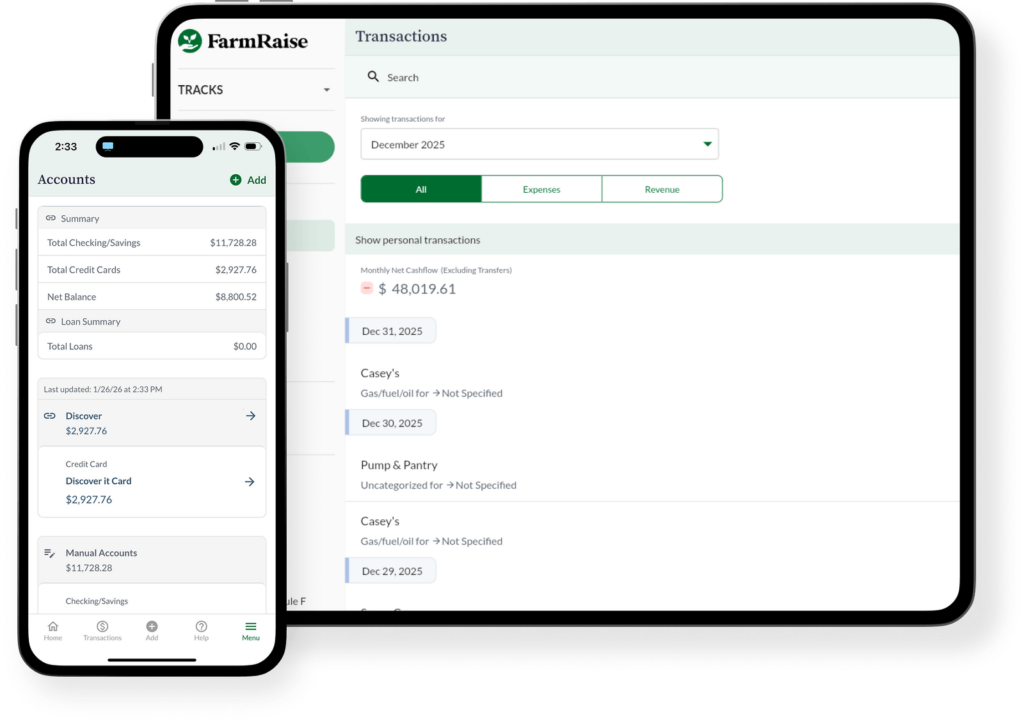
FarmRaise is a cloud-based, mobile-first platform designed to simplify farm finances for small-to-medium operations, trusted by over 20,000 farmers. Its standout differentiation is a built-in grant-discovery engine that actively matches your operation with USDA and other agricultural funding opportunities. If your biggest frustration is paperwork eating into field time, FarmRaise is built to fix that.
Core Features:
- FarmRaise Tracks App: Log expenses on your phone immediately, even without cell coverage in remote areas.
- Bank Integration: Connects to over 12,000 financial institutions for automatic transaction importing and sorting.
- Schedule F Generation: Automatically organizes expenses into correct IRS tax categories for compliant filing.
- Funding Library & Alerts: Weekly grant opportunity updates and a comprehensive database of loans and cost-share programs.
- Basic Inventory Tracking: Centralized tracking of farm assets and inventory in one accessible location.
| Pros | Cons |
| Extremely user-friendly; no accounting degree needed | Reporting is basic compared to full ERP platforms |
| Identifies funding via grant and funding discovery | Limited integration with farm machinery tools |
| Offline receipt logging for remote fields | Payroll add-on significantly increases monthly cost |
Best For:
- Small-to-medium farms seeking affordable, mobile-first accounting
- Beginning farmers who want help discovering USDA grants and cost-share programs
- Producers wanting to replace their shoebox-of-receipts with phone-based tracking
Rating: 4.4, Highly recommended for funding access and ease of use, FarmRaise is an excellent starting point for operations that value simplicity and grant discovery over enterprise-level depth.
8. Ambrook
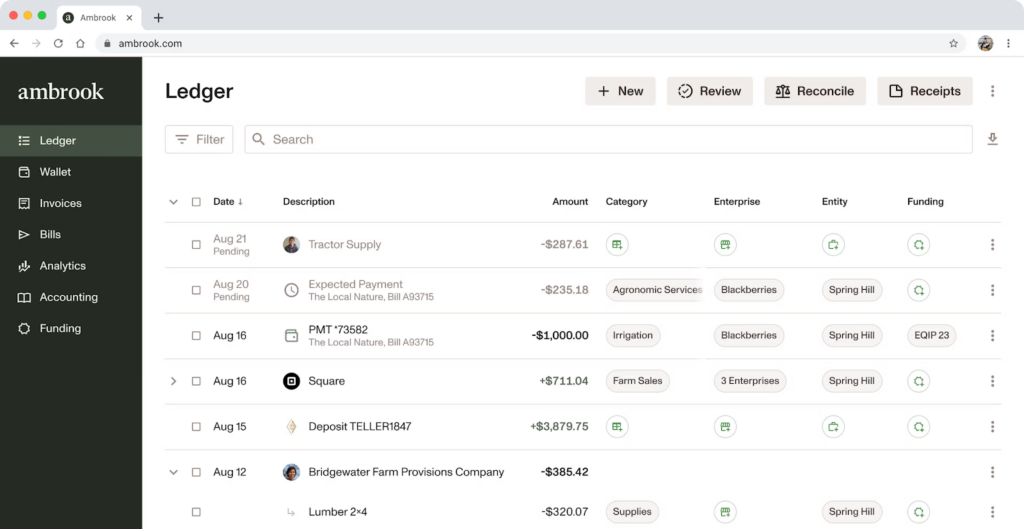
Ambrook positions itself as a modern, cloud-based alternative to legacy systems like QuickBooks, built from the ground up for agricultural producers. The platform emphasizes a beautiful user experience, mobile accessibility, and real-time financial transparency, aiming to eliminate the “shoebox of receipts” with AI-powered scanning and smart tagging. It is enterprise-driven, allowing you to track profitability by herd, crop, or custom project.
Core Features:
- AI Receipt Scanning: Digitize crumpled or handwritten receipts on the go with automatic transaction tagging.
- Enterprise Tracking: View profit margins by enterprise, updated daily as costs accrue across your operation.
- Mobile Functionality: Full-featured app for invoicing, receipt capture, and cash flow monitoring from the field.
- Integrated Bill Pay: Pay bills via mailed checks or digital transfers directly; includes employee spending cards.
- Funding Library: Access a comprehensive database of grants, loans, and cost-share programs matched to your needs.
| Pros | Cons |
| Exceptional UI and mobile app ease of use | No native 1099 filing tool within the platform |
| Responsive, US-based ag-finance expert support | Some niche features still in development pipeline |
| Direct bank feeds with daily transaction updates | Lacks integrated payroll; requires third-party tools |
Best For:
- Small-to-mid-sized farms prioritizing modern UX and mobile receipt capture
- Producers transitioning from QuickBooks to an ag-specific platform
- Operations wanting enterprise-level P&Ls with clean daily updates
Rating: 4.7/5 on Trustpilot (108 reviews), Ambrook is frequently called a “game changer” for farm record keeping and is the top pick for agriculture-first user experience.
9. Figured
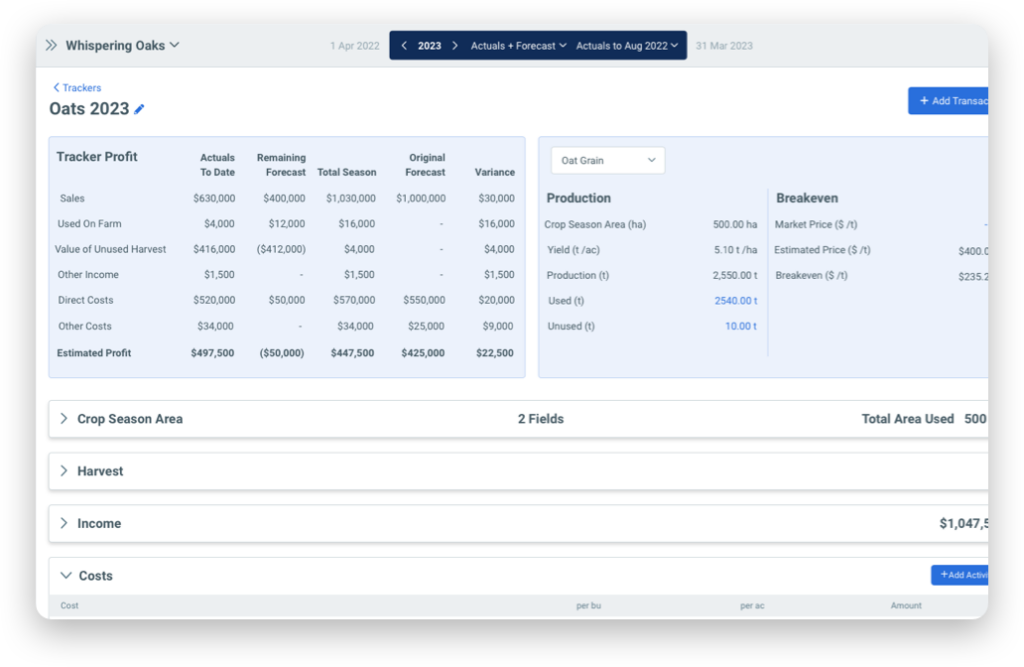
Figured is a specialized financial platform that layers on top of cloud accounting software like Xero and QuickBooks Online to deliver advanced budgeting, production tracking, and scenario planning for agriculture. Used by over 30,000 users worldwide, it brings together farmers, accountants, and bankers around a single source of real-time financial data, moving well beyond traditional bookkeeping into strategic financial management.
Core Features:
- Rolling Forecasts: Real-time view of future profit and cash availability for mid-season adjustment decisions.
- Production Trackers: Automatically tracks livestock movements, milk solids, and crop volumes with per-hectare cost calculations.
- Scenario Planning: Model farm succession, expansion, or price volatility using intuitive planning grids.
- Accounting Sync: Pulls categorized transactions from QuickBooks or Xero into Figured for production tracking.
| Pros | Cons |
| Immediate advisor/lender access to financial data | Requires separate Xero or QuickBooks subscription |
| Powerful multi-year budgeting and what-if modeling | High-speed internet mandatory for cloud performance |
| Built-in ag-specific metrics like $/kg milk solids | No dedicated mobile application currently available |
Best For:
- Dairy, livestock, and crop producers already using Xero or QuickBooks Online
- Operations needing collaborative financial planning with accountants and bankers
- Farm businesses requiring multi-year scenario modeling and forecasting
Rating: 4, recognized globally for financial planning, Figured serves 30,000+ users and is the go-to intelligence layer for farms that need strategic forecasting on top of existing accounting.
10. Farmbrite
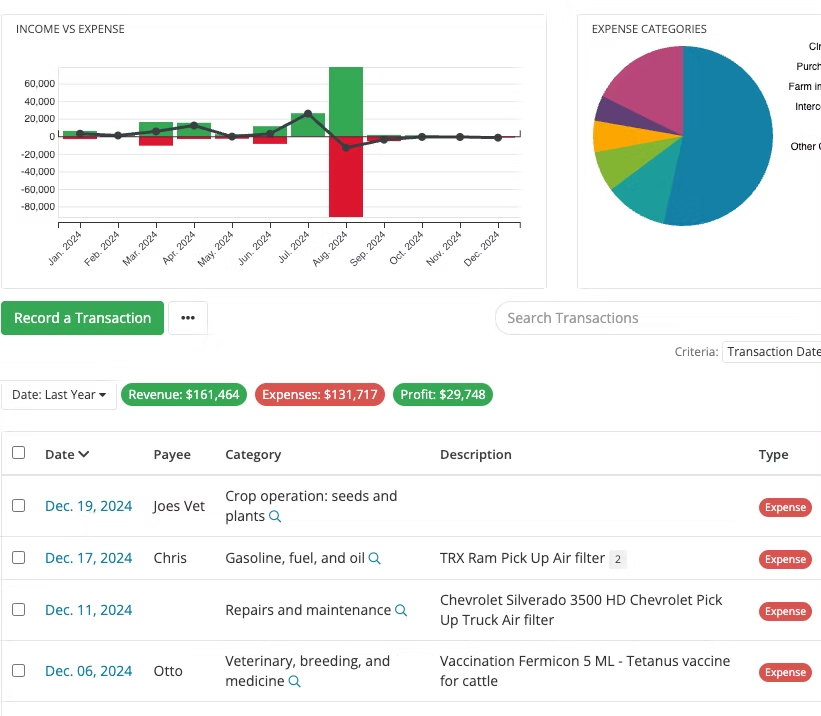
Farmbrite is a comprehensive, cloud-based platform designed to manage both livestock and crop operations through a single, modular interface. Used by thousands of farmers across 100 countries, it empowers diversified operations to transition from reactive management to proactive strategic planning. Whether you run a biodiverse farm, a non-profit agricultural project, or a research-focused operation, Farmbrite brings it all under one roof.
Core Features:
- Livestock Records: Detailed ID tracking, pedigree management, grazing rotations, and health/treatment logs.
- Crop & Field Tracking: Season planning, harvest traceability, soil health performance, and nutrient monitoring.
- E-Commerce Integration: Set up a digital storefront to sell farm products directly to consumers online.
- Financial Tools: Full accounting, bookkeeping, Schedule F reporting, and accountant-user access built in.
- Satellite Mapping: Advanced location management and climate reporting for informed field-level decisions.
| Pros | Cons |
| Integrates crops and livestock in one unified view | Advanced modules like e-commerce add to cost |
| Strong mobile and web access; works offline too | Lacks multi-currency for international sales |
| 4.9/5 customer satisfaction for value and support | Accounting-only tier lacks production tracking depth |
Best For:
- Diversified farms managing crops, livestock, and direct-to-consumer sales
- Non-profits and research-focused agricultural organizations
- Operations across multiple countries need a single management system
Rating: 4.7–4.8/5 on Capterra and G2, Farmbrite is the top choice for diversified, multi-operation farms that need production management and accounting in one platform.
How to Choose the Right Accounting Software for Your Farm
With ten strong contenders on the table, narrowing down to the right fit means asking the right questions about your operation. Use these six checkpoints to match the best software for farm accounting to your specific needs.
Assess Your Farm’s Financial Complexity
Start with the basics: how many entities, fields, and livestock classes do you manage? A single-enterprise hobby farm has different needs than a multi-site agribusiness. If your chart of accounts spans dozens of categories across multiple tax entities, lean toward platforms like Traction Ag or Folio3 Agtech that handle multi-entity consolidation natively.
Evaluate Farm-Specific Accounting Capabilities
Confirm the software supports ag-specific workflows such as crop-year accounting, Schedule F compliance, biological asset tracking, and ATIG account codes. Generic bookkeeping tools will leave you doing manual workarounds that negate the time savings of going digital in the first place.
Check Reporting & Decision-Making Tools
Your software should produce lender-ready financials, enterprise-level P&Ls, and scenario forecasts without requiring a CPA to interpret the output. Platforms like Figured and Ambrook excel here, giving you rolling dashboards that support real-time management decisions.
Inquire for Integration & Scalability
Does the platform connect to your bank, your John Deere Operations Center, your payroll provider, and your grain marketer? The best farm accounting software acts as a hub, not an island. Also, confirm it can scale as you add fields, entities, or revenue without hitting a pricing cliff.
Compare Pricing vs. ROI
An $80/year desktop license and a custom ERP quote serve very different operations. Calculate the total cost of ownership, including add-on modules, training, and annual maintenance, against the financial visibility and time savings you gain. A tool that catches one missed deduction or prevents one audit flag can pay for itself in a single season.
Test Usability & Support
Request a free trial or live demo before committing. Pay attention to how quickly you can enter your first transaction, generate your first report, and reach a live support agent. Verified user ratings on Capterra and G2 are your best proxy for real-world usability, so weigh those scores heavily.
Conclusion
Farm finances in 2026 are too complex and too consequential to manage with spreadsheets and guesswork. Whether you need a simple desktop ledger like Farm Biz for a small ranch, a mobile-first grant-finder like FarmRaise for a beginning operation, or a full-scale ERP like Folio3 AgTech for a multi-site enterprise, the right farm accounting software exists to match your scale, complexity, and growth plan. This guide has walked you through the key features to prioritize, a side-by-side comparison matrix, and in-depth profiles for ten leading platforms, so you have everything you need to make a confident decision.Ready to stop wrestling with numbers and start making them work for your bottom line? Book a free consultation with the Folio3 AgTech team to find out which solution fits your farm’s unique financial landscape and get a personalized implementation roadmap.