

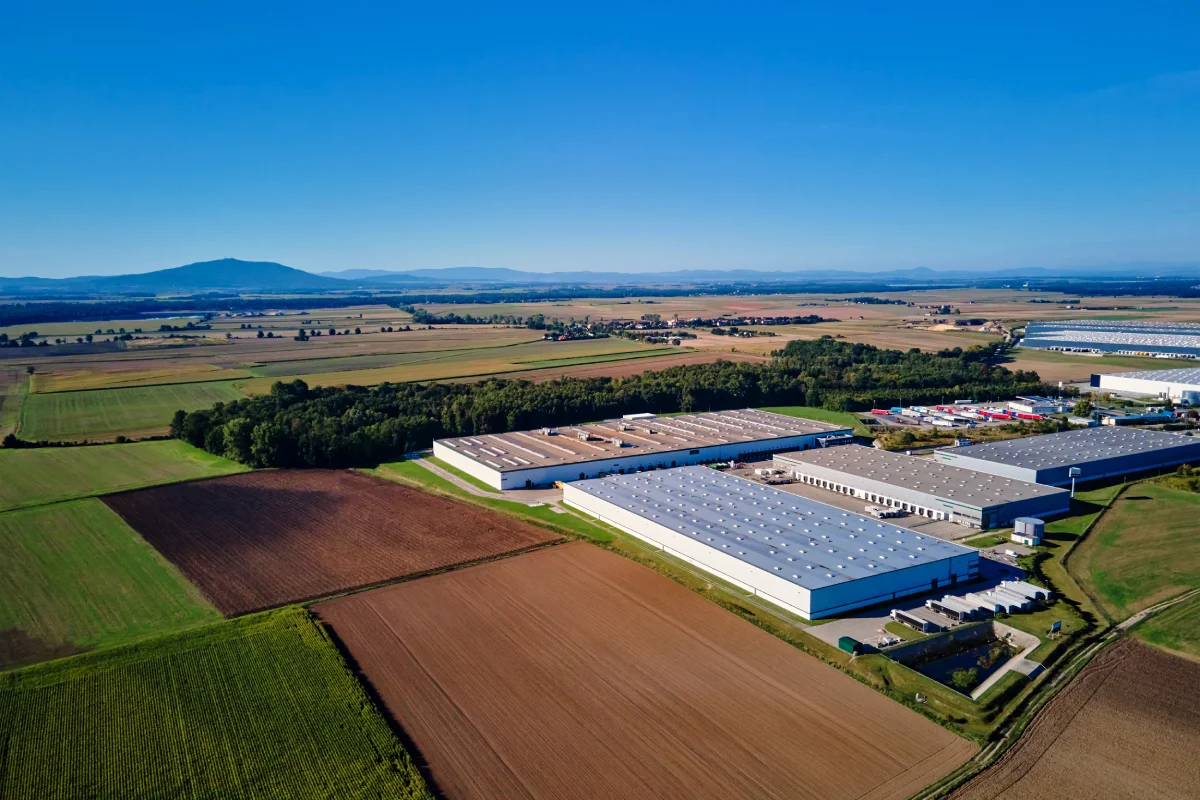
A multi-branch farm supply and agronomy business operating across the Pacific Northwest was growing fast and flying blind. Management ran a $40M operation using financial reports that were 15 days old by the time anyone read them. Seasonal stockouts cost grower relationships. Margin erosion at the branch level was invisible until the damage was done. The finance team spent 80% of their time building reports and 20% actually using them.
By deploying Folio3’s unified ERP for agriculture, the business replaced its spreadsheet architecture with a live, role-based dashboard ecosystem. It unifies point-of-sale data, multi-location inventory, centralized procurement, and financial consolidation into a single Record-to-Report system.
It was peak planting season at the flagship Willamette Valley branch. The Branch Manager stood in front of an empty pallet space where a high-demand pre-emergent herbicide should have been. A major grower was at the counter. The legacy inventory system said 50 gallons were in stock. The physical reality: zero.
To find out whether the neighboring branch could help, he made three phone calls because the localized POS systems shared no live data.
“I am flying blind in the middle of our busiest season,” the Branch Manager said. “I don’t know my true stock levels, I don’t know what’s on the truck from the corporate, and I have no idea if my branch is actually profitable this week until the CFO sends out a spreadsheet next month. We are losing sales because we can’t see our own inventory.”
The fix wasn’t more phone calls; it was eliminating the architecture that made them necessary.
Technical Justification: To eliminate localized blind spots, a unified ERP centralizes POS and inventory data into a single cloud database. Every counter transaction instantly updates the master inventory ledger; there is no batch syncing at the end of the day.
Role-Based Dashboards give the Branch Manager a live view of Today’s Gross Margin, Top-Selling SKUs, and Low-Stock Alerts specific to their location.
Global Inventory Visibility allows a counter rep to search any SKU and instantly see real-time available vs. committed stock across all regional branches. It enables inter-branch transfer requests on the spot, not after a series of phone calls.
For a deeper look at how farms and ag retailers are structuring their digital operations around centralized data, see the comprehensive guide to ERP data management in agriculture.
With the pre-season purchasing deadline six weeks out, the Lead Buyer had one shot to get the fertilizer order right. Her only reference: a sprawling Excel workbook stitching together last year’s sales data with current warehouse counts; manually exported, prone to error, and already out of date.
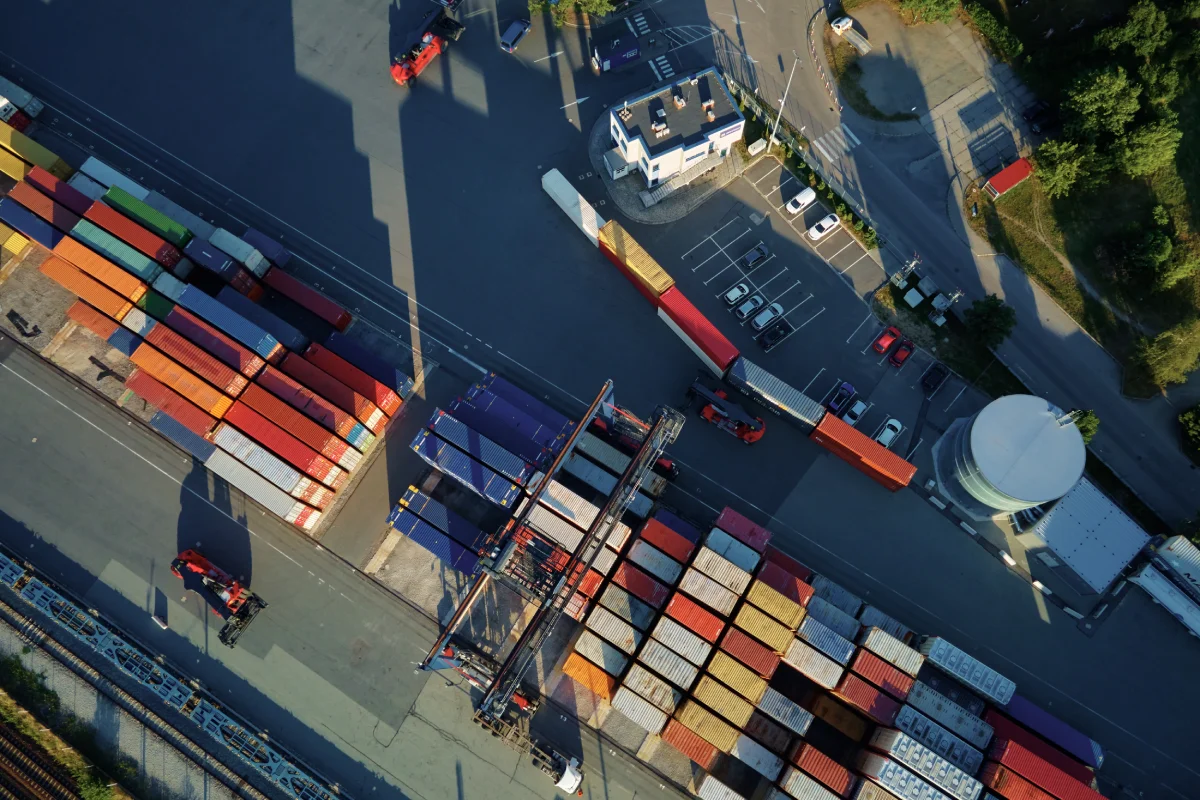
Because the data was fragmented across branch emails and disconnected systems, she routinely over-ordered expensive inputs “just to be safe,” tying up millions in working capital she couldn’t see clearly.
“We buy seasonal chemicals based on historical guesswork and fragmented branch emails,” the Lead Buyer explained. “If I order too much fungicide and it doesn’t rain, we’re stuck holding inventory that expires. If I don’t order enough, we lose our most loyal growers. I need a system that calculates our exact replenishment needs based on live sales velocity.”
This is the gap that separates reactive procurement from strategic purchasing, and it’s exactly what agri supply chain management software is designed to close.
Technical Justification: Automated Replenishment Logic replaces procurement guesswork. Within the ERP’s Supply Chain module, a Demand Planning Dashboard analyzes live sales velocity, historical seasonal trends, and current vendor lead times simultaneously.
The ERP calculates dynamic Min/Max Reorder Points for every SKU at every branch. When stock dips below the threshold, an Actionable Reorder Alert fires. The buyer clicks to consolidate demand across all branches into a single bulk Purchase Order, securing volume discounts without the manual coordination. Procurement shifts from a reactive, spreadsheet-driven exercise to a proactive, automated workflow.
For a practical framework on structuring this kind of visibility, the guide to smarter inventory planning in farming walks through the transition from reactive to demand-driven ordering.
Mid-season, global supply chain volatility caused the wholesale price of urea and glyphosate to spike sharply. The pricing manager received no alert. No system-connected landed cost changes to the branch POS. Branches across the network continued selling at the retail price calculated a month prior.
Freight surcharges, fuel costs, and wholesale price movements were trapped in the accounting department’s spreadsheets, invisible to the people making sales decisions at the counter.
“We sold out of glyphosate in three days, but when accounting finally ran the numbers, we realized we’d actually lost money on every jug due to inbound freight costs,” the Operations Director revealed. “If our retail pricing doesn’t instantly reflect our real-time landed cost, high sales volume actually accelerates our margin erosion.”
The challenge isn’t unusual. As the importance of farm inventory management guide notes, the real cost of disconnected systems isn’t just inefficiency, it’s margin loss that builds silently until a high-volume season makes it undeniable.
Automated Landed Cost Tracking ties inbound freight, handling, and duty charges directly to inventory valuation at the point of receipt. It establishes an accurate, real-time COGS before a single unit is sold.
Dynamic Margin Pricing Rules complete the protection. If the landed cost of a chemical rises 8% on a new inbound lot, the ERP alerts the pricing manager via dashboard. A single approval pushes a system-wide retail price update to every branch POS instantly, guaranteeing that the target margin holds regardless of supply chain volatility. High volume stops being a liability. It becomes the accelerator it was always meant to be.
At the end of each month, the true cost of the legacy architecture fell on the CFO. Generating the executive financial packet meant pulling CSV files from the POS system, the warehouse software, and the standalone general ledger. Two weeks of manual reconciliation just to find the truth.
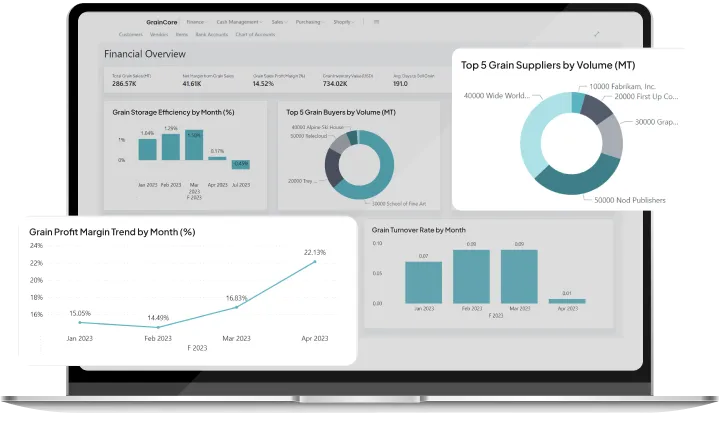
“By the time I present the profitability report to the board, the data is already useless for operational decisions,” the CFO said. “I spend 80% of my time building the reports and 20% analyzing them. We need a financial nervous system that updates the moment a transaction occurs, not 15 days later.”
The answer was a Unified General Ledger. Because the ERP integrates POS, inventory, and procurement natively through its farm accounting and financial management layer. So, every physical transaction generates an automated journal entry in real time. When a branch sells a bag of seed, revenue is recognized, inventory is depleted, and COGS is recorded. It does it simultaneously, without human involvement.
A unified GL means the CFO’s Executive Financial Dashboard shows live KPIs as Consolidated Cash Flow, Branch-by-Branch Profitability, and Inventory Turn Rates from the moment data is generated, not 15 days later.
Scheduled reporting features allow the system to automatically email drill-down PDF reports to the board every Monday at 6:00 AM. The finance team stops being historical data-gatherers and becomes strategic advisors. Month-end close compresses from weeks to 48 hours. The Record-to-Report cycle is finally synchronized with the business it’s supposed to serve.
For agribusinesses evaluating where to start, the overview of the benefits of ERP for the agriculture industry makes the financial case across operation types and sizes.
The transition from static spreadsheets to live Agriculture ERP dashboards produced measurable, verifiable results across every function of the business:
Metric | Before ERP | After ERP | Impact |
Month-end close cycle | 15 days | 48 hours | 94% faster |
Manual reporting labor | 120 hrs/month | 0 hrs | 100% eliminated |
Inventory carrying costs | Baseline | Reduced 12% | $450,000 saved |
Inter-branch stock visibility | Phone calls | Real-time dashboard | Instant transfers |
Margin protection on inputs | Reactive (post-loss) | Live landed cost alerts | Leakage stopped |
The Verdict: “Data is only valuable if it’s moving at the speed of your business. By putting live dashboards in front of our branch managers and buyers, we stopped looking in the rearview mirror and finally took control of our operations.”
– General Manager, Pacific Northwest Farm Supply.
“Replacing our legacy systems wasn’t just a software upgrade; it was a structural modernization. We eliminated the friction between the scale and the ledger, protecting our margins while delivering unprecedented transparency to our farmers.” — General Manager, Iowa Crop Cooperative.
If your branch managers and buyers are still making decisions from last month’s Excel file, this story is your mirror. The operations described here aren’t unusual; they’re the default state of a multi-location ag supply business that hasn’t yet unified its data.
The shift to live operational visibility doesn’t require a rip-and-replace of everything. It starts with a single question: What decisions are you making today with data that’s already too old to act on?
Explore Folio3’s ERP for Agriculture or talk to a Folio3 AgTech Architect today to map out your transition to live dashboards, automated replenishment, and real-time financial consolidation.
Get a Free Consultation Within 24 Hours, with a No-Obligation Ballpark Estimate
[contact-form-7 id="5196998" title="Intent Popup Form"]