









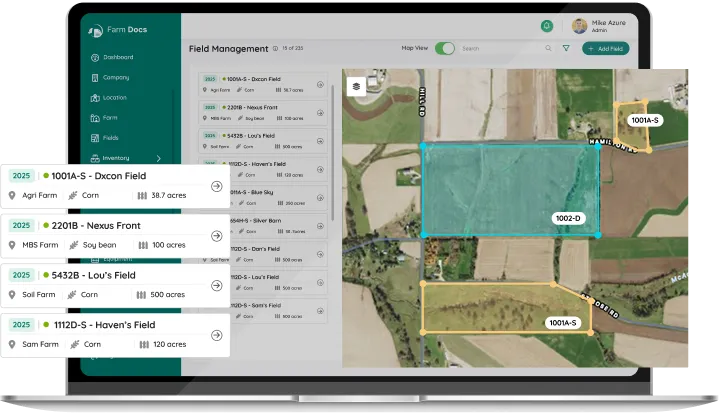


Farming in 2026 means juggling volatile weather patterns, tightening supply chains, and compliance demands that seem to multiply every season. If you are managing hundreds or thousands of acres, spreadsheets and gut instinct no longer cut it. The global farm management software market is projected to grow from $2.80 billion in 2025 to over $5.10 billion by 2030, expanding at a 12.70% CAGR, according to Mordor Intelligence.
Meanwhile, a 2025 meta-analysis published in MDPI Sustainability found that precision agriculture technologies deliver an approximate 22.3% increase in ROI and an 18.5% boost in net profit across 63 independent studies.
This guide is your definitive, agtech-consultant-reviewed roadmap to choosing the best crop management software for your operation. We evaluated nine leading platforms against a rigorous 10-point checklist so you can move from confusion to confident decision-making.
Why Agribusinesses Need Crop Management Software in 2026
From real-time field visibility to automated compliance, here’s why modern farms need crop management software to cut costs, protect yields, and stay competitive in 2026.
Real-Time Field Visibility and Decision-Making
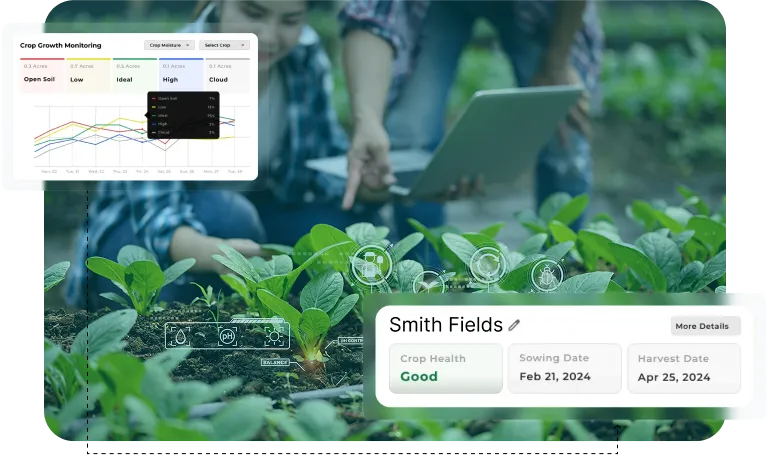
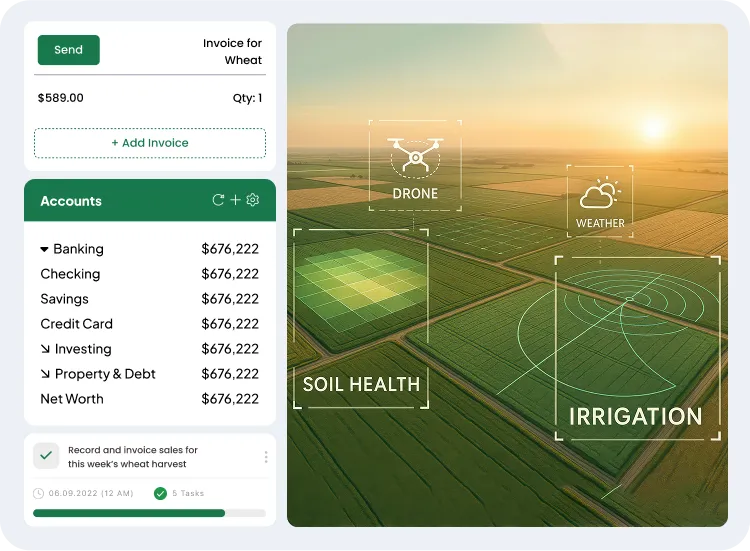
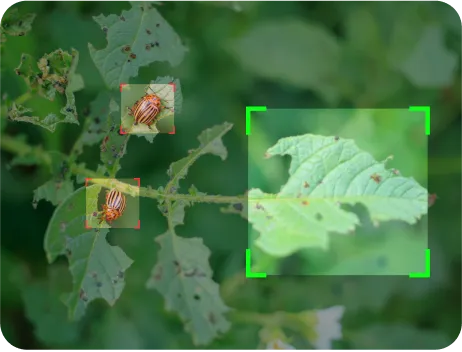
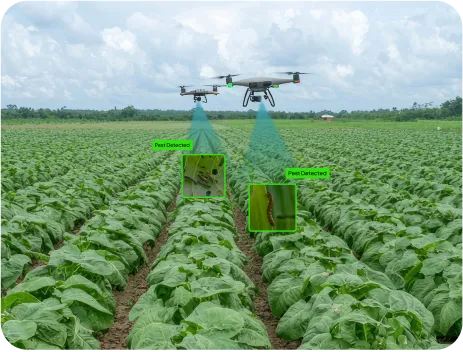
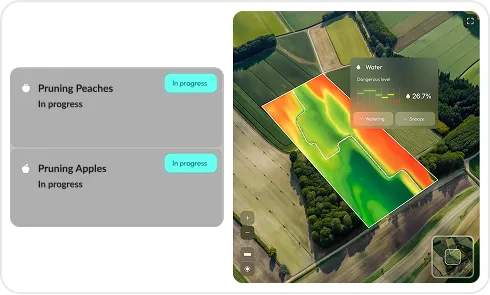
Your fields do not wait for you to catch up. Crop management software gives you a live dashboard of soil conditions, crop health, and weather alerts so you can act on facts rather than assumptions. When a pest outbreak hits or an irrigation line fails, real-time visibility can mean the difference between a minor setback and a ruined harvest.
Managing Yield with Data-Driven Forecasting
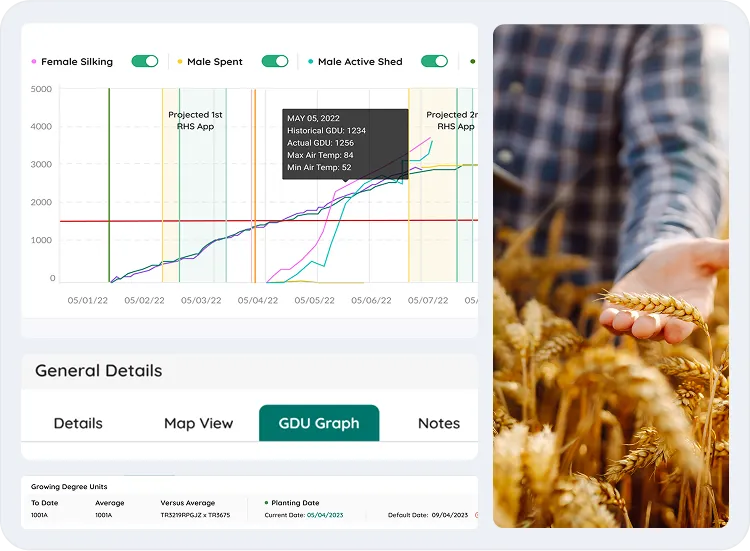
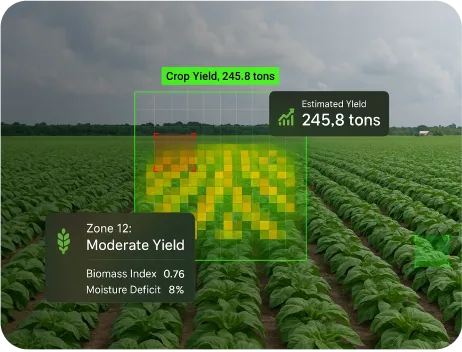
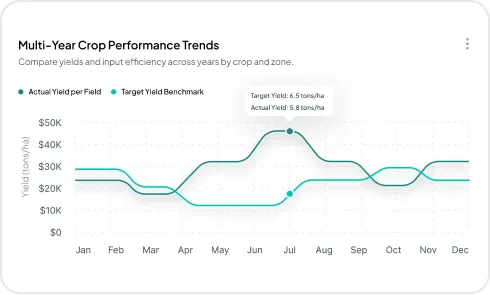
Yield forecasting powered by satellite imagery and historical field data helps you anticipate production volumes before harvest. It lets you negotiate forward contracts with confidence and allocate storage and logistics ahead of time, cutting last-minute scrambles that eat into margins.
Automating Compliance and Traceability
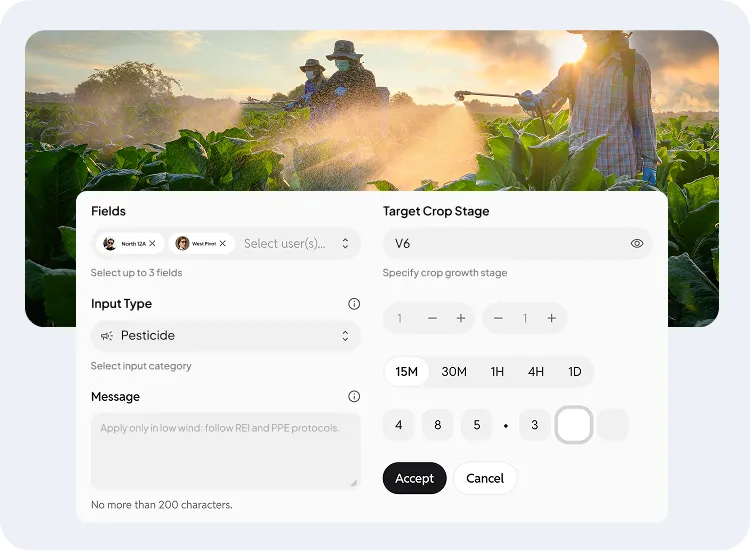
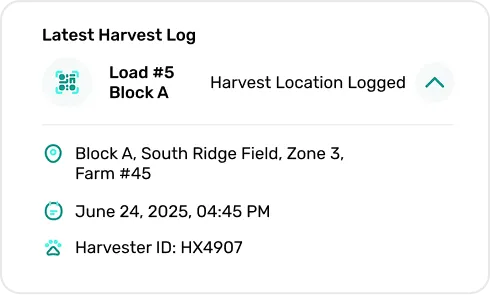
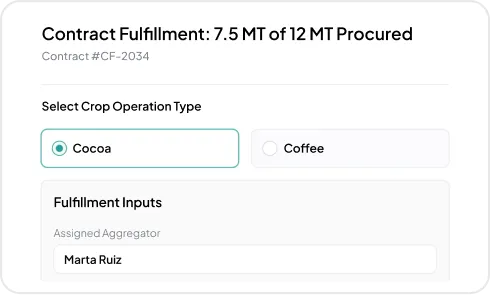
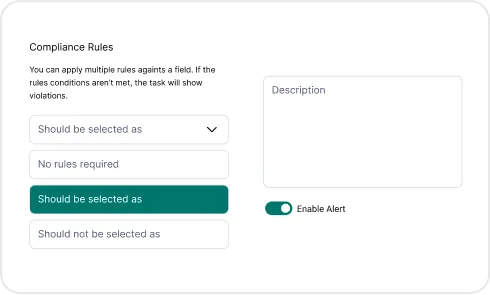
From FSMA to GAP certification and regional pesticide regulations, the compliance burden is heavier than ever. The right software automates record-keeping, tracks every input from seed to sale, and generates audit-ready reports in minutes rather than weeks.
Improving Field Workforce and Equipment Efficiency
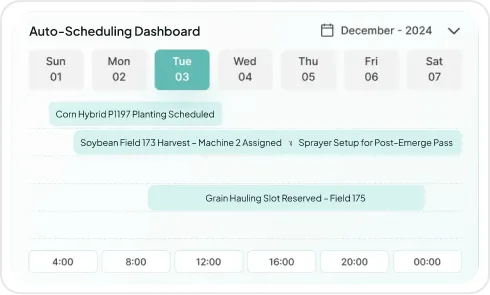
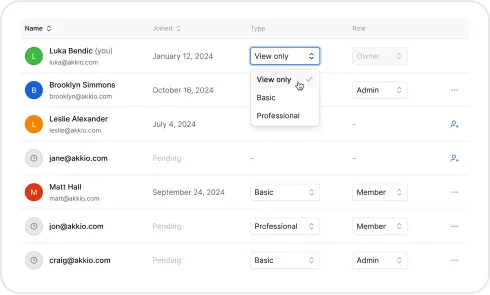
Labor shortages are not going away. Crop management platforms let you dispatch work orders, track crew productivity by task or block, and optimize equipment routes, so your people and machines do more with less.
Optimizing Input Costs through Precision Ag
Fertilizer, seed, and chemical costs continue to climb. Variable rate application maps and soil-specific recommendations ensure you apply exactly what each zone needs, eliminating the waste that comes with blanket applications. Operations using precision ag tools have reported input cost savings of 8–20% per season.
Supporting Sustainable and Climate-Smart Farming
Buyers and regulators increasingly demand proof of sustainable practices. Software that tracks carbon footprints, water usage, and nutrient runoff gives you verifiable ESG data, opening doors to premium markets and sustainability-linked financing.
Comparison Table: Top 9 Crop Management Software at a Glance
Below is a side-by-side snapshot of the nine best crop management software platforms we reviewed. Use it to quickly compare standout features, integration strengths, and pricing before diving into the full breakdown.
| Crop Management Software | Best For | Integration Capability | Key Standout Feature | Pricing Model | Rating |
| Agtech Folio3 | Enterprise multi-entity farms | ERP, IoT, NetSuite, D365 | Field-to-finance AI analytics | Custom quote | 4.6/5 |
| AgriERP | Mid-tier Microsoft farms | Dynamics 365, Power BI, Excel | 55-feature built-in accounting | From $950/yr | 4.9/5 |
| Agrivi | Global compliance & ESG | SAP, MS Dynamics, IoT API | Pest & disease risk modeling | From $100/user/mo | 4.5/5 |
| CropX | Precision irrigation farms | Reinke, weather stations, VRA | Soil-to-sky sensor fusion | $600/user/yr + hardware | 4.5/5 |
| Croptracker | Specialty fruit & veg growers | Packing lines, food safety | Harvest Quality Vision™ | From CA$5/mo | 4.8/5 |
| Granular | Row crop profitability focus | John Deere, Climate FieldView | Field-level profit analyzer | Premium subscription | 4.5/5 |
| Conservis | Financial risk management | John Deere, Rabo AgriFinance | Cost-per-bushel tracking | From $450/user/yr | 4.8/5 |
| Agworld | Collaborative agronomy teams | Precision modules, Power BI | Grower-advisor data sharing | From $1,495/yr | 4.5/5 |
| AgSquared | Diversified small-mid farms | Payroll systems, basic API | Integrated labor & payroll | From $10/user/mo | 4.4/5 |
How Did We Evaluate the Top Crop Management Software? Our 10 Checklist-Criteria
Choosing the best crop management software is not about picking the flashiest demo. We built a 10-point evaluation checklist rooted in how real agribusinesses operate, so every rating in this guide reflects practical, on-the-ground value.
1. Crop-Specific Functionality
Does the platform support your exact crop types, from row crops and orchards to specialty vegetables? We looked for software that adapts to crop-specific growth stages, input schedules, and harvest cycles rather than forcing a one-size-fits-all workflow.
2. Offline Mobile Functionality & Field Access
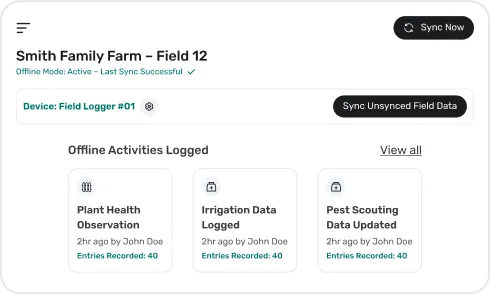
Rural connectivity is unreliable in many farming regions. We prioritized platforms that let your crew scout, log activities, and record data offline, with automatic sync once a connection returns.
3. Field Activity & Workforce Management
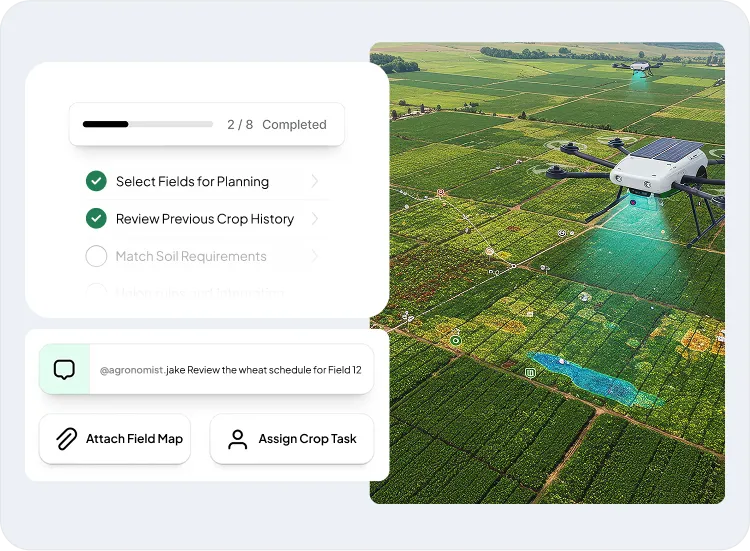
Can you create work orders, assign tasks to specific crews, and track completion in real time? This criterion measures how well the software replaces clipboards and phone calls with organized, accountable task management.
4. Input Management & Resource Tracking
We evaluated each platform’s ability to track seed, fertilizer, chemical, and water usage down to the field or zone level, because controlling inputs is the fastest path to protecting margins.
5. Financial Management, Accounting & Subsidy Tracking
Beyond basic record-keeping, we checked for integrated accounting, budget-vs-actual analysis, cost-per-acre reporting, and the ability to manage subsidy claims and crop insurance documentation.
6. Ecosystem Integrations
No farm runs on a single tool. We scored each platform on its ability to connect with existing ERPs (NetSuite, Dynamics 365, SAP), machinery data (John Deere, AGCO), weather services, and IoT sensors.
7. Compliance, Traceability & Food Safety
From FSMA and GlobalG.A.P. to pesticide use reporting, we measured how well each tool automates audit-ready documentation and maintains full traceability from seed to shelf.
8. Yield Monitoring & Performance Analytics
Can the software track yield by field, variety, and season while providing actionable insights through dashboards and reports? We valued platforms that turn raw data into decisions rather than just charts.
9. Scalability for Multi-Field Operations
A platform that works for 500 acres must also work for 50,000. We tested each solution’s ability to manage multiple farms, entities, and user roles without performance degradation.
10. ROI & Ease of Adoption
Even the most powerful software fails if your team does not use it. We assessed onboarding timelines, training requirements, customer support quality, and documented payback periods to determine real-world ROI.
The 9 Best Crop Management Software for 2026 (In-Depth View)
We break down each platform’s core features, pros and cons, ideal use cases, and ratings so you can match the right software to your operation’s needs.
1. Agtech Folio3
Agtech Folio3 is a comprehensive digital transformation framework built for large-scale agribusinesses with revenues ranging from $500,000 to over $4 billion. Positioned as an enterprise-grade agricultural ERP, it delivers end-to-end visibility across the entire supply chain, from field operations to consumer delivery. Its unified digital ecosystem connects crop management, livestock modules, and complex financial reporting, making it the go-to platform for multi-entity organizations that need a single source of truth.
Core Features:
- Integrated Production Planning & ROI Analytics: Seasonal crop plans with per-acre cost tracking and budget-to-actual analysis.
- AI-Powered Geospatial Analytics: Satellite and sensor-driven zone-by-zone crop health monitoring with pest detection.
- Full Traceability & Compliance: Batch and lot tracking from seed to sale for audit trails and food safety.
- Livestock & Feedlot Management: Specialized Cattlytics modules for herd health, feed efficiency, and inventory.
- Multi-System ERP Integration: Seamless connectivity with NetSuite, Dynamics 365, and IoT platforms.
| Pros | Cons |
| Total field-to-finance enterprise visibility | Significant staff training curve required |
| Massive scalability up to $4B+ revenue | Long implementation needs project management |
| Deep livestock plus crop capabilities | No transparent off-the-shelf pricing |
| Robust global compliance management | Requires full digital transformation commitment |
Best For:
- Large, multi-location agribusinesses needing consolidated field-to-finance control
- CFOs managing complex multi-entity crop and livestock operations
Rating: 4.6/5, the top-tier enterprise solution for organizations that demand integrated crop-to-finance visibility at scale, recognized as ERP Solution of the Year 2025.
2. AgriERP
AgriERP is a cloud-based, AI-powered ERP system designed specifically for modern farms and agribusinesses. Built on the Microsoft Dynamics 365 platform, it brings professional-grade financial and operational management to agricultural operations. Recognized by Forbes for innovation and awarded ERP Solution of the Year 2025 by AgTech Breakthrough Awards, AgriERP is known for helping operations cut costs by up to 20% through data-driven resource allocation and sustainability-focused workflows.
Core Features:
- Advanced Crop Management: Supports seasonal shifts, complex production records, and real-time growth monitoring.
- Built-In Financial Accounting: Integrated ledgers, accounts payable/receivable, and automated invoicing.
- Precision Field Mapping: GPS-based field boundary drawing with variable-rate application integration.
- Supply Chain & Labor Management: Workforce scheduling, payroll, and vendor coordination in one system.
- Microsoft Ecosystem Integration: Native connectivity with Excel, Power BI, and Microsoft Teams.
| Pros | Cons |
| Built on Azure with 99.9% uptime | Feature volume can overwhelm non-technical users |
| Seamless Microsoft ecosystem integration | Primarily crop-focused, limited livestock depth |
| Forbes-recognized award-winning platform | Custom pricing needed for enterprise rollouts |
| Reported 20% cost savings via sustainability | Relatively newer entrant versus legacy ERPs |
Best For:
- Mid-tier farms and agribusinesses already operating within the Microsoft ecosystem
- Operations focused on reducing costs through data-driven sustainability management
Rating: 4.9/5, the highest-rated platform on Capterra for functionality and value, ideal for professional farms wanting a Dynamics 365-powered crop and finance solution.
3. Agrivi
Agrivi is a cloud-native farm management platform that has established itself as a global leader in regulatory compliance and ESG reporting for agriculture. Used across 100+ countries by some of the world’s largest agri-food companies, Agrivi focuses on making farming sustainable and fully traceable. If your operation targets high-value export markets or must meet strict environmental certifications, Agrivi is built for exactly that purpose.
Core Features:
- Predictive Risk Management: Advanced weather forecasting, pest detection, and disease risk modeling.
- Comprehensive Resource Tracking: Monitors labor, machinery, and inventory to calculate real-time production costs.
- Full Traceability & Food Safety: Tracks every input and activity from planting through harvest for audits.
- Robust API & ERP Integration: Connects with SAP, MS Dynamics, IoT sensors, and weather stations.
- ESG & Carbon Footprint Reporting: Built-in tools for sustainability metrics and environmental certification tracking.
| Pros | Cons |
| Highly intuitive user-friendly interface | Higher price point limits small-farm access |
| Superior pest and disease prediction models | Mobile app less powerful than web version |
| Excellent customer support and onboarding | Feature volume can overwhelm beginners |
| Proven at global scale with large corporations | Occasional lag reported in older app versions |
Best For:
- Professional farm managers prioritizing global compliance and ESG certification
- Large agri-food corporations need traceable, audit-ready supply chain data
Rating: 4.5/5, the market leader for compliance-driven operations that need predictive agronomy and sustainability reporting across diverse global climates.
4. CropX
CropX is a disruptive precision agronomy platform that combines proprietary soil sensors with AI-driven analytics to deliver what it calls a “soil-to-sky” approach. With over 2,000 farm deployments worldwide, CropX serves a highly technical user base that demands actionable resource optimization rather than simple digital record-keeping. If your primary goal is slashing water, fertilizer, and energy waste, CropX’s hardware-software integration is hard to match.
Core Features:
- Proprietary Multi-Depth Soil Sensors: Measures moisture and electrical conductivity to detect leaching and salinity.
- Disease Risk Detection: Validated models covering 50+ fungal diseases with spray timing recommendations.
- Variable Rate Application Maps: Precision prescriptions for seeding, fertilization, and irrigation by zone.
- Direct Evapotranspiration Measurement: The Evato sensor measures actual crop water usage for irrigation precision.
| Pros | Cons |
| Up to 50% water savings and 15% yield gains | Requires initial hardware sensor investment |
| Simplifies complex agronomic data into actions | Lacks broad enterprise accounting features |
| 15+ years of validated disease risk models | Dependent on sensor connectivity in-field |
| Seamless integration with major irrigation systems | Too specialized for basic record-keeping needs |
Best For:
- Large-scale operations in water-scarce regions with high input costs
- Agronomists and research-oriented farms managing precision trial plots
Rating: 4.5/5, the best-in-class sensor-driven platform for operations where resource optimization and precision irrigation are the primary profit levers.
5. Croptracker
Croptracker is an award-winning farm management platform built specifically for the fruit and vegetable sector. Since 2006, it has served growers, packers, and cooperatives who need airtight food safety traceability and efficient labor tracking. Used by major global entities like Mr. Apple and Vineland Growers Co-op, Croptracker’s vision technology and audit automation make it the standout choice for specialty crop producers.
Core Features:
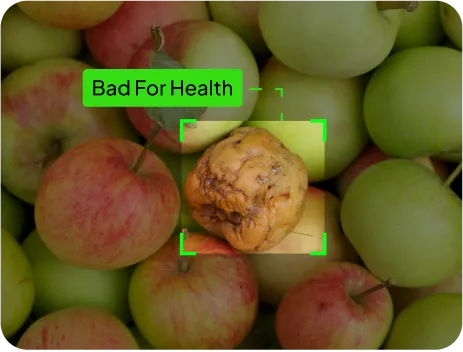
- Vision Technology Suite: Harvest Quality Vision™ and Crop Load Vision™ for real-time fruit size and color grading.
- Block-Level Traceability: Traces product to the specific field and employee for recall management.
- Crew & Labor Productivity: Real-time task assignment with piece-rate tracking for harvest efficiency.
- Audit Automation: Generates 50+ pre-formatted food safety audit reports instantly.
- Flexible Pricing Tiers: Scales from CA$5/month basic plans to full professional annual subscriptions.
| Pros | Cons |
| Industry-leading vision tech for fruit quality | Interface complexity due to feature volume |
| Dramatically simplifies food safety audits | Performance highly dependent on internet speed |
| Exceptional customer support responsiveness | Initial mapping setup is time-consuming |
| Robust labor tracking improves crew efficiency | Some UI elements difficult for older users |
Best For:
- Fruit and vegetable growers with high labor costs and strict food safety audits
- Packing cooperatives requiring block-level traceability and vision-based grading
Rating: 4.8/5, the premier specialty crop solution with unmatched vision technology and audit automation, ideal for quality-critical fruit and vegetable operations.
6. Granular
Granular, a subsidiary of Corteva Agriscience, is a high-end farm management platform designed for professional farmers who want to manage their operations with the financial rigor of a sophisticated business. It replaces fragmented spreadsheets with a single system of record that integrates operational, financial, and agronomic data. Its focus on field-level profitability makes it the go-to tool for row crop producers who need to understand the exact cost of every input.
Core Features:
- Profit Analyzer: Plan-forecast-actual budgeting that auto-updates with real field costs in real time.
- Work Order Management: Creates detailed application orders, ensuring correct inputs reach correct fields.
- High-End Imagery & Scouting: Satellite imagery with hybrid-versus-hybrid performance comparisons.
- Deep Machinery Integration: Seamless data sync with John Deere Ops Center and other OEM platforms.
| Pros | Cons |
| Unmatched field-level profitability depth | Onboarding and implementation take time |
| Dedicated Success Managers for support | Software can feel rigid for some workflows |
| Powerful what-if scenario planning tools | High cost may limit small-farm adoption |
| Single system replaces fragmented spreadsheets | Grain inventory modules need improvement |
Best For:
- Mid-to-large row crop producers needing professional-grade financial analysis
- CFOs and owners providing profitability reports to partners or lenders
Rating: 4.5/5, the gold standard for field-level profitability analysis with a 13-month average ROI, built for data-driven row crop decision-makers.
7. Conservis
Conservis is a premium farm management platform that has earned its reputation as the gold standard for financial risk management in agriculture. Founded in 2009, it was designed around the principle that farmers gain a market advantage when they can demonstrate full transparency into how their crops are produced. Its partnership with Rabo AgriFinance links operational data directly to innovative financing solutions, a unique advantage in the market.
Core Features:
- Operational Planning & Budgeting: Digital planning tools tied to a real-time financial picture for in-season adjustments.
- Automatic Data Integration: Syncs with John Deere and Climate FieldView to auto-create activity tickets.
- Inventory & Marketing Tracking: High-precision grain and chemical inventory with cost-per-bushel reporting.
- Audit & Insurance Optimization: Speeds FSA and crop insurance claims with record detail that proves losses.
| Pros | Cons |
| Industry-leading ease of use designation | High price point is a major consideration |
| Exceptional step-by-step customer support | Requires strong operational knowledge to maximize |
| Real-time cost-per-bushel analytics | Primarily optimized for North American crops |
| Robust traceability for market advantage | Dependent on high-quality data input accuracy |
Best For:
- Professional row and permanent crop growers managing complex grain contracts
- Farmers seeking financing advantages through Rabo AgriFinance data integration
Rating: 4.8/5, the highest-rated platform for ease of use and customer support, purpose-built for financially sophisticated growers who treat their farm as a business.
8. Agworld
Agworld is an independent, privately owned farm data management ecosystem focused on collaboration between growers and their advisors. Based in the US and Australia, it provides a unique platform where all stakeholders, from agronomists to contractors, work on a single set of standardized data. Agworld does not sell user data, ensuring the farmer retains full ownership of their digital assets, a key differentiator in today’s data-conscious market.
Core Features:
- Collaborative Seasonal Planning: Joint strategy development between growers and agronomists with dispatchable work orders.
- Offline Mobile Accessibility: Fully functional offline scouting and data logging with auto-sync on reconnection.
- Standardized Database: Structured data for fast, accurate reporting, such as total nitrogen per farm.
- Integrated Financials & Agronomy: Ties task management with cost-of-production for field-level financial views.
| Pros | Cons |
| Best-in-class grower-advisor collaboration | Some tasks buried under category layers |
| High data security with private ownership | Limited multi-hybrid per field management |
| Intuitive mobile-first user interface | Cannot easily create zones within fields |
| Standardized data enables fast reporting | Flat rate can be high for small operations |
Best For:
- Farms working closely with external agronomists need seamless data sharing
- Operations that prioritize data privacy and independent platform ownership
Rating: 4.5/5, the premier collaborative ecosystem for grower-advisor teams that need standardized data, strong privacy, and real-time field coordination.
9. AgSquared
AgSquared is a farm management solution purpose-built for diversified row crop and specialty farms where labor management is the primary operational challenge. It focuses on turning complex yearly plans into organized day-to-day workflows, with strong emphasis on payroll integration and food safety compliance. For small-to-mid-sized farms transitioning from paper to digital, AgSquared offers the most accessible entry point in this lineup.
Core Features:
- Integrated Labor Tracking & Payroll: Clock-in/out with automatic labor hour allocation to crops and cost centers.
- Diversified Crop Planning: Optimized for farms growing wide varieties with complex seasonal rotations.
- Chemical & Food Safety Compliance: REI/PHI label compliance with digital forms replacing paper-based tracking.
- Harvest Forecasting & Inventory: Real-time yield dashboards for sales coordination and inventory management.
| Pros | Cons |
| Highly affordable entry-level pricing | Limited integration with other ag programs |
| Exceptional for managing diverse labor crews | Mobile app lacks full desktop functionality |
| Simplified design accessible to all tech levels | Customization options may feel restricted |
| Strong food safety compliance and digital forms | Reporting limited for advanced analytical needs |
Best For:
- Small-to-mid-sized diversified farms where labor is the primary operational cost
- Operations transitioning from paper-based systems to their first digital platform
Rating: 4.4/5, the most cost-effective entry point for diversified farms needing organized labor management and food safety compliance without enterprise complexity.
The ROI of Implementing a Crop Management Software for Your Fields
If you are an agribusiness decision-maker or CFO, the question is not whether crop management software costs money. It is how quickly it pays for itself. Here is where the numbers start speaking.
Reduced Input Waste and Lower Per-Acre Costs
Precision application tools within crop management software directly target your biggest variable expense: inputs. According to a 2025 report by the Association of Equipment Manufacturers (AEM), an 8% improvement in fertilizer optimization can save up to $20,000 per 1,000 acres, and a 7% reduction in fuel use saves an additional $4,000 per 1,000 acres. CropX users have reported water savings of up to 50%, while platforms like AgriERP have helped farms achieve 20% cost reductions through optimized resource allocation.
Improved Yields and Revenue Protection
A 2025 meta-analysis in MDPI Sustainability, covering 63 independent studies, found that precision agriculture technologies deliver an approximate 18.5% increase in net profit. Similarly, Granular’s field-level profitability tools have enabled farmers to cut underperforming crop varieties, improving net margins by 5–10% in a single season. These gains are not projections. They are documented outcomes from real operations.
Faster Compliance and Insurance Payouts
The administrative ROI is often overlooked but substantial. Croptracker can generate 50+ audit-ready reports instantly, saving days of manual preparation. Conservis users have reported recovering thousands of dollars in crop insurance claims that would have been lost without detailed digital records. When your software proves a recordable loss with field-level precision, the payback period on your subscription becomes measured in weeks, not years.
Conclusion
Modern farming demands more than instinct. With volatile weather, rising input costs, and a compliance landscape that gets stricter each year, the right crop management software is not a luxury but an operational necessity. This guide walks you through the nine best crop management software platforms for 2026, evaluated against a rigorous 10-point checklist, so you can match your operation’s specific needs to a solution that delivers measurable ROI. Whether you need enterprise-scale ERP integration, precision soil sensing, specialty crop traceability, or an affordable first step into digital farm management, one of these nine platforms fits your operation. Ready to take the next step? Book a consultation with Folio3 Agtech experts and find the crop management solution that turns your field data into profit.
FAQs
What Is Crop Management Software and How Does It Work?
Crop management software is a digital platform that helps farmers plan, monitor, and analyze field operations using real-time data from sensors, satellites, and manual inputs. It centralizes field activities, input tracking, yield monitoring, and financial reporting into one system, replacing spreadsheets and paper records with automated, data-driven workflows.
How Much Does Crop Management Software Typically Cost?
Pricing varies widely depending on farm size and platform complexity. Entry-level tools like AgSquared start at $10 per user per month, while professional platforms like Conservis and Agworld range from $450 to $3,995 per year. Enterprise solutions such as Agtech Folio3 use custom-quote models tailored to the scale of your operation.
Can Crop Management Software Work Offline in Remote Fields?
Yes, several platforms offer robust offline mobile functionality. Agworld, for example, provides fully functional offline scouting and data logging that automatically syncs when connectivity returns. This is a critical feature for farms in areas with unreliable cellular coverage.
What Is the Average ROI Timeline for Crop Management Software?
Most professional-grade platforms deliver measurable ROI within 12 to 24 months. Granular reports a 13-month average ROI, while precision tools like CropX show returns through water savings of up to 50% within the first season. The payback period depends on farm size, input costs, and how fully the team adopts the system.
How Do I Choose the Right Crop Management Software for My Farm?
Start by identifying your primary operational pain point, whether it is financial tracking, compliance, labor management, or input optimization. Then match that need to a platform’s core strength using a structured evaluation checklist like the one in this guide. Factor in your existing tech ecosystem, team’s technical comfort, and budget to narrow your shortlist.